Brown Rice Sushi Rolls
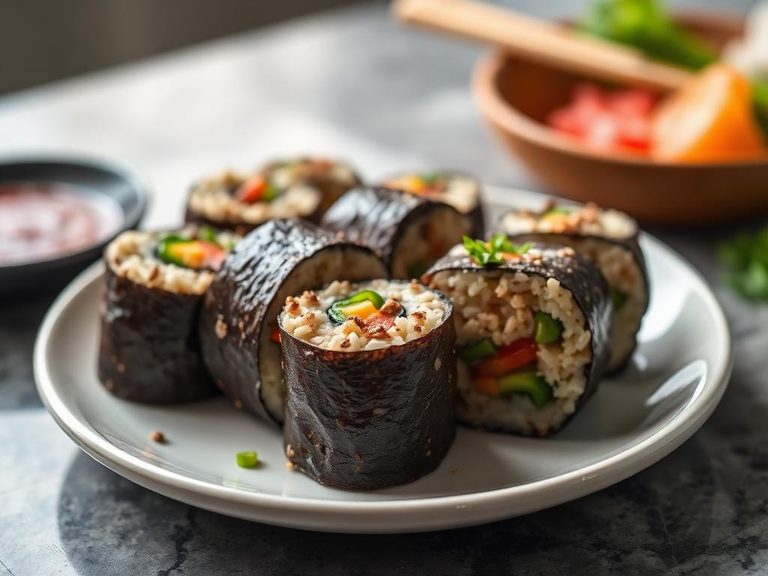
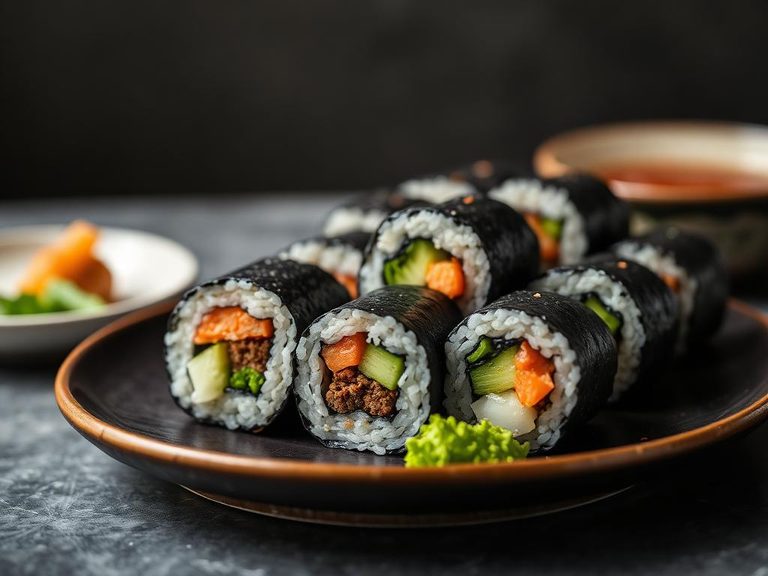
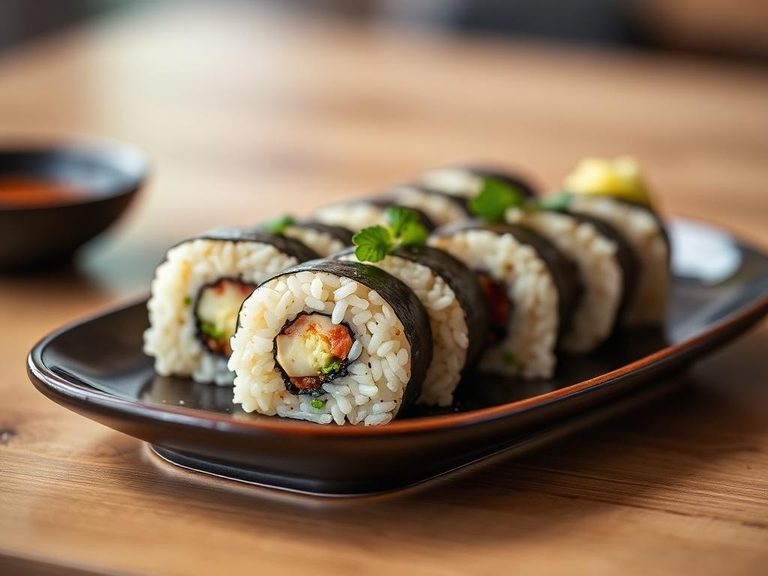
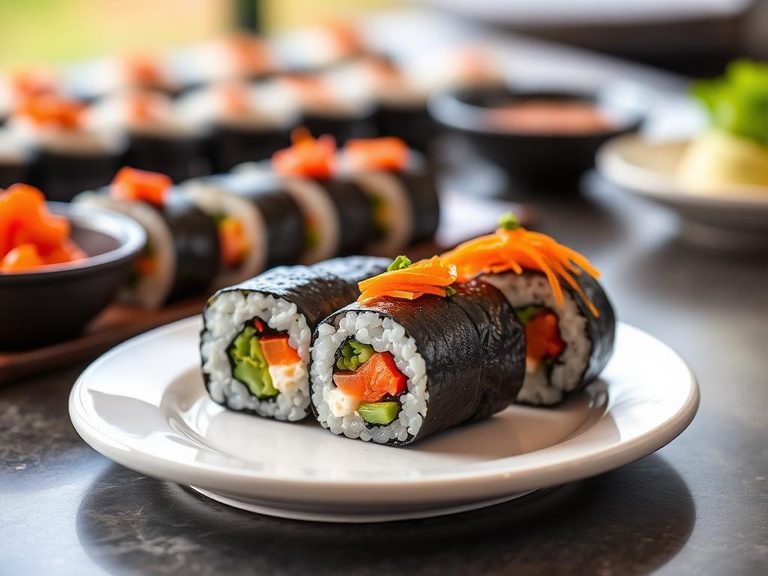
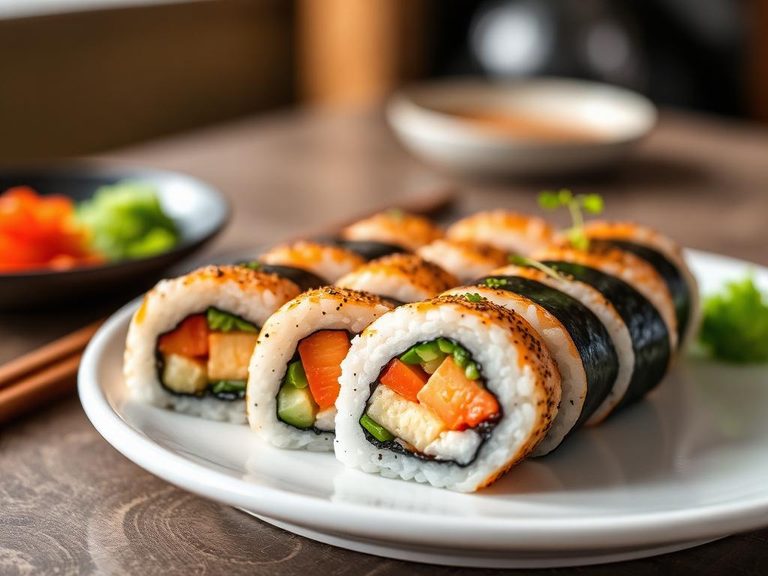
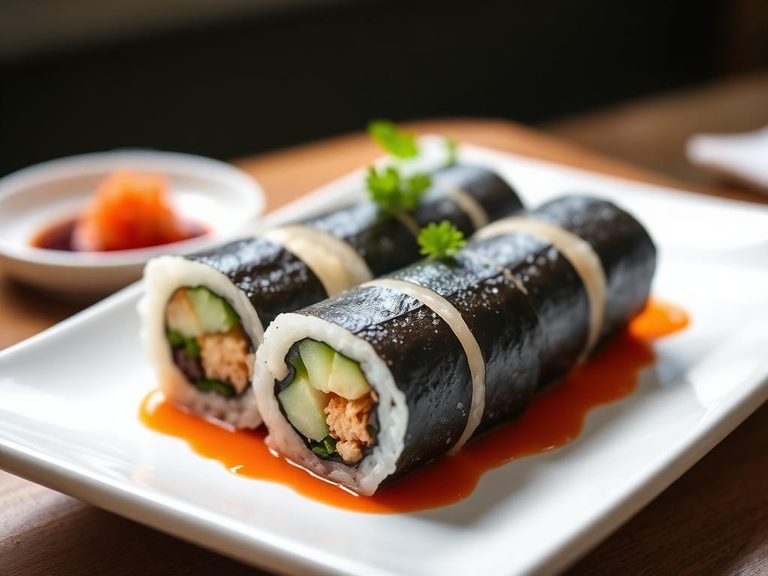
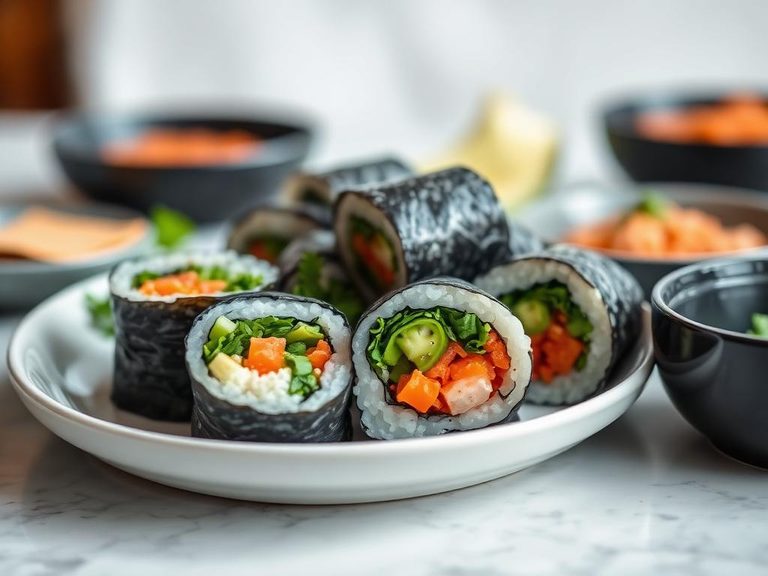
Brown rice sushi rolls are a modern, health-conscious twist on traditional Japanese sushi, replacing white rice with whole-grain brown rice. They typically feature fillings like fresh fish (such as salmon or tuna), vegetables (like avocado, cucumber, or carrot), and are wrapped in seaweed (nori). While sushi originates from Japan, this variation has become popular globally, especially in health-focused cuisines.
🍽️ Nutrition at a glance
Brown rice sushi rolls are a balanced dish, offering complex carbohydrates from the whole grain rice, lean protein from fish or tofu, and healthy fats from ingredients like avocado. A typical roll provides a good source of fiber, B vitamins, and minerals like magnesium, with a calorie range of approximately 250-350 per roll, depending on fillings.
Nutrition breakdown
| Calories | 290 kcal |
| Protein | 9 g |
| Carbs | 52 g |
| Fat | 4 g |
| Fiber | 3 g |
| Sugar | 4 g |
| Sodium | 480 mg |
| Manganese | 1.8 mg |
| Selenium | 15 mcg |
| Magnesium | 60 mg |
| Phosphorus | 120 mg |
| Thiamin (B1) | 0.2 mg |
| Niacin (B3) | 2.5 mg |
| Iron | 1.5 mg |
| Folate | 40 mcg |
Per 6 pieces (240 g) · estimated, varies by recipe
💡 What's interesting
Nutritionally, using brown rice boosts the fiber content significantly compared to white rice, aiding digestion and providing sustained energy. Culturally, it reflects a growing fusion of traditional Japanese techniques with contemporary wellness trends, making sushi more accessible to those seeking whole-food options.