

Seaweed, cooked, fat added
Common food

Photo: Wikipedia
This is a preparation of edible marine algae, typically wakame or kombu, that has been softened through cooking and dressed with a small amount of oil or fat. The texture is uniquely slippery and tender, offering a mild, briny flavor with a distinct umami depth. Nutritionally, it is a low-calorie food that provides a notable amount of protein (3.41g) and carbohydrates (7.71g) relative to its energy density.
Calorie split: 19% protein · 43% carbs · 38% fat
↓ Full nutrition💚 Why it's loved
People love it for its oceanic, savory taste and the satisfying, slippery texture that adds interest to salads, soups, and side dishes. It is a staple in East Asian cuisine, valued for its ability to enhance umami and provide a quick, nutritious element to a meal.
⚠️ Watch-outs & how to enjoy it better
The slimy texture can be off-putting to those unfamiliar with it, and it can be high in sodium, especially if prepared with added salt or soy sauce. To counteract this, rinse the seaweed thoroughly before use and pair it with unsalted or low-sodium ingredients. Its high iodine content means individuals with thyroid conditions should consume it in moderation and consult a healthcare provider.
Key benefits
- Provides a good source of plant-based protein for its low calorie count.
- Contains essential minerals like iodine, calcium, and magnesium from marine sources.
- Offers a savory umami flavor that can reduce the need for added salt.
- Rich in antioxidants and unique polysaccharides like fucoidan.
- Adds significant volume and texture to meals with minimal calories.
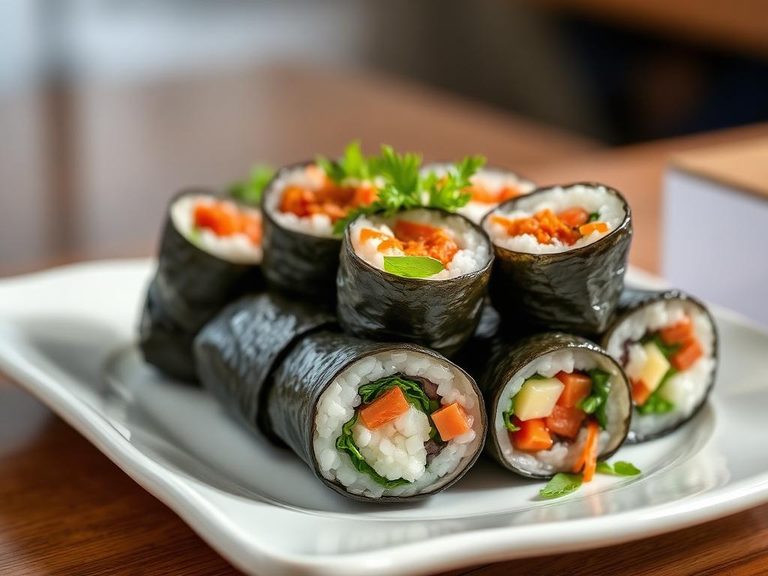
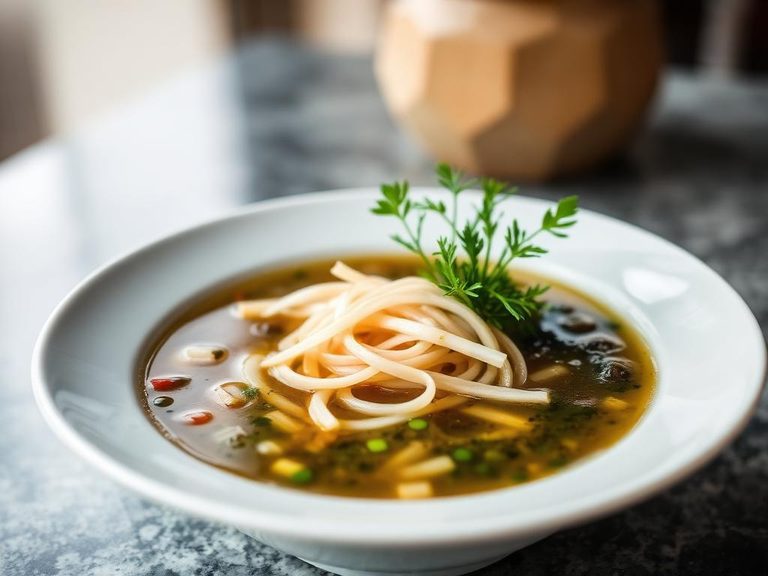
🍽️ Popular dishes
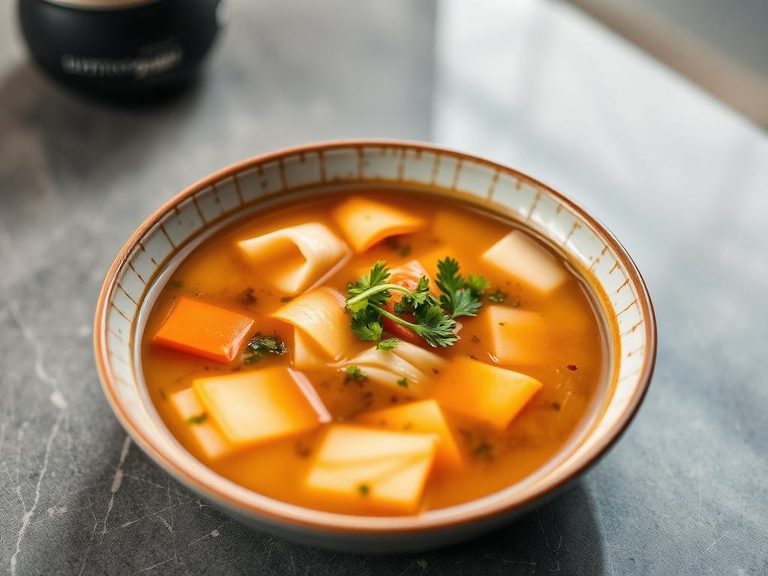
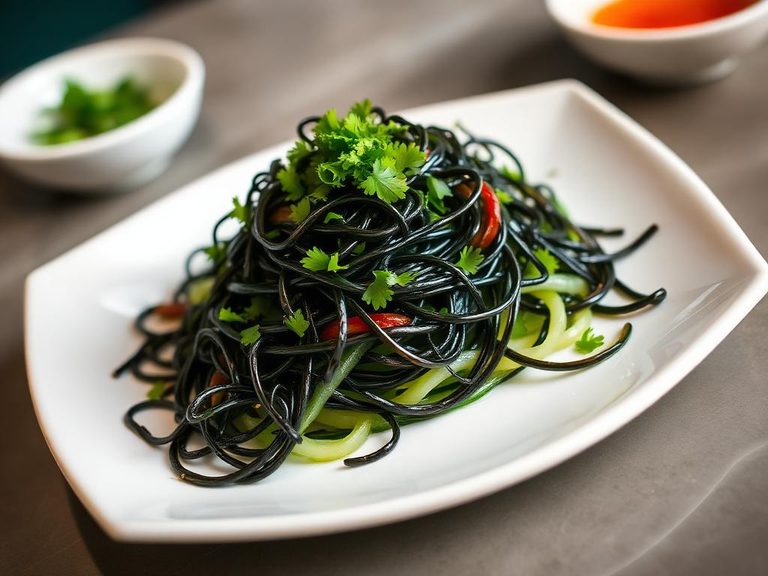
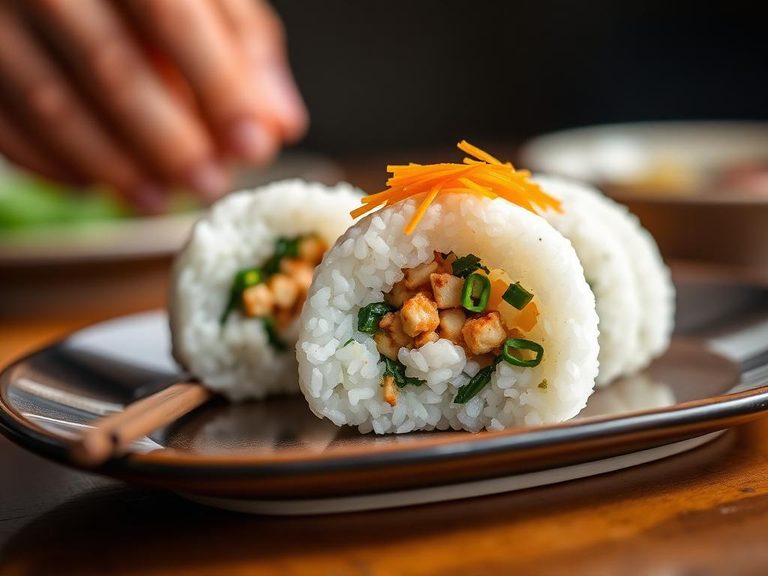
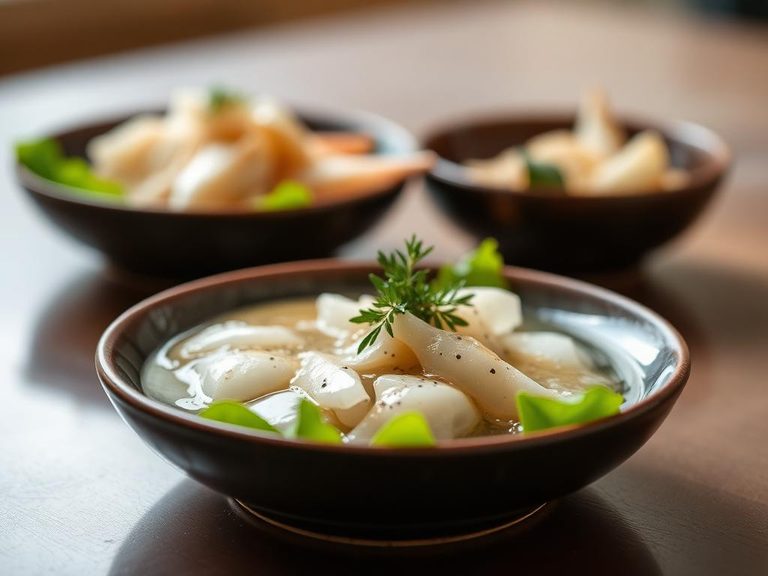
🌍 Where it's eaten
💡 Did you know?
The green color of cooked wakame comes from a pigment called fucoxanthin, which is also being studied for its potential role in fat metabolism.
Full nutrition (USDA data · scales with serving)
| Water | 80.1 g |
| Energy | 63.0 kcal |
| Protein | 3.4 g |
| Total lipid (fat) | 3.1 g |
| Carbohydrate, by difference | 7.7 g |
| Fiber, total dietary | 0.70 g |
| Total Sugars | 0.57 g |
| Calcium, Ca | 126 mg |
| Iron, Fe | 2.2 mg |
| Magnesium, Mg | 74.0 mg |
| Phosphorus, P | 59.0 mg |
| Potassium, K | 161 mg |
| Sodium, Na | 382 mg |
| Zinc, Zn | 0.86 mg |
| Copper, Cu | 0.22 mg |
| Selenium, Se | 0.70 ug |
| Vitamin C, total ascorbic acid | 12.4 mg |
| Thiamin | 0.06 mg |
| Riboflavin | 0.25 mg |
| Niacin | 1.1 mg |
| Vitamin B-6 | 0.06 mg |
| Folate, total | 144 ug |
| Folic acid | 0.00 ug |
| Folate, food | 144 ug |
| Folate, DFE | 144 ug |
| Choline, total | 12.2 mg |
| Vitamin B-12 | 0.00 ug |
| Vitamin B-12, added | 0.00 ug |
| Vitamin A, RAE | 99.0 ug |
| Retinol | 11.0 ug |
| Carotene, beta | 1052 ug |
| Carotene, alpha | 0.00 ug |
| Cryptoxanthin, beta | 0.00 ug |
| Lycopene | 0.00 ug |
| Lutein + zeaxanthin | 0.00 ug |
| Vitamin E (alpha-tocopherol) | 1.3 mg |
| Vitamin E, added | 0.00 mg |
| Vitamin D (D2 + D3) | 0.00 ug |
| Vitamin K (phylloquinone) | 26.5 ug |
| Alcohol, ethyl | 0.00 g |
| Caffeine | 0.00 mg |
| Theobromine | 0.00 mg |
Fat & fatty acid profile (per 100g)
| Fatty acids, total saturated | 0.82 g |
| SFA 4:0 | 0.02 g |
| SFA 6:0 | 0.01 g |
| SFA 8:0 | 0.01 g |
| SFA 10:0 | 0.02 g |
| SFA 12:0 | 0.02 g |
| SFA 14:0 | 0.08 g |
| SFA 16:0 | 0.46 g |
| SFA 18:0 | 0.17 g |
| Fatty acids, total monounsaturated | 0.97 g |
| MUFA 16:1 | 0.02 g |
| MUFA 18:1 | 0.92 g |
| MUFA 20:1 | 0.02 g |
| MUFA 22:1 | 0.00 g |
| Fatty acids, total polyunsaturated | 0.86 g |
| PUFA 18:2 | 0.67 g |
| PUFA 18:3 | 0.08 g |
| PUFA 18:4 | 0.00 g |
| PUFA 20:4 | 0.01 g |
| PUFA 20:5 n-3 (EPA) | 0.09 g |
| PUFA 22:5 n-3 (DPA) | 0.00 g |
| PUFA 22:6 n-3 (DHA) | 0.00 g |
| Cholesterol | 2.0 mg |
Amino acid profile (per 100g)
Estimated from Seaweed, Canadian Cultivated EMI-TSUNOMATA, dry — USDA does not publish this profile for Seaweed.
| Tryptophan | 0.16 g |
| Threonine | 0.58 g |
| Isoleucine | 0.56 g |
| Leucine | 0.90 g |
| Lysine | 0.75 g |
| Methionine | 0.25 g |
| Cystine | 0.25 g |
| Phenylalanine | 0.81 g |
| Tyrosine | 0.34 g |
| Valine | 0.66 g |
| Arginine | 0.77 g |
| Histidine | 0.23 g |
| Alanine | 0.81 g |
| Aspartic acid | 1.3 g |
| Glutamic acid | 1.7 g |
| Glycine | 0.67 g |
| Proline | 0.66 g |
| Serine | 0.64 g |
FAQ
Is cooked seaweed with fat added healthy?
Yes, it is generally healthy. It is low in calories and provides protein, fiber, and minerals like iodine. The added fat is typically small and can help with the absorption of fat-soluble vitamins, but it's best to check the specific product's ingredients for added sodium or sugars.
How do I reduce the slimy texture of cooked seaweed?
You can reduce the sliminess by rinsing it thoroughly under cold water, soaking it in vinegar or lemon juice for a few minutes, or briefly blanching it in boiling water before adding it to your dish.
Can I eat seaweed every day?
While seaweed is nutritious, its high iodine content means it's best consumed in moderation. Daily consumption of large amounts could potentially affect thyroid function, especially in individuals with pre-existing conditions. A few servings per week is a safe guideline for most people.
Nutrient density (calculated · NRF9.3)
Nutrient Rich Foods index: beneficial nutrients (protein, fiber, vitamins, minerals) minus saturated fat, added sugar & sodium, per 100 kcal.
NRF9.3 index — Fulgoni, Keast & Drewnowski, 2009. Computed from USDA nutrients.
Weight-loss friendliness (composite index)
Energy density 0.63 kcal/g · 22% calories from protein · 0.7 g fiber · 0.6 g sugar per 100 g.
Composite of energy density (Rolls et al., 1999), protein & fiber satiety, minus sugar. A calculated heuristic — ranks satiety-per-calorie, not a clinical measure.
Dietary load (calculated from USDA values)
Potential renal acid load. Positive = acid-forming, negative = alkaline-forming.
Sodium-to-potassium ratio: 2.37 (lower is better — aim for ≤ 1)
Sodium:potassium per WHO potassium guidance. Computed from USDA nutrients.