Sauce, pasta, spaghetti/marinara, ready-to-serve
Whole food · Soups, Sauces, and Gravies
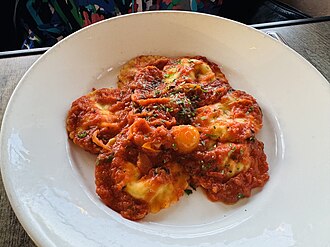
Photo: Wikipedia
This is the classic, smooth, and vibrant red sauce that forms the soul of countless pasta dishes. It offers a bright, tangy tomato flavor with a subtle sweetness and a velvety, spoon-coating texture. Nutritionally, it's a light base, providing modest carbs and fiber with minimal fat and calories per serving.
💚 Why it's loved
People love it for its comforting, familiar taste that instantly evokes a sense of home cooking and Italian-American nostalgia. Its smooth consistency and balanced acidity make it a perfect, effortless canvas for countless pasta variations and toppings.
⚠️ Watch-outs & how to enjoy it better
The primary downside can be a high sodium content in many commercial brands, which is a consideration for those monitoring salt intake. To counteract this, choose low-sodium versions or dilute with a splash of pasta water, and always pair it with a protein like lean meat or beans and a healthy fat like olive oil to create a more balanced meal and slow carbohydrate absorption.
Key benefits
- Low in calories and fat, making it a light sauce base.
- Good source of dietary fiber from tomatoes.
- Contains lycopene, an antioxidant from cooked tomatoes.
- Versatile foundation for adding proteins and vegetables.
- Quick and convenient ready-to-serve option.
🍽️ Popular dishes
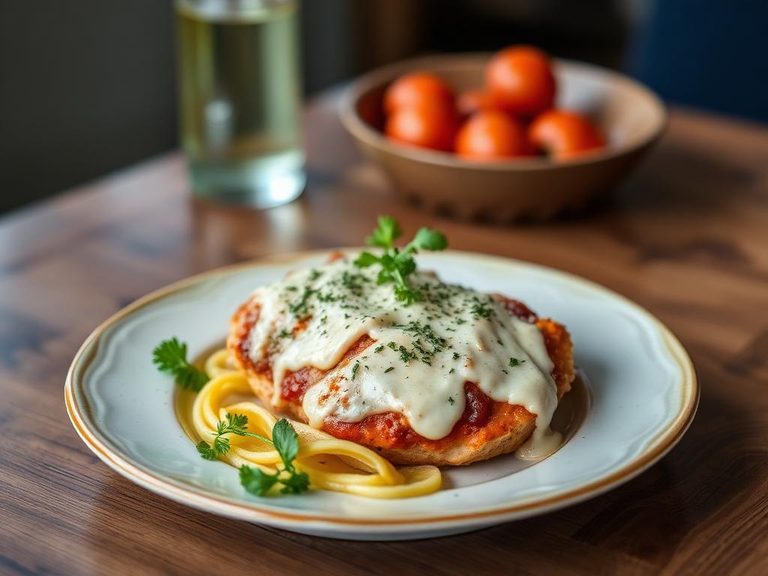
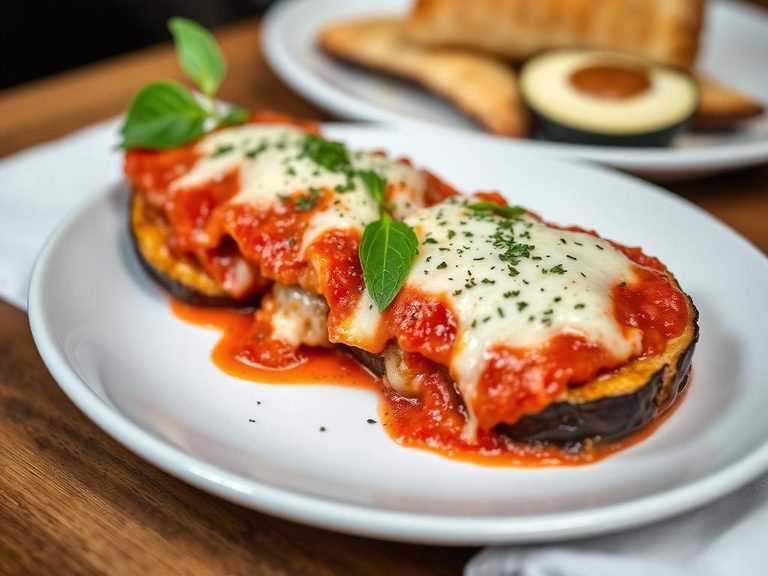
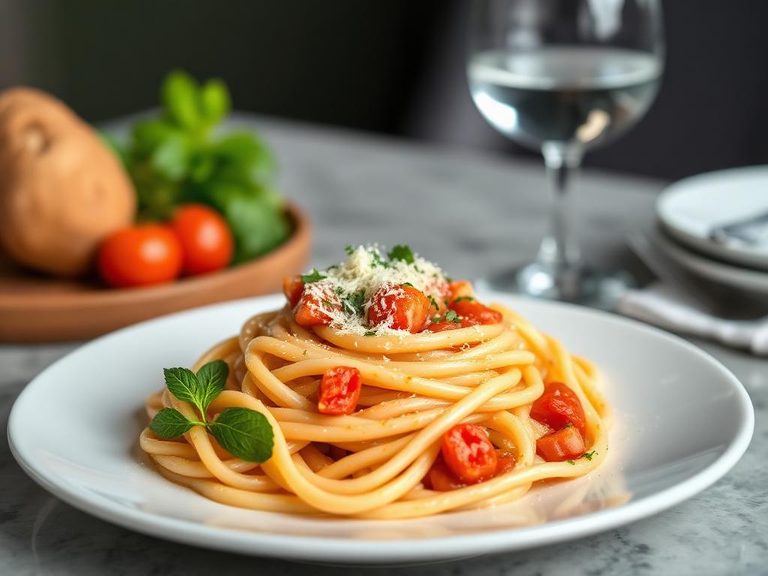
🌍 Where it's eaten
💡 Did you know?
The term 'marinara' in Italian doesn't mean 'marine' or 'seafood'—it actually means 'sailor's style,' referring to a simple tomato sauce that was a staple on Neapolitan fishing boats because its acidity helped preserve it during long voyages.
Full nutrition (scales with serving)
| Water | 87.4 g |
| Energy (Atwater General Factors) | 51.0 kcal |
| Energy (Atwater Specific Factors) | 45.0 kcal |
| Energy | 45.0 kcal |
| Energy | 186 kj |
| Nitrogen | 0.23 g |
| Protein | 1.4 g |
| Total lipid (fat) | 1.5 g |
| Total fat (NLEA) | 1.1 g |
| Ash | 1.7 g |
| Carbohydrate, by difference | 8.1 g |
| Carbohydrate, by summation | 7.3 g |
| Fiber, total dietary | 1.8 g |
| Sugars, Total | 5.5 g |
| Sucrose | 0.85 g |
| Glucose | 2.3 g |
| Fructose | 2.4 g |
| Lactose | 0.00 g |
| Maltose | 0.00 g |
| Galactose | 0.00 g |
| Starch | 0.00 g |
| Calcium, Ca | 27.0 mg |
| Iron, Fe | 0.78 mg |
| Magnesium, Mg | 18.5 mg |
| Phosphorus, P | 34.0 mg |
| Potassium, K | 319 mg |
| Sodium, Na | 419 mg |
| Zinc, Zn | 0.20 mg |
| Copper, Cu | 0.08 mg |
| Manganese, Mn | 0.14 mg |
| Vitamin A, RAE | 32.0 ug |
| Carotene, beta | 390 ug |
| Carotene, alpha | 0.00 ug |
| Cryptoxanthin, beta | 0.00 ug |
| Lycopene | 12700 ug |
| Lutein + zeaxanthin | 190 ug |
| Fatty acids, total saturated | 0.17 g |
| SFA 4:0 | 0.00 g |
| SFA 6:0 | 0.00 g |
| SFA 8:0 | 0.00 g |
| SFA 10:0 | 0.00 g |
| SFA 11:0 | 0.00 g |
| SFA 12:0 | 0.00 g |
| SFA 14:0 | 0.00 g |
| SFA 15:0 | 0.00 g |
| SFA 16:0 | 0.11 g |
| SFA 17:0 | 0.00 g |
| SFA 18:0 | 0.04 g |
| SFA 20:0 | 0.01 g |
| SFA 22:0 | 0.00 g |
| SFA 24:0 | 0.00 g |
| Fatty acids, total monounsaturated | 0.38 g |
| MUFA 14:1 c | 0.00 g |
| MUFA 15:1 | 0.00 g |
| MUFA 16:1 c | 0.00 g |
| MUFA 17:1 | 0.00 g |
| MUFA 17:1 c | 0.00 g |
| MUFA 18:1 c | 0.36 g |
| MUFA 20:1 | 0.01 g |
| MUFA 20:1 c | 0.01 g |
| MUFA 22:1 c | 0.00 g |
| MUFA 24:1 c | 0.00 g |
| Fatty acids, total polyunsaturated | 0.50 g |
| PUFA 18:2 c | 0.42 g |
| PUFA 18:2 n-6 c,c | 0.42 g |
| PUFA 18:2 CLAs | 0.00 g |
| PUFA 18:3 c | 0.08 g |
| PUFA 18:3 n-3 c,c,c (ALA) | 0.08 g |
| PUFA 18:3 n-6 c,c,c | 0.00 g |
| PUFA 18:4 | 0.00 g |
| PUFA 20:2 c | 0.00 g |
| PUFA 20:2 n-6 c,c | 0.00 g |
| PUFA 20:3 c | 0.00 g |
| PUFA 20:3 n-3 | 0.00 g |
| PUFA 20:3 n-6 | 0.00 g |
| PUFA 20:4 | 0.00 g |
| PUFA 20:4c | 0.00 g |
| PUFA 20:5c | 0.00 g |
| PUFA 20:5 n-3 (EPA) | 0.00 g |
| PUFA 22:2 | 0.00 g |
| PUFA 22:5 c | 0.00 g |
| PUFA 22:4 | 0.00 g |
| PUFA 22:5 n-3 (DPA) | 0.00 g |
| PUFA 22:6 c | 0.00 g |
| PUFA 22:6 n-3 (DHA) | 0.00 g |
| Fatty acids, total trans | 0.01 g |
| Fatty acids, total trans-monoenoic | 0.00 g |
| TFA 16:1 t | 0.00 g |
| TFA 18:1 t | 0.00 g |
| TFA 22:1 t | 0.00 g |
| Fatty acids, total trans-dienoic | 0.00 g |
| TFA 18:2 t not further defined | 0.00 g |
FAQ
What's the difference between marinara and spaghetti sauce?
Marinara is typically a simpler, quicker-cooked sauce of tomatoes, garlic, and herbs, often without meat. 'Spaghetti sauce' is a broader, more Americanized term that can include meat (like Bolognese), more vegetables, and a wider range of seasonings.
Is this sauce gluten-free?
The base ingredients (tomatoes, herbs) are naturally gluten-free. However, always check the label for additives or thickeners that might contain gluten, especially in pre-made products.
How can I improve the taste of a store-bought jar?
Sauté some fresh garlic and onion in a pan, add the sauce, and let it simmer with a pinch of sugar, red pepper flakes, or fresh basil. This deepens the flavor and adds a homemade touch.