

Salad dressing, peppercorn dressing, commercial, regular
Whole food · Fats and Oils
Peppercorn dressing is a creamy, emulsified condiment built on a base of oil, vinegar, and mayonnaise, studded with cracked black peppercorns for a bold, spicy bite. Its texture is luxuriously thick and clingy, coating salad leaves or drizzling over grilled meats with a glossy sheen. Nutritionally, it is a very high-fat, calorie-dense dressing, providing over 60g of fat per 100g.
Calorie split: 1% protein · 2% carbs · 97% fat
↓ Full nutrition💚 Why it's loved
People adore it for its signature creamy-yet-spicy profile that instantly elevates a simple green salad or a grilled steak. Its versatility makes it a staple for everything from potato salads to dipping sauces for appetizers.
⚠️ Watch-outs & how to enjoy it better
Its extremely high fat and calorie content can contribute to excess calorie intake if used liberally. The high sodium content from added salt and vinegar can be a concern for those monitoring blood pressure. To counteract this, use it sparingly as a flavor accent rather than a primary sauce, and pair it with large portions of leafy greens and lean protein to create a more balanced meal.
Key benefits
- Provides a quick source of dietary fat for energy
- Adds significant flavor to plain vegetables and proteins
- Contains compounds from black pepper that may aid digestion
- Offers a convenient, ready-to-use flavor boost for meals
🍽️ Popular dishes
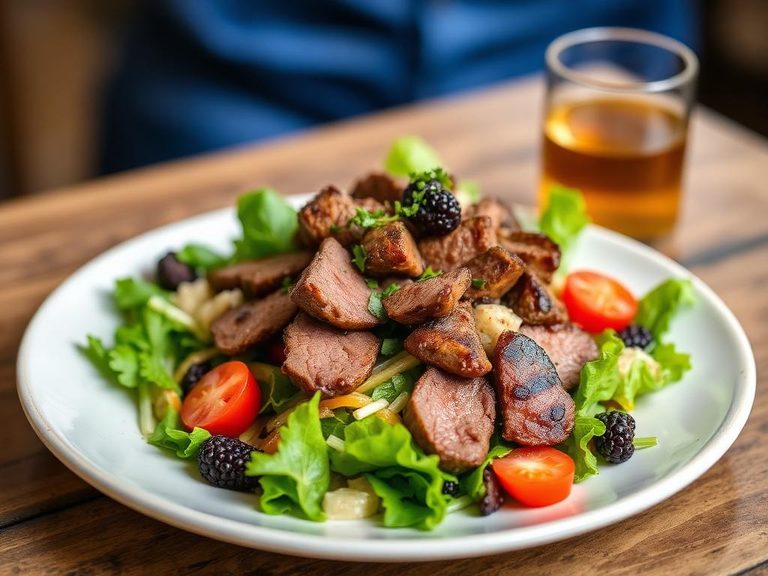
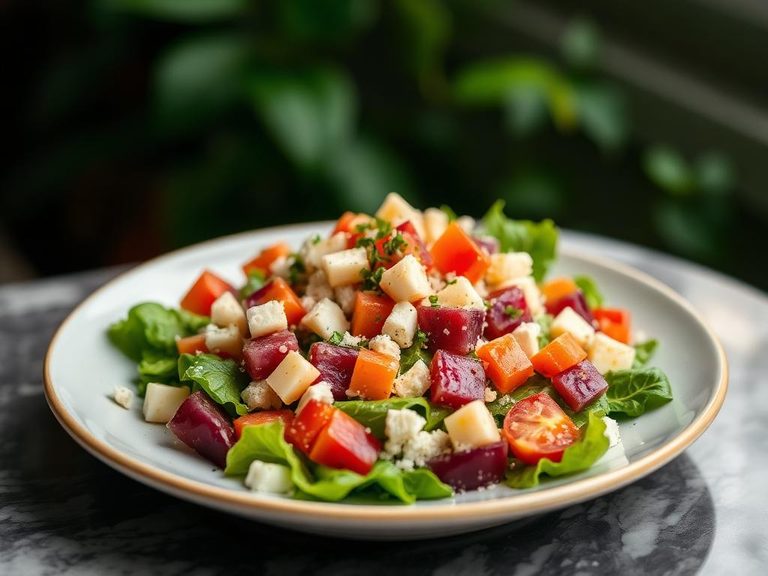
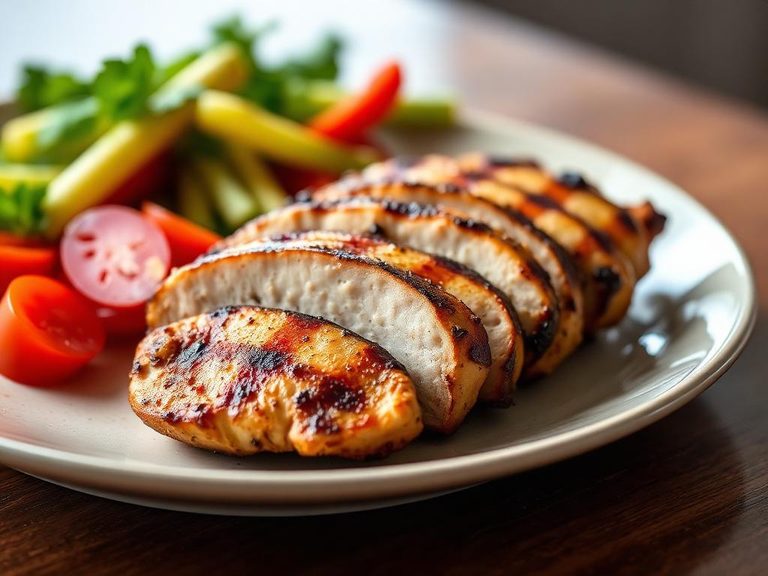
🌍 Where it's eaten
💡 Did you know?
The 'peppercorn' in the name often refers to a mix of black, white, green, and pink peppercorns, with the pink peppercorn technically not a true peppercorn but a dried berry from a South American shrub.
Full nutrition (USDA data · scales with serving)
| Water | 31.9 g |
| Energy | 564 kcal |
| Energy | 2360 kj |
| Protein | 1.2 g |
| Total lipid (fat) | 61.4 g |
| Ash | 2.0 g |
| Carbohydrate, by difference | 3.5 g |
| Fiber, total dietary | 0.00 g |
| Total Sugars | 2.5 g |
| Calcium, Ca | 22.0 mg |
| Iron, Fe | 0.35 mg |
| Magnesium, Mg | 2.0 mg |
| Phosphorus, P | 26.0 mg |
| Potassium, K | 176 mg |
| Sodium, Na | 1103 mg |
| Zinc, Zn | 0.18 mg |
| Copper, Cu | 0.01 mg |
| Selenium, Se | 1.6 ug |
| Vitamin C, total ascorbic acid | 0.60 mg |
| Thiamin | 0.00 mg |
| Riboflavin | 0.00 mg |
| Niacin | 0.00 mg |
| Vitamin B-6 | 0.07 mg |
| Folate, total | 4.0 ug |
| Folic acid | 0.00 ug |
| Folate, food | 4.0 ug |
| Folate, DFE | 4.0 ug |
| Choline, total | 20.6 mg |
| Vitamin B-12 | 0.12 ug |
| Vitamin B-12, added | 0.00 ug |
| Vitamin A, RAE | 10.0 ug |
| Retinol | 10.0 ug |
| Carotene, beta | 2.0 ug |
| Carotene, alpha | 1.0 ug |
| Cryptoxanthin, beta | 1.0 ug |
| Vitamin A, IU | 38.0 iu |
| Lycopene | 0.00 ug |
| Lutein + zeaxanthin | 29.0 ug |
| Vitamin E (alpha-tocopherol) | 4.2 mg |
| Vitamin E, added | 0.00 mg |
| Vitamin D (D2 + D3), International Units | 4.0 iu |
| Vitamin D (D2 + D3) | 0.10 ug |
| Vitamin K (phylloquinone) | 125 ug |
| Alcohol, ethyl | 0.00 g |
| Caffeine | 0.00 mg |
| Theobromine | 0.00 mg |
Fat & fatty acid profile (per 100g)
| Fatty acids, total saturated | 10.5 g |
| SFA 4:0 | 0.13 g |
| SFA 6:0 | 0.05 g |
| SFA 8:0 | 0.03 g |
| SFA 10:0 | 0.06 g |
| SFA 12:0 | 0.09 g |
| SFA 14:0 | 0.35 g |
| SFA 16:0 | 7.1 g |
| SFA 18:0 | 2.6 g |
| Fatty acids, total monounsaturated | 14.8 g |
| MUFA 16:1 | 0.23 g |
| MUFA 18:1 | 14.4 g |
| MUFA 20:1 | 0.12 g |
| MUFA 22:1 | 0.00 g |
| Fatty acids, total polyunsaturated | 33.0 g |
| PUFA 18:2 | 29.0 g |
| PUFA 18:3 | 3.9 g |
| PUFA 18:4 | 0.00 g |
| PUFA 20:4 | 0.04 g |
| PUFA 20:5 n-3 (EPA) | 0.00 g |
| PUFA 22:5 n-3 (DPA) | 0.00 g |
| PUFA 22:6 n-3 (DHA) | 0.01 g |
| Cholesterol | 49.0 mg |
Amino acid profile (per 100g)
Estimated from Salad dressing, sesame seed dressing, regular — USDA does not publish this profile for Salad dressing.
| Tryptophan | 0.05 g |
| Threonine | 0.05 g |
| Isoleucine | 0.05 g |
| Leucine | 0.08 g |
| Lysine | 0.14 g |
| Methionine | 0.03 g |
| Cystine | 0.00 g |
| Phenylalanine | 0.09 g |
| Tyrosine | 0.10 g |
| Valine | 0.07 g |
| Arginine | 0.40 g |
| Histidine | 0.03 g |
| Alanine | 0.00 g |
| Aspartic acid | 0.00 g |
| Glutamic acid | 0.46 g |
| Glycine | 0.00 g |
| Proline | 0.00 g |
| Serine | 0.00 g |
FAQ
Is peppercorn dressing the same as ranch dressing?
No. While both are creamy, peppercorn dressing is defined by its prominent cracked pepper flavor and often lacks the buttermilk, herb, and garlic notes central to ranch.
Can I make a lighter version at home?
Yes. You can blend Greek yogurt or silken tofu with vinegar, a small amount of oil, and freshly cracked pepper to significantly reduce fat and calories while maintaining a creamy texture.
What type of pepper gives the best flavor?
Coarsely cracked Tellicherry black peppercorns are prized for their complex, fruity heat. A mix of black and green peppercorns offers a balanced, sharp flavor.
Nutrient density (calculated · NRF9.3)
Nutrient Rich Foods index: beneficial nutrients (protein, fiber, vitamins, minerals) minus saturated fat, added sugar & sodium, per 100 kcal.
NRF9.3 index — Fulgoni, Keast & Drewnowski, 2009. Computed from USDA nutrients.
Weight-loss friendliness (composite index)
Energy density 5.64 kcal/g · 1% calories from protein · 0.0 g fiber · 2.5 g sugar per 100 g.
Composite of energy density (Rolls et al., 1999), protein & fiber satiety, minus sugar. A calculated heuristic — ranks satiety-per-calorie, not a clinical measure.
Dietary load (calculated from USDA values)
Potential renal acid load. Positive = acid-forming, negative = alkaline-forming.
Sodium-to-potassium ratio: 6.27 (lower is better — aim for ≤ 1)
Sodium:potassium per WHO potassium guidance. Computed from USDA nutrients.