

Salad dressing, italian dressing, reduced calorie
Whole food · Fats and Oils

Photo: Wikipedia
This is a lightened-up version of the classic Italian vinaigrette, offering a tangy, herbaceous punch with a silky, oil-based texture. It delivers a zesty blend of vinegar, garlic, and oregano without the full calorie load of traditional dressings. Notably, it remains almost entirely fat-based, with 20g of fat per 100g, while providing minimal protein or carbohydrates.
Calorie split: 1% protein · 13% carbs · 87% fat
↓ Full nutrition💚 Why it's loved
People love it for delivering the classic, punchy Italian-American flavor profile—tangy, garlicky, and herbaceous—without the full caloric commitment. It's a versatile staple that instantly brightens everything from a simple garden salad to a marinated chicken breast.
⚠️ Watch-outs & how to enjoy it better
The reduced-calorie formula often relies on added thickeners, more vinegar, or artificial sweeteners, which can create a slightly thinner or sharper taste. Those monitoring sodium intake or blood sugar should check labels carefully, as some brands compensate for reduced oil with higher salt or hidden sugars. Tip: Use it as a marinade or dip with a protein source (like grilled chicken) to balance the vinegar's acidity and improve satiety.
Key benefits
- Significantly lower in calories than full-fat versions.
- Provides a quick, flavorful way to enhance plain vegetables.
- Adds no sugar to savory dishes.
- Can help increase consumption of leafy greens.
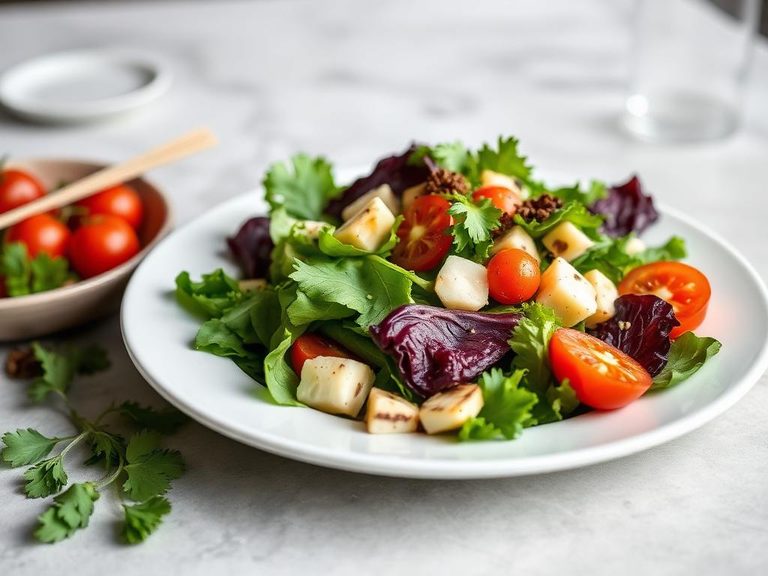
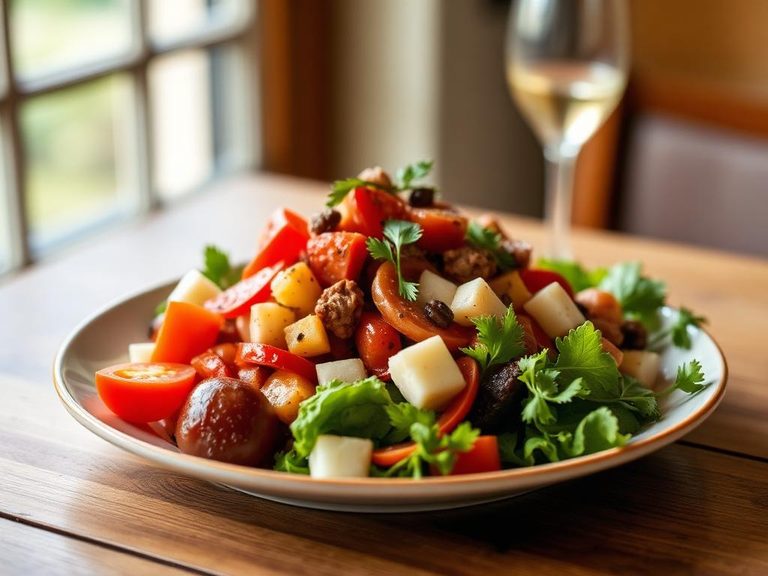
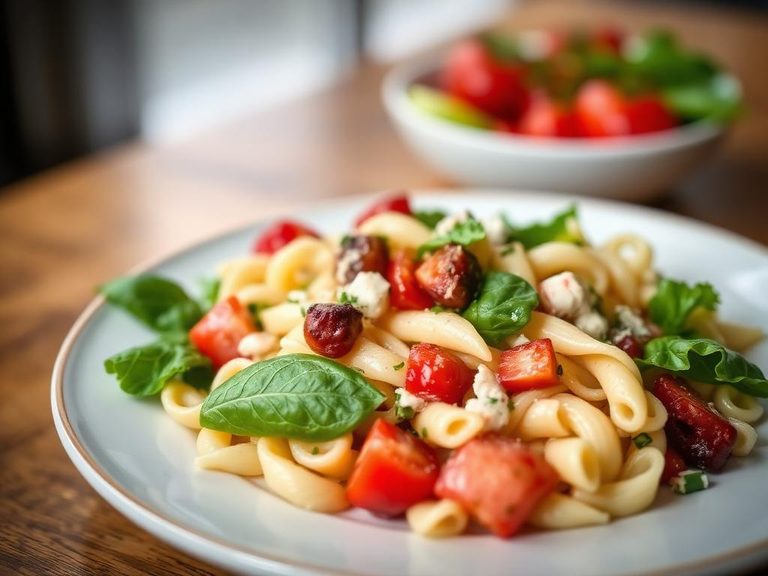
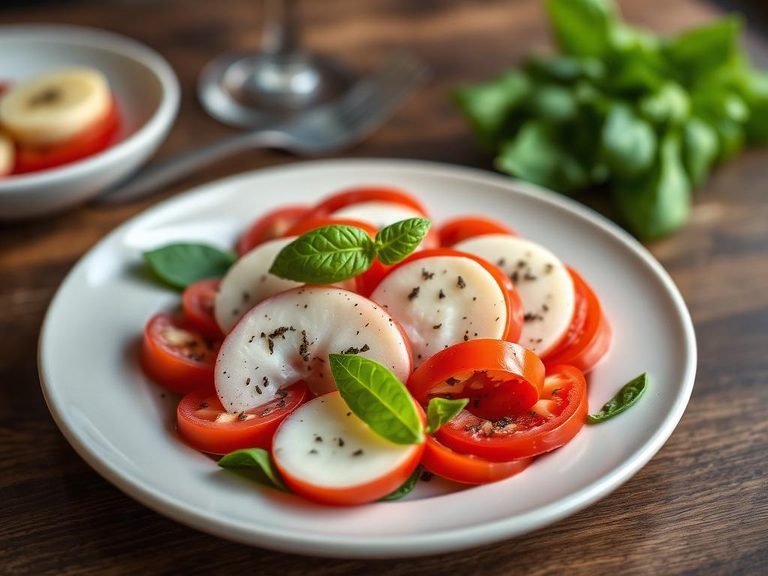
🍽️ Popular dishes
🌍 Where it's eaten
💡 Did you know?
The 'Italian dressing' found in most American supermarkets is largely an American invention, not a traditional recipe from Italy, and was popularized in the mid-20th century by Kraft Foods.
Full nutrition (USDA data · scales with serving)
| Water | 70.0 g |
| Energy | 200 kcal |
| Energy | 837 kj |
| Protein | 0.30 g |
| Total lipid (fat) | 20.0 g |
| Ash | 3.0 g |
| Carbohydrate, by difference | 6.7 g |
| Fiber, total dietary | 0.20 g |
| Total Sugars | 1.9 g |
| Calcium, Ca | 6.0 mg |
| Iron, Fe | 0.13 mg |
| Magnesium, Mg | 2.0 mg |
| Phosphorus, P | 7.0 mg |
| Potassium, K | 33.0 mg |
| Sodium, Na | 1074 mg |
| Zinc, Zn | 0.04 mg |
| Copper, Cu | 0.01 mg |
| Manganese, Mn | 0.02 mg |
| Selenium, Se | 1.6 ug |
| Vitamin C, total ascorbic acid | 0.40 mg |
| Thiamin | 0.01 mg |
| Riboflavin | 0.01 mg |
| Niacin | 0.02 mg |
| Pantothenic acid | 0.00 mg |
| Vitamin B-6 | 0.03 mg |
| Folate, total | 3.0 ug |
| Folic acid | 0.00 ug |
| Folate, food | 3.0 ug |
| Folate, DFE | 3.0 ug |
| Choline, total | 3.3 mg |
| Vitamin B-12 | 0.07 ug |
| Vitamin B-12, added | 0.00 ug |
| Vitamin A, RAE | 0.00 ug |
| Retinol | 0.00 ug |
| Carotene, beta | 0.00 ug |
| Carotene, alpha | 0.00 ug |
| Cryptoxanthin, beta | 0.00 ug |
| Vitamin A, IU | 0.00 iu |
| Lycopene | 0.00 ug |
| Lutein + zeaxanthin | 0.00 ug |
| Vitamin E (alpha-tocopherol) | 0.59 mg |
| Vitamin E, added | 0.00 mg |
| Vitamin D (D2 + D3), International Units | 0.00 iu |
| Vitamin D (D2 + D3) | 0.00 ug |
| Vitamin K (phylloquinone) | 12.5 ug |
| Alcohol, ethyl | 0.00 g |
| Caffeine | 0.00 mg |
| Theobromine | 0.00 mg |
Fat & fatty acid profile (per 100g)
| Fatty acids, total saturated | 2.9 g |
| SFA 4:0 | 0.00 g |
| SFA 6:0 | 0.00 g |
| SFA 8:0 | 0.00 g |
| SFA 10:0 | 0.00 g |
| SFA 12:0 | 0.00 g |
| SFA 14:0 | 0.02 g |
| SFA 16:0 | 2.1 g |
| SFA 18:0 | 0.76 g |
| Fatty acids, total monounsaturated | 4.7 g |
| MUFA 16:1 | 0.04 g |
| MUFA 18:1 | 4.6 g |
| MUFA 20:1 | 0.04 g |
| MUFA 22:1 | 0.00 g |
| Fatty acids, total polyunsaturated | 11.6 g |
| PUFA 18:2 | 10.2 g |
| PUFA 18:3 | 1.4 g |
| PUFA 18:4 | 0.00 g |
| PUFA 20:4 | 0.00 g |
| PUFA 20:5 n-3 (EPA) | 0.00 g |
| PUFA 22:5 n-3 (DPA) | 0.00 g |
| PUFA 22:6 n-3 (DHA) | 0.00 g |
| Cholesterol | 0.00 mg |
Amino acid profile (per 100g)
Estimated from Salad dressing, sesame seed dressing, regular — USDA does not publish this profile for Salad dressing.
| Tryptophan | 0.05 g |
| Threonine | 0.05 g |
| Isoleucine | 0.05 g |
| Leucine | 0.08 g |
| Lysine | 0.14 g |
| Methionine | 0.03 g |
| Cystine | 0.00 g |
| Phenylalanine | 0.09 g |
| Tyrosine | 0.10 g |
| Valine | 0.07 g |
| Arginine | 0.40 g |
| Histidine | 0.03 g |
| Alanine | 0.00 g |
| Aspartic acid | 0.00 g |
| Glutamic acid | 0.46 g |
| Glycine | 0.00 g |
| Proline | 0.00 g |
| Serine | 0.00 g |
FAQ
Is reduced-calorie Italian dressing healthier than regular?
It's lower in calories and fat, which can help with weight management. However, it may contain more sodium, thickeners, or additives to compensate for flavor and texture. Always compare nutrition labels.
Can I use it for cooking?
Yes, it's excellent as a quick marinade for meats, tofu, or vegetables, or as a flavor base for pasta salads. The vinegar content helps tenderize proteins.
Why does it sometimes separate or look cloudy?
This is normal. The oil and vinegar components naturally separate, and added thickeners (like xanthan gum) can create a slightly cloudy appearance. Shake well before each use.
Nutrient density (calculated · NRF9.3)
Nutrient Rich Foods index: beneficial nutrients (protein, fiber, vitamins, minerals) minus saturated fat, added sugar & sodium, per 100 kcal.
NRF9.3 index — Fulgoni, Keast & Drewnowski, 2009. Computed from USDA nutrients.
Weight-loss friendliness (composite index)
Energy density 2.00 kcal/g · 1% calories from protein · 0.2 g fiber · 1.9 g sugar per 100 g.
Composite of energy density (Rolls et al., 1999), protein & fiber satiety, minus sugar. A calculated heuristic — ranks satiety-per-calorie, not a clinical measure.
Dietary load (calculated from USDA values)
Potential renal acid load. Positive = acid-forming, negative = alkaline-forming.
Sodium-to-potassium ratio: 32.55 (lower is better — aim for ≤ 1)
Sodium:potassium per WHO potassium guidance. Computed from USDA nutrients.