

Salad dressing, home recipe, vinegar and oil
Whole food · Fats and Oils

Photo: Wikipedia
A classic, emulsified blend of oil and vinegar, this dressing is a shimmering, golden elixir that coats greens with a bright, tangy kick and a rich, silky mouthfeel. It's a near-pure fat source, delivering over 50g of fat per 100g, with virtually no protein or carbohydrates. The flavor is sharp and customizable, often enhanced with herbs, mustard, or garlic.
Calorie split: 0% protein · 2% carbs · 98% fat
↓ Full nutrition💚 Why it's loved
People adore its vibrant, customizable flavor that can transform a simple salad into a satisfying meal. It's a cornerstone of culinary versatility, serving as a marinade, dip, or finishing sauce across countless cuisines.
⚠️ Watch-outs & how to enjoy it better
The high fat and calorie density can be a concern for calorie-restricted diets, and the acidic vinegar may aggravate acid reflux in some individuals. To manage this, practice strict portion control (1-2 tablespoons) and pair it with high-fiber vegetables and lean protein to create a more balanced, satiating meal.
Key benefits
- High in monounsaturated fats from oil, which can support heart health.
- Zero protein and negligible carbs, making it suitable for ketogenic diets.
- Vinegar may help with blood sugar regulation when consumed with a meal.
- A simple, preservative-free alternative to many commercial dressings.
🍽️ Popular dishes
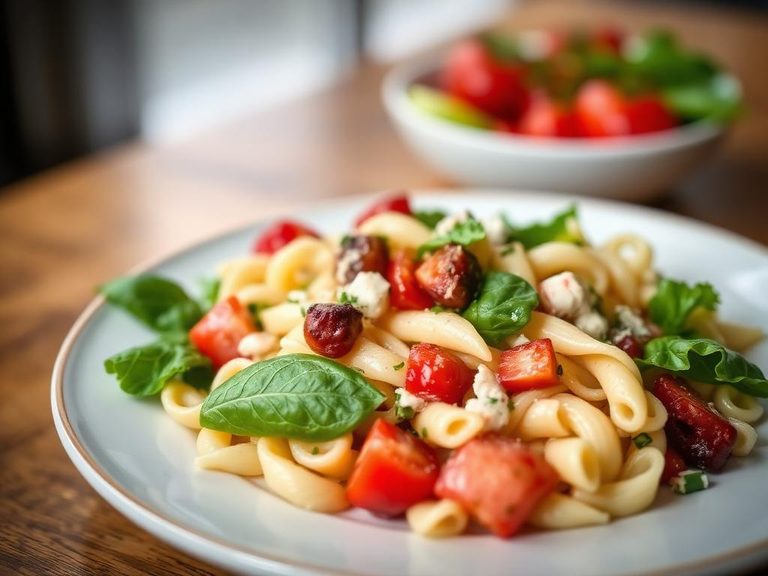
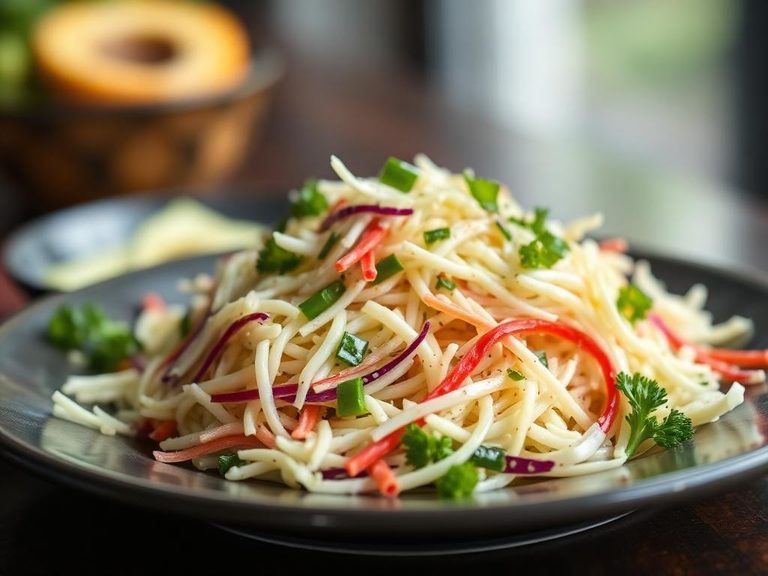
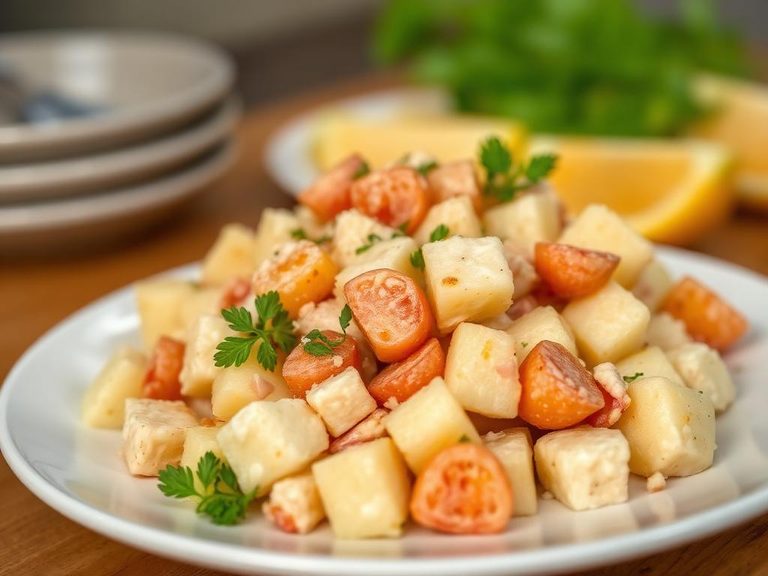
🌍 Where it's eaten
💡 Did you know?
The classic 3-to-1 oil-to-vinegar ratio for a vinaigrette is a guideline, not a rule; the French culinary term 'à la vinaigrette' simply means dressed with a vinegar-and-oil sauce, with no fixed proportion.
Full nutrition (USDA data · scales with serving)
| Water | 47.4 g |
| Energy | 449 kcal |
| Energy | 1878 kj |
| Protein | 0.00 g |
| Total lipid (fat) | 50.1 g |
| Ash | 0.00 g |
| Carbohydrate, by difference | 2.5 g |
| Fiber, total dietary | 0.00 g |
| Total Sugars | 2.5 g |
| Calcium, Ca | 0.00 mg |
| Iron, Fe | 0.00 mg |
| Magnesium, Mg | 0.00 mg |
| Phosphorus, P | 0.00 mg |
| Potassium, K | 8.0 mg |
| Sodium, Na | 1.0 mg |
| Zinc, Zn | 0.00 mg |
| Copper, Cu | 0.00 mg |
| Selenium, Se | 1.6 ug |
| Vitamin C, total ascorbic acid | 0.00 mg |
| Thiamin | 0.00 mg |
| Riboflavin | 0.00 mg |
| Niacin | 0.00 mg |
| Pantothenic acid | 0.00 mg |
| Vitamin B-6 | 0.00 mg |
| Folate, total | 0.00 ug |
| Folic acid | 0.00 ug |
| Folate, food | 0.00 ug |
| Folate, DFE | 0.00 ug |
| Choline, total | 0.10 mg |
| Vitamin B-12 | 0.00 ug |
| Vitamin B-12, added | 0.00 ug |
| Vitamin A, RAE | 0.00 ug |
| Retinol | 0.00 ug |
| Carotene, beta | 0.00 ug |
| Carotene, alpha | 0.00 ug |
| Cryptoxanthin, beta | 0.00 ug |
| Vitamin A, IU | 0.00 iu |
| Lycopene | 0.00 ug |
| Lutein + zeaxanthin | 0.00 ug |
| Vitamin E (alpha-tocopherol) | 4.6 mg |
| Vitamin E, added | 0.00 mg |
| Vitamin D (D2 + D3), International Units | 0.00 iu |
| Vitamin D (D2 + D3) | 0.00 ug |
| Vitamin K (phylloquinone) | 98.8 ug |
| Alcohol, ethyl | 0.00 g |
| Caffeine | 0.00 mg |
| Theobromine | 0.00 mg |
Fat & fatty acid profile (per 100g)
| Fatty acids, total saturated | 9.1 g |
| SFA 4:0 | 0.00 g |
| SFA 6:0 | 0.00 g |
| SFA 8:0 | 0.00 g |
| SFA 10:0 | 0.00 g |
| SFA 12:0 | 0.00 g |
| SFA 14:0 | 0.20 g |
| SFA 16:0 | 7.0 g |
| SFA 18:0 | 1.9 g |
| Fatty acids, total monounsaturated | 14.8 g |
| MUFA 16:1 | 0.10 g |
| MUFA 18:1 | 14.7 g |
| MUFA 20:1 | 0.00 g |
| MUFA 22:1 | 0.00 g |
| Fatty acids, total polyunsaturated | 24.1 g |
| PUFA 18:2 | 22.7 g |
| PUFA 18:3 | 1.4 g |
| PUFA 18:4 | 0.00 g |
| PUFA 20:4 | 0.00 g |
| PUFA 20:5 n-3 (EPA) | 0.00 g |
| PUFA 22:5 n-3 (DPA) | 0.00 g |
| PUFA 22:6 n-3 (DHA) | 0.00 g |
| Cholesterol | 0.00 mg |
| Phytosterols | 66.0 mg |
Amino acid profile (per 100g)
| Tryptophan | 0.00 g |
| Threonine | 0.00 g |
| Isoleucine | 0.00 g |
| Leucine | 0.00 g |
| Lysine | 0.00 g |
| Methionine | 0.00 g |
| Cystine | 0.00 g |
| Phenylalanine | 0.00 g |
| Tyrosine | 0.00 g |
| Valine | 0.00 g |
| Arginine | 0.00 g |
| Histidine | 0.00 g |
| Alanine | 0.00 g |
| Aspartic acid | 0.00 g |
| Glutamic acid | 0.00 g |
| Glycine | 0.00 g |
| Proline | 0.00 g |
| Serine | 0.00 g |
FAQ
Why does my homemade oil and vinegar dressing separate?
It separates because oil and vinegar are immiscible—they don't naturally mix. To create a temporary emulsion, whisk vigorously or shake in a sealed jar just before serving. Adding an emulsifier like Dijon mustard or egg yolk helps stabilize it longer.
What's the best oil to use for this dressing?
Extra virgin olive oil is classic for its fruity, peppery flavor. For a neutral taste, use avocado, grapeseed, or light olive oil. The choice depends on whether you want the oil's flavor to be a star or a subtle carrier for the vinegar and seasonings.
Can I make this dressing ahead of time?
Yes, but it will likely separate. Store it in a tightly sealed jar in the refrigerator for up to a week. Let it sit at room temperature for 10 minutes and shake vigorously before using to re-emulsify. The flavor may deepen slightly as it rests.
Nutrient density (calculated · NRF9.3)
Nutrient Rich Foods index: beneficial nutrients (protein, fiber, vitamins, minerals) minus saturated fat, added sugar & sodium, per 100 kcal.
NRF9.3 index — Fulgoni, Keast & Drewnowski, 2009. Computed from USDA nutrients.
Weight-loss friendliness (composite index)
Energy density 4.49 kcal/g · 0% calories from protein · 0.0 g fiber · 2.5 g sugar per 100 g.
Composite of energy density (Rolls et al., 1999), protein & fiber satiety, minus sugar. A calculated heuristic — ranks satiety-per-calorie, not a clinical measure.
Dietary load (calculated from USDA values)
Potential renal acid load. Positive = acid-forming, negative = alkaline-forming.
Sodium-to-potassium ratio: 0.13 (lower is better — aim for ≤ 1)
Sodium:potassium per WHO potassium guidance. Computed from USDA nutrients.