

Rice, white, long-grain, parboiled, unenriched, cooked
Whole food · Cereal Grains and Pasta

Photo: Wikipedia
Parboiled long-grain white rice is a starchy, slightly chewy staple with a subtle nutty aroma, its grains cooking up distinct and fluffy rather than sticky. The parboiling process pushes some nutrients from the husk into the grain, giving it a faint golden hue and a firmer texture than regular white rice. Per 100g, it offers a modest 123 kcal and a solid 2.91g of protein, making it a lighter, energy-efficient base for meals.
Calorie split: 10% protein · 87% carbs · 3% fat
↓ Full nutrition💚 Why it's loved
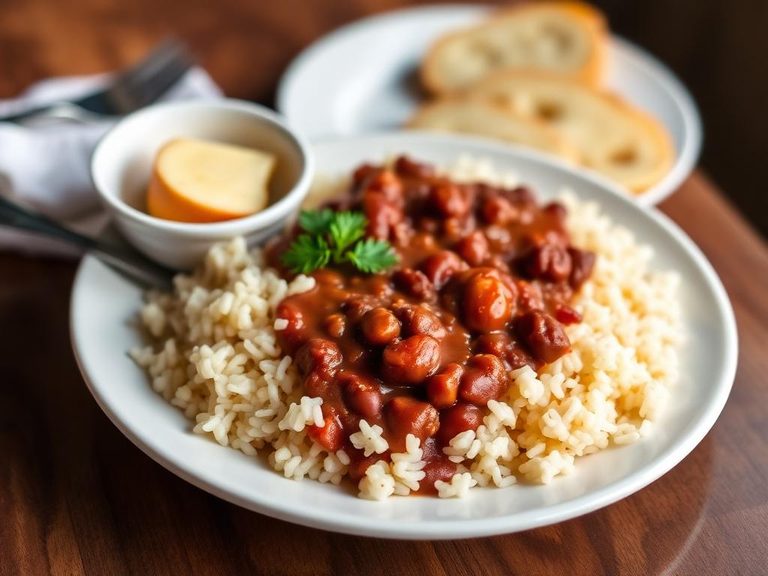
People love it for its reliable, non-sticky texture that makes it perfect for dishes where grains should remain distinct, and for its mild, slightly earthy flavor that complements bold curries and stews. It's a versatile canvas that absorbs sauces and spices without becoming mushy.
⚠️ Watch-outs & how to enjoy it better
As a refined carbohydrate, it can cause blood-sugar spikes if eaten alone in large portions, and it lacks the fiber and full nutrient profile of whole grains. To counteract this, pair it with protein (like lentils or chicken) and healthy fats (like ghee or avocado), or mix it with vegetables to increase fiber and slow digestion.
Key benefits
- Lower glycemic index than regular white rice due to parboiling
- Good source of quick-release energy (26g carbs per 100g)
- Contains more retained B vitamins and minerals than polished white rice
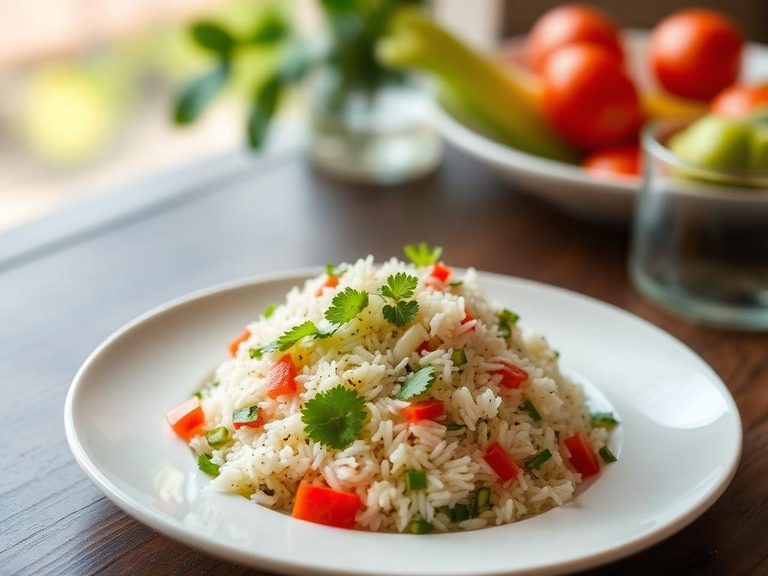
- Grains stay separate and fluffy, ideal for pilafs and salads
- Naturally low in fat (0.37g per 100g)
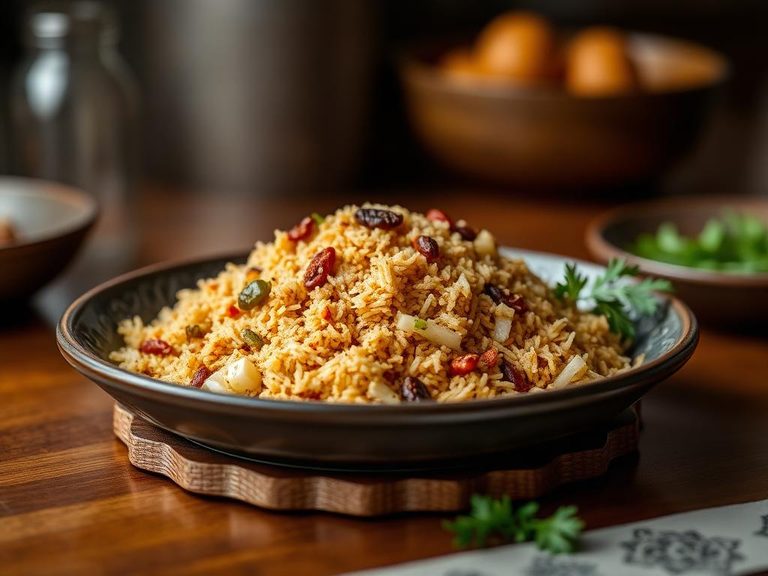
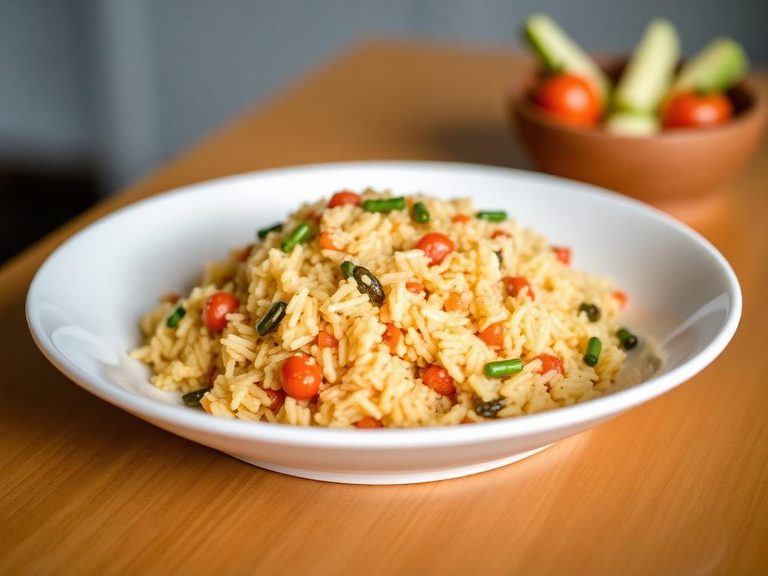
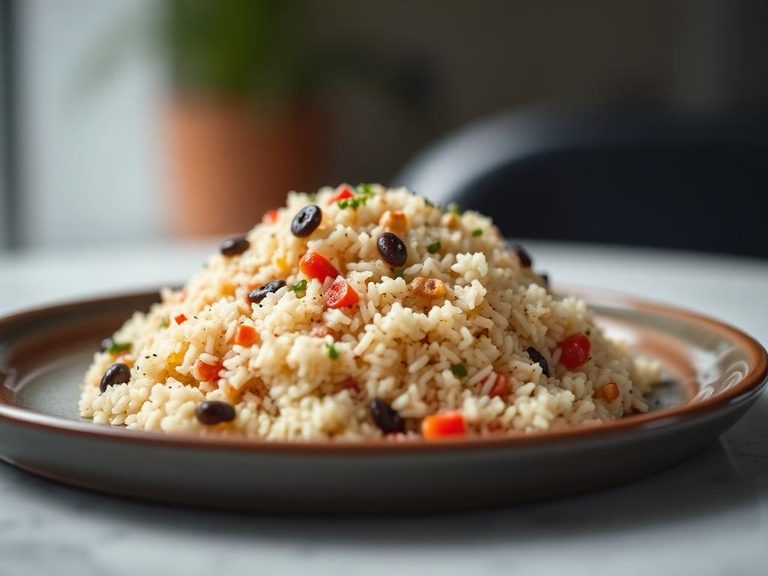
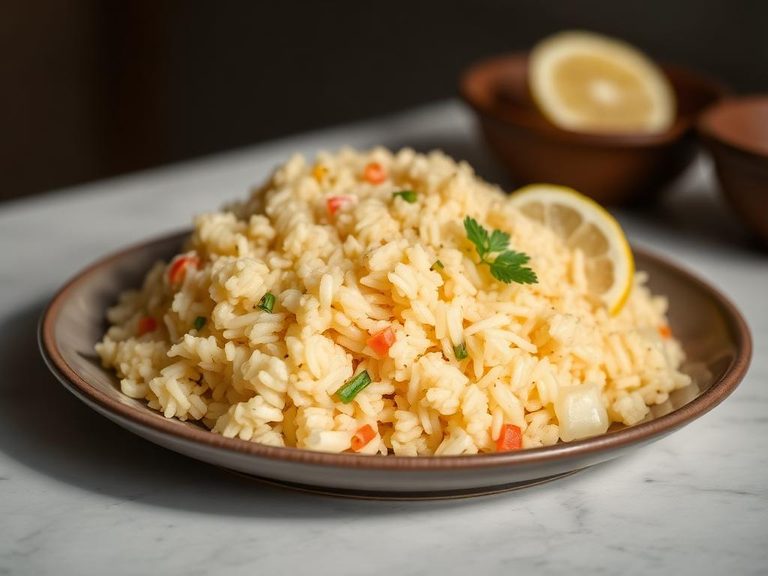
🍽️ Popular dishes
🌍 Where it's eaten
💡 Did you know?
The parboiling process, which involves partially boiling the rice in its husk, was originally developed in the 1940s to prevent rice from breaking during milling and to improve its nutritional value for populations at risk of deficiency diseases like beriberi.
Full nutrition (USDA data · scales with serving)
| Water | 70.4 g |
| Energy | 123 kcal |
| Energy | 513 kj |
| Protein | 2.9 g |
| Total lipid (fat) | 0.37 g |
| Ash | 0.30 g |
| Carbohydrate, by difference | 26.1 g |
| Fiber, total dietary | 0.90 g |
| Total Sugars | 0.11 g |
| Sucrose | 0.08 g |
| Glucose | 0.01 g |
| Fructose | 0.02 g |
| Lactose | 0.00 g |
| Maltose | 0.00 g |
| Galactose | 0.00 g |
| Calcium, Ca | 19.0 mg |
| Iron, Fe | 0.24 mg |
| Magnesium, Mg | 9.0 mg |
| Phosphorus, P | 55.0 mg |
| Potassium, K | 56.0 mg |
| Sodium, Na | 2.0 mg |
| Zinc, Zn | 0.37 mg |
| Copper, Cu | 0.07 mg |
| Manganese, Mn | 0.35 mg |
| Selenium, Se | 9.3 ug |
| Vitamin C, total ascorbic acid | 0.00 mg |
| Thiamin | 0.07 mg |
| Riboflavin | 0.02 mg |
| Niacin | 2.3 mg |
| Pantothenic acid | 0.32 mg |
| Vitamin B-6 | 0.16 mg |
| Folate, total | 3.0 ug |
| Folic acid | 0.00 ug |
| Folate, food | 3.0 ug |
| Folate, DFE | 3.0 ug |
| Vitamin B-12 | 0.00 ug |
| Vitamin E (alpha-tocopherol) | 0.01 mg |
| Vitamin D (D2 + D3), International Units | 0.00 iu |
| Vitamin D (D2 + D3) | 0.00 ug |
| Vitamin K (phylloquinone) | 0.00 ug |
Fat & fatty acid profile (per 100g)
| Fatty acids, total saturated | 0.07 g |
| SFA 4:0 | 0.00 g |
| SFA 6:0 | 0.00 g |
| SFA 8:0 | 0.00 g |
| SFA 10:0 | 0.00 g |
| SFA 12:0 | 0.00 g |
| SFA 14:0 | 0.00 g |
| SFA 15:0 | 0.00 g |
| SFA 16:0 | 0.07 g |
| SFA 17:0 | 0.00 g |
| SFA 18:0 | 0.00 g |
| SFA 20:0 | 0.00 g |
| SFA 22:0 | 0.00 g |
| SFA 24:0 | 0.00 g |
| Fatty acids, total monounsaturated | 0.07 g |
| MUFA 14:1 | 0.00 g |
| MUFA 16:1 | 0.00 g |
| MUFA 18:1 | 0.07 g |
| MUFA 20:1 | 0.00 g |
| MUFA 22:1 | 0.00 g |
| Fatty acids, total polyunsaturated | 0.09 g |
| PUFA 18:2 | 0.07 g |
| PUFA 18:3 | 0.02 g |
| PUFA 18:4 | 0.00 g |
| PUFA 20:4 | 0.00 g |
| PUFA 20:5 n-3 (EPA) | 0.00 g |
| PUFA 22:5 n-3 (DPA) | 0.00 g |
| PUFA 22:6 n-3 (DHA) | 0.00 g |
| Cholesterol | 0.00 mg |
Amino acid profile (per 100g)
| Tryptophan | 0.04 g |
| Threonine | 0.11 g |
| Isoleucine | 0.13 g |
| Leucine | 0.26 g |
| Lysine | 0.08 g |
| Methionine | 0.07 g |
| Cystine | 0.06 g |
| Phenylalanine | 0.15 g |
| Tyrosine | 0.09 g |
| Valine | 0.18 g |
| Arginine | 0.26 g |
| Histidine | 0.07 g |
| Alanine | 0.17 g |
| Aspartic acid | 0.31 g |
| Glutamic acid | 0.55 g |
| Glycine | 0.14 g |
| Proline | 0.19 g |
| Serine | 0.14 g |
FAQ
What's the difference between parboiled and regular white rice?
Parboiled rice is partially boiled in its husk before milling, which drives some nutrients into the grain and results in a firmer, less sticky texture and a slightly higher nutrient retention compared to regular polished white rice.
Is parboiled rice gluten-free?
Yes, pure parboiled rice is naturally gluten-free, making it a safe grain choice for people with celiac disease or gluten sensitivity.
Why is my parboiled rice yellow?
The parboiling process can give the grains a slight yellowish or golden tint. This is normal and comes from the water-soluble vitamins and pigments from the husk being absorbed into the grain.
Nutrient density (calculated · NRF9.3)
Nutrient Rich Foods index: beneficial nutrients (protein, fiber, vitamins, minerals) minus saturated fat, added sugar & sodium, per 100 kcal.
NRF9.3 index — Fulgoni, Keast & Drewnowski, 2009. Computed from USDA nutrients.
Weight-loss friendliness (composite index)
Energy density 1.23 kcal/g · 9% calories from protein · 0.9 g fiber · 0.1 g sugar per 100 g.
Composite of energy density (Rolls et al., 1999), protein & fiber satiety, minus sugar. A calculated heuristic — ranks satiety-per-calorie, not a clinical measure.
Dietary load (calculated from USDA values)
Potential renal acid load. Positive = acid-forming, negative = alkaline-forming.
Sodium-to-potassium ratio: 0.04 (lower is better — aim for ≤ 1)
Sodium:potassium per WHO potassium guidance. Computed from USDA nutrients.