

Puddings, all flavors except chocolate, low calorie, instant, dry mix
Whole food · Sweets

Photo: Wikipedia
This is the powdered base for a light, quick-set dessert that transforms with cold milk into a smooth, wobbly pudding. Its texture is typically soft and slightly gelatinous, with a mild, sweet flavor profile that varies by flavor (like vanilla, butterscotch, or pistachio). Nutritionally, it's a high-carb, low-fat, low-protein option, with most of its calories coming from starches and sugars.
Calorie split: 1% protein · 97% carbs · 2% fat
↓ Full nutrition💚 Why it's loved
People love it for its nostalgic comfort and sheer convenience—a sweet, creamy treat ready in minutes with just milk. Its mild flavor makes it a versatile canvas for toppings like fruit, whipped cream, or a sprinkle of cinnamon.
⚠️ Watch-outs & how to enjoy it better
It is very high in refined carbohydrates and added sugars, which can cause rapid blood-sugar spikes, and offers minimal nutritional value. To counteract this, pair a small portion with a source of protein (like nuts or Greek yogurt) or fiber (like berries) to slow sugar absorption.
Key benefits
- Very low in fat and protein
- Quick and easy to prepare
- Long shelf life as a dry mix
- Consistent flavor and texture
- Light dessert option
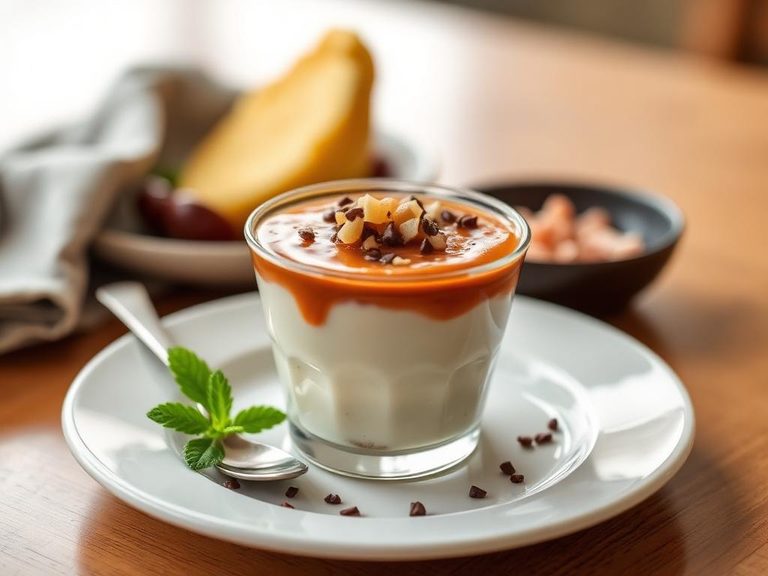
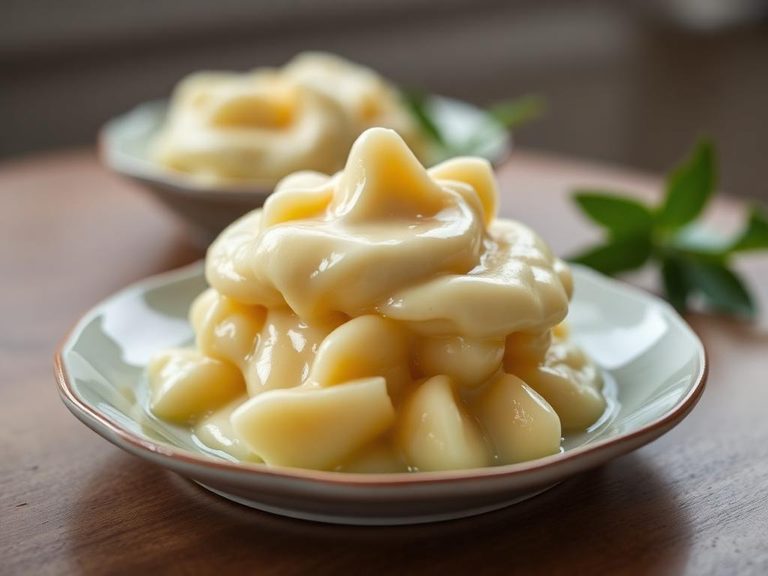
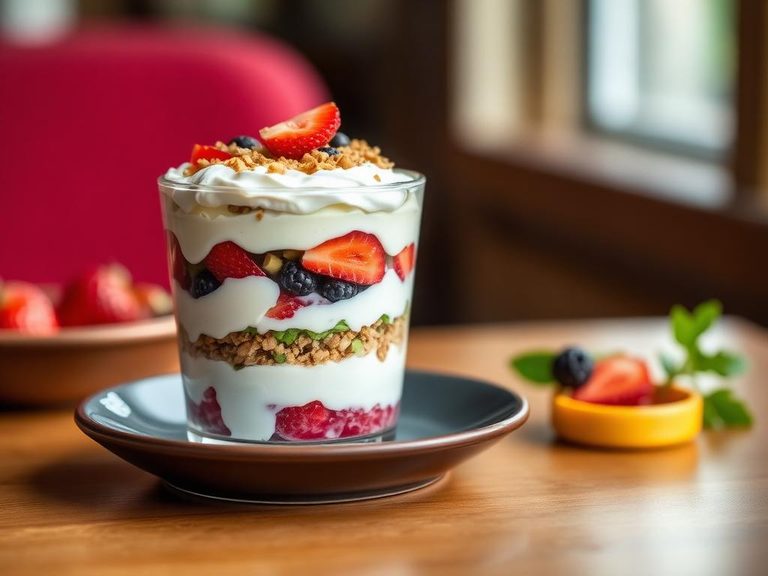
🍽️ Popular dishes
🌍 Where it's eaten
💡 Did you know?
The 'instant' set comes from pre-gelatinized starch and phosphate salts in the mix, which react with milk proteins to form a gel without cooking.
Full nutrition (USDA data · scales with serving)
| Water | 6.8 g |
| Energy | 350 kcal |
| Energy | 1464 kj |
| Protein | 0.81 g |
| Total lipid (fat) | 0.90 g |
| Ash | 6.8 g |
| Carbohydrate, by difference | 84.7 g |
| Fiber, total dietary | 0.80 g |
| Total Sugars | 0.90 g |
| Calcium, Ca | 143 mg |
| Iron, Fe | 0.38 mg |
| Magnesium, Mg | 5.0 mg |
| Phosphorus, P | 2368 mg |
| Potassium, K | 30.0 mg |
| Sodium, Na | 3750 mg |
| Zinc, Zn | 0.10 mg |
| Copper, Cu | 0.04 mg |
| Manganese, Mn | 0.04 mg |
| Selenium, Se | 0.80 ug |
| Vitamin C, total ascorbic acid | 0.00 mg |
| Thiamin | 0.01 mg |
| Riboflavin | 0.02 mg |
| Niacin | 0.01 mg |
| Pantothenic acid | 0.05 mg |
| Vitamin B-6 | 0.01 mg |
| Folate, total | 1.0 ug |
| Folic acid | 0.00 ug |
| Folate, food | 1.0 ug |
| Folate, DFE | 1.0 ug |
| Choline, total | 1.1 mg |
| Vitamin B-12 | 0.05 ug |
| Vitamin B-12, added | 0.00 ug |
| Vitamin A, RAE | 0.00 ug |
| Retinol | 0.00 ug |
| Carotene, beta | 0.00 ug |
| Carotene, alpha | 0.00 ug |
| Cryptoxanthin, beta | 0.00 ug |
| Vitamin A, IU | 0.00 iu |
| Lycopene | 0.00 ug |
| Lutein + zeaxanthin | 0.00 ug |
| Vitamin E (alpha-tocopherol) | 0.08 mg |
| Vitamin E, added | 0.00 mg |
| Vitamin D (D2 + D3), International Units | 0.00 iu |
| Vitamin D (D2 + D3) | 0.00 ug |
| Vitamin K (phylloquinone) | 1.7 ug |
| Alcohol, ethyl | 0.00 g |
| Caffeine | 0.00 mg |
| Theobromine | 0.00 mg |
Fat & fatty acid profile (per 100g)
| Fatty acids, total saturated | 0.10 g |
| SFA 4:0 | 0.00 g |
| SFA 6:0 | 0.00 g |
| SFA 8:0 | 0.00 g |
| SFA 10:0 | 0.00 g |
| SFA 12:0 | 0.00 g |
| SFA 14:0 | 0.00 g |
| SFA 16:0 | 0.08 g |
| SFA 18:0 | 0.02 g |
| Fatty acids, total monounsaturated | 0.12 g |
| MUFA 16:1 | 0.00 g |
| MUFA 18:1 | 0.11 g |
| MUFA 20:1 | 0.00 g |
| MUFA 22:1 | 0.00 g |
| Fatty acids, total polyunsaturated | 0.43 g |
| PUFA 18:2 | 0.39 g |
| PUFA 18:3 | 0.05 g |
| PUFA 18:4 | 0.00 g |
| PUFA 20:4 | 0.00 g |
| PUFA 20:5 n-3 (EPA) | 0.00 g |
| PUFA 22:5 n-3 (DPA) | 0.00 g |
| PUFA 22:6 n-3 (DHA) | 0.00 g |
| Cholesterol | 0.00 mg |
Amino acid profile (per 100g)
Estimated from Puddings, rice, dry mix, prepared with 2% milk — USDA does not publish this profile for Puddings.
| Tryptophan | 0.04 g |
| Threonine | 0.13 g |
| Isoleucine | 0.17 g |
| Leucine | 0.27 g |
| Lysine | 0.22 g |
| Methionine | 0.07 g |
| Cystine | 0.03 g |
| Phenylalanine | 0.14 g |
| Tyrosine | 0.14 g |
| Valine | 0.19 g |
| Arginine | 0.10 g |
| Histidine | 0.07 g |
| Alanine | 0.10 g |
| Aspartic acid | 0.21 g |
| Glutamic acid | 0.58 g |
| Glycine | 0.06 g |
| Proline | 0.27 g |
| Serine | 0.15 g |
FAQ
How is it different from regular instant pudding mix?
This specific variant is formulated to be 'low calorie,' meaning it typically uses sugar substitutes or less sugar and may contain thickeners like maltodextrin instead of some starch, reducing calories and fat compared to standard versions.
Can I use water instead of milk?
While you can, using water will result in a much thinner, less creamy texture and a significant loss of flavor and protein. Milk (dairy or plant-based) is strongly recommended for the intended taste and mouthfeel.
Why does my pudding sometimes not set properly?
Common reasons include not whisking the mix with the cold milk long enough (usually 2 minutes), using warm milk, or not letting it chill in the refrigerator for the full recommended time (typically 5-10 minutes).
Nutrient density (calculated · NRF9.3)
Nutrient Rich Foods index: beneficial nutrients (protein, fiber, vitamins, minerals) minus saturated fat, added sugar & sodium, per 100 kcal.
NRF9.3 index — Fulgoni, Keast & Drewnowski, 2009. Computed from USDA nutrients.
Weight-loss friendliness (composite index)
Energy density 3.50 kcal/g · 1% calories from protein · 0.8 g fiber · 0.9 g sugar per 100 g.
Composite of energy density (Rolls et al., 1999), protein & fiber satiety, minus sugar. A calculated heuristic — ranks satiety-per-calorie, not a clinical measure.
Dietary load (calculated from USDA values)
Potential renal acid load. Positive = acid-forming, negative = alkaline-forming.
Sodium-to-potassium ratio: 125.00 (lower is better — aim for ≤ 1)
Sodium:potassium per WHO potassium guidance. Computed from USDA nutrients.