

Pork, chop, lean and fat eaten
Common food
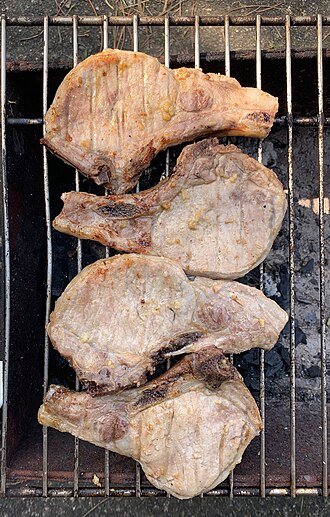
Photo: Wikipedia
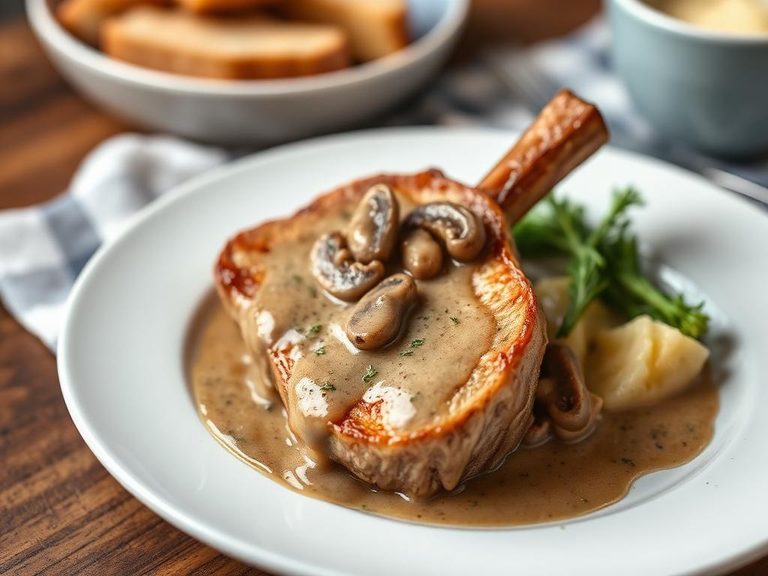
A pork chop is a classic cut from the loin, prized for its satisfying balance of tender, juicy meat and a flavorful cap of fat. When cooked properly, it offers a rich, savory taste with a slightly firmer texture than other cuts, making it a hearty centerpiece for any meal. Nutritionally, it's a powerhouse of complete protein, providing nearly 27 grams per 100g with virtually no carbohydrates.
Calorie split: 57% protein · 0% carbs · 43% fat
↓ Full nutrition💚 Why it's loved
People adore pork chops for their robust, savory flavor that serves as a perfect canvas for a wide array of seasonings, from simple salt and pepper to complex marinades. Their cultural significance in home cooking, from American comfort food to European feasts, makes them a nostalgic and versatile staple.
⚠️ Watch-outs & how to enjoy it better
The attached fat, while flavorful, adds saturated fat and calories, which those monitoring heart health or total intake should consider. Pork is also a common food for some, and overcooking can lead to a dry, tough texture. To counteract, trim excess visible fat before cooking, use moist-heat methods like braising or brining to ensure juiciness, and pair with fiber-rich vegetables to balance the meal.
Key benefits
- Excellent source of complete, high-quality protein for muscle maintenance.
- Very low in carbohydrates, suitable for low-carb and ketogenic diets.
- Provides essential B vitamins, particularly thiamine (B1) and niacin (B3).
- Rich in minerals like selenium, phosphorus, and zinc.
🍽️ Popular dishes
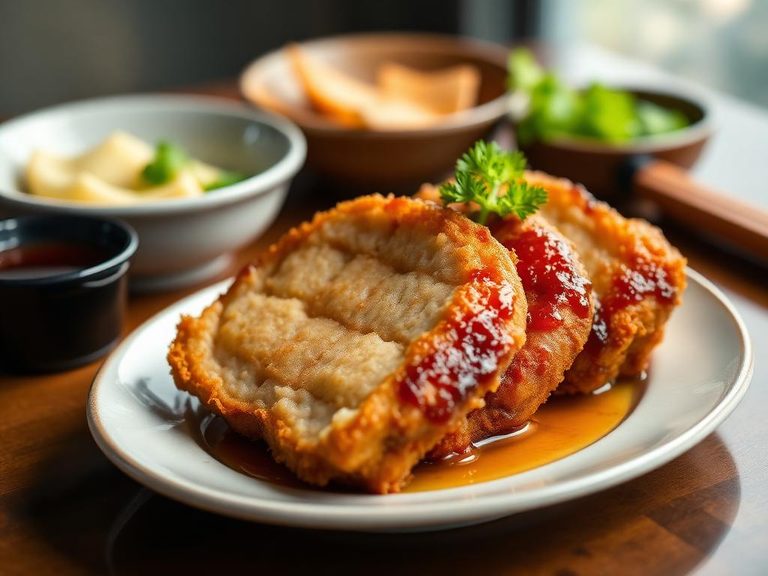

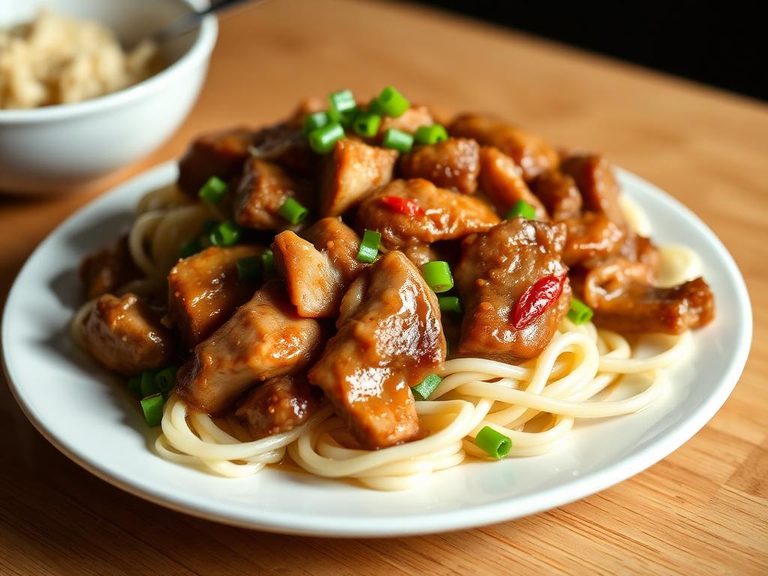
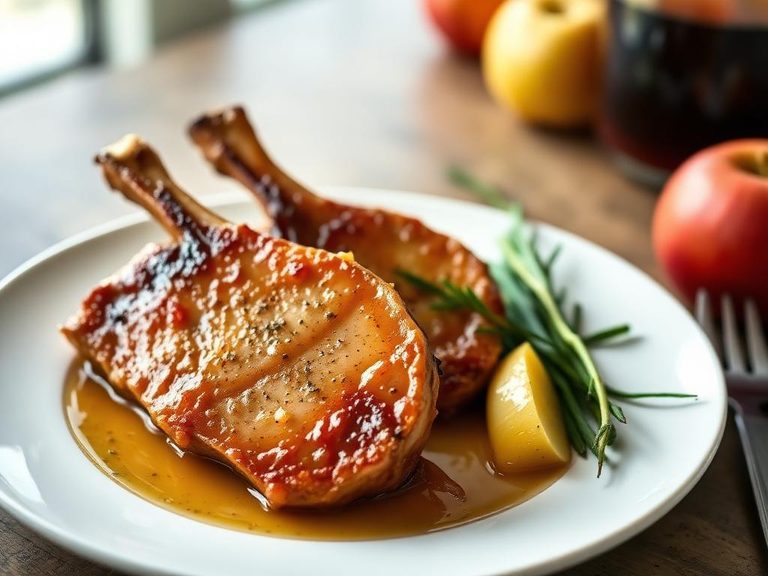

🌍 Where it's eaten
💡 Did you know?
The 'chop' in pork chop doesn't refer to a chopping motion, but likely derives from the Old English word 'ceap,' meaning 'a purchase' or 'trade,' reflecting its status as a marketable cut of meat.
Full nutrition (USDA data · scales with serving)
| Water | 61.9 g |
| Energy | 195 kcal |
| Protein | 27.0 g |
| Total lipid (fat) | 9.2 g |
| Carbohydrate, by difference | 0.01 g |
| Fiber, total dietary | 0.00 g |
| Total Sugars | 0.00 g |
| Calcium, Ca | 8.0 mg |
| Iron, Fe | 0.61 mg |
| Magnesium, Mg | 26.0 mg |
| Phosphorus, P | 252 mg |
| Potassium, K | 422 mg |
| Sodium, Na | 351 mg |
| Zinc, Zn | 2.0 mg |
| Copper, Cu | 0.07 mg |
| Selenium, Se | 46.1 ug |
| Vitamin C, total ascorbic acid | 0.00 mg |
| Thiamin | 0.63 mg |
| Riboflavin | 0.20 mg |
| Niacin | 8.3 mg |
| Vitamin B-6 | 0.62 mg |
| Folate, total | 0.00 ug |
| Folic acid | 0.00 ug |
| Folate, food | 0.00 ug |
| Folate, DFE | 0.00 ug |
| Choline, total | 75.7 mg |
| Vitamin B-12 | 0.63 ug |
| Vitamin B-12, added | 0.00 ug |
| Vitamin A, RAE | 1.0 ug |
| Retinol | 1.0 ug |
| Carotene, beta | 0.00 ug |
| Carotene, alpha | 0.00 ug |
| Cryptoxanthin, beta | 0.00 ug |
| Lycopene | 0.00 ug |
| Lutein + zeaxanthin | 0.00 ug |
| Vitamin E (alpha-tocopherol) | 0.20 mg |
| Vitamin E, added | 0.00 mg |
| Vitamin D (D2 + D3) | 0.60 ug |
| Vitamin K (phylloquinone) | 0.00 ug |
| Alcohol, ethyl | 0.00 g |
| Caffeine | 0.00 mg |
| Theobromine | 0.00 mg |
Fat & fatty acid profile (per 100g)
| Fatty acids, total saturated | 3.2 g |
| SFA 4:0 | 0.00 g |
| SFA 6:0 | 0.00 g |
| SFA 8:0 | 0.00 g |
| SFA 10:0 | 0.01 g |
| SFA 12:0 | 0.01 g |
| SFA 14:0 | 0.12 g |
| SFA 16:0 | 2.0 g |
| SFA 18:0 | 1.0 g |
| Fatty acids, total monounsaturated | 3.9 g |
| MUFA 16:1 | 0.22 g |
| MUFA 18:1 | 3.6 g |
| MUFA 20:1 | 0.06 g |
| MUFA 22:1 | 0.00 g |
| Fatty acids, total polyunsaturated | 1.1 g |
| PUFA 18:2 | 0.96 g |
| PUFA 18:3 | 0.04 g |
| PUFA 18:4 | 0.00 g |
| PUFA 20:4 | 0.07 g |
| PUFA 20:5 n-3 (EPA) | 0.00 g |
| PUFA 22:5 n-3 (DPA) | 0.00 g |
| PUFA 22:6 n-3 (DHA) | 0.00 g |
| Cholesterol | 72.0 mg |
Amino acid profile (per 100g)
Estimated from Pork, cured, salt pork, raw — USDA does not publish this profile for Pork.
| Tryptophan | 0.02 g |
| Threonine | 0.17 g |
| Isoleucine | 0.13 g |
| Leucine | 0.35 g |
| Lysine | 0.42 g |
| Methionine | 0.07 g |
| Cystine | 0.04 g |
| Phenylalanine | 0.19 g |
| Tyrosine | 0.08 g |
| Valine | 0.24 g |
| Arginine | 0.52 g |
| Histidine | 0.06 g |
| Alanine | 0.28 g |
| Aspartic acid | 0.42 g |
| Glutamic acid | 0.69 g |
| Glycine | 0.36 g |
| Proline | 0.27 g |
| Serine | 0.19 g |
FAQ
How do I prevent a pork chop from becoming dry and tough?
The key is not to overcook it. Use a meat thermometer and remove it from heat when the internal temperature reaches 145°F (63°C), followed by a rest period. Brining or marinating beforehand also helps retain moisture.
What's the difference between a pork chop and a pork loin?
A pork chop is a single, individual serving cut *from* the pork loin, which is the large, long muscle running along the pig's back. The loin is the whole roast; the chop is a slice of it.
Is the fat on a pork chop edible?
Yes, the fat cap is edible and adds significant flavor and juiciness during cooking. However, for dietary reasons, you can trim some of it away before or after cooking.
Nutrient density (calculated · NRF9.3)
Nutrient Rich Foods index: beneficial nutrients (protein, fiber, vitamins, minerals) minus saturated fat, added sugar & sodium, per 100 kcal.
NRF9.3 index — Fulgoni, Keast & Drewnowski, 2009. Computed from USDA nutrients.
Weight-loss friendliness (composite index)
Energy density 1.95 kcal/g · 55% calories from protein · 0.0 g fiber · 0.0 g sugar per 100 g.
Composite of energy density (Rolls et al., 1999), protein & fiber satiety, minus sugar. A calculated heuristic — ranks satiety-per-calorie, not a clinical measure.
Dietary load (calculated from USDA values)
Potential renal acid load. Positive = acid-forming, negative = alkaline-forming.
Sodium-to-potassium ratio: 0.83 (lower is better — aim for ≤ 1)
Sodium:potassium per WHO potassium guidance. Computed from USDA nutrients.