

Pork, chop, coated, lean and fat eaten
Common food

Photo: Wikipedia
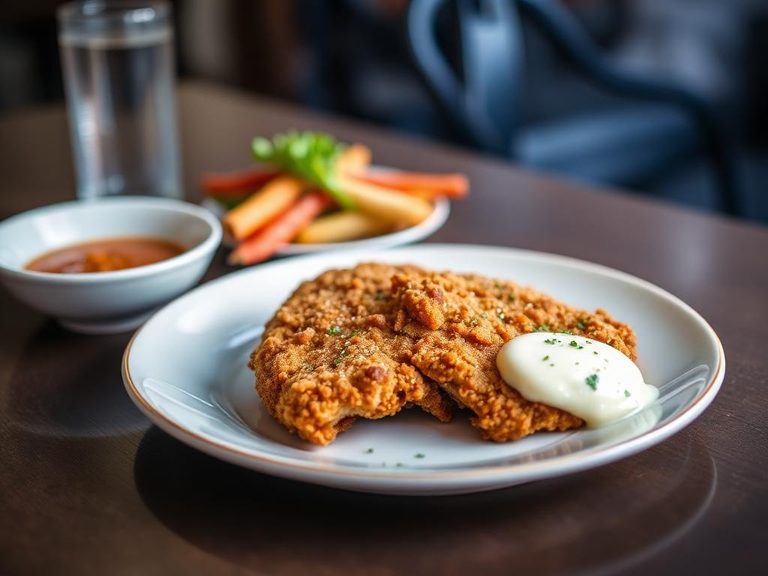
A classic breaded and fried pork cutlet, offering a satisfying crunch that gives way to tender, savory meat. It's a protein-packed centerpiece, delivering over 25 grams of protein per 100 grams while remaining relatively lean. The golden coating provides a delightful textural contrast, making it a universal comfort food.
Calorie split: 45% protein · 13% carbs · 42% fat
↓ Full nutrition💚 Why it's loved
People adore it for the perfect marriage of a crispy, seasoned crust and juicy, flavorful pork inside. Its versatility allows it to be dressed up with sauces or enjoyed simply, making it a staple in family dinners and pub menus alike.
⚠️ Watch-outs & how to enjoy it better
The breading can significantly increase the carbohydrate and fat content, especially if deep-fried, which may not suit low-carb diets or those monitoring fat intake. To counteract this, opt for oven-baked or air-fried versions, and pair it with non-starchy vegetables like steamed broccoli or a fresh salad to balance the meal and add fiber.
Key benefits
- Excellent source of high-quality protein for muscle maintenance.
- Provides essential B vitamins like thiamine and niacin for energy metabolism.
- Contains important minerals such as zinc and selenium.
- Offers a satisfying, calorie-controlled meal option when portioned mindfully.
🍽️ Popular dishes
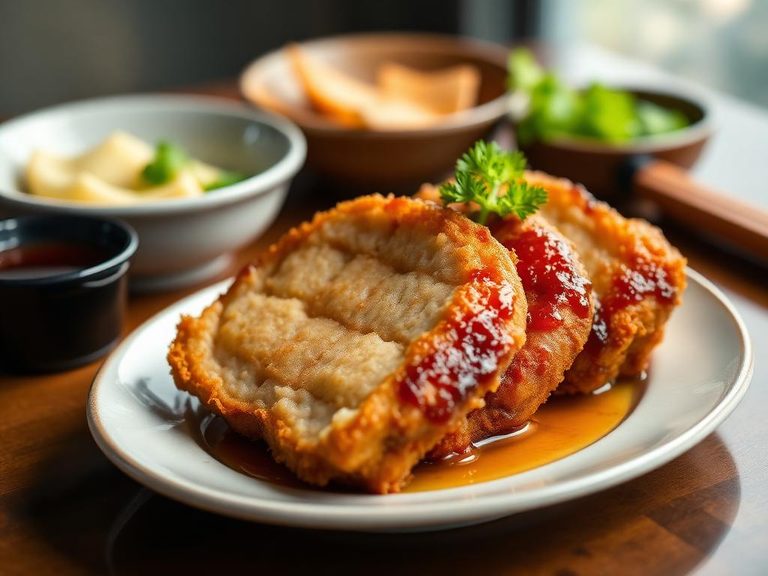
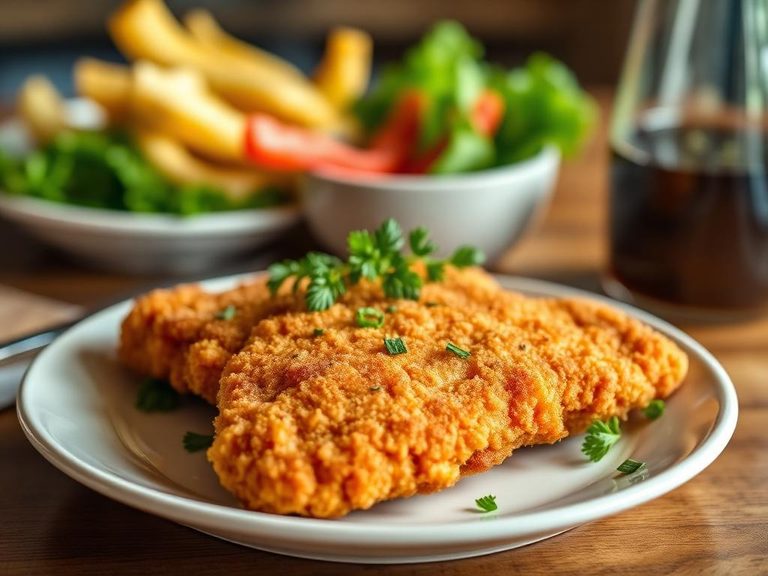
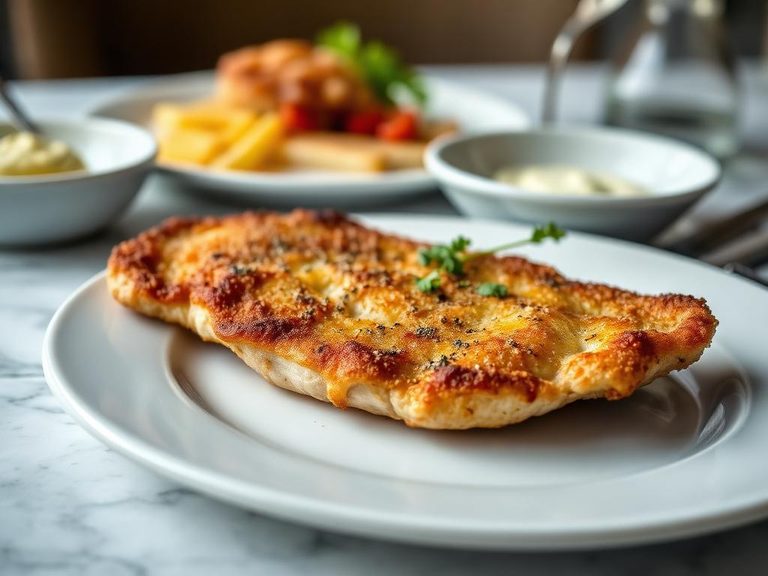
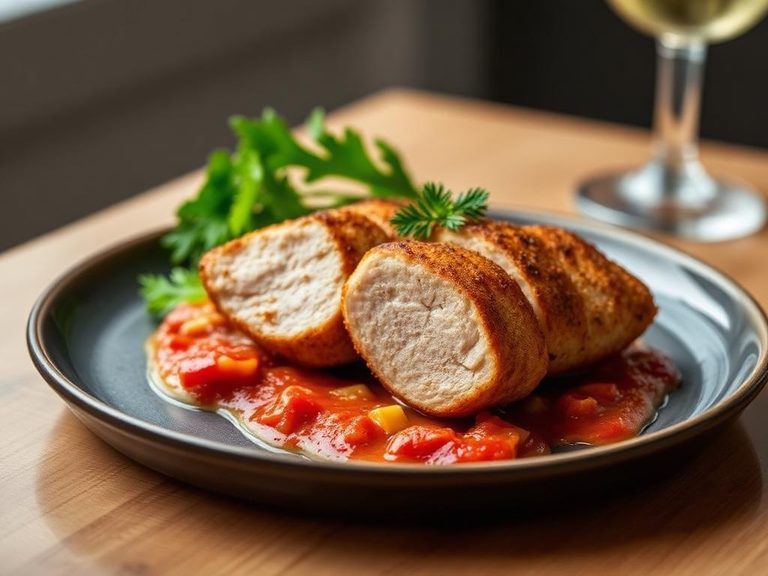
🌍 Where it's eaten
💡 Did you know?
The Japanese dish Tonkatsu, a breaded pork cutlet, was directly inspired by European schnitzel but adapted with panko breadcrumbs for a lighter, crispier texture that became a national favorite.
Full nutrition (USDA data · scales with serving)
| Water | 55.1 g |
| Energy | 229 kcal |
| Protein | 25.1 g |
| Total lipid (fat) | 10.6 g |
| Carbohydrate, by difference | 7.2 g |
| Fiber, total dietary | 0.40 g |
| Total Sugars | 0.62 g |
| Calcium, Ca | 26.0 mg |
| Iron, Fe | 1.0 mg |
| Magnesium, Mg | 28.0 mg |
| Phosphorus, P | 237 mg |
| Potassium, K | 390 mg |
| Sodium, Na | 409 mg |
| Zinc, Zn | 1.9 mg |
| Copper, Cu | 0.09 mg |
| Selenium, Se | 43.0 ug |
| Vitamin C, total ascorbic acid | 0.00 mg |
| Thiamin | 0.65 mg |
| Riboflavin | 0.22 mg |
| Niacin | 8.0 mg |
| Vitamin B-6 | 0.56 mg |
| Folate, total | 11.0 ug |
| Folic acid | 8.0 ug |
| Folate, food | 2.0 ug |
| Folate, DFE | 16.0 ug |
| Choline, total | 68.1 mg |
| Vitamin B-12 | 0.59 ug |
| Vitamin B-12, added | 0.00 ug |
| Vitamin A, RAE | 1.0 ug |
| Retinol | 1.0 ug |
| Carotene, beta | 0.00 ug |
| Carotene, alpha | 0.00 ug |
| Cryptoxanthin, beta | 0.00 ug |
| Lycopene | 0.00 ug |
| Lutein + zeaxanthin | 0.00 ug |
| Vitamin E (alpha-tocopherol) | 0.56 mg |
| Vitamin E, added | 0.00 mg |
| Vitamin D (D2 + D3) | 0.50 ug |
| Vitamin K (phylloquinone) | 2.7 ug |
| Alcohol, ethyl | 0.00 g |
| Caffeine | 0.00 mg |
| Theobromine | 0.00 mg |
Fat & fatty acid profile (per 100g)
| Fatty acids, total saturated | 3.2 g |
| SFA 4:0 | 0.00 g |
| SFA 6:0 | 0.00 g |
| SFA 8:0 | 0.00 g |
| SFA 10:0 | 0.01 g |
| SFA 12:0 | 0.00 g |
| SFA 14:0 | 0.10 g |
| SFA 16:0 | 2.0 g |
| SFA 18:0 | 1.0 g |
| Fatty acids, total monounsaturated | 4.3 g |
| MUFA 16:1 | 0.20 g |
| MUFA 18:1 | 4.1 g |
| MUFA 20:1 | 0.07 g |
| MUFA 22:1 | 0.00 g |
| Fatty acids, total polyunsaturated | 2.0 g |
| PUFA 18:2 | 1.7 g |
| PUFA 18:3 | 0.14 g |
| PUFA 18:4 | 0.00 g |
| PUFA 20:4 | 0.06 g |
| PUFA 20:5 n-3 (EPA) | 0.00 g |
| PUFA 22:5 n-3 (DPA) | 0.00 g |
| PUFA 22:6 n-3 (DHA) | 0.00 g |
| Cholesterol | 63.0 mg |
Amino acid profile (per 100g)
Estimated from Pork, cured, salt pork, raw — USDA does not publish this profile for Pork.
| Tryptophan | 0.02 g |
| Threonine | 0.17 g |
| Isoleucine | 0.13 g |
| Leucine | 0.35 g |
| Lysine | 0.42 g |
| Methionine | 0.07 g |
| Cystine | 0.04 g |
| Phenylalanine | 0.19 g |
| Tyrosine | 0.08 g |
| Valine | 0.24 g |
| Arginine | 0.52 g |
| Histidine | 0.06 g |
| Alanine | 0.28 g |
| Aspartic acid | 0.42 g |
| Glutamic acid | 0.69 g |
| Glycine | 0.36 g |
| Proline | 0.27 g |
| Serine | 0.19 g |
FAQ
Is this a lean cut of meat?
The description 'lean and fat eaten' means it's a cut like a loin chop, which is relatively lean, but the nutritional values include the fat that remains after cooking. The breading and cooking method add more fat than the meat alone.
How can I make it healthier at home?
Use a light coating of whole-wheat panko, bake or air-fry instead of deep-frying, and use a cooking spray. This reduces the fat and calorie content significantly while maintaining crunch.
What's the best way to reheat leftovers without losing crispiness?
Reheat in an oven or air fryer at 375°F (190°C) for 5-10 minutes. Avoid the microwave, which will make the coating soggy.
Nutrient density (calculated · NRF9.3)
Nutrient Rich Foods index: beneficial nutrients (protein, fiber, vitamins, minerals) minus saturated fat, added sugar & sodium, per 100 kcal.
NRF9.3 index — Fulgoni, Keast & Drewnowski, 2009. Computed from USDA nutrients.
Weight-loss friendliness (composite index)
Energy density 2.29 kcal/g · 44% calories from protein · 0.4 g fiber · 0.6 g sugar per 100 g.
Composite of energy density (Rolls et al., 1999), protein & fiber satiety, minus sugar. A calculated heuristic — ranks satiety-per-calorie, not a clinical measure.
Dietary load (calculated from USDA values)
Potential renal acid load. Positive = acid-forming, negative = alkaline-forming.
Sodium-to-potassium ratio: 1.05 (lower is better — aim for ≤ 1)
Sodium:potassium per WHO potassium guidance. Computed from USDA nutrients.