

Schnitzel (German)

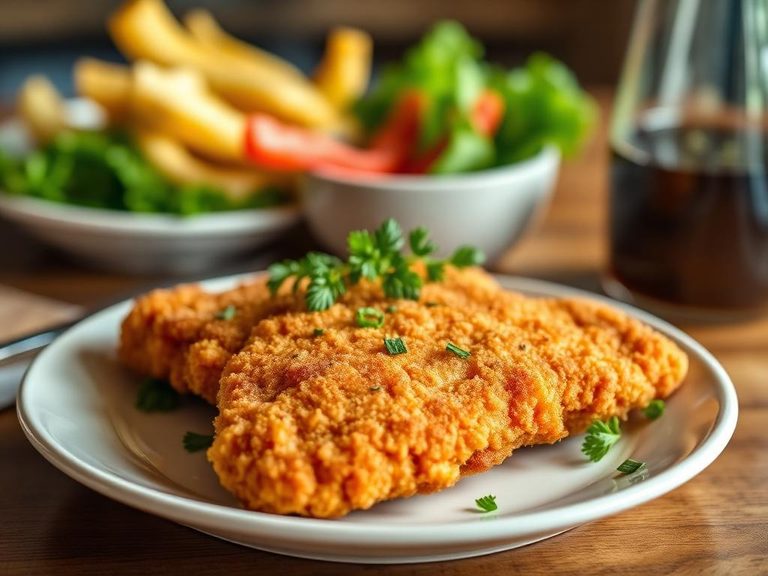
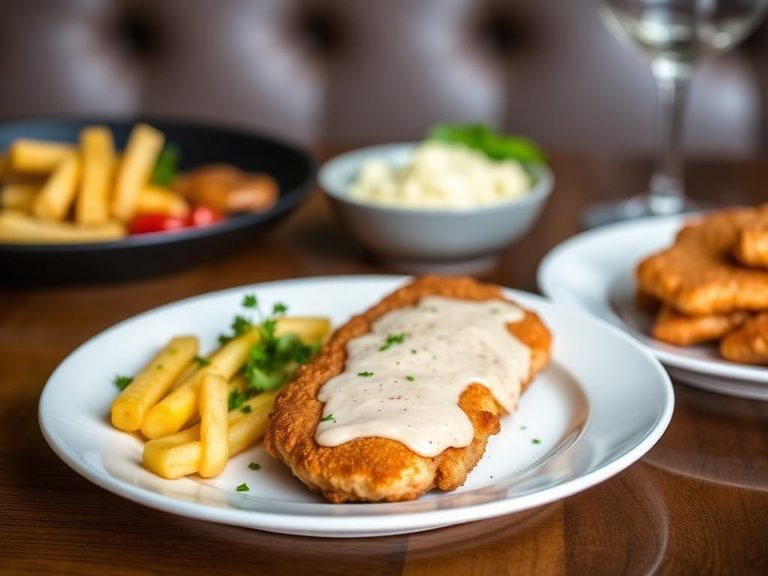
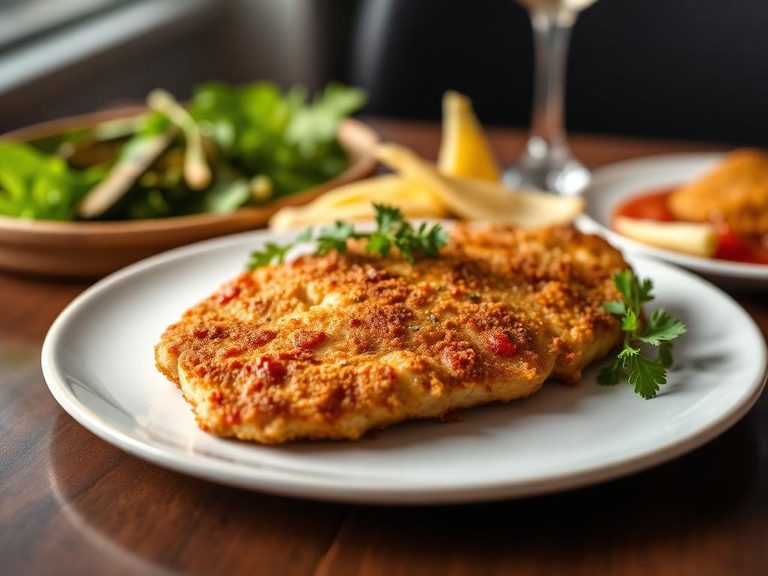
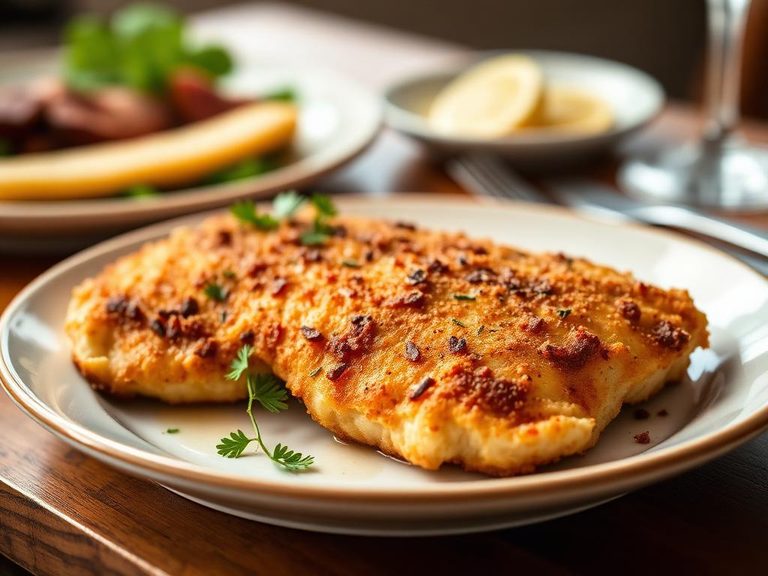
Schnitzel is a classic German dish consisting of a thin slice of meat, typically veal or pork, that is breaded and fried to a golden, crispy perfection. It is a staple of German cuisine, often served with a squeeze of lemon, potato salad, or fries, and is celebrated for its simple yet satisfying preparation.
🍽️ Nutrition at a glance
Schnitzel is high in protein from the meat and fat from the frying process, with a moderate amount of carbohydrates from the breading. A typical serving provides around 400-600 calories, along with essential nutrients like iron, zinc, and B vitamins.
Nutrition breakdown
| Calories | 430 kcal |
| Protein | 28 g |
| Carbs | 18 g |
| Fat | 28 g |
| Fiber | 1 g |
| Sugar | 1 g |
| Sodium | 650 mg |
| Iron | 2.5 mg |
| Zinc | 4.0 mg |
| Vitamin B12 | 1.2 µg |
| Niacin (B3) | 6.0 mg |
| Phosphorus | 220 mg |
| Selenium | 25 µg |
| Vitamin B6 | 0.4 mg |
| Potassium | 350 mg |
Per 1 schnitzel (150 g) · estimated, varies by recipe
💡 What's interesting
Culturally, schnitzel is a symbol of German comfort food, with regional variations like the Wiener Schnitzel (made with veal) being a protected culinary heritage. Nutritionally, its breading can help lock in the meat's juices, making it a flavorful way to enjoy lean protein when prepared with mindful portioning.
🍽️ Related dishes




AI estimate may be inaccurate · Terms