

Potato salad, home-prepared
Whole food · Vegetables and Vegetable Products
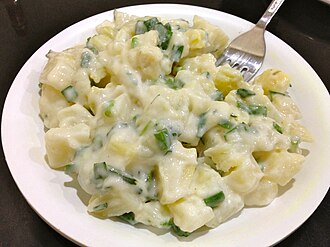
Photo: Wikipedia
A creamy, tangy, and comforting side dish made from boiled potato chunks tossed in a mayonnaise or mustard-based dressing, often studded with celery, onion, and hard-boiled egg. Its texture is a delightful contrast of soft, starchy potato and crisp, fresh vegetables, with a rich, savory flavor profile. Nutritionally, it provides a moderate energy boost from its carbohydrate and fat content, with a small amount of protein.
Calorie split: 8% protein · 35% carbs · 57% fat
↓ Full nutrition💚 Why it's loved
People adore potato salad for its creamy, comforting texture and its ability to complement a wide range of main dishes, from grilled meats to sandwiches. It's a nostalgic staple at barbecues, picnics, and family gatherings, evoking a sense of tradition and shared meals.
⚠️ Watch-outs & how to enjoy it better
The high fat and carbohydrate content can be a concern for those managing blood sugar or calorie intake, and some recipes are high in sodium. To counteract this, opt for a lighter dressing using Greek yogurt or olive oil, and pair the salad with a lean protein like grilled chicken or a large side of leafy greens to balance the meal and slow digestion.
Key benefits
- Provides quick energy from starchy carbohydrates.
- Contains potassium, an essential mineral for fluid balance.
- The fat content aids in the absorption of fat-soluble vitamins.
- A versatile base that can be customized with many add-ins.
- A classic, satisfying comfort food for many cultures.
🍽️ Popular dishes
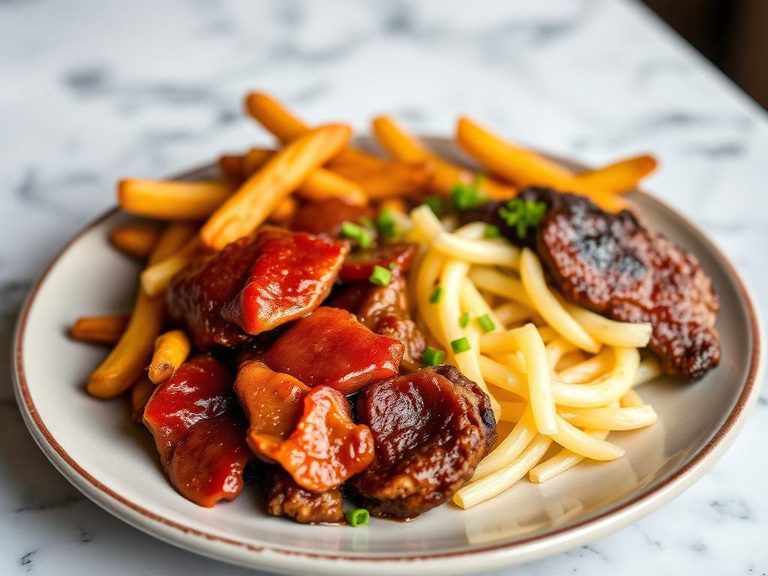
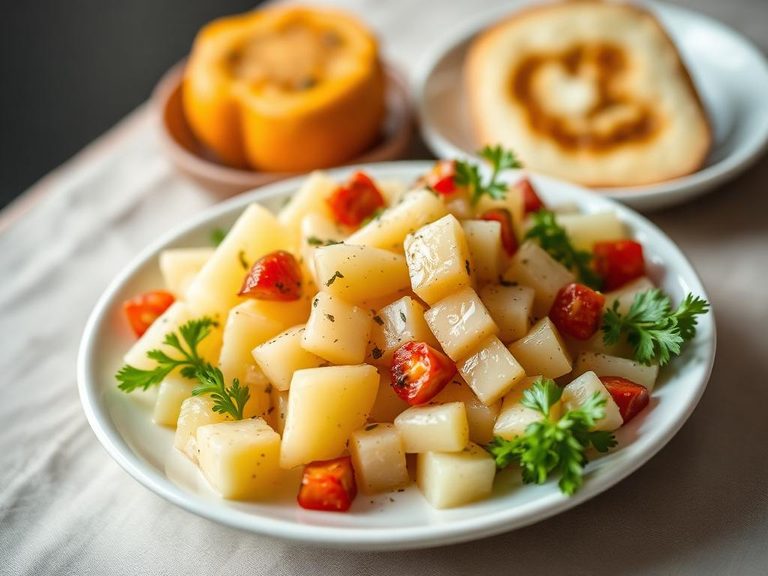
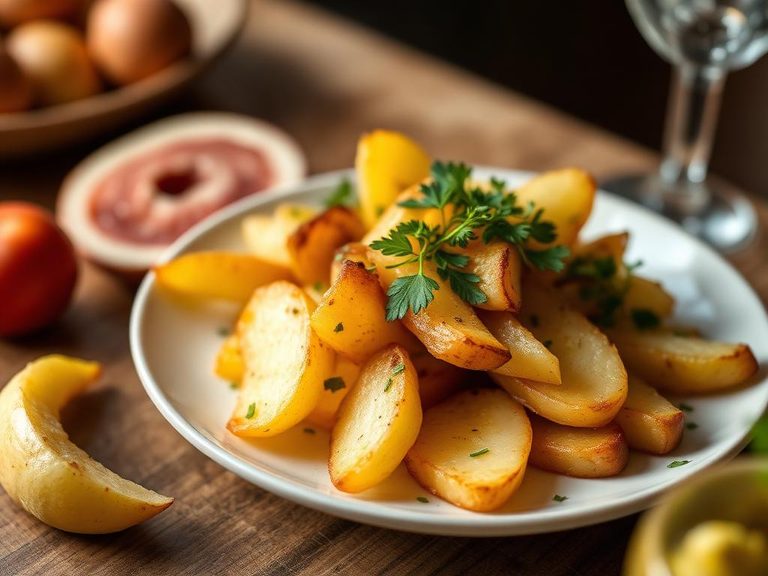
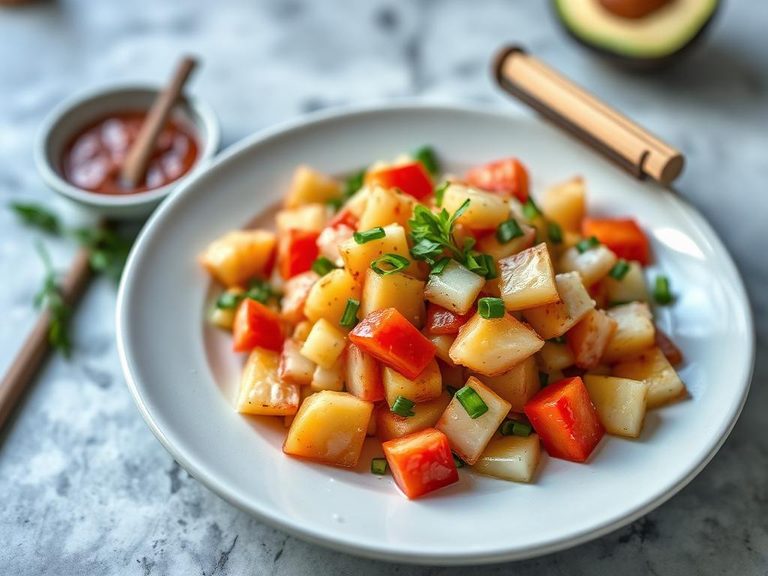
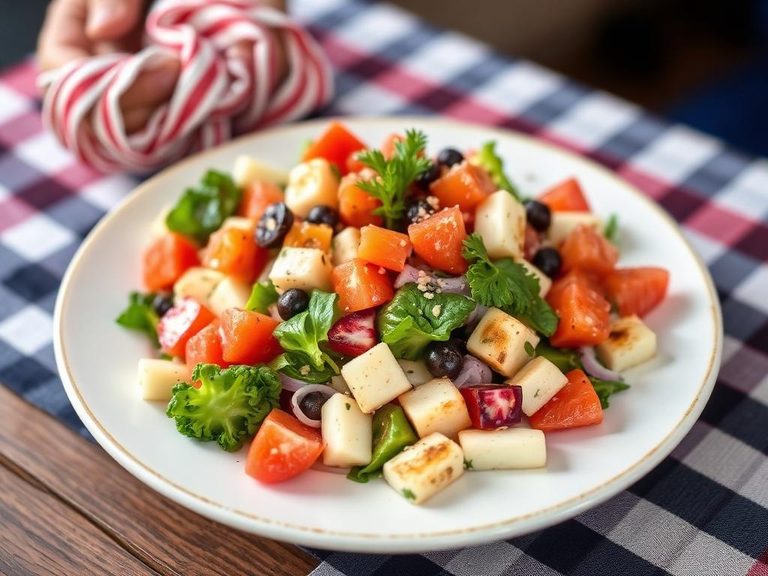
🌍 Where it's eaten
💡 Did you know?
The earliest known recipe for potato salad appeared in a 1860s German cookbook, where it was typically dressed with vinegar and oil, not the mayonnaise that became popular in the United States in the early 20th century.
Full nutrition (USDA data · scales with serving)
| Water | 76.0 g |
| Energy | 143 kcal |
| Energy | 598 kj |
| Protein | 2.7 g |
| Total lipid (fat) | 8.2 g |
| Ash | 1.9 g |
| Carbohydrate, by difference | 11.2 g |
| Fiber, total dietary | 1.3 g |
| Calcium, Ca | 19.0 mg |
| Iron, Fe | 0.65 mg |
| Magnesium, Mg | 15.0 mg |
| Phosphorus, P | 52.0 mg |
| Potassium, K | 254 mg |
| Sodium, Na | 529 mg |
| Zinc, Zn | 0.31 mg |
| Copper, Cu | 0.12 mg |
| Manganese, Mn | 0.10 mg |
| Selenium, Se | 4.1 ug |
| Vitamin C, total ascorbic acid | 10.0 mg |
| Thiamin | 0.08 mg |
| Riboflavin | 0.06 mg |
| Niacin | 0.89 mg |
| Pantothenic acid | 0.53 mg |
| Vitamin B-6 | 0.14 mg |
| Folate, total | 7.0 ug |
| Folic acid | 0.00 ug |
| Folate, food | 7.0 ug |
| Folate, DFE | 7.0 ug |
| Vitamin B-12 | 0.00 ug |
| Vitamin A, RAE | 32.0 ug |
| Retinol | 29.0 ug |
| Carotene, beta | 36.0 ug |
| Vitamin A, IU | 157 iu |
| Vitamin D (D2 + D3), International Units | 0.00 iu |
| Vitamin D (D2 + D3) | 0.00 ug |
Fat & fatty acid profile (per 100g)
| Fatty acids, total saturated | 1.4 g |
| SFA 10:0 | 0.00 g |
| SFA 12:0 | 0.01 g |
| SFA 14:0 | 0.01 g |
| SFA 16:0 | 1.0 g |
| SFA 18:0 | 0.37 g |
| Fatty acids, total monounsaturated | 2.5 g |
| MUFA 16:1 | 0.05 g |
| MUFA 18:1 | 2.4 g |
| MUFA 20:1 | 0.01 g |
| Fatty acids, total polyunsaturated | 3.7 g |
| PUFA 18:2 | 3.3 g |
| PUFA 18:3 | 0.37 g |
| Cholesterol | 68.0 mg |
Amino acid profile (per 100g)
| Tryptophan | 0.04 g |
| Threonine | 0.12 g |
| Isoleucine | 0.14 g |
| Leucine | 0.20 g |
| Lysine | 0.17 g |
| Methionine | 0.07 g |
| Cystine | 0.05 g |
| Phenylalanine | 0.14 g |
| Tyrosine | 0.10 g |
| Valine | 0.17 g |
| Arginine | 0.15 g |
| Histidine | 0.06 g |
| Alanine | 0.12 g |
| Aspartic acid | 0.42 g |
| Glutamic acid | 0.39 g |
| Glycine | 0.09 g |
| Proline | 0.10 g |
| Serine | 0.16 g |
FAQ
Is potato salad a healthy food?
It can be part of a balanced diet. Its healthiness depends heavily on the recipe—creamy, mayo-based versions are higher in fat and calories, while vinegar-based or lighter versions are lower. It provides carbohydrates for energy and some nutrients like potassium.
How long does homemade potato salad last?
When stored in an airtight container in the refrigerator, it is generally safe to eat for 3 to 5 days. It should be discarded if left out at room temperature for more than 2 hours.
Can I make potato salad without mayonnaise?
Absolutely. Many delicious versions use a dressing of olive oil and vinegar, mustard, or a combination of Greek yogurt and herbs for a lighter, tangier flavor.
Nutrient density (calculated · NRF9.3)
Nutrient Rich Foods index: beneficial nutrients (protein, fiber, vitamins, minerals) minus saturated fat, added sugar & sodium, per 100 kcal.
NRF9.3 index — Fulgoni, Keast & Drewnowski, 2009. Computed from USDA nutrients.
Weight-loss friendliness (composite index)
Energy density 1.43 kcal/g · 7% calories from protein · 1.3 g fiber · 0.0 g sugar per 100 g.
Composite of energy density (Rolls et al., 1999), protein & fiber satiety, minus sugar. A calculated heuristic — ranks satiety-per-calorie, not a clinical measure.
Dietary load (calculated from USDA values)
Potential renal acid load. Positive = acid-forming, negative = alkaline-forming.
Sodium-to-potassium ratio: 2.08 (lower is better — aim for ≤ 1)
Sodium:potassium per WHO potassium guidance. Computed from USDA nutrients.