

Pork, chop, coated, lean only eaten
Common food

Photo: Wikipedia
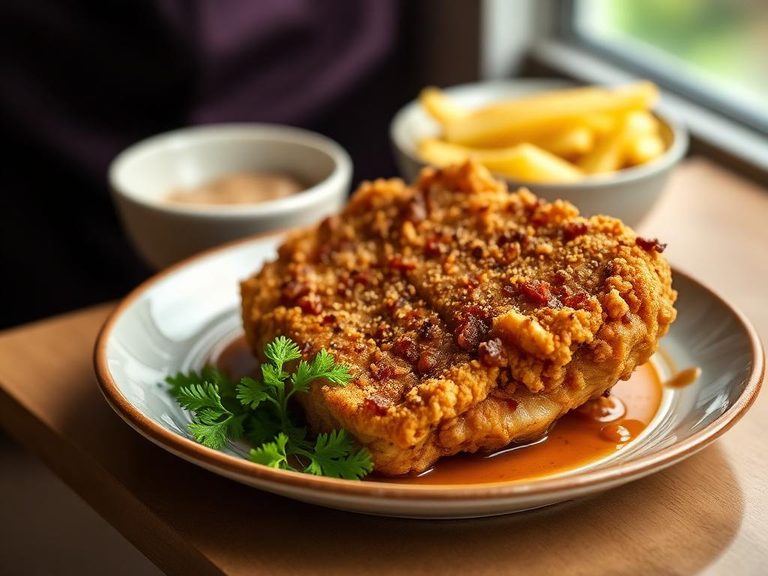
A lean pork chop, typically bone-in or boneless, that has been coated in a seasoned breading or batter and cooked until crisp. The exterior offers a satisfying crunch, while the interior meat is tender, juicy, and savory. It provides a substantial protein boost with a moderate calorie count, especially when the coating is light.
Calorie split: 51% protein · 14% carbs · 34% fat
↓ Full nutrition💚 Why it's loved
People love it for the classic textural contrast between the crispy, flavorful coating and the tender, juicy meat inside. It's a versatile comfort food that can be baked, pan-fried, or air-fried, fitting into many casual and home-cooked meals.
⚠️ Watch-outs & how to enjoy it better
The coating can absorb significant oil during frying, increasing fat and calorie content, and may be high in sodium depending on the seasoning. To counteract this, opt for baking or air-frying instead of deep-frying, and pair it with a large side of non-starchy vegetables to balance the meal and add fiber.
Key benefits
- High in complete protein for muscle maintenance and satiety.
- Relatively low in carbohydrates compared to other breaded meats.
- Good source of B vitamins, particularly thiamine and B12.
- Lean cut provides essential minerals like selenium and phosphorus.
🍽️ Popular dishes
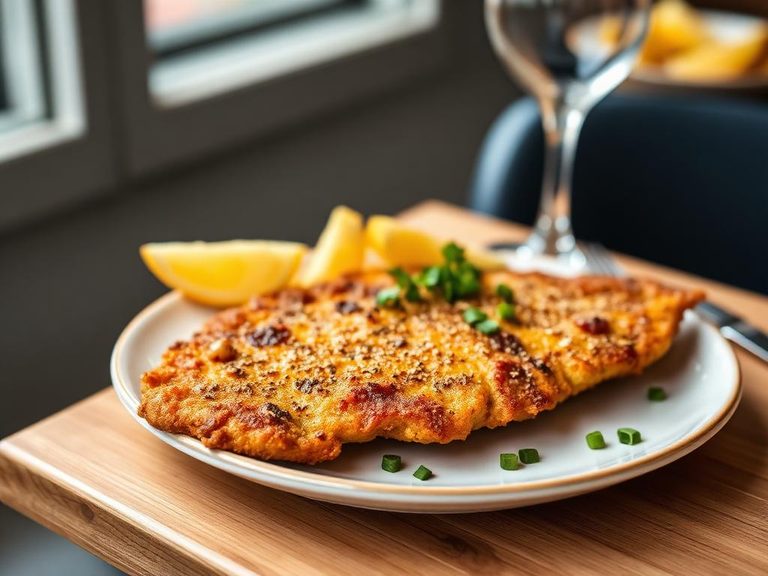
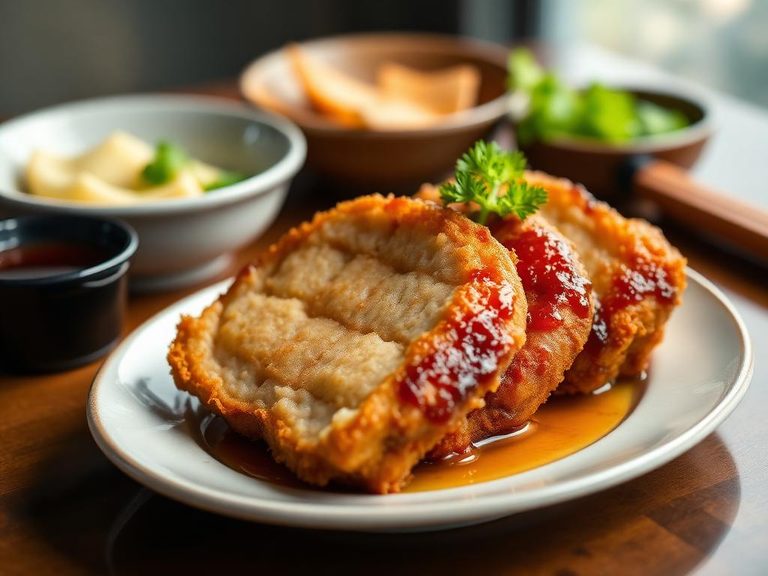
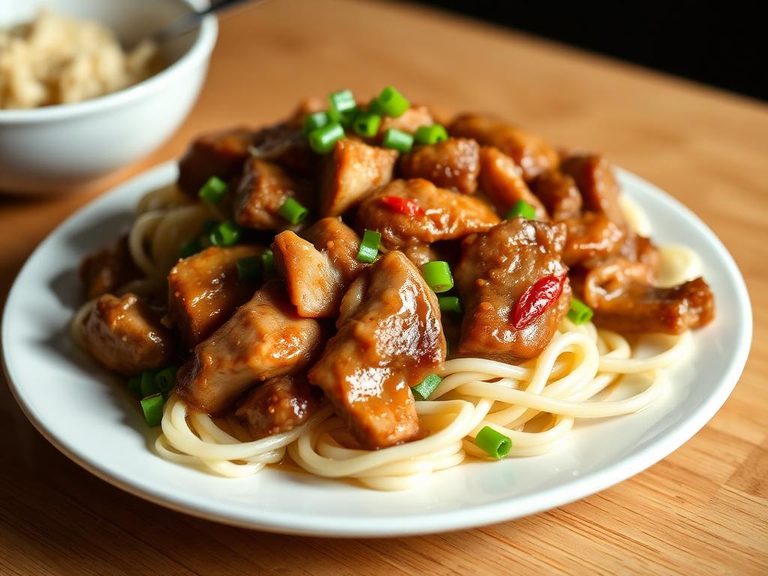
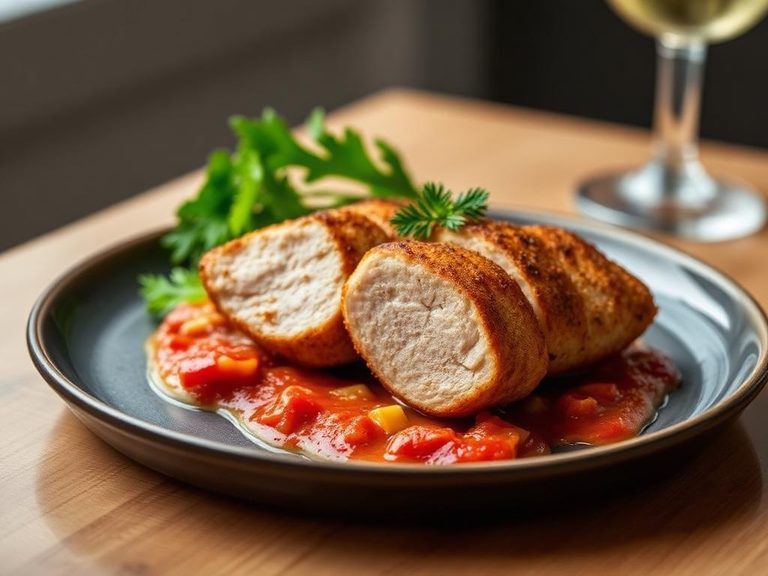
🌍 Where it's eaten
💡 Did you know?
The term 'chop' likely derives from the Hindi word 'chāp,' meaning a rib or piece of meat, reflecting the historical influence of the British Raj on culinary terminology.
Full nutrition (USDA data · scales with serving)
| Water | 57.1 g |
| Energy | 208 kcal |
| Protein | 26.0 g |
| Total lipid (fat) | 7.7 g |
| Carbohydrate, by difference | 7.2 g |
| Fiber, total dietary | 0.40 g |
| Total Sugars | 0.62 g |
| Calcium, Ca | 24.0 mg |
| Iron, Fe | 1.0 mg |
| Magnesium, Mg | 28.0 mg |
| Phosphorus, P | 244 mg |
| Potassium, K | 403 mg |
| Sodium, Na | 413 mg |
| Zinc, Zn | 1.9 mg |
| Copper, Cu | 0.09 mg |
| Selenium, Se | 44.8 ug |
| Vitamin C, total ascorbic acid | 0.00 mg |
| Thiamin | 0.67 mg |
| Riboflavin | 0.22 mg |
| Niacin | 8.2 mg |
| Vitamin B-6 | 0.58 mg |
| Folate, total | 11.0 ug |
| Folic acid | 8.0 ug |
| Folate, food | 2.0 ug |
| Folate, DFE | 16.0 ug |
| Choline, total | 70.1 mg |
| Vitamin B-12 | 0.56 ug |
| Vitamin B-12, added | 0.00 ug |
| Vitamin A, RAE | 0.00 ug |
| Retinol | 0.00 ug |
| Carotene, beta | 0.00 ug |
| Carotene, alpha | 0.00 ug |
| Cryptoxanthin, beta | 0.00 ug |
| Lycopene | 0.00 ug |
| Lutein + zeaxanthin | 0.00 ug |
| Vitamin E (alpha-tocopherol) | 0.56 mg |
| Vitamin E, added | 0.00 mg |
| Vitamin D (D2 + D3) | 0.50 ug |
| Vitamin K (phylloquinone) | 2.7 ug |
| Alcohol, ethyl | 0.00 g |
| Caffeine | 0.00 mg |
| Theobromine | 0.00 mg |
Fat & fatty acid profile (per 100g)
| Fatty acids, total saturated | 2.2 g |
| SFA 4:0 | 0.00 g |
| SFA 6:0 | 0.00 g |
| SFA 8:0 | 0.00 g |
| SFA 10:0 | 0.00 g |
| SFA 12:0 | 0.00 g |
| SFA 14:0 | 0.07 g |
| SFA 16:0 | 1.4 g |
| SFA 18:0 | 0.68 g |
| Fatty acids, total monounsaturated | 3.2 g |
| MUFA 16:1 | 0.15 g |
| MUFA 18:1 | 3.0 g |
| MUFA 20:1 | 0.05 g |
| MUFA 22:1 | 0.00 g |
| Fatty acids, total polyunsaturated | 1.5 g |
| PUFA 18:2 | 1.3 g |
| PUFA 18:3 | 0.12 g |
| PUFA 18:4 | 0.00 g |
| PUFA 20:4 | 0.06 g |
| PUFA 20:5 n-3 (EPA) | 0.00 g |
| PUFA 22:5 n-3 (DPA) | 0.00 g |
| PUFA 22:6 n-3 (DHA) | 0.00 g |
| Cholesterol | 62.0 mg |
Amino acid profile (per 100g)
Estimated from Pork, cured, salt pork, raw — USDA does not publish this profile for Pork.
| Tryptophan | 0.02 g |
| Threonine | 0.17 g |
| Isoleucine | 0.13 g |
| Leucine | 0.35 g |
| Lysine | 0.42 g |
| Methionine | 0.07 g |
| Cystine | 0.04 g |
| Phenylalanine | 0.19 g |
| Tyrosine | 0.08 g |
| Valine | 0.24 g |
| Arginine | 0.52 g |
| Histidine | 0.06 g |
| Alanine | 0.28 g |
| Aspartic acid | 0.42 g |
| Glutamic acid | 0.69 g |
| Glycine | 0.36 g |
| Proline | 0.27 g |
| Serine | 0.19 g |
FAQ
Is a coated pork chop healthier than a regular pork chop?
It depends on the cooking method and coating. A baked or air-fried coated chop can be comparable, but deep-fried versions add extra fat and calories. The coating itself may add carbs and sodium.
How can I make a coated pork chop lower in fat?
Use a light coating of whole-grain breadcrumbs or panko, spray with a little oil, and bake or air-fry. Avoid heavy batter or deep-frying.
What is the best way to keep a coated pork chop juicy?
Pound the chop to an even thickness before coating, don't overcook it (use a meat thermometer to 145°F/63°C), and let it rest for a few minutes after cooking.
Nutrient density (calculated · NRF9.3)
Nutrient Rich Foods index: beneficial nutrients (protein, fiber, vitamins, minerals) minus saturated fat, added sugar & sodium, per 100 kcal.
NRF9.3 index — Fulgoni, Keast & Drewnowski, 2009. Computed from USDA nutrients.
Weight-loss friendliness (composite index)
Energy density 2.08 kcal/g · 50% calories from protein · 0.4 g fiber · 0.6 g sugar per 100 g.
Composite of energy density (Rolls et al., 1999), protein & fiber satiety, minus sugar. A calculated heuristic — ranks satiety-per-calorie, not a clinical measure.
Dietary load (calculated from USDA values)
Potential renal acid load. Positive = acid-forming, negative = alkaline-forming.
Sodium-to-potassium ratio: 1.02 (lower is better — aim for ≤ 1)
Sodium:potassium per WHO potassium guidance. Computed from USDA nutrients.