

Pie, lemon meringue, commercially prepared
Whole food · Baked Products

Photo: Wikipedia
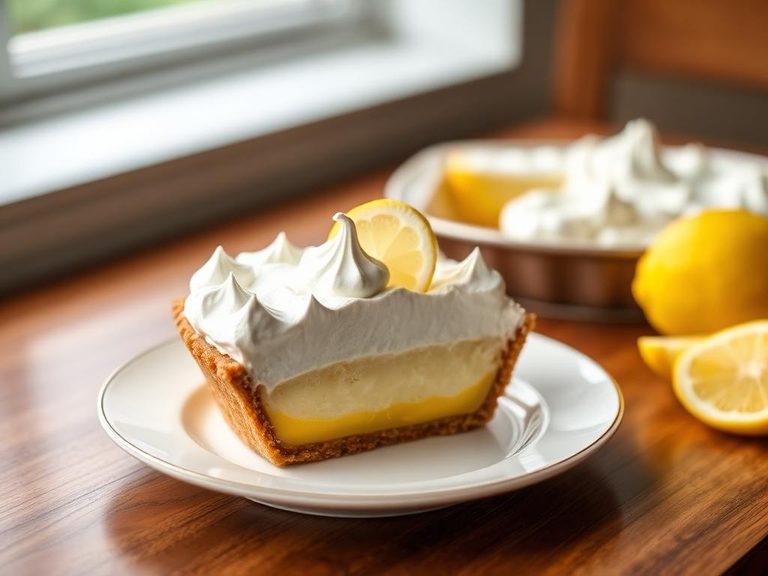
A slice of lemon meringue pie is a vibrant, tangy-sweet dessert with a crisp, buttery crust, a smooth, intensely lemony curd filling, and a pillowy, toasted meringue topping. Nutritionally, it's a high-carb, high-sugar treat, with over 47g of carbohydrates and nearly 24g of sugar per 100g, primarily from the filling and meringue.
Calorie split: 2% protein · 69% carbs · 29% fat
↓ Full nutrition💚 Why it's loved
People adore the perfect balance of sharp, zesty lemon curd cutting through the sweet, airy meringue and rich crust. It's a classic dessert that evokes nostalgia and is a staple at diners, bakeries, and holiday tables.
⚠️ Watch-outs & how to enjoy it better
Its high sugar and refined carbohydrate content can lead to rapid blood-sugar spikes, making it unsuitable for those managing diabetes or insulin resistance. The meringue and crust often contain common allergens like eggs and wheat (gluten). To enjoy mindfully, pair a small slice with a source of protein or fat (like a handful of nuts) to slow sugar absorption, and practice strict portion control.
Key benefits
- Provides a quick source of energy from carbohydrates.
- Contains small amounts of fat from the crust and egg yolks.
- Offers a sensory experience combining sweet, tart, and creamy textures.
- Often associated with celebrations and comfort food traditions.
🍽️ Popular dishes
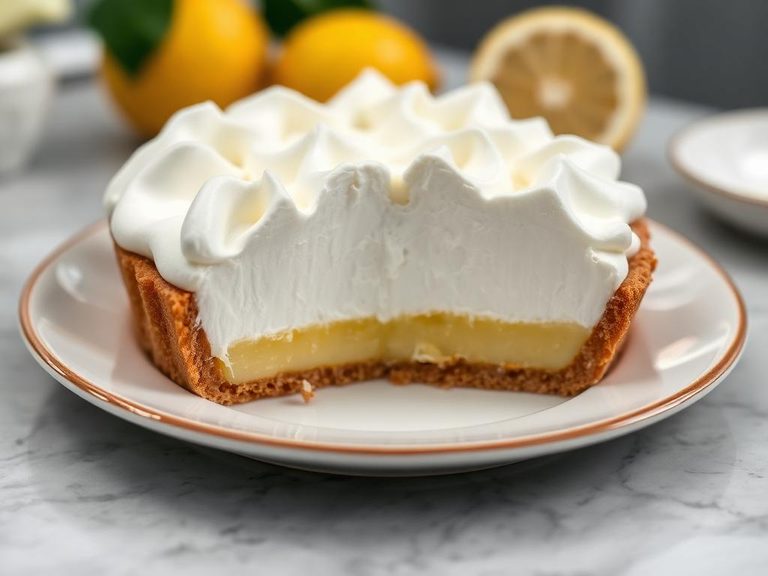
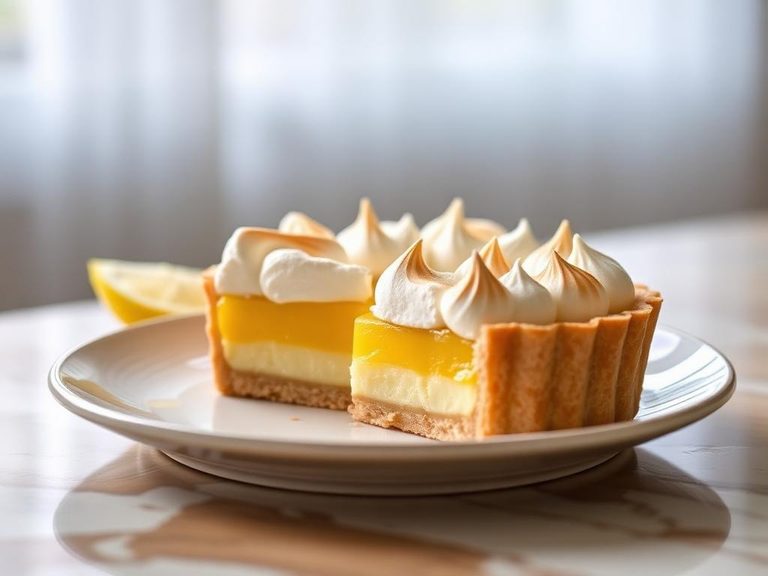
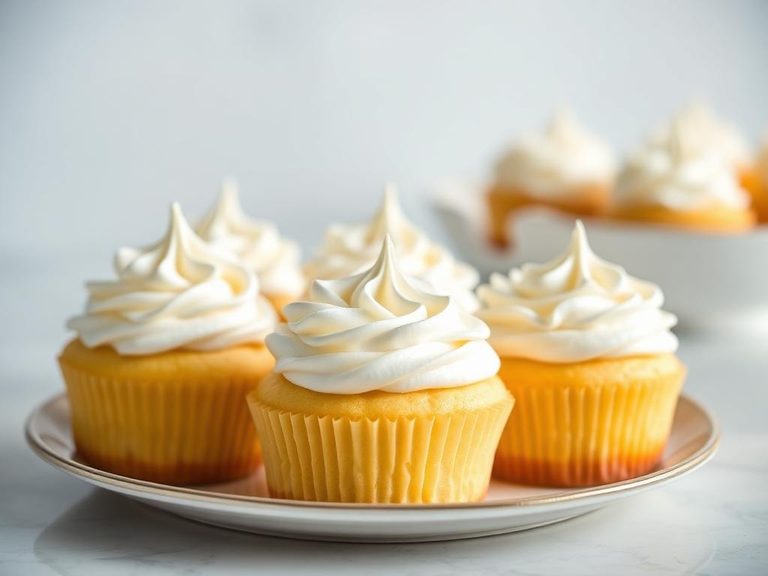
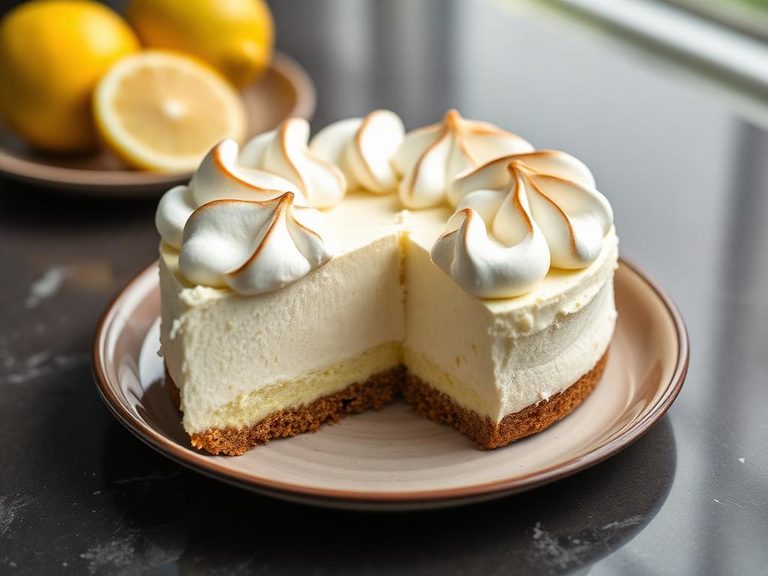
🌍 Where it's eaten
💡 Did you know?
The perfect lemon meringue pie is a science: the lemon curd must be acidic enough to set properly, and the meringue must be beaten to stiff peaks and baked just long enough to create a golden crust without weeping or shrinking.
Full nutrition (USDA data · scales with serving)
| Water | 41.7 g |
| Energy | 268 kcal |
| Energy | 1121 kj |
| Protein | 1.5 g |
| Total lipid (fat) | 8.7 g |
| Ash | 0.90 g |
| Carbohydrate, by difference | 47.2 g |
| Fiber, total dietary | 1.2 g |
| Total Sugars | 23.9 g |
| Calcium, Ca | 56.0 mg |
| Iron, Fe | 0.61 mg |
| Magnesium, Mg | 15.0 mg |
| Phosphorus, P | 105 mg |
| Potassium, K | 89.0 mg |
| Sodium, Na | 172 mg |
| Zinc, Zn | 0.49 mg |
| Copper, Cu | 0.00 mg |
| Manganese, Mn | 0.06 mg |
| Selenium, Se | 3.0 ug |
| Vitamin C, total ascorbic acid | 3.2 mg |
| Thiamin | 0.06 mg |
| Riboflavin | 0.21 mg |
| Niacin | 0.65 mg |
| Pantothenic acid | 0.79 mg |
| Vitamin B-6 | 0.03 mg |
| Folate, total | 24.0 ug |
| Folic acid | 16.0 ug |
| Folate, food | 8.0 ug |
| Folate, DFE | 35.0 ug |
| Choline, total | 6.2 mg |
| Vitamin B-12 | 0.17 ug |
| Vitamin B-12, added | 0.00 ug |
| Vitamin A, RAE | 51.0 ug |
| Retinol | 51.0 ug |
| Carotene, beta | 1.0 ug |
| Carotene, alpha | 0.00 ug |
| Cryptoxanthin, beta | 3.0 ug |
| Vitamin A, IU | 173 iu |
| Lycopene | 0.00 ug |
| Lutein + zeaxanthin | 9.0 ug |
| Vitamin E (alpha-tocopherol) | 1.1 mg |
| Vitamin E, added | 0.00 mg |
| Vitamin D (D2 + D3), International Units | 7.0 iu |
| Vitamin D (D2 + D3) | 0.20 ug |
| Vitamin K (phylloquinone) | 2.1 ug |
| Alcohol, ethyl | 0.00 g |
| Caffeine | 0.00 mg |
| Theobromine | 0.00 mg |
Fat & fatty acid profile (per 100g)
| Fatty acids, total saturated | 1.8 g |
| SFA 4:0 | 0.00 g |
| SFA 6:0 | 0.00 g |
| SFA 8:0 | 0.00 g |
| SFA 10:0 | 0.00 g |
| SFA 12:0 | 0.00 g |
| SFA 14:0 | 0.03 g |
| SFA 16:0 | 1.3 g |
| SFA 18:0 | 0.38 g |
| Fatty acids, total monounsaturated | 2.7 g |
| MUFA 16:1 | 0.06 g |
| MUFA 18:1 | 2.6 g |
| MUFA 20:1 | 0.00 g |
| MUFA 22:1 | 0.00 g |
| Fatty acids, total polyunsaturated | 3.6 g |
| PUFA 18:2 | 3.4 g |
| PUFA 18:3 | 0.20 g |
| PUFA 18:4 | 0.00 g |
| PUFA 20:4 | 0.02 g |
| PUFA 20:5 n-3 (EPA) | 0.00 g |
| PUFA 22:5 n-3 (DPA) | 0.00 g |
| PUFA 22:6 n-3 (DHA) | 0.01 g |
| Cholesterol | 45.0 mg |
Amino acid profile (per 100g)
| Tryptophan | 0.02 g |
| Threonine | 0.06 g |
| Isoleucine | 0.07 g |
| Leucine | 0.12 g |
| Lysine | 0.08 g |
| Methionine | 0.03 g |
| Cystine | 0.03 g |
| Phenylalanine | 0.07 g |
| Tyrosine | 0.05 g |
| Valine | 0.07 g |
| Arginine | 0.08 g |
| Histidine | 0.03 g |
| Alanine | 0.06 g |
| Aspartic acid | 0.11 g |
| Glutamic acid | 0.34 g |
| Glycine | 0.05 g |
| Proline | 0.12 g |
| Serine | 0.10 g |
FAQ
Why does the meringue sometimes get watery or 'weep' on top of the pie?
This is called 'weeping' and is caused by undercooked meringue, sugar not fully dissolved, or placing meringue on a cold filling. The key is to spread the meringue over the hot filling to cook the bottom and seal it, then bake until golden.
Can I make a lemon meringue pie without a traditional crust?
Yes, it can be made as a crustless dessert or with alternative bases like a graham cracker crust or even a meringue shell (Pavlova-style) for a gluten-free version.
Is lemon meringue pie always served chilled?
Traditionally, yes. Chilling allows the lemon curd to set firmly for clean slicing. However, some variations are served warm, especially the crust or the pie as a whole, for a different textural experience.
Nutrient density (calculated · NRF9.3)
Nutrient Rich Foods index: beneficial nutrients (protein, fiber, vitamins, minerals) minus saturated fat, added sugar & sodium, per 100 kcal.
NRF9.3 index — Fulgoni, Keast & Drewnowski, 2009. Computed from USDA nutrients.
Weight-loss friendliness (composite index)
Energy density 2.68 kcal/g · 2% calories from protein · 1.2 g fiber · 23.9 g sugar per 100 g.
Composite of energy density (Rolls et al., 1999), protein & fiber satiety, minus sugar. A calculated heuristic — ranks satiety-per-calorie, not a clinical measure.
Dietary load (calculated from USDA values)
Potential renal acid load. Positive = acid-forming, negative = alkaline-forming.
Sodium-to-potassium ratio: 1.93 (lower is better — aim for ≤ 1)
Sodium:potassium per WHO potassium guidance. Computed from USDA nutrients.