

Pie, cherry, commercially prepared
Whole food · Baked Products
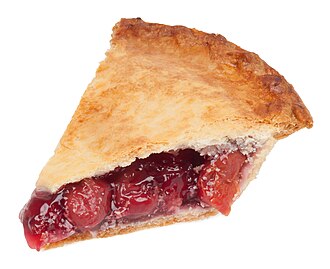
Photo: Wikipedia
Commercially prepared cherry pie is a sweet, flaky pastry shell filled with a glossy, vibrant red cherry compote. Its texture is a delightful contrast between the tender, buttery crust and the soft, juicy fruit filling. Nutritionally, it is a high-carbohydrate, energy-dense treat, with a significant portion of its calories coming from added sugars.
Calorie split: 3% protein · 60% carbs · 37% fat
↓ Full nutrition💚 Why it's loved
People love cherry pie for its perfect balance of sweet and tart flavors, the satisfying texture of a flaky crust, and its deep cultural association with comfort, holidays, and Americana.
⚠️ Watch-outs & how to enjoy it better
Its high sugar and refined carbohydrate content can cause rapid blood sugar spikes, making it a concern for those managing diabetes. To mitigate this, pair a small slice with a source of protein (like Greek yogurt) or healthy fat (like nuts) to slow sugar absorption. Also, be mindful of portion size and check labels for high sodium content in some commercial fillings.
Key benefits
- Provides a quick source of energy from carbohydrates.
- Contains some vitamin C from the cherry filling.
- Offers a comforting, nostalgic flavor experience.
- Convenient and widely available dessert option.
🍽️ Popular dishes
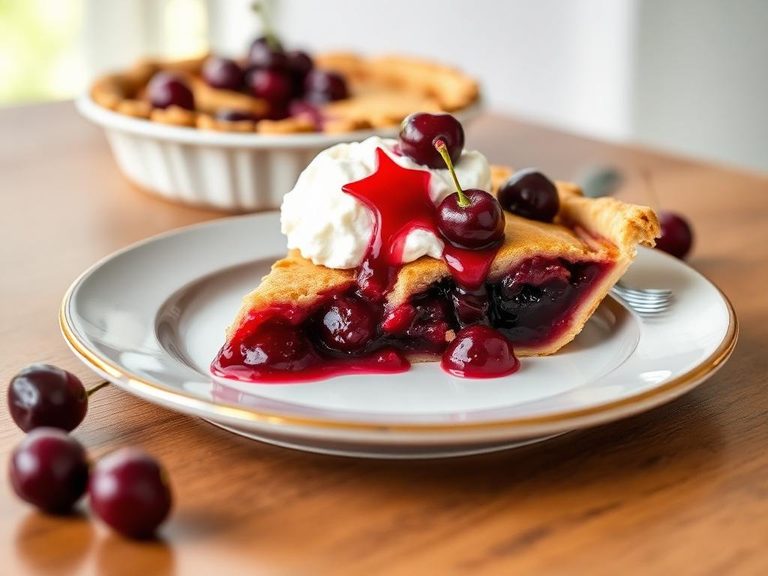
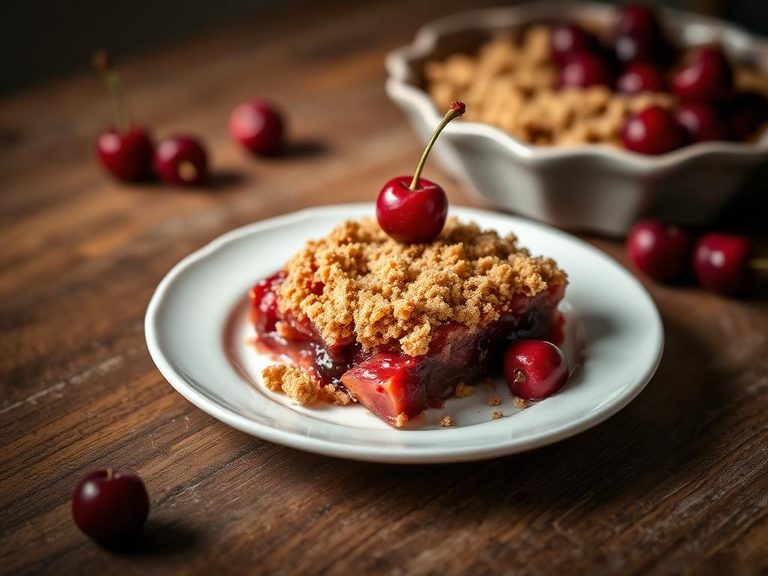
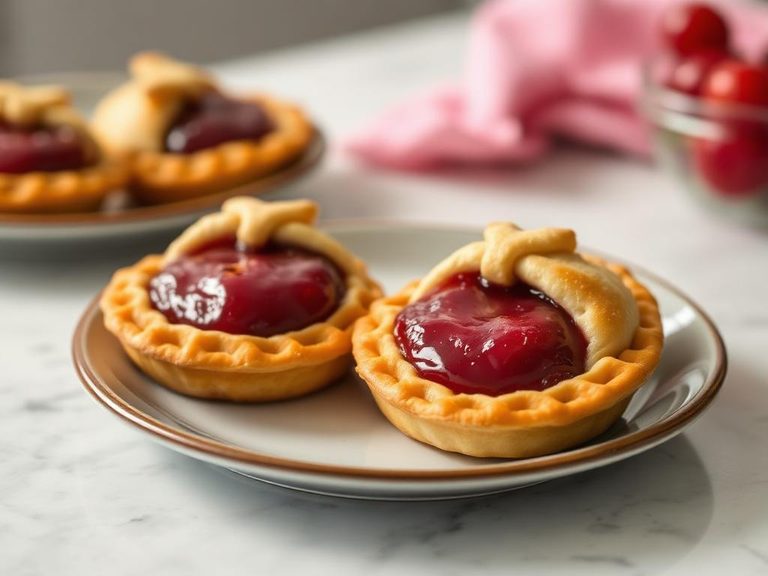
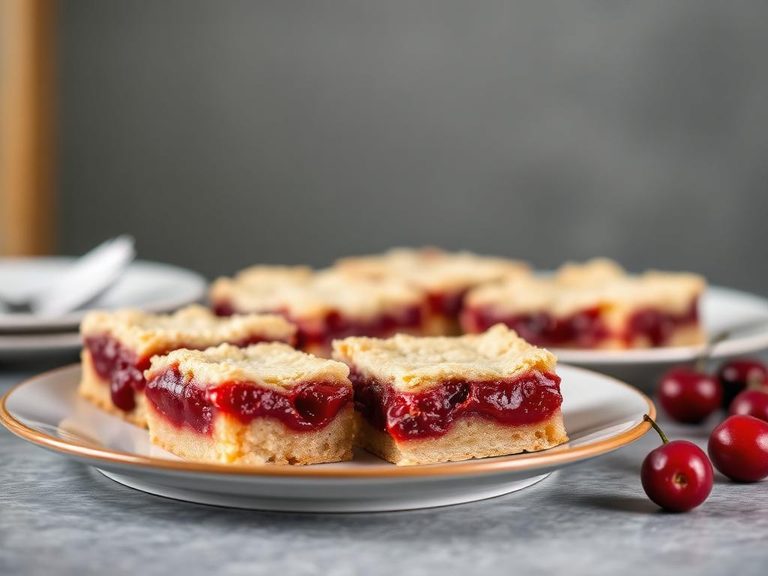
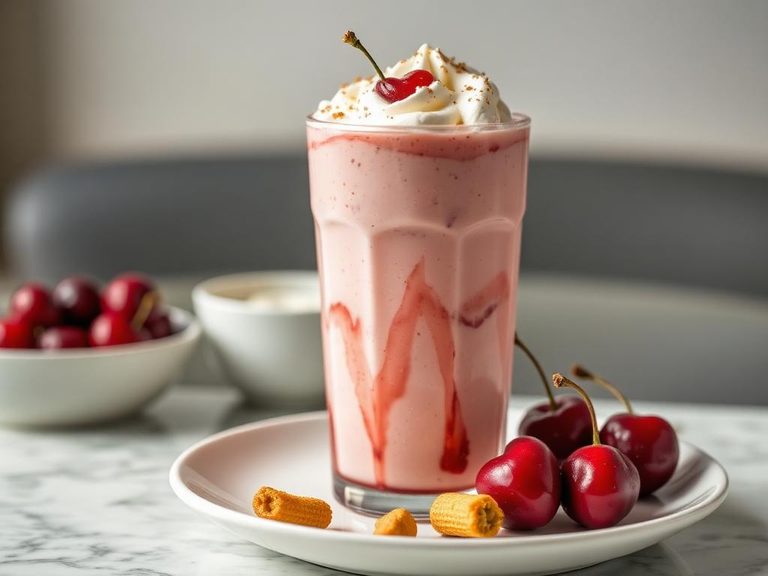
🌍 Where it's eaten
💡 Did you know?
The tradition of filling pies with fruit in America is often linked to the 'pie bird' or 'pie vent,' a ceramic device placed in the center of a pie crust to release steam and prevent a soggy bottom, a practice that became popular in the 19th century.
Full nutrition (USDA data · scales with serving)
| Water | 46.2 g |
| Energy | 260 kcal |
| Energy | 1088 kj |
| Protein | 2.0 g |
| Total lipid (fat) | 11.0 g |
| Ash | 0.90 g |
| Carbohydrate, by difference | 39.8 g |
| Fiber, total dietary | 0.80 g |
| Total Sugars | 14.3 g |
| Calcium, Ca | 12.0 mg |
| Iron, Fe | 0.48 mg |
| Magnesium, Mg | 8.0 mg |
| Phosphorus, P | 29.0 mg |
| Potassium, K | 81.0 mg |
| Sodium, Na | 246 mg |
| Zinc, Zn | 0.18 mg |
| Copper, Cu | 0.04 mg |
| Manganese, Mn | 0.14 mg |
| Selenium, Se | 1.2 ug |
| Vitamin C, total ascorbic acid | 0.90 mg |
| Thiamin | 0.02 mg |
| Riboflavin | 0.03 mg |
| Niacin | 0.20 mg |
| Pantothenic acid | 0.32 mg |
| Vitamin B-6 | 0.04 mg |
| Folate, total | 27.0 ug |
| Folic acid | 19.0 ug |
| Folate, food | 8.0 ug |
| Folate, DFE | 40.0 ug |
| Choline, total | 7.2 mg |
| Vitamin B-12 | 0.01 ug |
| Vitamin B-12, added | 0.00 ug |
| Vitamin A, RAE | 52.0 ug |
| Retinol | 46.0 ug |
| Carotene, beta | 69.0 ug |
| Carotene, alpha | 0.00 ug |
| Cryptoxanthin, beta | 0.00 ug |
| Vitamin A, IU | 267 iu |
| Lycopene | 0.00 ug |
| Lutein + zeaxanthin | 20.0 ug |
| Vitamin E (alpha-tocopherol) | 0.76 mg |
| Vitamin E, added | 0.00 mg |
| Vitamin D (D2 + D3), International Units | 0.00 iu |
| Vitamin D (D2 + D3) | 0.00 ug |
| Vitamin K (phylloquinone) | 7.6 ug |
| Alcohol, ethyl | 0.00 g |
| Caffeine | 0.00 mg |
| Theobromine | 0.00 mg |
Fat & fatty acid profile (per 100g)
| Fatty acids, total saturated | 2.6 g |
| SFA 4:0 | 0.00 g |
| SFA 6:0 | 0.00 g |
| SFA 8:0 | 0.00 g |
| SFA 10:0 | 0.00 g |
| SFA 12:0 | 0.00 g |
| SFA 14:0 | 0.04 g |
| SFA 16:0 | 1.4 g |
| SFA 18:0 | 1.1 g |
| Fatty acids, total monounsaturated | 5.8 g |
| MUFA 16:1 | 0.01 g |
| MUFA 18:1 | 5.8 g |
| MUFA 20:1 | 0.00 g |
| MUFA 22:1 | 0.00 g |
| Fatty acids, total polyunsaturated | 2.1 g |
| PUFA 18:2 | 1.9 g |
| PUFA 18:3 | 0.14 g |
| PUFA 18:4 | 0.00 g |
| PUFA 20:4 | 0.00 g |
| PUFA 20:5 n-3 (EPA) | 0.00 g |
| PUFA 22:5 n-3 (DPA) | 0.00 g |
| PUFA 22:6 n-3 (DHA) | 0.00 g |
| Cholesterol | 0.00 mg |
Amino acid profile (per 100g)
| Tryptophan | 0.03 g |
| Threonine | 0.08 g |
| Isoleucine | 0.10 g |
| Leucine | 0.17 g |
| Lysine | 0.12 g |
| Methionine | 0.04 g |
| Cystine | 0.03 g |
| Phenylalanine | 0.10 g |
| Tyrosine | 0.08 g |
| Valine | 0.12 g |
| Arginine | 0.10 g |
| Histidine | 0.05 g |
| Alanine | 0.07 g |
| Aspartic acid | 0.14 g |
| Glutamic acid | 0.52 g |
| Glycine | 0.06 g |
| Proline | 0.20 g |
| Serine | 0.11 g |
FAQ
Is commercially prepared cherry pie made with real cherries?
Yes, most commercial cherry pies use real cherries, often canned or frozen, but the filling is also heavily sweetened with sugar and may contain thickeners like cornstarch and preservatives.
How does the sugar content compare to homemade pie?
Commercially prepared cherry pie often has a higher sugar content than homemade versions, as manufacturers add sugar to ensure consistent sweetness and shelf stability. Homemade recipes allow for control over sugar levels.
Can I freeze a commercially prepared cherry pie?
Yes, you can freeze a whole or sliced cherry pie. Wrap it tightly in plastic wrap and foil to prevent freezer burn. It will keep for 3-4 months. Thaw in the refrigerator before reheating.
Nutrient density (calculated · NRF9.3)
Nutrient Rich Foods index: beneficial nutrients (protein, fiber, vitamins, minerals) minus saturated fat, added sugar & sodium, per 100 kcal.
NRF9.3 index — Fulgoni, Keast & Drewnowski, 2009. Computed from USDA nutrients.
Weight-loss friendliness (composite index)
Energy density 2.60 kcal/g · 3% calories from protein · 0.8 g fiber · 14.3 g sugar per 100 g.
Composite of energy density (Rolls et al., 1999), protein & fiber satiety, minus sugar. A calculated heuristic — ranks satiety-per-calorie, not a clinical measure.
Dietary load (calculated from USDA values)
Potential renal acid load. Positive = acid-forming, negative = alkaline-forming.
Sodium-to-potassium ratio: 3.04 (lower is better — aim for ≤ 1)
Sodium:potassium per WHO potassium guidance. Computed from USDA nutrients.