

Pickles, dill
Common food
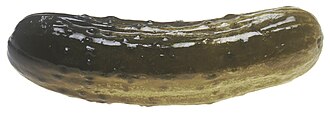
Photo: Wikipedia
A crisp, tangy cucumber spear or slice, transformed by a brine of vinegar, salt, and dill. Its satisfying crunch and sharp, salty-sour punch deliver a burst of flavor with almost no calories. Nutritionally, it's a low-energy-density food, providing a bit of fiber and trace nutrients.
Calorie split: 14% protein · 58% carbs · 28% fat
↓ Full nutrition💚 Why it's loved
People adore dill pickles for their electrifying crunch and the bold, savory-sour zing that can cut through rich foods. They are a versatile condiment, snack, and cultural icon, especially in American delis and German cuisine.
⚠️ Watch-outs & how to enjoy it better
The primary concern is high sodium content, which can be problematic for those with hypertension or heart concerns. Some commercial brands may contain added sugars or preservatives. To counteract, choose low-sodium varieties, rinse slices before eating, or pair with potassium-rich foods like avocado or banana to help balance electrolytes.
Key benefits
- Extremely low in calories (14 kcal per 100g).
- Contains probiotics if naturally fermented (not just vinegar-pickled).
- Provides a small amount of dietary fiber.
- Adds intense flavor without added sugar or fat.
- May aid digestion and gut health (fermented varieties).
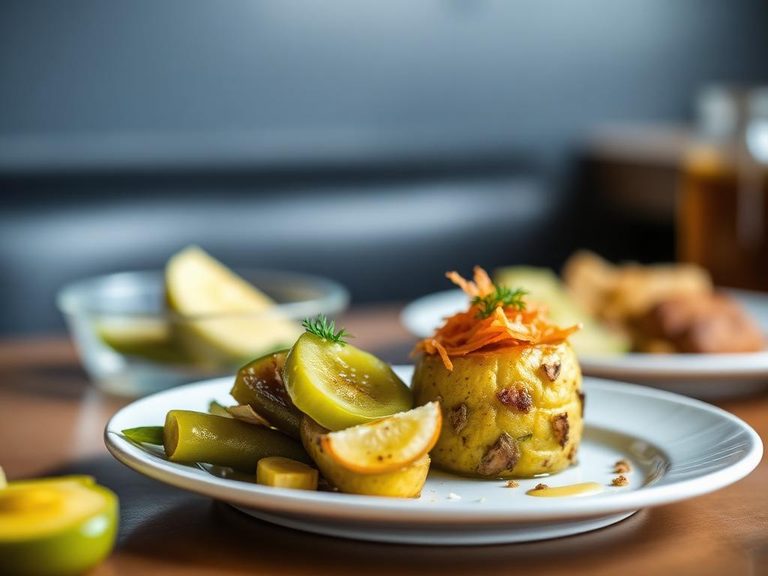
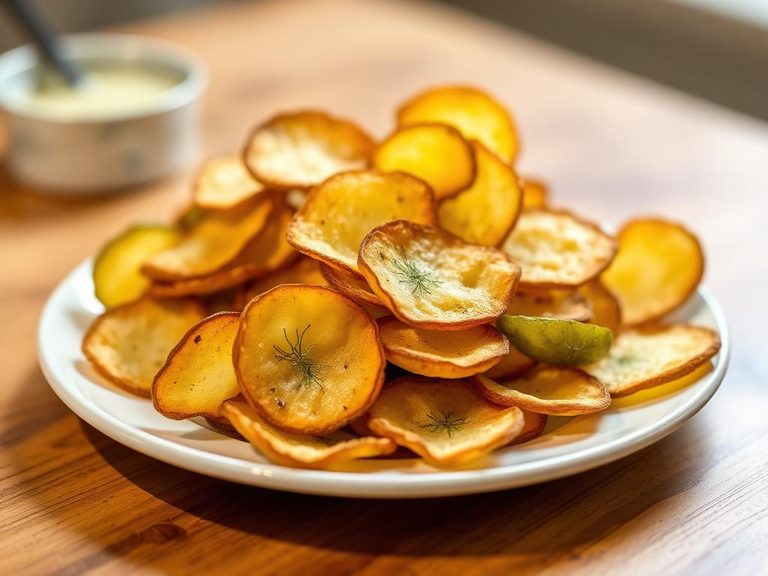
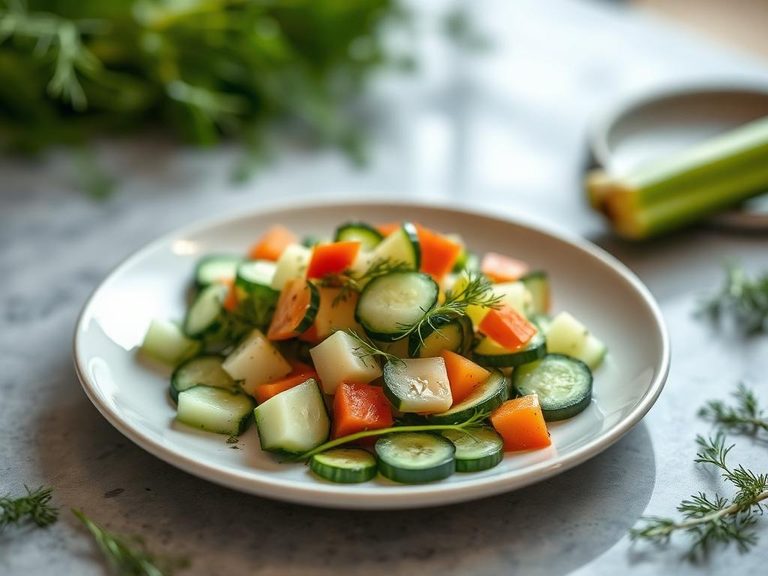
🍽️ Popular dishes
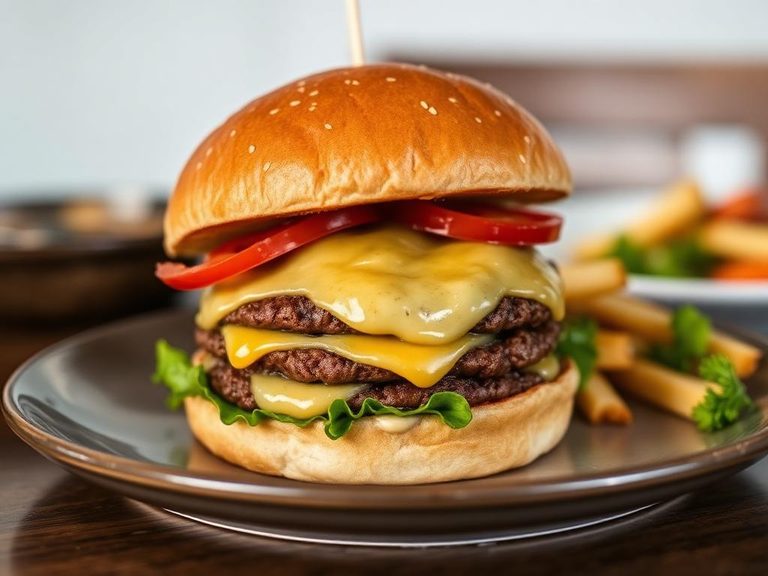
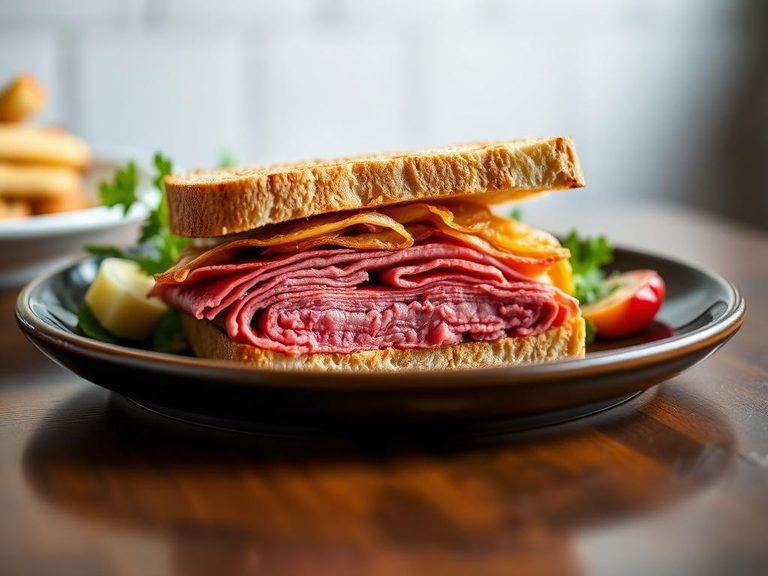
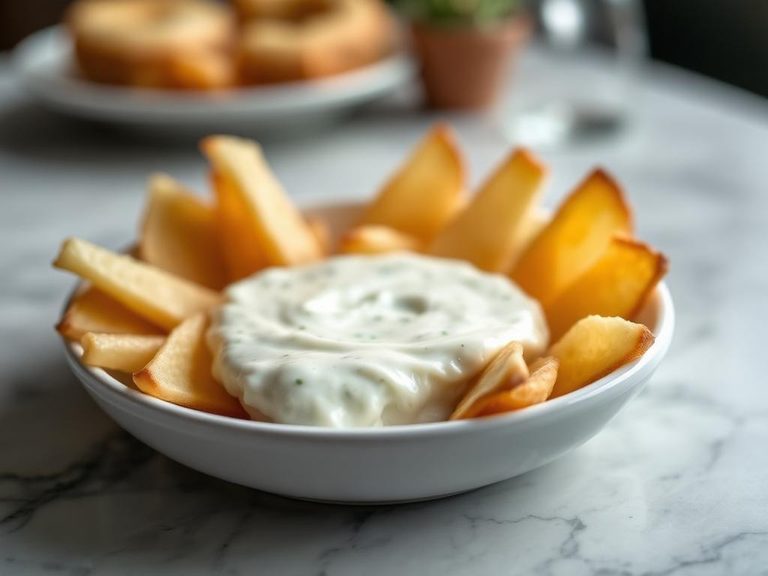
🌍 Where it's eaten
💡 Did you know?
The phrase 'in a pickle' is thought to originate from Shakespeare, but the actual practice of pickling cucumbers in brine was popularized in the 16th century by Dutch and German traders who brought them to America.
Full nutrition (USDA data · scales with serving)
| Water | 94.7 g |
| Energy | 14.0 kcal |
| Protein | 0.48 g |
| Total lipid (fat) | 0.43 g |
| Carbohydrate, by difference | 2.0 g |
| Fiber, total dietary | 1.0 g |
| Total Sugars | 1.3 g |
| Calcium, Ca | 54.0 mg |
| Iron, Fe | 0.23 mg |
| Magnesium, Mg | 7.0 mg |
| Phosphorus, P | 16.0 mg |
| Potassium, K | 112 mg |
| Sodium, Na | 808 mg |
| Zinc, Zn | 0.11 mg |
| Copper, Cu | 0.03 mg |
| Selenium, Se | 0.00 ug |
| Vitamin C, total ascorbic acid | 2.1 mg |
| Thiamin | 0.05 mg |
| Riboflavin | 0.06 mg |
| Niacin | 0.11 mg |
| Vitamin B-6 | 0.03 mg |
| Folate, total | 8.0 ug |
| Folic acid | 0.00 ug |
| Folate, food | 8.0 ug |
| Folate, DFE | 8.0 ug |
| Choline, total | 3.4 mg |
| Vitamin B-12 | 0.00 ug |
| Vitamin B-12, added | 0.00 ug |
| Vitamin A, RAE | 4.0 ug |
| Retinol | 0.00 ug |
| Carotene, beta | 45.0 ug |
| Carotene, alpha | 0.00 ug |
| Cryptoxanthin, beta | 1.0 ug |
| Lycopene | 0.00 ug |
| Lutein + zeaxanthin | 199 ug |
| Vitamin E (alpha-tocopherol) | 0.12 mg |
| Vitamin E, added | 0.00 mg |
| Vitamin D (D2 + D3) | 0.00 ug |
| Vitamin K (phylloquinone) | 16.8 ug |
| Alcohol, ethyl | 0.00 g |
| Caffeine | 0.00 mg |
| Theobromine | 0.00 mg |
Fat & fatty acid profile (per 100g)
| Fatty acids, total saturated | 0.08 g |
| SFA 4:0 | 0.00 g |
| SFA 6:0 | 0.00 g |
| SFA 8:0 | 0.00 g |
| SFA 10:0 | 0.00 g |
| SFA 12:0 | 0.00 g |
| SFA 14:0 | 0.00 g |
| SFA 16:0 | 0.07 g |
| SFA 18:0 | 0.01 g |
| Fatty acids, total monounsaturated | 0.01 g |
| MUFA 16:1 | 0.00 g |
| MUFA 18:1 | 0.01 g |
| MUFA 20:1 | 0.00 g |
| MUFA 22:1 | 0.00 g |
| Fatty acids, total polyunsaturated | 0.12 g |
| PUFA 18:2 | 0.05 g |
| PUFA 18:3 | 0.07 g |
| PUFA 18:4 | 0.00 g |
| PUFA 20:4 | 0.00 g |
| PUFA 20:5 n-3 (EPA) | 0.00 g |
| PUFA 22:5 n-3 (DPA) | 0.00 g |
| PUFA 22:6 n-3 (DHA) | 0.00 g |
| Cholesterol | 0.00 mg |
Amino acid profile (per 100g)
Estimated from Pickles, cucumber, sweet (includes bread and butter pickles) — USDA does not publish this profile for Pickles.
| Tryptophan | 0.01 g |
| Threonine | 0.02 g |
| Isoleucine | 0.02 g |
| Leucine | 0.03 g |
| Lysine | 0.03 g |
| Methionine | 0.01 g |
| Cystine | 0.01 g |
| Phenylalanine | 0.02 g |
| Tyrosine | 0.01 g |
| Valine | 0.02 g |
| Arginine | 0.03 g |
| Histidine | 0.01 g |
| Alanine | 0.03 g |
| Aspartic acid | 0.04 g |
| Glutamic acid | 0.17 g |
| Glycine | 0.03 g |
| Proline | 0.01 g |
| Serine | 0.03 g |
FAQ
Are all dill pickles fermented?
No. Many commercial dill pickles are 'quick' or 'refrigerator' pickles, preserved in a vinegar-based brine. True fermented pickles (like traditional half-sours) use a salt brine that allows natural lactic acid bacteria to develop.
Do dill pickles have any sugar?
They contain a very small amount of naturally occurring sugar (about 1.28g per 100g), but most brands do not add sugar to the brine. Always check the label for added sugars.
Can I eat dill pickles on a low-carb diet?
Yes, they are an excellent low-carb snack. With only about 2g of net carbs per 100g (total carbs minus fiber), they fit well into keto and low-carb eating plans.
Nutrient density (calculated · NRF9.3)
Nutrient Rich Foods index: beneficial nutrients (protein, fiber, vitamins, minerals) minus saturated fat, added sugar & sodium, per 100 kcal.
NRF9.3 index — Fulgoni, Keast & Drewnowski, 2009. Computed from USDA nutrients.
Weight-loss friendliness (composite index)
Energy density 0.14 kcal/g · 14% calories from protein · 1.0 g fiber · 1.3 g sugar per 100 g.
Composite of energy density (Rolls et al., 1999), protein & fiber satiety, minus sugar. A calculated heuristic — ranks satiety-per-calorie, not a clinical measure.
Dietary load (calculated from USDA values)
Potential renal acid load. Positive = acid-forming, negative = alkaline-forming.
Sodium-to-potassium ratio: 7.21 (lower is better — aim for ≤ 1)
Sodium:potassium per WHO potassium guidance. Computed from USDA nutrients.