

Peas, green, cooked, boiled, drained, with salt
Whole food · Vegetables and Vegetable Products
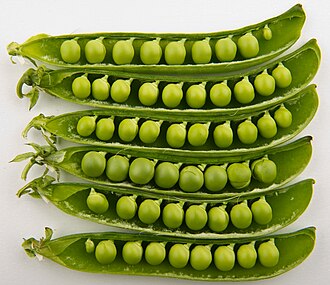
Photo: Wikipedia
Boiled green peas are small, vibrant spheres that burst with a sweet, earthy flavor and a satisfyingly tender yet slightly firm texture. They are a surprisingly robust source of plant-based protein and dietary fiber, making them a nutrient-dense addition to any meal.
Calorie split: 25% protein · 73% carbs · 2% fat
↓ Full nutrition💚 Why it's loved
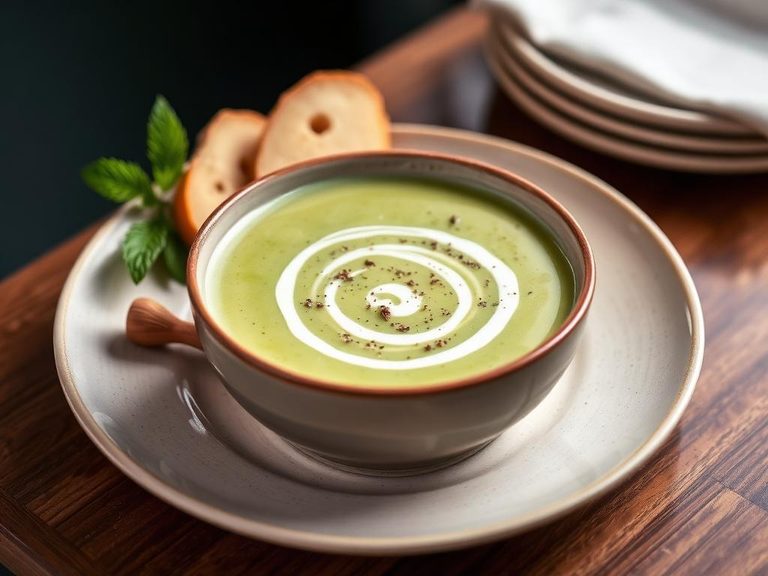
People adore peas for their natural sweetness that intensifies with cooking and their incredible versatility, easily starring in everything from rustic soups to elegant risottos. They are a nostalgic comfort food in many cultures, often associated with home-cooked meals and garden freshness.
⚠️ Watch-outs & how to enjoy it better
The added salt in this preparation can be a concern for those monitoring sodium intake, and the carbohydrate content, while healthy, may require portion awareness for blood sugar management. To counteract this, rinse the peas briefly after cooking to reduce surface sodium, and pair them with a healthy fat or protein source like olive oil, nuts, or lean meat to slow carbohydrate absorption.
Key benefits
- Excellent source of plant-based protein for muscle maintenance.
- High in dietary fiber, supporting digestive health and satiety.
- Rich in vitamins like K and C, and minerals like manganese.
- Contains antioxidants like lutein and zeaxanthin, beneficial for eye health.
🍽️ Popular dishes



🌍 Where it's eaten
💡 Did you know?
The average pea plant produces pods for about three weeks, and each pod typically contains 6-10 peas, all maturing at the same rate from the bottom of the pod upward.
Full nutrition (USDA data · scales with serving)
| Water | 77.9 g |
| Energy | 84.0 kcal |
| Energy | 352 kj |
| Protein | 5.4 g |
| Total lipid (fat) | 0.22 g |
| Ash | 0.92 g |
| Carbohydrate, by difference | 15.6 g |
| Fiber, total dietary | 5.5 g |
| Total Sugars | 5.9 g |
| Sucrose | 5.2 g |
| Glucose | 0.13 g |
| Fructose | 0.41 g |
| Lactose | 0.00 g |
| Maltose | 0.18 g |
| Galactose | 0.00 g |
| Calcium, Ca | 27.0 mg |
| Iron, Fe | 1.5 mg |
| Magnesium, Mg | 39.0 mg |
| Phosphorus, P | 117 mg |
| Potassium, K | 271 mg |
| Sodium, Na | 239 mg |
| Zinc, Zn | 1.2 mg |
| Copper, Cu | 0.17 mg |
| Manganese, Mn | 0.53 mg |
| Selenium, Se | 1.9 ug |
| Vitamin C, total ascorbic acid | 14.2 mg |
| Thiamin | 0.26 mg |
| Riboflavin | 0.15 mg |
| Niacin | 2.0 mg |
| Pantothenic acid | 0.15 mg |
| Vitamin B-6 | 0.22 mg |
| Folate, total | 63.0 ug |
| Folic acid | 0.00 ug |
| Folate, food | 63.0 ug |
| Folate, DFE | 63.0 ug |
| Choline, total | 29.7 mg |
| Betaine | 0.20 mg |
| Vitamin B-12 | 0.00 ug |
| Vitamin B-12, added | 0.00 ug |
| Vitamin A, RAE | 40.0 ug |
| Retinol | 0.00 ug |
| Carotene, beta | 470 ug |
| Carotene, alpha | 22.0 ug |
| Cryptoxanthin, beta | 0.00 ug |
| Vitamin A, IU | 801 iu |
| Lycopene | 0.00 ug |
| Lutein + zeaxanthin | 2593 ug |
| Vitamin E (alpha-tocopherol) | 0.14 mg |
| Vitamin E, added | 0.00 mg |
| Tocopherol, beta | 0.00 mg |
| Tocopherol, gamma | 0.99 mg |
| Tocopherol, delta | 0.02 mg |
| Vitamin D (D2 + D3), International Units | 0.00 iu |
| Vitamin D (D2 + D3) | 0.00 ug |
| Vitamin K (phylloquinone) | 25.9 ug |
Fat & fatty acid profile (per 100g)
| Fatty acids, total saturated | 0.04 g |
| SFA 16:0 | 0.04 g |
| SFA 18:0 | 0.00 g |
| Fatty acids, total monounsaturated | 0.02 g |
| MUFA 18:1 | 0.02 g |
| Fatty acids, total polyunsaturated | 0.10 g |
| PUFA 18:2 | 0.08 g |
| PUFA 18:3 | 0.02 g |
| Fatty acids, total trans | 0.00 g |
| Cholesterol | 0.00 mg |
Amino acid profile (per 100g)
| Tryptophan | 0.04 g |
| Threonine | 0.20 g |
| Isoleucine | 0.19 g |
| Leucine | 0.32 g |
| Lysine | 0.31 g |
| Methionine | 0.08 g |
| Cystine | 0.03 g |
| Phenylalanine | 0.20 g |
| Tyrosine | 0.11 g |
| Valine | 0.23 g |
| Arginine | 0.42 g |
| Histidine | 0.10 g |
| Alanine | 0.24 g |
| Aspartic acid | 0.49 g |
| Glutamic acid | 0.73 g |
| Glycine | 0.18 g |
| Proline | 0.17 g |
| Serine | 0.18 g |
FAQ
Are canned peas as nutritious as boiled fresh or frozen peas?
Canned peas can be slightly lower in some heat-sensitive vitamins like vitamin C due to the canning process, and they often contain significantly more sodium. However, they retain their fiber, protein, and most minerals well.
Why do some people experience digestive discomfort from peas?
Peas contain oligosacaccharides, a type of carbohydrate that some people find difficult to digest, which can lead to gas or bloating. Soaking dried peas before cooking and ensuring they are thoroughly cooked can help reduce these compounds.
Can I eat the pods of green peas?
It depends on the variety. Snow peas and sugar snap peas have edible pods, but the common garden pea (Pisum sativum) has a tough, fibrous pod that is typically discarded.
Nutrient density (calculated · NRF9.3)
Nutrient Rich Foods index: beneficial nutrients (protein, fiber, vitamins, minerals) minus saturated fat, added sugar & sodium, per 100 kcal.
NRF9.3 index — Fulgoni, Keast & Drewnowski, 2009. Computed from USDA nutrients.
Weight-loss friendliness (composite index)
Energy density 0.84 kcal/g · 26% calories from protein · 5.5 g fiber · 5.9 g sugar per 100 g.
Composite of energy density (Rolls et al., 1999), protein & fiber satiety, minus sugar. A calculated heuristic — ranks satiety-per-calorie, not a clinical measure.
Dietary load (calculated from USDA values)
Potential renal acid load. Positive = acid-forming, negative = alkaline-forming.
Sodium-to-potassium ratio: 0.88 (lower is better — aim for ≤ 1)
Sodium:potassium per WHO potassium guidance. Computed from USDA nutrients.