

Ostrich
Common food

Photo: Wikipedia
Ostrich is a lean, red meat from the world's largest bird, prized for a taste and texture remarkably similar to premium beef. Its deep crimson color and fine-grained muscle yield a tender, rich flavor without the heaviness of traditional red meat. Nutritionally, it's a powerhouse, delivering an exceptional amount of protein for very few calories and almost no fat.
Calorie split: 62% protein · 0% carbs · 38% fat
↓ Full nutrition💚 Why it's loved
People love ostrich for its unique combination of a familiar, steak-like flavor with a cleaner, less gamey profile and remarkable tenderness. Its versatility allows it to be prepared like beef—grilled, pan-seared, or minced—making it an exciting yet approachable choice for health-conscious food lovers.
⚠️ Watch-outs & how to enjoy it better
Its primary downside is its leanness; overcooking can make it tough and dry, which may disappoint those used to fattier cuts. Those watching iron intake should note its high heme iron content. To counteract dryness, cook ostrich to medium-rare or medium and use a quick sear or marinade; pair with a sauce or side of healthy fats like avocado to balance the meal.
Key benefits
- Extremely high in protein for muscle repair and satiety.
- Very low in fat and calories compared to beef or lamb.
- Rich in iron, zinc, and B vitamins like B12.
- Contains more iron per serving than chicken or turkey.
- A sustainable and ethical alternative to traditional red meat.
🍽️ Popular dishes
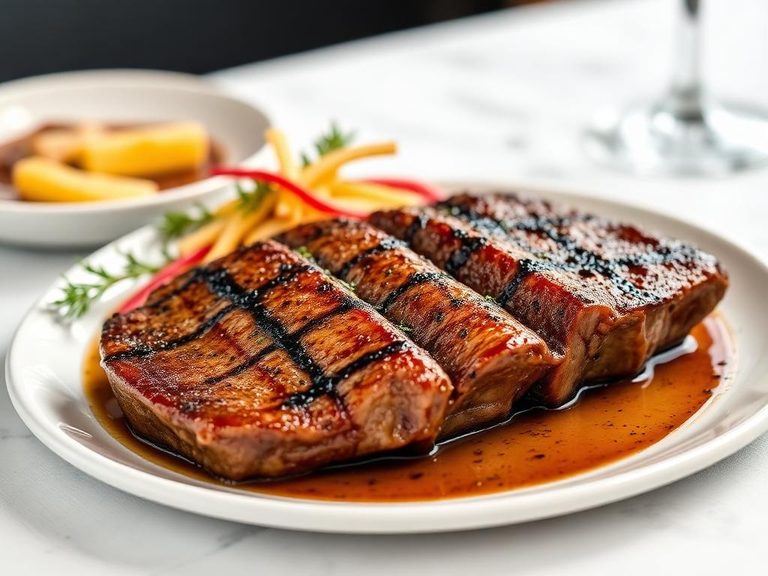
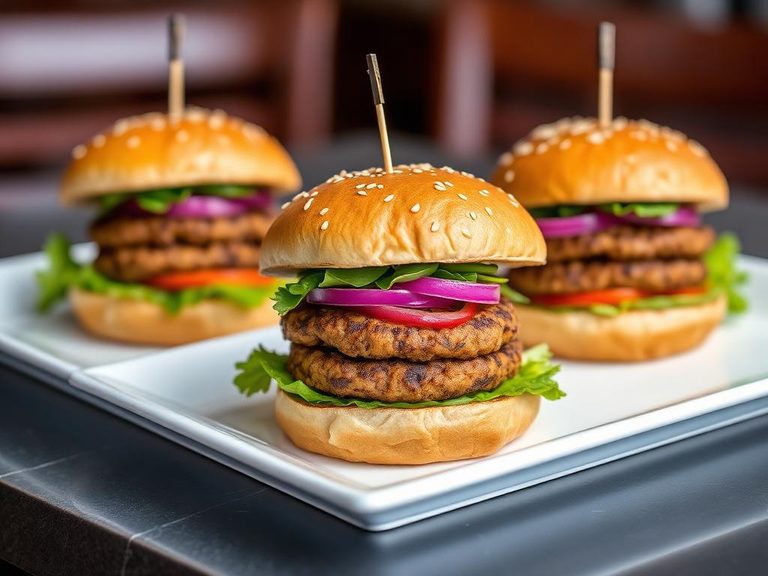
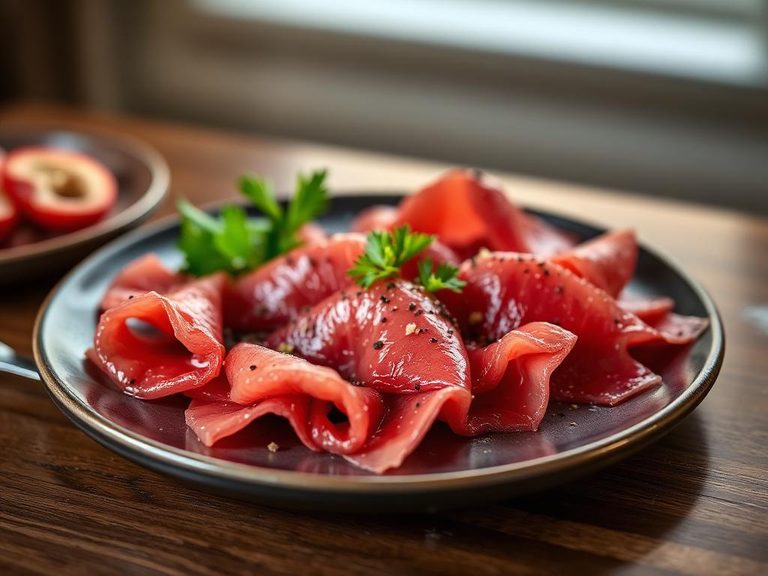
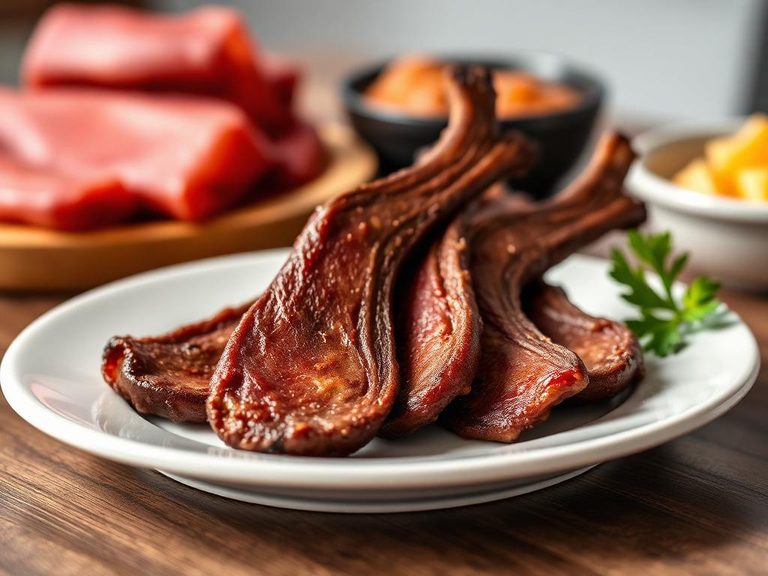
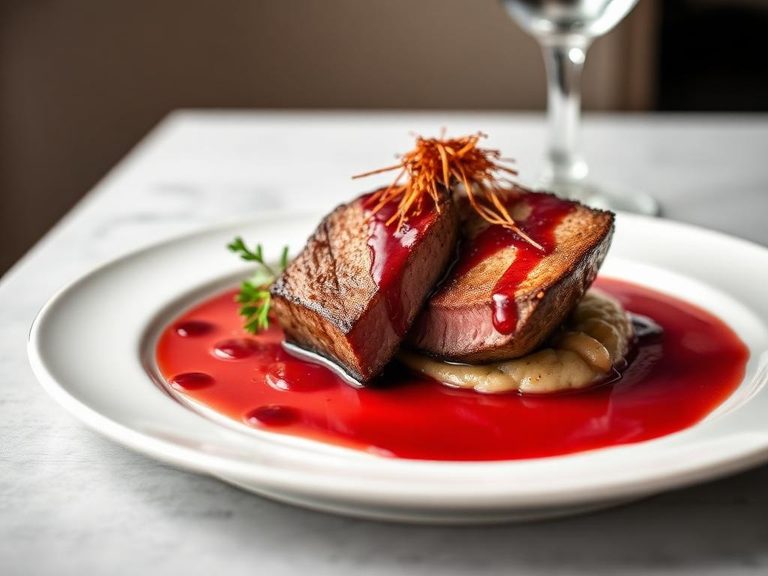
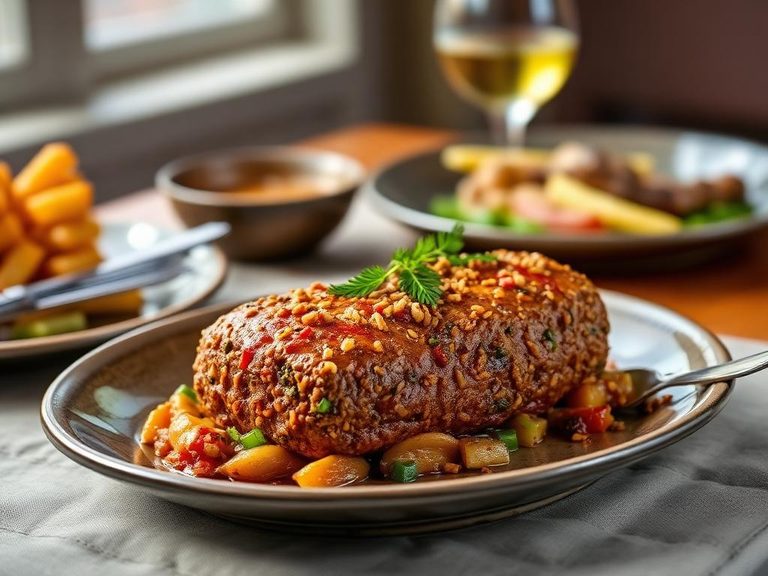
🌍 Where it's eaten
💡 Did you know?
Despite being a bird, ostrich meat is classified as red meat due to its high myoglobin content, which gives it its deep color and beef-like characteristics.
Full nutrition (USDA data · scales with serving)
| Water | 66.6 g |
| Energy | 174 kcal |
| Protein | 25.9 g |
| Total lipid (fat) | 7.0 g |
| Carbohydrate, by difference | 0.00 g |
| Fiber, total dietary | 0.00 g |
| Total Sugars | 0.00 g |
| Calcium, Ca | 8.0 mg |
| Iron, Fe | 3.4 mg |
| Magnesium, Mg | 23.0 mg |
| Phosphorus, P | 222 mg |
| Potassium, K | 320 mg |
| Sodium, Na | 402 mg |
| Zinc, Zn | 4.3 mg |
| Copper, Cu | 0.14 mg |
| Selenium, Se | 33.2 ug |
| Vitamin C, total ascorbic acid | 0.00 mg |
| Thiamin | 0.21 mg |
| Riboflavin | 0.27 mg |
| Niacin | 6.5 mg |
| Vitamin B-6 | 0.50 mg |
| Folate, total | 14.0 ug |
| Folic acid | 0.00 ug |
| Folate, food | 14.0 ug |
| Folate, DFE | 14.0 ug |
| Choline, total | 65.2 mg |
| Vitamin B-12 | 5.7 ug |
| Vitamin B-12, added | 0.00 ug |
| Vitamin A, RAE | 0.00 ug |
| Retinol | 0.00 ug |
| Carotene, beta | 0.00 ug |
| Carotene, alpha | 0.00 ug |
| Cryptoxanthin, beta | 0.00 ug |
| Lycopene | 0.00 ug |
| Lutein + zeaxanthin | 0.00 ug |
| Vitamin E (alpha-tocopherol) | 0.24 mg |
| Vitamin E, added | 0.00 mg |
| Vitamin D (D2 + D3) | 0.10 ug |
| Vitamin K (phylloquinone) | 3.5 ug |
| Alcohol, ethyl | 0.00 g |
| Caffeine | 0.00 mg |
| Theobromine | 0.00 mg |
Fat & fatty acid profile (per 100g)
| Fatty acids, total saturated | 1.8 g |
| SFA 4:0 | 0.00 g |
| SFA 6:0 | 0.00 g |
| SFA 8:0 | 0.00 g |
| SFA 10:0 | 0.00 g |
| SFA 12:0 | 0.00 g |
| SFA 14:0 | 0.04 g |
| SFA 16:0 | 1.3 g |
| SFA 18:0 | 0.39 g |
| Fatty acids, total monounsaturated | 2.1 g |
| MUFA 16:1 | 0.34 g |
| MUFA 18:1 | 1.8 g |
| MUFA 20:1 | 0.02 g |
| MUFA 22:1 | 0.00 g |
| Fatty acids, total polyunsaturated | 0.73 g |
| PUFA 18:2 | 0.63 g |
| PUFA 18:3 | 0.04 g |
| PUFA 18:4 | 0.00 g |
| PUFA 20:4 | 0.06 g |
| PUFA 20:5 n-3 (EPA) | 0.00 g |
| PUFA 22:5 n-3 (DPA) | 0.00 g |
| PUFA 22:6 n-3 (DHA) | 0.00 g |
| Cholesterol | 82.0 mg |
Amino acid profile (per 100g)
Estimated from Ostrich, ground, cooked, pan-broiled — USDA does not publish this profile for Ostrich.
| Tryptophan | 0.23 g |
| Threonine | 1.1 g |
| Isoleucine | 1.2 g |
| Leucine | 2.1 g |
| Lysine | 2.3 g |
| Methionine | 0.73 g |
| Cystine | 0.27 g |
| Phenylalanine | 1.1 g |
| Tyrosine | 0.85 g |
| Valine | 1.3 g |
| Arginine | 1.8 g |
| Histidine | 0.66 g |
| Alanine | 1.7 g |
| Aspartic acid | 2.4 g |
| Glutamic acid | 4.0 g |
| Glycine | 1.7 g |
| Proline | 1.4 g |
| Serine | 1.0 g |
| Hydroxyproline | 0.47 g |
FAQ
Does ostrich taste like chicken?
No, it tastes much more like lean beef or venison. It has a rich, red-meat flavor without the strong gamey notes of some other wild meats.
How should I cook ostrich to avoid it being tough?
Because it's very low in fat, ostrich cooks quickly and is best served medium-rare to medium (130-145°F internal temperature). Overcooking will dry it out.
Is ostrich meat sustainable?
Yes, ostrich farming is considered more sustainable than traditional cattle ranching, requiring less land, water, and feed to produce a similar amount of meat.
Nutrient density (calculated · NRF9.3)
Nutrient Rich Foods index: beneficial nutrients (protein, fiber, vitamins, minerals) minus saturated fat, added sugar & sodium, per 100 kcal.
NRF9.3 index — Fulgoni, Keast & Drewnowski, 2009. Computed from USDA nutrients.
Weight-loss friendliness (composite index)
Energy density 1.74 kcal/g · 60% calories from protein · 0.0 g fiber · 0.0 g sugar per 100 g.
Composite of energy density (Rolls et al., 1999), protein & fiber satiety, minus sugar. A calculated heuristic — ranks satiety-per-calorie, not a clinical measure.
Dietary load (calculated from USDA values)
Potential renal acid load. Positive = acid-forming, negative = alkaline-forming.
Sodium-to-potassium ratio: 1.26 (lower is better — aim for ≤ 1)
Sodium:potassium per WHO potassium guidance. Computed from USDA nutrients.