

Ostrich, inside leg, cooked
Whole food · Poultry Products

Photo: Wikipedia
Ostrich inside leg is a lean, deep-red meat from the bird's most tender muscle, offering a flavor and texture remarkably similar to premium beef but with a slightly finer grain. When cooked, it yields a juicy, rich bite without the gaminess often associated with exotic meats. Its standout nutritional feature is its exceptional protein density, packing nearly 30 grams per 100g with minimal fat.
Calorie split: 87% protein · 0% carbs · 13% fat
↓ Full nutrition💚 Why it's loved
People love ostrich for its ability to satisfy a red-meat craving in a much leaner, healthier format. Its mild, beef-like flavor makes it incredibly versatile for grilling, stir-frying, or mincing, allowing it to fit seamlessly into familiar dishes.
⚠️ Watch-outs & how to enjoy it better
Due to its extreme leanness, ostrich can become tough and dry if overcooked, which is a common pitfall for those used to fattier cuts. To counteract this, cook it quickly to medium-rare or medium (130-145°F internal temp) and consider a brief marinade or a quick sear followed by a rest to retain juices.
Key benefits
- Extremely high in protein for muscle maintenance and satiety
- Very low in fat and calories compared to traditional red meats
- Naturally free of carbohydrates and sugars
- A good source of iron and B vitamins, especially B12
- Lower in cholesterol than beef, lamb, or pork
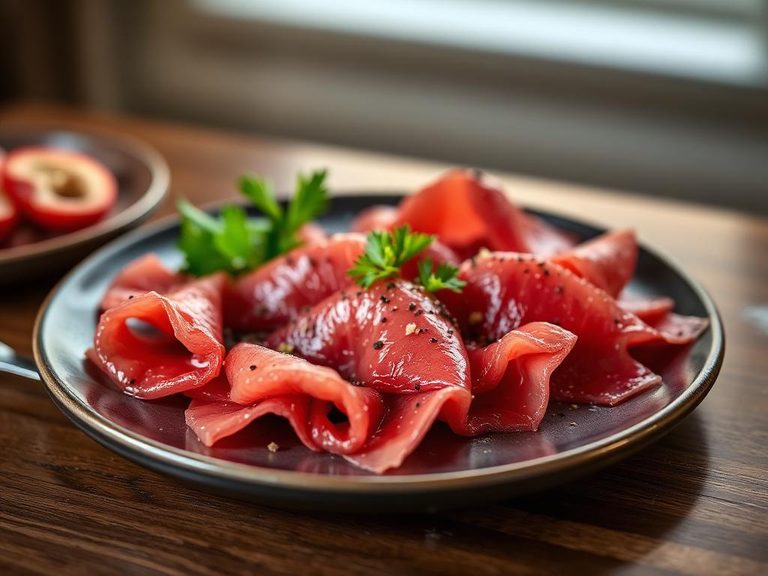
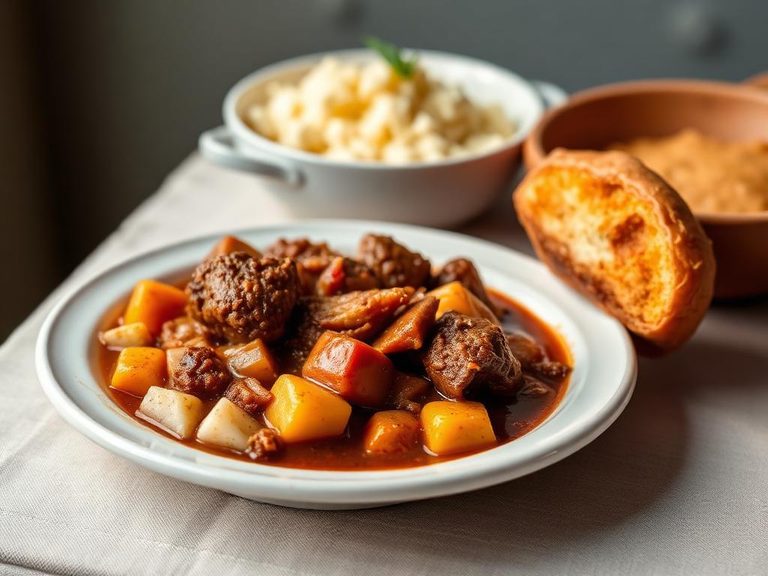
🍽️ Popular dishes
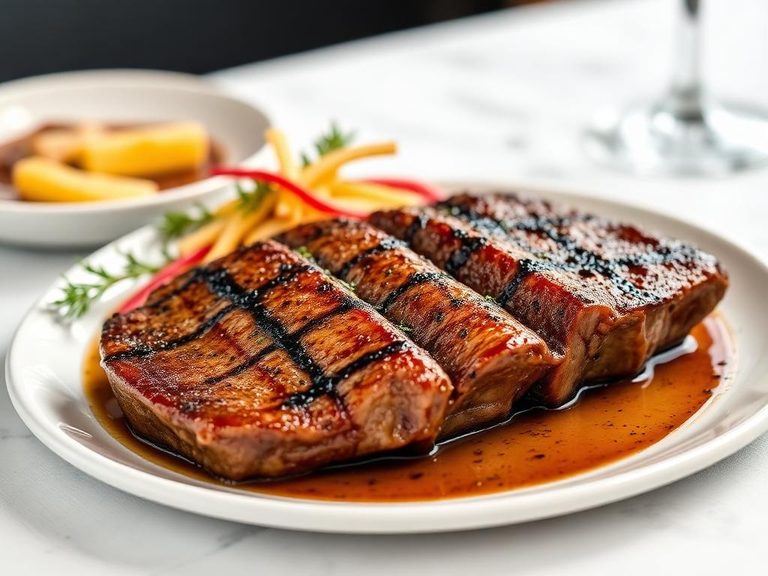
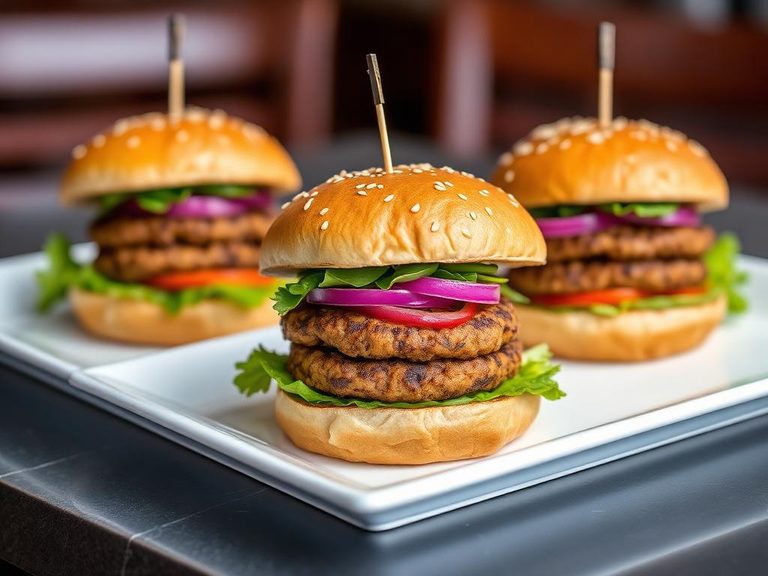
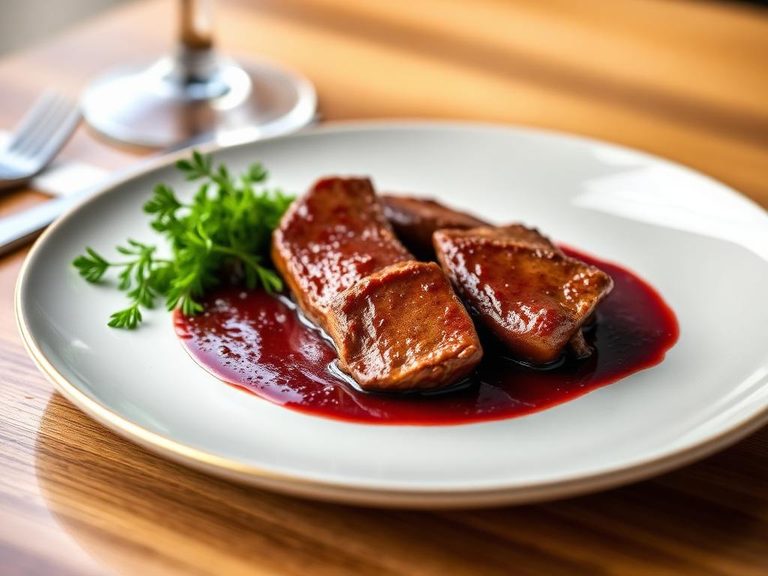
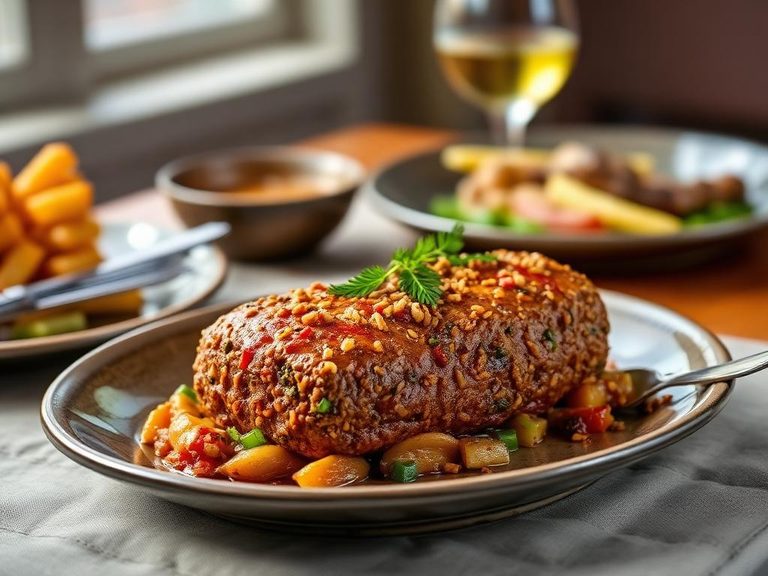
🌍 Where it's eaten
💡 Did you know?
Despite being the world's largest living bird, an ostrich produces a surprisingly small amount of meat per carcass, making it a relatively rare and premium protein source.
Full nutrition (USDA data · scales with serving)
| Water | 70.0 g |
| Energy | 141 kcal |
| Energy | 591 kj |
| Protein | 29.0 g |
| Total lipid (fat) | 1.9 g |
| Ash | 0.76 g |
| Carbohydrate, by difference | 0.00 g |
| Fiber, total dietary | 0.00 g |
| Total Sugars | 0.00 g |
| Calcium, Ca | 6.0 mg |
| Iron, Fe | 3.1 mg |
| Magnesium, Mg | 25.0 mg |
| Phosphorus, P | 244 mg |
| Potassium, K | 352 mg |
| Sodium, Na | 83.0 mg |
| Zinc, Zn | 4.7 mg |
| Copper, Cu | 0.15 mg |
| Manganese, Mn | 0.02 mg |
| Selenium, Se | 36.5 ug |
| Vitamin C, total ascorbic acid | 0.00 mg |
| Thiamin | 0.24 mg |
| Riboflavin | 0.30 mg |
| Niacin | 7.3 mg |
| Pantothenic acid | 1.3 mg |
| Vitamin B-6 | 0.56 mg |
| Folate, total | 16.0 ug |
| Folic acid | 0.00 ug |
| Folate, food | 16.0 ug |
| Folate, DFE | 16.0 ug |
| Vitamin B-12 | 6.4 ug |
| Vitamin A, RAE | 0.00 ug |
| Retinol | 0.00 ug |
| Carotene, beta | 0.00 ug |
| Carotene, alpha | 0.00 ug |
| Cryptoxanthin, beta | 0.00 ug |
| Vitamin A, IU | 0.00 iu |
| Lycopene | 0.00 ug |
| Lutein + zeaxanthin | 0.00 ug |
| Vitamin E (alpha-tocopherol) | 0.22 mg |
| Alcohol, ethyl | 0.00 g |
| Caffeine | 0.00 mg |
| Theobromine | 0.00 mg |
Fat & fatty acid profile (per 100g)
| Fatty acids, total saturated | 0.70 g |
| SFA 14:0 | 0.01 g |
| SFA 16:0 | 0.44 g |
| SFA 18:0 | 0.25 g |
| Fatty acids, total monounsaturated | 0.67 g |
| MUFA 16:1 | 0.13 g |
| MUFA 18:1 | 0.54 g |
| Fatty acids, total polyunsaturated | 0.32 g |
| PUFA 18:2 | 0.18 g |
| PUFA 18:3 | 0.01 g |
| PUFA 20:4 | 0.13 g |
| Cholesterol | 73.0 mg |
Amino acid profile (per 100g)
| Tryptophan | 0.26 g |
| Threonine | 1.3 g |
| Isoleucine | 1.4 g |
| Leucine | 2.4 g |
| Lysine | 2.6 g |
| Methionine | 0.81 g |
| Cystine | 0.30 g |
| Phenylalanine | 1.2 g |
| Tyrosine | 0.94 g |
| Valine | 1.4 g |
| Arginine | 2.0 g |
| Histidine | 0.73 g |
| Alanine | 1.9 g |
| Aspartic acid | 2.7 g |
| Glutamic acid | 4.4 g |
| Glycine | 1.9 g |
| Proline | 1.5 g |
| Serine | 1.2 g |
| Hydroxyproline | 0.52 g |
FAQ
What does ostrich taste like?
It tastes very similar to lean beef, with a rich, slightly sweet flavor and a fine, tender texture. It lacks the strong, gamey taste some might expect from exotic meat.
How do I cook ostrich without it getting tough?
The key is to not overcook it. Treat it like a premium steak: sear quickly on high heat for a crust, then finish to an internal temperature of 130-145°F (54-63°C) for medium-rare to medium. Let it rest before slicing.
Is ostrich meat healthy?
Yes, it's considered a very healthy red meat alternative. It's exceptionally high in protein, low in fat and calories, and contains important nutrients like iron and B12, making it a nutritious choice for many diets.
Nutrient density (calculated · NRF9.3)
Nutrient Rich Foods index: beneficial nutrients (protein, fiber, vitamins, minerals) minus saturated fat, added sugar & sodium, per 100 kcal.
NRF9.3 index — Fulgoni, Keast & Drewnowski, 2009. Computed from USDA nutrients.
Weight-loss friendliness (composite index)
Energy density 1.41 kcal/g · 82% calories from protein · 0.0 g fiber · 0.0 g sugar per 100 g.
Composite of energy density (Rolls et al., 1999), protein & fiber satiety, minus sugar. A calculated heuristic — ranks satiety-per-calorie, not a clinical measure.
Dietary load (calculated from USDA values)
Potential renal acid load. Positive = acid-forming, negative = alkaline-forming.
Sodium-to-potassium ratio: 0.24 (lower is better — aim for ≤ 1)
Sodium:potassium per WHO potassium guidance. Computed from USDA nutrients.