

Mollusks, oyster, Pacific, cooked, moist heat
Whole food · Finfish and Shellfish Products

Photo: Wikipedia
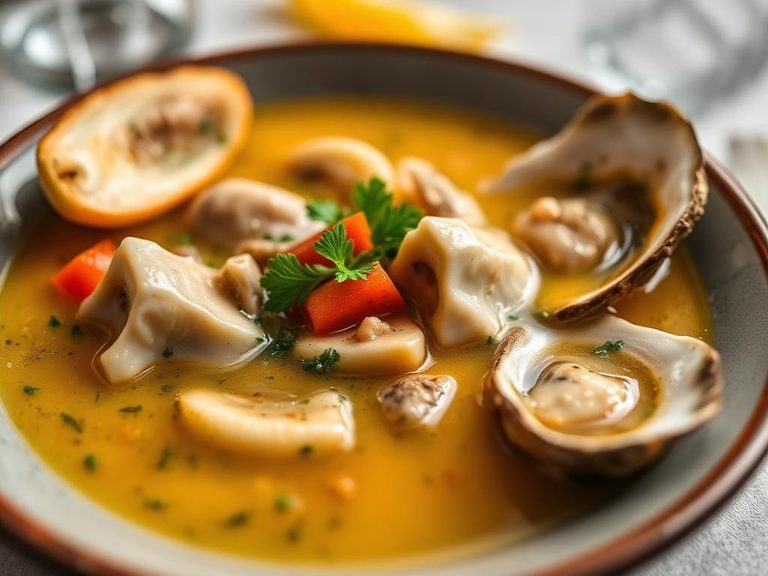
Pacific oysters, gently steamed or poached, offer a plump, briny-sweet bite with a silky, custard-like texture that melts on the tongue. They are a nutritional powerhouse, delivering a substantial 18.9 grams of complete protein per 100 grams with minimal fat. This lean, mineral-rich shellfish provides a clean, oceanic flavor that is both delicate and deeply satisfying.
Calorie split: 48% protein · 25% carbs · 26% fat
↓ Full nutrition💚 Why it's loved
People adore the unique, complex flavor of Pacific oysters—a harmonious balance of brine, sweetness, and a hint of cucumber or melon. Their versatility shines whether served raw on the half-shell, grilled with compound butter, or simply steamed, making them a celebrated centerpiece from casual seafood shacks to fine dining.
⚠️ Watch-outs & how to enjoy it better
As a common shellfish allergen, oysters can trigger serious reactions in sensitive individuals. Their high natural sodium content may be a concern for those monitoring blood pressure. To mitigate, pair with potassium-rich vegetables like steamed asparagus or a fresh salad to help balance sodium, and always be aware of portion size if sodium is a concern.
Key benefits
- Excellent source of high-quality, complete protein
- Rich in essential minerals like zinc, selenium, and iron
- Low in calories and fat, making it a lean protein choice
- Contains omega-3 fatty acids, beneficial for heart health
- A natural source of vitamin B12, crucial for nerve function
🍽️ Popular dishes
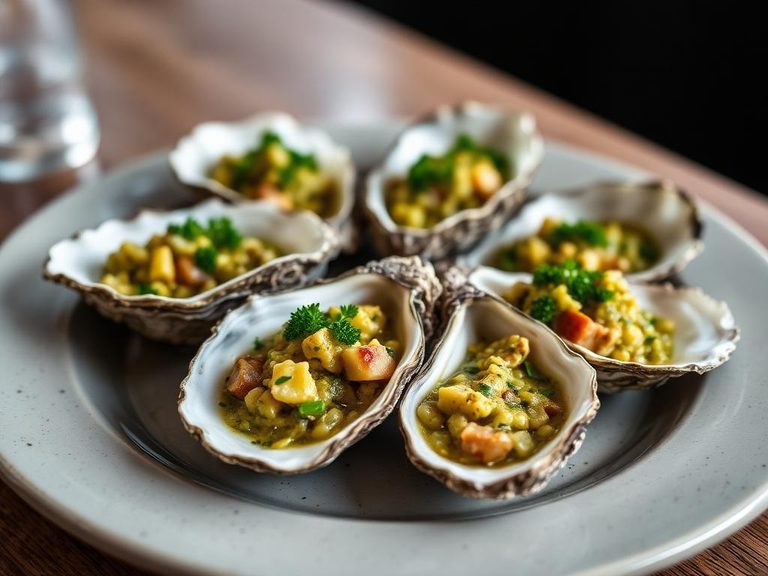
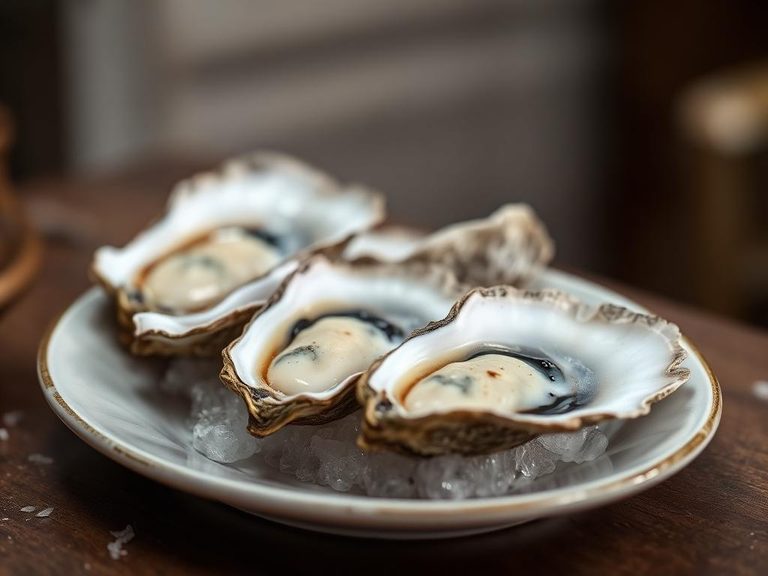
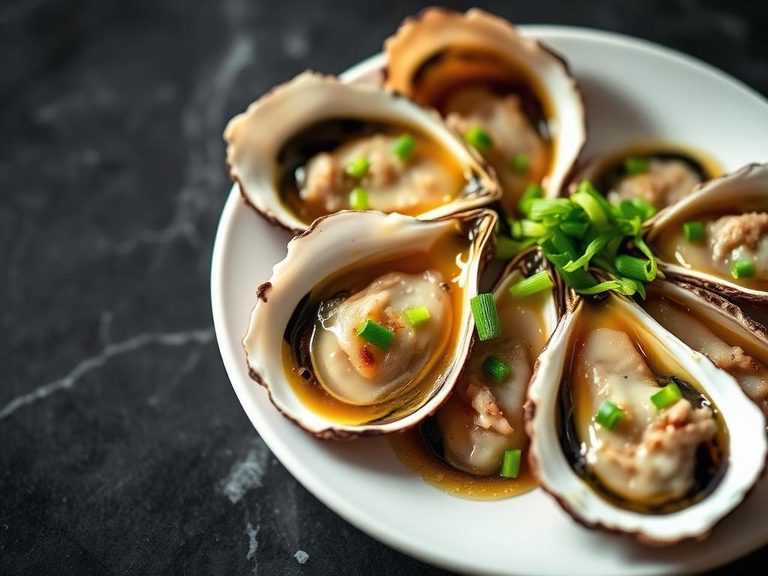
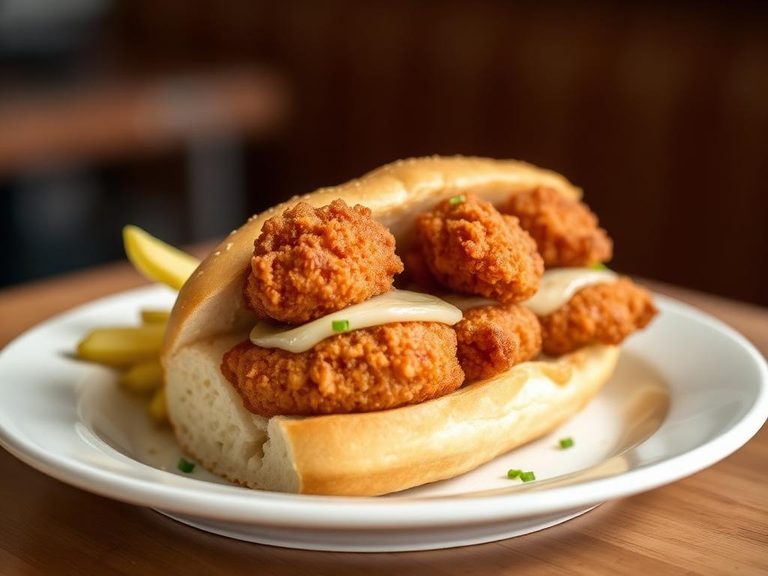
🌍 Where it's eaten
💡 Did you know?
A single adult Pacific oyster can filter up to 50 gallons (190 liters) of water per day, playing a vital role in cleaning coastal ecosystems.
Full nutrition (USDA data · scales with serving)
| Water | 64.1 g |
| Energy | 163 kcal |
| Energy | 682 kj |
| Protein | 18.9 g |
| Total lipid (fat) | 4.6 g |
| Ash | 2.5 g |
| Carbohydrate, by difference | 9.9 g |
| Fiber, total dietary | 0.00 g |
| Total Sugars | 0.00 g |
| Calcium, Ca | 16.0 mg |
| Iron, Fe | 9.2 mg |
| Magnesium, Mg | 44.0 mg |
| Phosphorus, P | 243 mg |
| Potassium, K | 302 mg |
| Sodium, Na | 212 mg |
| Zinc, Zn | 33.2 mg |
| Copper, Cu | 2.7 mg |
| Manganese, Mn | 1.2 mg |
| Selenium, Se | 154 ug |
| Vitamin C, total ascorbic acid | 12.8 mg |
| Thiamin | 0.13 mg |
| Riboflavin | 0.44 mg |
| Niacin | 3.6 mg |
| Pantothenic acid | 0.90 mg |
| Vitamin B-6 | 0.09 mg |
| Folate, total | 15.0 ug |
| Folic acid | 0.00 ug |
| Folate, food | 15.0 ug |
| Folate, DFE | 15.0 ug |
| Vitamin B-12 | 28.8 ug |
| Vitamin A, RAE | 146 ug |
| Retinol | 146 ug |
| Carotene, beta | 0.00 ug |
| Carotene, alpha | 0.00 ug |
| Cryptoxanthin, beta | 0.00 ug |
| Vitamin A, IU | 487 iu |
| Lycopene | 0.00 ug |
| Lutein + zeaxanthin | 0.00 ug |
| Vitamin E (alpha-tocopherol) | 0.85 mg |
| Vitamin K (phylloquinone) | 0.10 ug |
| Alcohol, ethyl | 0.00 g |
| Caffeine | 0.00 mg |
| Theobromine | 0.00 mg |
Fat & fatty acid profile (per 100g)
| Fatty acids, total saturated | 1.0 g |
| SFA 4:0 | 0.00 g |
| SFA 6:0 | 0.00 g |
| SFA 8:0 | 0.00 g |
| SFA 10:0 | 0.00 g |
| SFA 12:0 | 0.00 g |
| SFA 14:0 | 0.16 g |
| SFA 16:0 | 0.71 g |
| SFA 18:0 | 0.14 g |
| Fatty acids, total monounsaturated | 0.78 g |
| MUFA 16:1 | 0.23 g |
| MUFA 18:1 | 0.38 g |
| MUFA 20:1 | 0.06 g |
| MUFA 22:1 | 0.11 g |
| Fatty acids, total polyunsaturated | 1.8 g |
| PUFA 18:2 | 0.06 g |
| PUFA 18:3 | 0.06 g |
| PUFA 18:4 | 0.17 g |
| PUFA 20:4 | 0.08 g |
| PUFA 20:5 n-3 (EPA) | 0.88 g |
| PUFA 22:5 n-3 (DPA) | 0.04 g |
| PUFA 22:6 n-3 (DHA) | 0.50 g |
| Cholesterol | 100 mg |
Amino acid profile (per 100g)
| Tryptophan | 0.21 g |
| Threonine | 0.81 g |
| Isoleucine | 0.82 g |
| Leucine | 1.3 g |
| Lysine | 1.4 g |
| Methionine | 0.43 g |
| Cystine | 0.25 g |
| Phenylalanine | 0.68 g |
| Tyrosine | 0.60 g |
| Valine | 0.83 g |
| Arginine | 1.4 g |
| Histidine | 0.36 g |
| Alanine | 1.1 g |
| Aspartic acid | 1.8 g |
| Glutamic acid | 2.6 g |
| Glycine | 1.2 g |
| Proline | 0.77 g |
| Serine | 0.85 g |
FAQ
How do I know if a cooked oyster is safe to eat?
The oyster shells should open during cooking. Discard any that remain firmly closed. The meat should be plump and opaque, not shriveled or dry. Always purchase from reputable sources and ensure proper refrigeration before cooking.
What's the difference between Pacific and Atlantic oysters?
Pacific oysters (like Kumamoto or Shigoku) tend to be smaller, with a sweeter, more cucumber-like finish and a deep, cupped shell. Atlantic oysters (like Bluepoint or Wellfleet) are often larger, brinier, and have a more pronounced mineral flavor with a flatter shell.
Can I eat the liquor (the liquid in the shell)?
Absolutely. The oyster liquor is the natural seawater and juices from the oyster itself. It's packed with briny flavor and nutrients, and is considered a delicacy. Many people sip it directly from the shell or mix it into sauces and stews.
Nutrient density (calculated · NRF9.3)
Nutrient Rich Foods index: beneficial nutrients (protein, fiber, vitamins, minerals) minus saturated fat, added sugar & sodium, per 100 kcal.
NRF9.3 index — Fulgoni, Keast & Drewnowski, 2009. Computed from USDA nutrients.
Weight-loss friendliness (composite index)
Energy density 1.63 kcal/g · 46% calories from protein · 0.0 g fiber · 0.0 g sugar per 100 g.
Composite of energy density (Rolls et al., 1999), protein & fiber satiety, minus sugar. A calculated heuristic — ranks satiety-per-calorie, not a clinical measure.
Dietary load (calculated from USDA values)
Potential renal acid load. Positive = acid-forming, negative = alkaline-forming.
Sodium-to-potassium ratio: 0.70 (lower is better — aim for ≤ 1)
Sodium:potassium per WHO potassium guidance. Computed from USDA nutrients.