

Green beans, raw
Common food
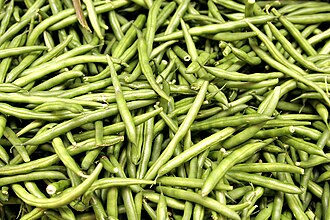
Photo: Wikipedia
Raw green beans are crisp, snappy pods with a bright, grassy flavor and a satisfying crunch. They are exceptionally low in calories (40 kcal per 100g) and a good source of fiber, vitamin C, and vitamin K. Their fresh, clean taste makes them a refreshing snack or a crunchy addition to salads and crudité platters.
Calorie split: 20% protein · 74% carbs · 6% fat
↓ Full nutrition💚 Why it's loved
People love raw green beans for their satisfying crunch and mild, sweet flavor that pairs well with dips like hummus or ranch. They are a versatile, portable snack that adds a fresh, vibrant element to salads and vegetable trays.
⚠️ Watch-outs & how to enjoy it better
Some may find raw green beans tough or difficult to digest due to their fiber content, and they contain lectins that can cause discomfort if consumed in large quantities. To counteract this, blanching or steaming for a few minutes can soften them and reduce lectins, while pairing with a fat source like olive oil or a protein-rich dip can improve nutrient absorption and satiety.
Key benefits
- Low in calories and fat, supporting weight management.
- Good source of fiber (3g per 100g) for digestive health.
- Provides vitamin C and vitamin K for immune and bone support.
- Contains antioxidants like flavonoids and carotenoids.
- High water content aids in hydration.
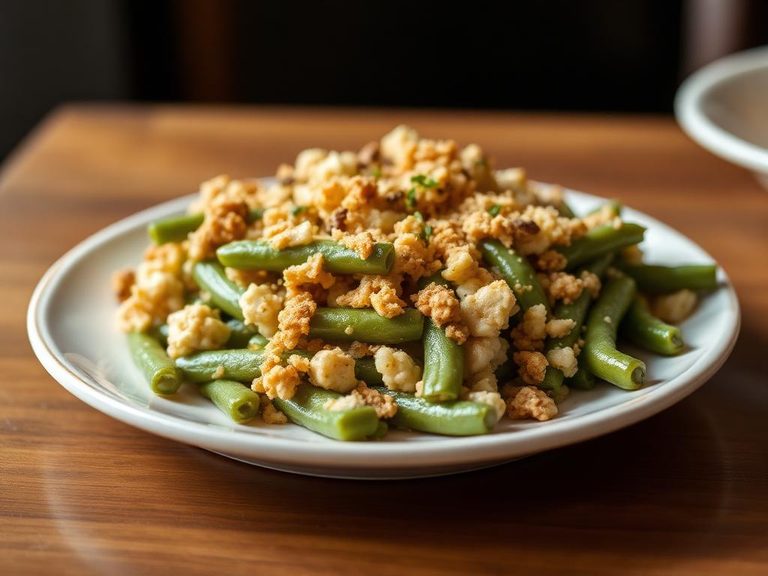
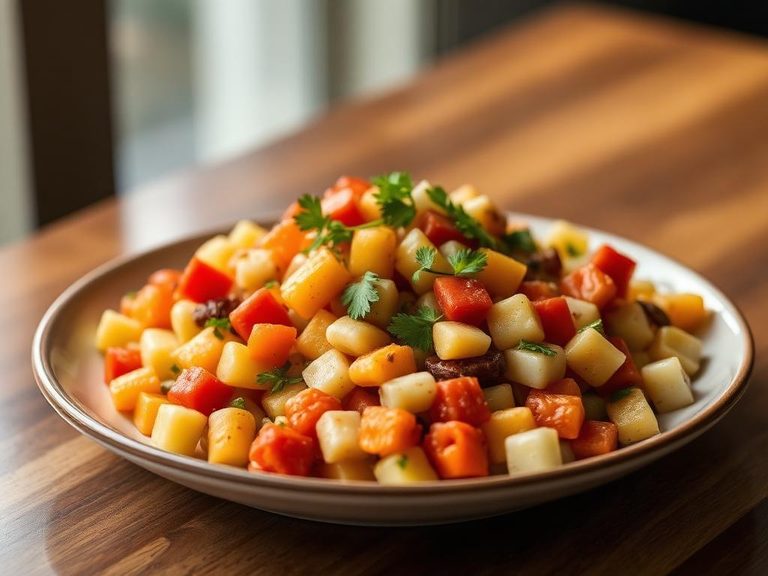
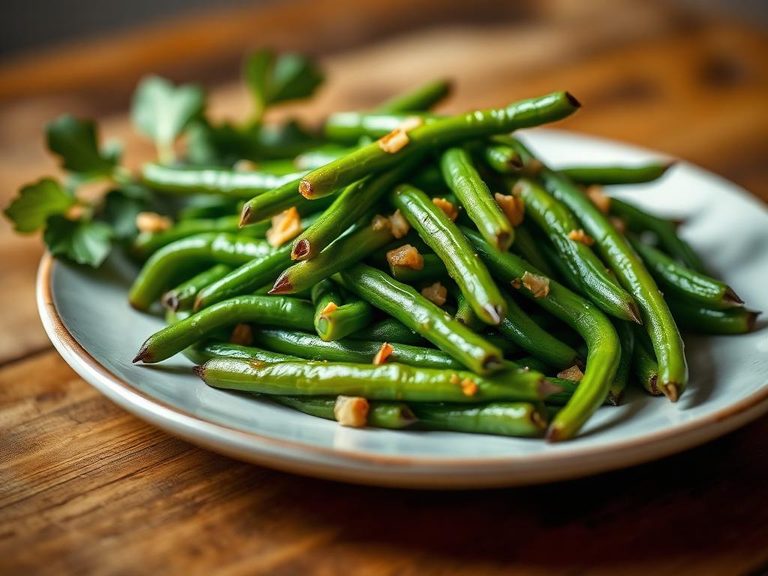
🍽️ Popular dishes
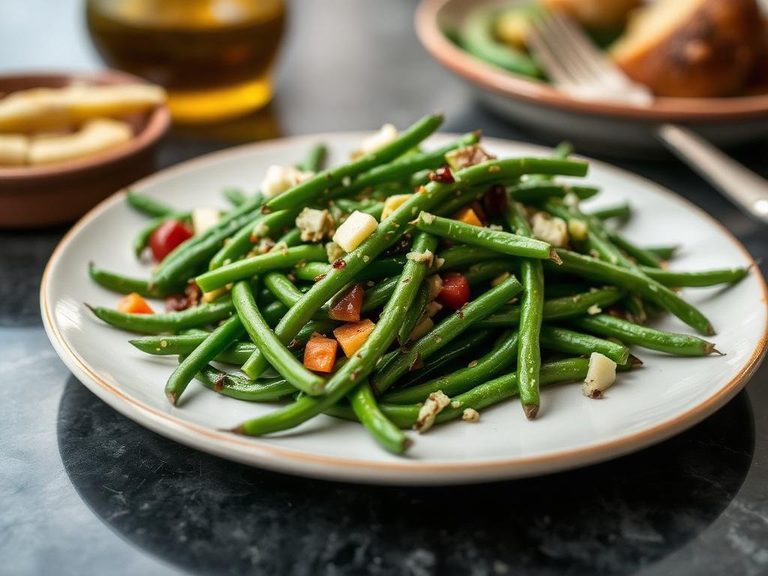
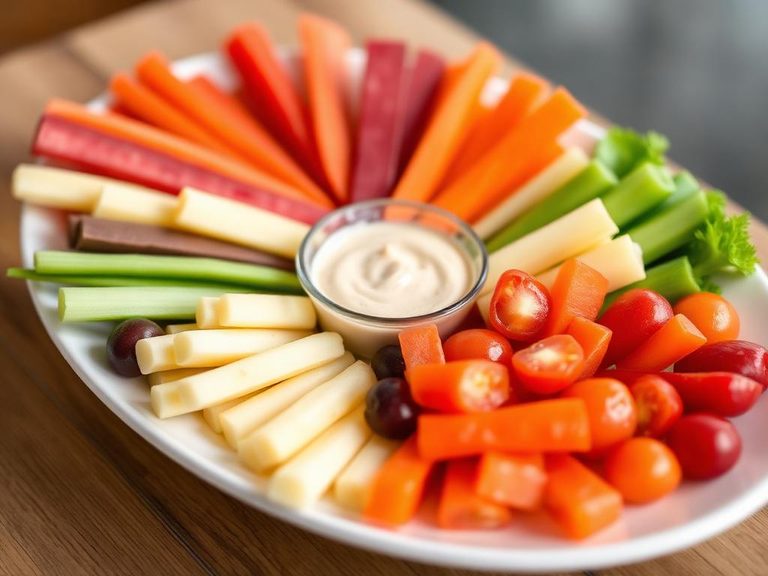
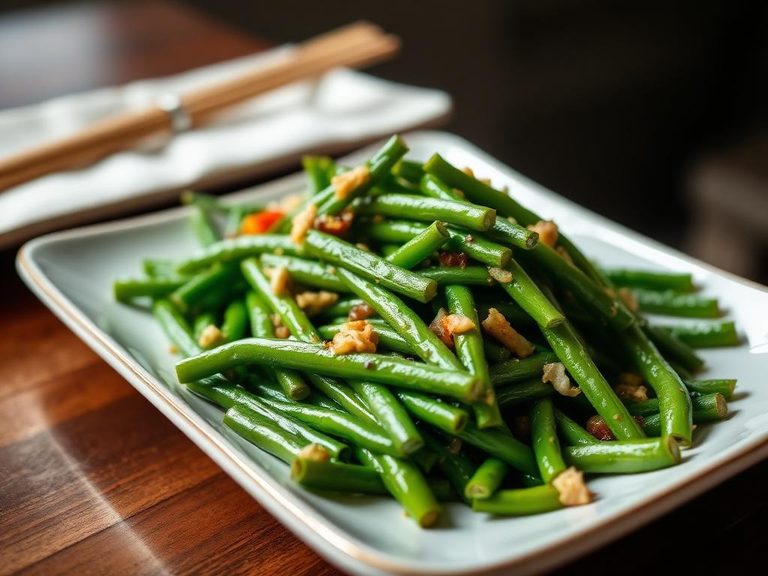
🌍 Where it's eaten
💡 Did you know?
Green beans are actually immature pods of the common bean plant (Phaseolus vulgaris), and if left to mature, they would become the familiar dried beans we use in soups and stews.
Full nutrition (USDA data · scales with serving)
| Water | 89.7 g |
| Energy | 40.0 kcal |
| Protein | 2.0 g |
| Total lipid (fat) | 0.28 g |
| Carbohydrate, by difference | 7.4 g |
| Fiber, total dietary | 3.0 g |
| Total Sugars | 2.3 g |
| Calcium, Ca | 40.0 mg |
| Iron, Fe | 0.65 mg |
| Magnesium, Mg | 28.0 mg |
| Phosphorus, P | 41.0 mg |
| Potassium, K | 290 mg |
| Sodium, Na | 0.00 mg |
| Zinc, Zn | 0.35 mg |
| Copper, Cu | 0.10 mg |
| Selenium, Se | 0.60 ug |
| Vitamin C, total ascorbic acid | 12.2 mg |
| Thiamin | 0.06 mg |
| Riboflavin | 0.10 mg |
| Niacin | 0.73 mg |
| Vitamin B-6 | 0.12 mg |
| Folate, total | 33.0 ug |
| Folic acid | 0.00 ug |
| Folate, food | 33.0 ug |
| Folate, DFE | 33.0 ug |
| Choline, total | 15.3 mg |
| Vitamin B-12 | 0.00 ug |
| Vitamin B-12, added | 0.00 ug |
| Vitamin A, RAE | 35.0 ug |
| Retinol | 0.00 ug |
| Carotene, beta | 379 ug |
| Carotene, alpha | 69.0 ug |
| Cryptoxanthin, beta | 0.00 ug |
| Lycopene | 0.00 ug |
| Lutein + zeaxanthin | 640 ug |
| Vitamin E (alpha-tocopherol) | 0.41 mg |
| Vitamin E, added | 0.00 mg |
| Vitamin D (D2 + D3) | 0.00 ug |
| Vitamin K (phylloquinone) | 43.9 ug |
| Alcohol, ethyl | 0.00 g |
| Caffeine | 0.00 mg |
| Theobromine | 0.00 mg |
Fat & fatty acid profile (per 100g)
| Fatty acids, total saturated | 0.05 g |
| SFA 4:0 | 0.00 g |
| SFA 6:0 | 0.00 g |
| SFA 8:0 | 0.00 g |
| SFA 10:0 | 0.00 g |
| SFA 12:0 | 0.00 g |
| SFA 14:0 | 0.00 g |
| SFA 16:0 | 0.04 g |
| SFA 18:0 | 0.01 g |
| Fatty acids, total monounsaturated | 0.01 g |
| MUFA 16:1 | 0.00 g |
| MUFA 18:1 | 0.01 g |
| MUFA 20:1 | 0.00 g |
| MUFA 22:1 | 0.00 g |
| Fatty acids, total polyunsaturated | 0.11 g |
| PUFA 18:2 | 0.04 g |
| PUFA 18:3 | 0.07 g |
| PUFA 18:4 | 0.00 g |
| PUFA 20:4 | 0.00 g |
| PUFA 20:5 n-3 (EPA) | 0.00 g |
| PUFA 22:5 n-3 (DPA) | 0.00 g |
| PUFA 22:6 n-3 (DHA) | 0.00 g |
| Cholesterol | 0.00 mg |
Amino acid profile (per 100g)
Estimated from Beans, snap, green, canned, no salt added, solids and liquids — USDA does not publish this profile for Green beans.
| Tryptophan | 0.01 g |
| Threonine | 0.04 g |
| Isoleucine | 0.03 g |
| Leucine | 0.05 g |
| Lysine | 0.04 g |
| Methionine | 0.01 g |
| Cystine | 0.01 g |
| Phenylalanine | 0.03 g |
| Tyrosine | 0.02 g |
| Valine | 0.04 g |
| Arginine | 0.03 g |
| Histidine | 0.01 g |
| Alanine | 0.04 g |
| Aspartic acid | 0.11 g |
| Glutamic acid | 0.08 g |
| Glycine | 0.03 g |
| Proline | 0.03 g |
| Serine | 0.04 g |
FAQ
Are raw green beans safe to eat?
Yes, they are safe and commonly eaten raw, but they contain lectins that can cause digestive upset if consumed in large amounts. Cooking or blanching them reduces lectin content.
How do raw green beans compare nutritionally to cooked ones?
Raw green beans retain more vitamin C and certain antioxidants, but cooking can make some nutrients more bioavailable and reduce antinutrients like lectins.
Can I eat the entire green bean pod?
Yes, the entire pod is edible, including the thin, tender seeds inside. The stringy seam can be tough in some varieties, but modern cultivars are often stringless.
Nutrient density (calculated · NRF9.3)
Nutrient Rich Foods index: beneficial nutrients (protein, fiber, vitamins, minerals) minus saturated fat, added sugar & sodium, per 100 kcal.
NRF9.3 index — Fulgoni, Keast & Drewnowski, 2009. Computed from USDA nutrients.
Weight-loss friendliness (composite index)
Energy density 0.40 kcal/g · 20% calories from protein · 3.0 g fiber · 2.3 g sugar per 100 g.
Composite of energy density (Rolls et al., 1999), protein & fiber satiety, minus sugar. A calculated heuristic — ranks satiety-per-calorie, not a clinical measure.
Dietary load (calculated from USDA values)
Potential renal acid load. Positive = acid-forming, negative = alkaline-forming.
Sodium-to-potassium ratio: 0.00 (lower is better — aim for ≤ 1)
Sodium:potassium per WHO potassium guidance. Computed from USDA nutrients.