

Green beans, cooked, as ingredient
Common food
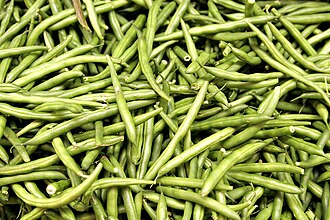
Photo: Wikipedia
Green beans, cooked, are tender-crisp pods with a bright, grassy flavor and a satisfying snap. They are a low-calorie, high-fiber ingredient that adds volume and nutrients without heaviness. Their mild taste makes them a perfect canvas for bold seasonings.
Calorie split: 20% protein · 74% carbs · 6% fat
↓ Full nutrition💚 Why it's loved
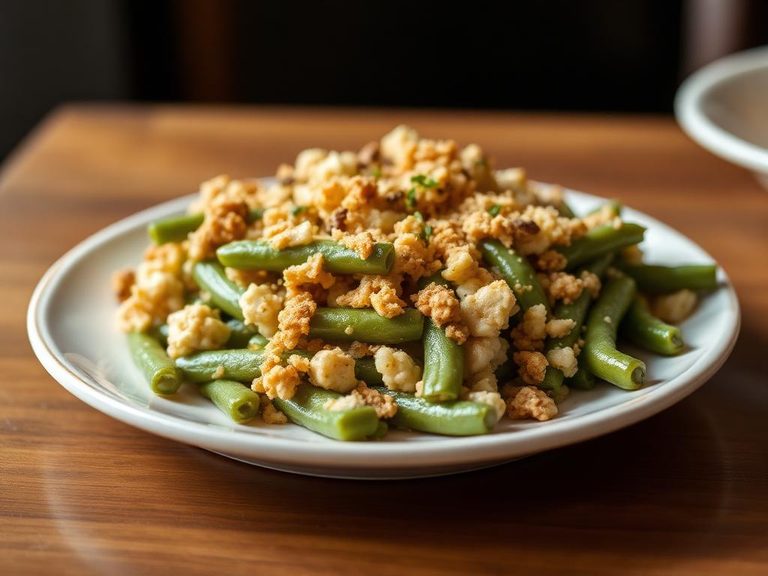
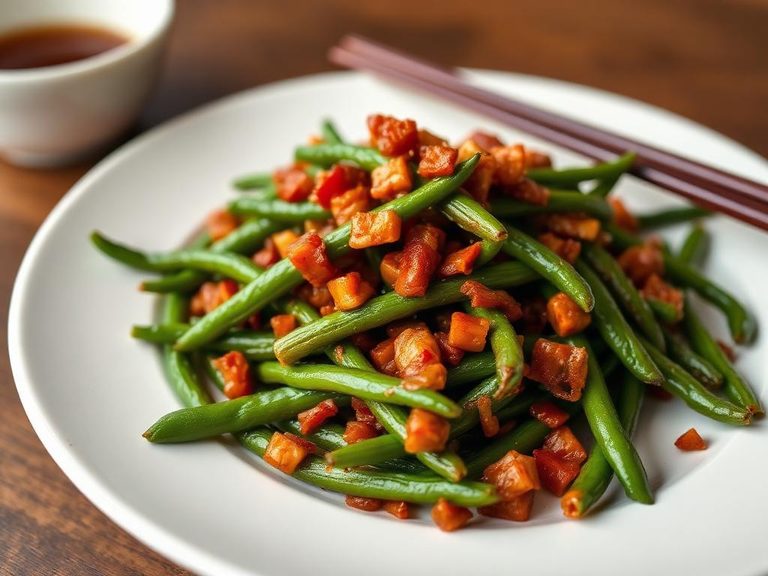
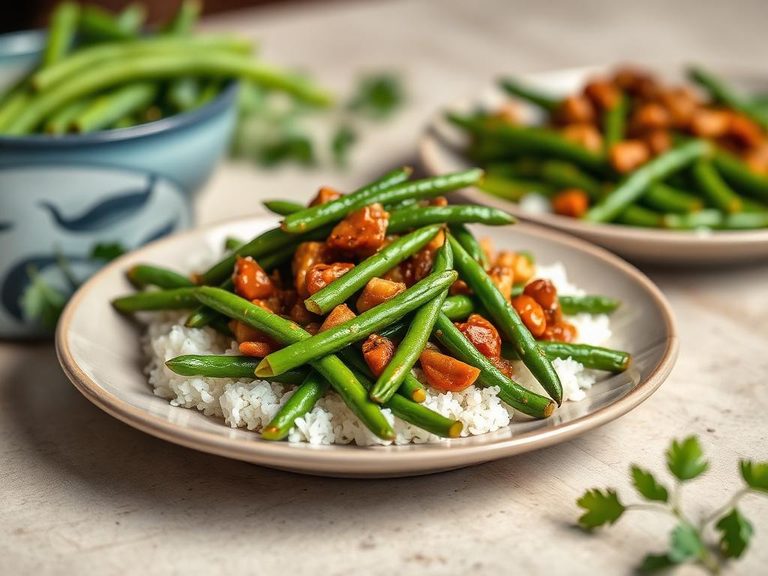
People love green beans for their incredible versatility—they can be steamed, roasted, stir-fried, or added to casseroles, absorbing the flavors of garlic, butter, or soy sauce. They are a staple comfort food in many cultures, from American holiday tables to Asian stir-fries.
⚠️ Watch-outs & how to enjoy it better
Some find plain boiled green beans to have a slightly sulfurous or grassy taste. To counteract this, avoid overcooking; blanch them quickly or sauté with aromatics like garlic and lemon. For those watching blood sugar, pair with a protein or healthy fat to slow digestion.
Key benefits
- Excellent source of dietary fiber for digestive health.
- Very low in calories and fat, supporting weight management.
- Provides plant-based protein and essential vitamins like K and C.
- Contains antioxidants that help combat oxidative stress.
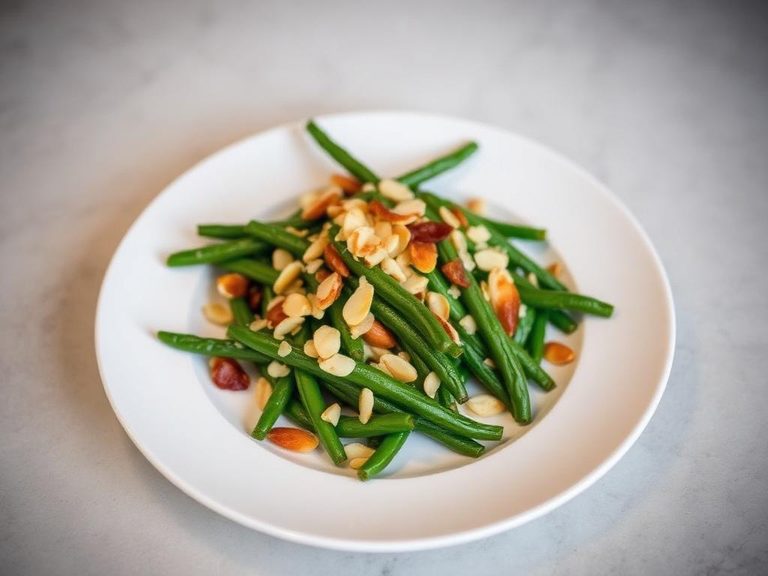
🍽️ Popular dishes
🌍 Where it's eaten
💡 Did you know?
The common green bean (Phaseolus vulgaris) is a member of the legume family, making it a distant cousin to kidney beans and lentils, though we eat the whole pod.
Full nutrition (USDA data · scales with serving)
| Water | 89.2 g |
| Energy | 42.0 kcal |
| Protein | 2.0 g |
| Total lipid (fat) | 0.29 g |
| Carbohydrate, by difference | 7.7 g |
| Fiber, total dietary | 3.1 g |
| Total Sugars | 2.4 g |
| Calcium, Ca | 42.0 mg |
| Iron, Fe | 0.68 mg |
| Magnesium, Mg | 29.0 mg |
| Phosphorus, P | 43.0 mg |
| Potassium, K | 302 mg |
| Sodium, Na | 0.00 mg |
| Zinc, Zn | 0.36 mg |
| Copper, Cu | 0.10 mg |
| Selenium, Se | 0.60 ug |
| Vitamin C, total ascorbic acid | 10.8 mg |
| Thiamin | 0.06 mg |
| Riboflavin | 0.10 mg |
| Niacin | 0.72 mg |
| Vitamin B-6 | 0.11 mg |
| Folate, total | 29.0 ug |
| Folic acid | 0.00 ug |
| Folate, food | 29.0 ug |
| Folate, DFE | 29.0 ug |
| Choline, total | 15.9 mg |
| Vitamin B-12 | 0.00 ug |
| Vitamin B-12, added | 0.00 ug |
| Vitamin A, RAE | 35.0 ug |
| Retinol | 0.00 ug |
| Carotene, beta | 375 ug |
| Carotene, alpha | 68.0 ug |
| Cryptoxanthin, beta | 0.00 ug |
| Lycopene | 0.00 ug |
| Lutein + zeaxanthin | 633 ug |
| Vitamin E (alpha-tocopherol) | 0.43 mg |
| Vitamin E, added | 0.00 mg |
| Vitamin D (D2 + D3) | 0.00 ug |
| Vitamin K (phylloquinone) | 45.7 ug |
| Alcohol, ethyl | 0.00 g |
| Caffeine | 0.00 mg |
| Theobromine | 0.00 mg |
Fat & fatty acid profile (per 100g)
| Fatty acids, total saturated | 0.05 g |
| SFA 4:0 | 0.00 g |
| SFA 6:0 | 0.00 g |
| SFA 8:0 | 0.00 g |
| SFA 10:0 | 0.00 g |
| SFA 12:0 | 0.00 g |
| SFA 14:0 | 0.00 g |
| SFA 16:0 | 0.04 g |
| SFA 18:0 | 0.01 g |
| Fatty acids, total monounsaturated | 0.01 g |
| MUFA 16:1 | 0.00 g |
| MUFA 18:1 | 0.01 g |
| MUFA 20:1 | 0.00 g |
| MUFA 22:1 | 0.00 g |
| Fatty acids, total polyunsaturated | 0.12 g |
| PUFA 18:2 | 0.05 g |
| PUFA 18:3 | 0.07 g |
| PUFA 18:4 | 0.00 g |
| PUFA 20:4 | 0.00 g |
| PUFA 20:5 n-3 (EPA) | 0.00 g |
| PUFA 22:5 n-3 (DPA) | 0.00 g |
| PUFA 22:6 n-3 (DHA) | 0.00 g |
| Cholesterol | 0.00 mg |
Amino acid profile (per 100g)
Estimated from Beans, snap, green, canned, no salt added, solids and liquids — USDA does not publish this profile for Green beans.
| Tryptophan | 0.01 g |
| Threonine | 0.04 g |
| Isoleucine | 0.03 g |
| Leucine | 0.05 g |
| Lysine | 0.04 g |
| Methionine | 0.01 g |
| Cystine | 0.01 g |
| Phenylalanine | 0.03 g |
| Tyrosine | 0.02 g |
| Valine | 0.04 g |
| Arginine | 0.03 g |
| Histidine | 0.01 g |
| Alanine | 0.04 g |
| Aspartic acid | 0.11 g |
| Glutamic acid | 0.08 g |
| Glycine | 0.03 g |
| Proline | 0.03 g |
| Serine | 0.04 g |
FAQ
Are canned green beans as nutritious as fresh or frozen?
Canned green beans retain most of their fiber and minerals but can be higher in sodium. Rinsing them under water can reduce sodium content by up to 40%.
How do I keep green beans from getting mushy?
Cook them quickly over high heat (like stir-frying) or blanch in boiling water for 3-4 minutes, then immediately plunge into ice water to stop the cooking process.
Can I eat the ends and strings?
Modern 'stringless' varieties have very tender ends, but for older types, it's common to snap off the tough stem end and pull to remove the fibrous string.
Nutrient density (calculated · NRF9.3)
Nutrient Rich Foods index: beneficial nutrients (protein, fiber, vitamins, minerals) minus saturated fat, added sugar & sodium, per 100 kcal.
NRF9.3 index — Fulgoni, Keast & Drewnowski, 2009. Computed from USDA nutrients.
Weight-loss friendliness (composite index)
Energy density 0.42 kcal/g · 20% calories from protein · 3.1 g fiber · 2.4 g sugar per 100 g.
Composite of energy density (Rolls et al., 1999), protein & fiber satiety, minus sugar. A calculated heuristic — ranks satiety-per-calorie, not a clinical measure.
Dietary load (calculated from USDA values)
Potential renal acid load. Positive = acid-forming, negative = alkaline-forming.
Sodium-to-potassium ratio: 0.00 (lower is better — aim for ≤ 1)
Sodium:potassium per WHO potassium guidance. Computed from USDA nutrients.