

Dark green vegetables as ingredient in omelet
Common food

Photo: Wikipedia
This is a vibrant mix of finely chopped leafy greens—like spinach, kale, or chard—folded into beaten eggs to create a nutrient-dense, savory omelet. The greens add a tender, slightly earthy bite and a beautiful speckled color against the fluffy egg. Nutritionally, it's a powerhouse, delivering a significant boost of fiber and vitamins for very few calories.
Calorie split: 34% protein · 52% carbs · 14% fat
↓ Full nutrition💚 Why it's loved
People love it for transforming a simple omelet into a more substantial, flavorful meal with a satisfying texture. It's a classic way to incorporate a serving of vegetables into breakfast, making it both comforting and virtuous.
⚠️ Watch-outs & how to enjoy it better
Some greens, like spinach, are high in oxalates, which can bind to calcium and iron, potentially reducing absorption. To counteract this, pair the omelet with a source of vitamin C (like a side of tomatoes or bell peppers) to enhance iron uptake, or choose lower-oxalate greens like kale or chard.
Key benefits
- Excellent source of dietary fiber for digestive health.
- Rich in vitamins A, C, and K from the leafy greens.
- Provides plant-based iron and calcium.
- Low in calories while adding volume and satiety.
- Adds antioxidants like lutein and zeaxanthin.
🍽️ Popular dishes

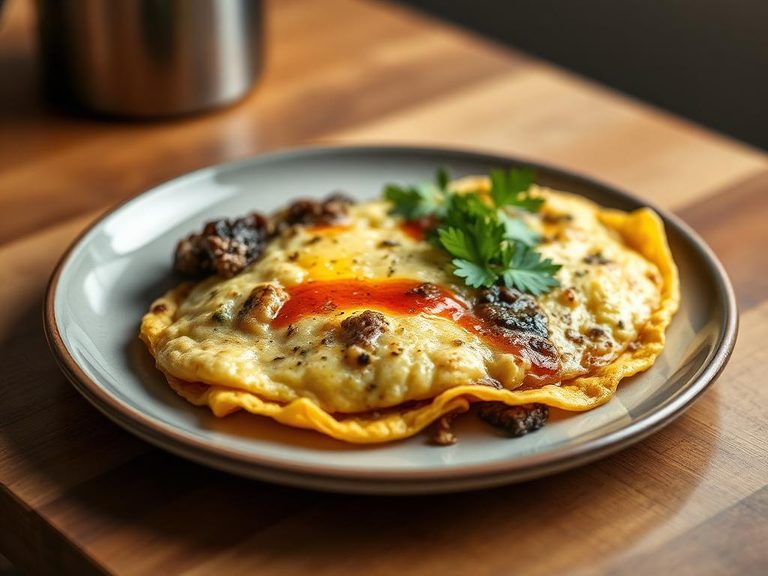
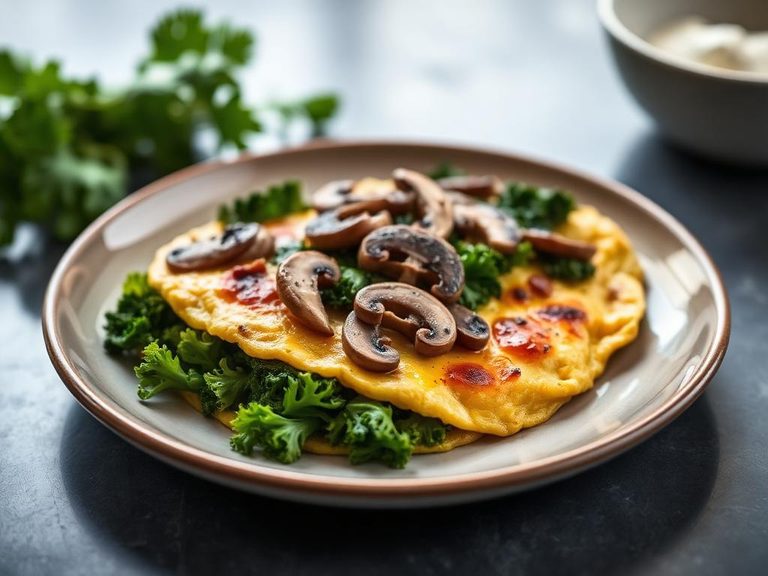

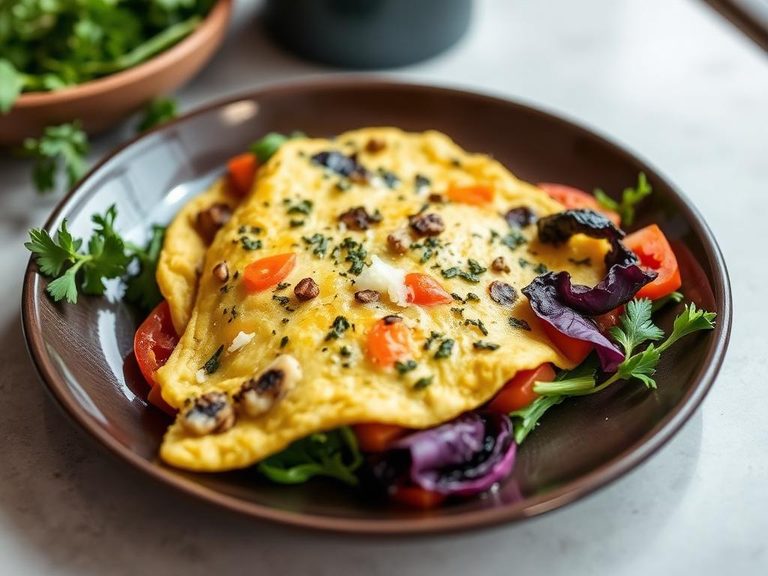
🌍 Where it's eaten
💡 Did you know?
The 'Florentine' in Spinach Omelet Florentine is a culinary nod to Catherine de' Medici, the Italian-born Queen of France, who is said to have introduced spinach to the French court.
Full nutrition (USDA data · scales with serving)
| Water | 90.6 g |
| Energy | 35.0 kcal |
| Protein | 3.0 g |
| Total lipid (fat) | 0.56 g |
| Carbohydrate, by difference | 4.5 g |
| Fiber, total dietary | 1.9 g |
| Total Sugars | 1.2 g |
| Calcium, Ca | 65.0 mg |
| Iron, Fe | 1.0 mg |
| Magnesium, Mg | 82.0 mg |
| Phosphorus, P | 49.0 mg |
| Potassium, K | 452 mg |
| Sodium, Na | 94.0 mg |
| Zinc, Zn | 0.44 mg |
| Copper, Cu | 0.08 mg |
| Selenium, Se | 0.30 ug |
| Vitamin C, total ascorbic acid | 34.9 mg |
| Thiamin | 0.07 mg |
| Riboflavin | 0.17 mg |
| Niacin | 0.54 mg |
| Vitamin B-6 | 0.22 mg |
| Folate, total | 81.0 ug |
| Folic acid | 0.00 ug |
| Folate, food | 81.0 ug |
| Folate, DFE | 81.0 ug |
| Choline, total | 19.8 mg |
| Vitamin B-12 | 0.00 ug |
| Vitamin B-12, added | 0.00 ug |
| Vitamin A, RAE | 242 ug |
| Retinol | 0.00 ug |
| Carotene, beta | 2895 ug |
| Carotene, alpha | 1.0 ug |
| Cryptoxanthin, beta | 8.0 ug |
| Lycopene | 0.00 ug |
| Lutein + zeaxanthin | 6323 ug |
| Vitamin E (alpha-tocopherol) | 1.7 mg |
| Vitamin E, added | 0.00 mg |
| Vitamin D (D2 + D3) | 0.00 ug |
| Vitamin K (phylloquinone) | 414 ug |
| Alcohol, ethyl | 0.00 g |
| Caffeine | 0.00 mg |
| Theobromine | 0.00 mg |
Fat & fatty acid profile (per 100g)
| Fatty acids, total saturated | 0.07 g |
| SFA 4:0 | 0.00 g |
| SFA 6:0 | 0.00 g |
| SFA 8:0 | 0.00 g |
| SFA 10:0 | 0.00 g |
| SFA 12:0 | 0.00 g |
| SFA 14:0 | 0.01 g |
| SFA 16:0 | 0.05 g |
| SFA 18:0 | 0.01 g |
| Fatty acids, total monounsaturated | 0.01 g |
| MUFA 16:1 | 0.00 g |
| MUFA 18:1 | 0.01 g |
| MUFA 20:1 | 0.00 g |
| MUFA 22:1 | 0.00 g |
| Fatty acids, total polyunsaturated | 0.14 g |
| PUFA 18:2 | 0.03 g |
| PUFA 18:3 | 0.12 g |
| PUFA 18:4 | 0.00 g |
| PUFA 20:4 | 0.00 g |
| PUFA 20:5 n-3 (EPA) | 0.00 g |
| PUFA 22:5 n-3 (DPA) | 0.00 g |
| PUFA 22:6 n-3 (DHA) | 0.00 g |
| Cholesterol | 0.00 mg |
FAQ
Should I cook the greens before adding them to the eggs?
For watery greens like spinach, it's best to quickly sauté or wilt them first to release excess moisture, preventing a soggy omelet. For tender greens like baby spinach, you can often add them raw and let them cook in the egg.
What's the best way to chop the greens for an omelet?
A fine to medium chop works best. It distributes the greens evenly throughout the egg, ensures they cook through quickly, and makes for a neater bite.
Can I use frozen greens?
Yes, but thaw and squeeze them thoroughly in a clean towel to remove all excess water. Frozen greens are often pre-chopped and can be a convenient option.
Nutrient density (calculated · NRF9.3)
Nutrient Rich Foods index: beneficial nutrients (protein, fiber, vitamins, minerals) minus saturated fat, added sugar & sodium, per 100 kcal.
NRF9.3 index — Fulgoni, Keast & Drewnowski, 2009. Computed from USDA nutrients.
Weight-loss friendliness (composite index)
Energy density 0.35 kcal/g · 34% calories from protein · 1.9 g fiber · 1.2 g sugar per 100 g.
Composite of energy density (Rolls et al., 1999), protein & fiber satiety, minus sugar. A calculated heuristic — ranks satiety-per-calorie, not a clinical measure.
Dietary load (calculated from USDA values)
Potential renal acid load. Positive = acid-forming, negative = alkaline-forming.
Sodium-to-potassium ratio: 0.21 (lower is better — aim for ≤ 1)
Sodium:potassium per WHO potassium guidance. Computed from USDA nutrients.