

Grapefruit juice, 100%, with calcium added
Common food
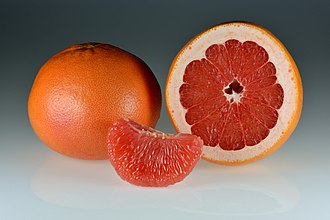
Photo: Wikipedia
This is a vibrant, tart-sweet beverage made from 100% squeezed grapefruit, fortified with calcium for bone support. Its texture is smooth and refreshing, with a characteristic zesty, slightly bitter edge from the fruit's natural compounds. Nutritionally, it's a low-calorie drink that delivers a solid dose of natural sugars and a key mineral boost.
Calorie split: 5% protein · 79% carbs · 16% fat
↓ Full nutrition💚 Why it's loved
People love it for its bold, invigorating flavor that's both sweet and tart, making it a classic breakfast or brunch staple. Its versatility shines in cocktails, mocktails, and salad dressings, offering a bright, citrusy base.
⚠️ Watch-outs & how to enjoy it better
The natural tartness and bitterness can be strong for some palates, and the natural sugars (about 8g per 100g) can contribute to blood sugar spikes if consumed in large amounts. To counteract, pair it with a source of protein or healthy fat (like eggs or nuts) to slow sugar absorption, and stick to a standard 1-cup serving. Note: Grapefruit can interact with certain medications; consult a doctor if you take prescription drugs.
Key benefits
- Good source of vitamin C, an antioxidant
- Provides calcium for bone and teeth health
- Low in fat and a source of natural sugars for energy
- Contains the antioxidant lycopene
- May support hydration
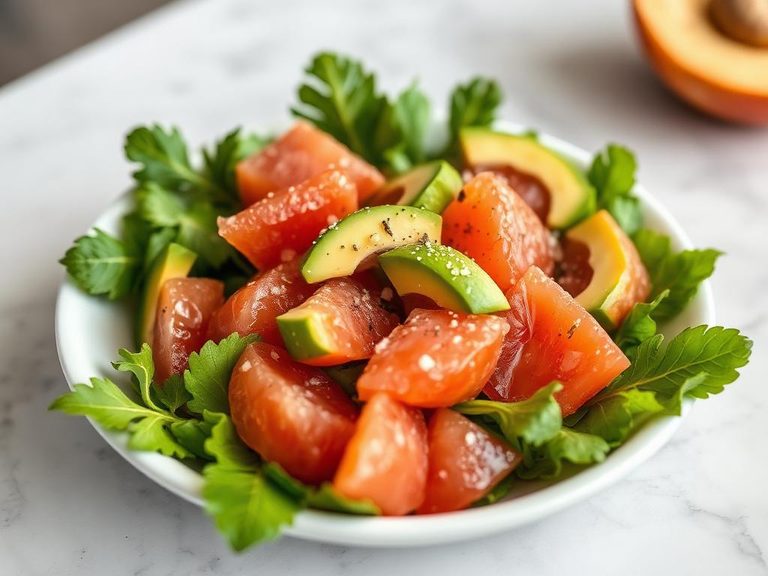
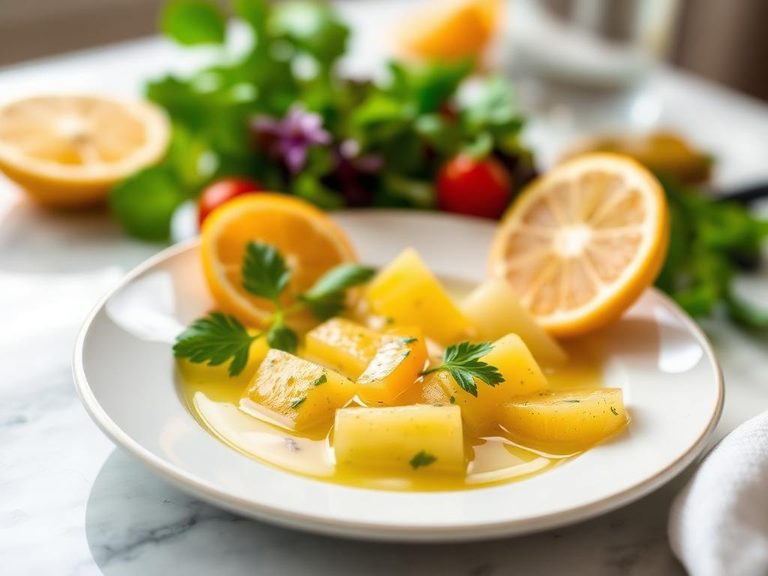
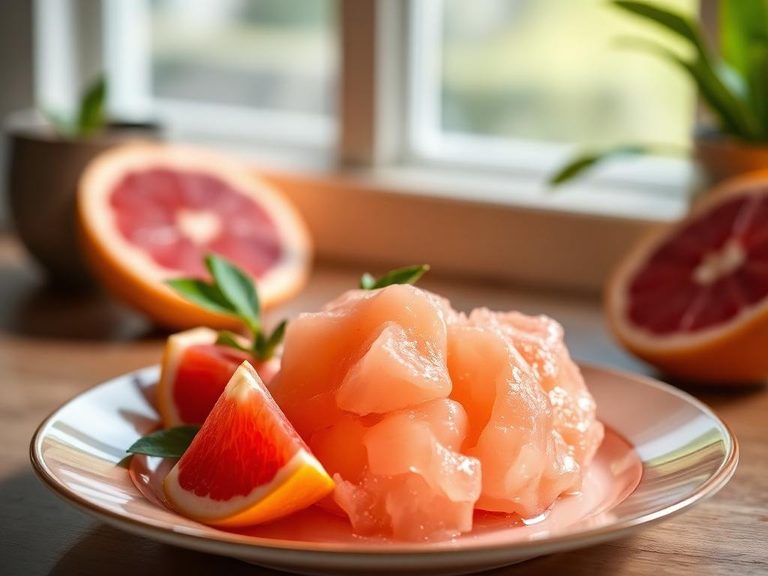
🍽️ Popular dishes


🌍 Where it's eaten
💡 Did you know?
The 'ruby red' variety of grapefruit, often used for juice, was a natural mutation discovered in Texas in the 1920s and is prized for its sweeter, less bitter flavor compared to white grapefruit.
Full nutrition (USDA data · scales with serving)
| Water | 90.8 g |
| Energy | 39.0 kcal |
| Protein | 0.51 g |
| Total lipid (fat) | 0.68 g |
| Carbohydrate, by difference | 7.7 g |
| Fiber, total dietary | 0.30 g |
| Total Sugars | 8.0 g |
| Calcium, Ca | 146 mg |
| Iron, Fe | 0.06 mg |
| Magnesium, Mg | 9.0 mg |
| Phosphorus, P | 16.0 mg |
| Potassium, K | 132 mg |
| Sodium, Na | 2.0 mg |
| Zinc, Zn | 0.04 mg |
| Copper, Cu | 0.03 mg |
| Selenium, Se | 0.00 ug |
| Vitamin C, total ascorbic acid | 22.2 mg |
| Thiamin | 0.04 mg |
| Riboflavin | 0.03 mg |
| Niacin | 0.20 mg |
| Vitamin B-6 | 0.04 mg |
| Folate, total | 12.0 ug |
| Folic acid | 0.00 ug |
| Folate, food | 12.0 ug |
| Folate, DFE | 12.0 ug |
| Choline, total | 6.4 mg |
| Vitamin B-12 | 0.00 ug |
| Vitamin B-12, added | 0.00 ug |
| Vitamin A, RAE | 16.0 ug |
| Retinol | 0.00 ug |
| Carotene, beta | 188 ug |
| Carotene, alpha | 3.0 ug |
| Cryptoxanthin, beta | 5.0 ug |
| Lycopene | 297 ug |
| Lutein + zeaxanthin | 14.0 ug |
| Vitamin E (alpha-tocopherol) | 0.20 mg |
| Vitamin E, added | 0.00 mg |
| Vitamin D (D2 + D3) | 0.00 ug |
| Vitamin K (phylloquinone) | 0.00 ug |
| Alcohol, ethyl | 0.00 g |
| Caffeine | 0.00 mg |
| Theobromine | 0.00 mg |
Fat & fatty acid profile (per 100g)
| Fatty acids, total saturated | 0.17 g |
| SFA 4:0 | 0.00 g |
| SFA 6:0 | 0.00 g |
| SFA 8:0 | 0.00 g |
| SFA 10:0 | 0.00 g |
| SFA 12:0 | 0.00 g |
| SFA 14:0 | 0.00 g |
| SFA 16:0 | 0.15 g |
| SFA 18:0 | 0.01 g |
| Fatty acids, total monounsaturated | 0.16 g |
| MUFA 16:1 | 0.01 g |
| MUFA 18:1 | 0.15 g |
| MUFA 20:1 | 0.00 g |
| MUFA 22:1 | 0.00 g |
| Fatty acids, total polyunsaturated | 0.30 g |
| PUFA 18:2 | 0.23 g |
| PUFA 18:3 | 0.06 g |
| PUFA 18:4 | 0.00 g |
| PUFA 20:4 | 0.00 g |
| PUFA 20:5 n-3 (EPA) | 0.00 g |
| PUFA 22:5 n-3 (DPA) | 0.00 g |
| PUFA 22:6 n-3 (DHA) | 0.00 g |
| Cholesterol | 0.00 mg |
Amino acid profile (per 100g)
Estimated from Grapefruit, sections, canned, juice pack, solids and liquids — USDA does not publish this profile for Grapefruit juice.
| Tryptophan | 0.01 g |
| Threonine | 0.01 g |
| Isoleucine | 0.01 g |
| Leucine | 0.01 g |
| Lysine | 0.02 g |
| Methionine | 0.01 g |
| Cystine | 0.01 g |
| Phenylalanine | 0.04 g |
| Tyrosine | 0.01 g |
| Valine | 0.01 g |
| Arginine | 0.08 g |
| Histidine | 0.01 g |
| Alanine | 0.02 g |
| Aspartic acid | 0.13 g |
| Glutamic acid | 0.18 g |
| Glycine | 0.01 g |
| Proline | 0.06 g |
| Serine | 0.03 g |
FAQ
Is grapefruit juice with added calcium as good as milk for bone health?
It's a good supplemental source, providing about 15-20% of the daily value for calcium per cup. However, milk also provides protein and other nutrients, so it's best viewed as a complementary source within a varied diet.
Why is it '100%' and not from concentrate?
'100% juice' means no added sugars or water. 'Not from concentrate' indicates the juice was squeezed directly from the fruit and pasteurized, which some believe better preserves fresh flavor.
Does the calcium change the taste?
Minimal. Calcium salts like calcium citrate or carbonate are typically used, which are relatively tasteless at the levels added for fortification, so the grapefruit's natural flavor remains dominant.
Nutrient density (calculated · NRF9.3)
Nutrient Rich Foods index: beneficial nutrients (protein, fiber, vitamins, minerals) minus saturated fat, added sugar & sodium, per 100 kcal.
NRF9.3 index — Fulgoni, Keast & Drewnowski, 2009. Computed from USDA nutrients.
Weight-loss friendliness (composite index)
Energy density 0.39 kcal/g · 5% calories from protein · 0.3 g fiber · 8.0 g sugar per 100 g.
Composite of energy density (Rolls et al., 1999), protein & fiber satiety, minus sugar. A calculated heuristic — ranks satiety-per-calorie, not a clinical measure.
Dietary load (calculated from USDA values)
Potential renal acid load. Positive = acid-forming, negative = alkaline-forming.
Sodium-to-potassium ratio: 0.02 (lower is better — aim for ≤ 1)
Sodium:potassium per WHO potassium guidance. Computed from USDA nutrients.