

Frozen yogurts, flavors other than chocolate
Whole food · Sweets

Photo: Wikipedia
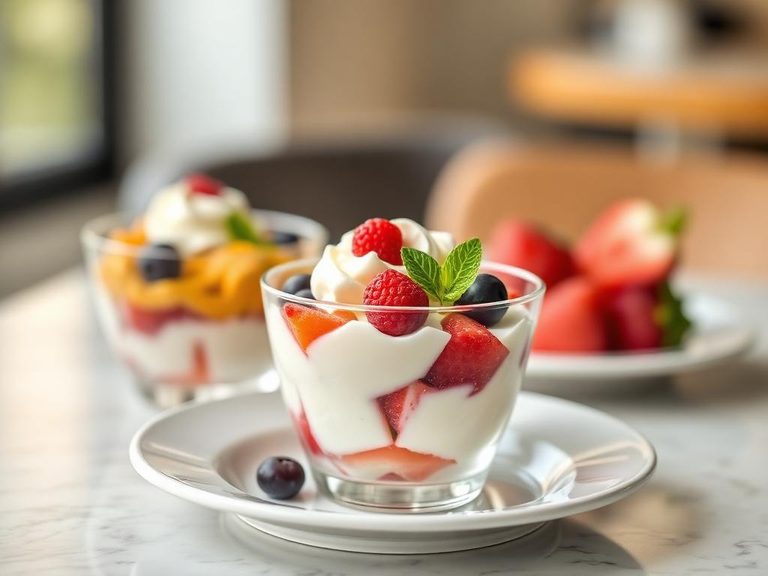
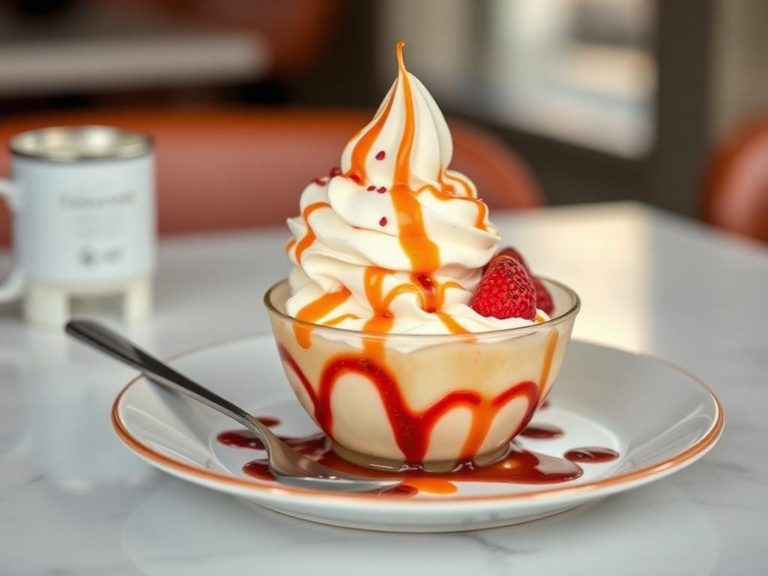
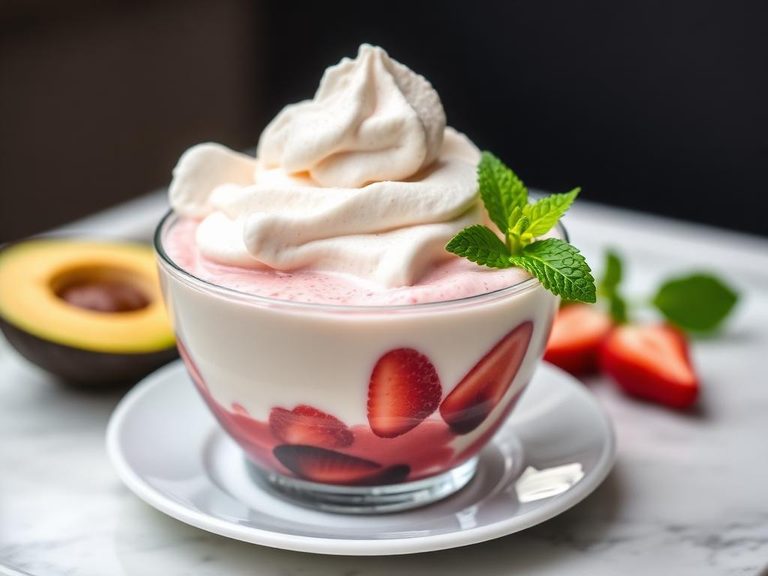
Frozen yogurt, in flavors beyond chocolate, is a tangy, creamy dessert made from cultured dairy and churned while freezing. Its texture is smooth and slightly icy, offering a refreshing, lighter alternative to traditional ice cream. Nutritionally, it provides a modest protein boost but is notable for its significant sugar content, with nearly 20 grams per 100g serving.
Calorie split: 9% protein · 66% carbs · 25% fat
↓ Full nutrition💚 Why it's loved
People adore its signature tangy-sweet balance and the way it serves as a versatile canvas for countless toppings, from fresh fruit to crunchy granola. It's often seen as a nostalgic, fun treat, deeply embedded in mall culture and summer dessert routines.
⚠️ Watch-outs & how to enjoy it better
Its high sugar content can lead to rapid blood-sugar spikes, which is a concern for individuals managing diabetes or insulin resistance. To counteract this, pair a small portion with a source of protein or healthy fat (like nuts or seeds) to slow sugar absorption, and be mindful of high-sugar toppings. Those with lactose intolerance should also exercise caution.
Key benefits
- Contains probiotics from live active cultures, which may support gut health.
- Offers a lower fat content than many ice creams.
- Provides calcium and some protein from its dairy base.
- Can be a source of quick energy due to its carbohydrate content.
🍽️ Popular dishes
🌍 Where it's eaten
💡 Did you know?
The first U.S. patent for a machine to make frozen yogurt was filed in 1981, but the dessert gained massive commercial popularity in the 1980s as a 'healthier' ice cream alternative, peaking with chains like TCBY.
Full nutrition (USDA data · scales with serving)
| Water | 71.2 g |
| Energy | 127 kcal |
| Energy | 531 kj |
| Protein | 3.0 g |
| Total lipid (fat) | 3.6 g |
| Ash | 0.60 g |
| Carbohydrate, by difference | 21.6 g |
| Fiber, total dietary | 0.00 g |
| Total Sugars | 19.9 g |
| Calcium, Ca | 100 mg |
| Iron, Fe | 0.46 mg |
| Magnesium, Mg | 10.0 mg |
| Phosphorus, P | 89.0 mg |
| Potassium, K | 156 mg |
| Sodium, Na | 63.0 mg |
| Zinc, Zn | 0.28 mg |
| Copper, Cu | 0.01 mg |
| Selenium, Se | 1.9 ug |
| Fluoride, F | 25.7 ug |
| Vitamin C, total ascorbic acid | 0.70 mg |
| Thiamin | 0.04 mg |
| Riboflavin | 0.18 mg |
| Niacin | 0.07 mg |
| Vitamin B-6 | 0.04 mg |
| Folate, total | 4.0 ug |
| Folic acid | 0.00 ug |
| Folate, food | 4.0 ug |
| Folate, DFE | 4.0 ug |
| Choline, total | 23.1 mg |
| Vitamin B-12 | 0.07 ug |
| Vitamin B-12, added | 0.00 ug |
| Vitamin A, RAE | 49.0 ug |
| Retinol | 48.0 ug |
| Carotene, beta | 9.0 ug |
| Carotene, alpha | 0.00 ug |
| Cryptoxanthin, beta | 0.00 ug |
| Vitamin A, IU | 176 iu |
| Lycopene | 0.00 ug |
| Lutein + zeaxanthin | 0.00 ug |
| Vitamin E (alpha-tocopherol) | 0.09 mg |
| Vitamin E, added | 0.00 mg |
| Vitamin D (D2 + D3), International Units | 3.0 iu |
| Vitamin D (D2 + D3) | 0.10 ug |
| Vitamin D3 (cholecalciferol) | 0.10 ug |
| Vitamin K (phylloquinone) | 0.30 ug |
| Alcohol, ethyl | 0.00 g |
| Caffeine | 0.00 mg |
| Theobromine | 0.00 mg |
Fat & fatty acid profile (per 100g)
| Fatty acids, total saturated | 2.3 g |
| SFA 4:0 | 0.11 g |
| SFA 6:0 | 0.08 g |
| SFA 8:0 | 0.04 g |
| SFA 10:0 | 0.10 g |
| SFA 12:0 | 0.12 g |
| SFA 14:0 | 0.38 g |
| SFA 16:0 | 0.99 g |
| SFA 18:0 | 0.35 g |
| Fatty acids, total monounsaturated | 0.99 g |
| MUFA 16:1 | 0.08 g |
| MUFA 18:1 | 0.82 g |
| MUFA 20:1 | 0.00 g |
| MUFA 22:1 | 0.00 g |
| Fatty acids, total polyunsaturated | 0.10 g |
| PUFA 18:2 | 0.07 g |
| PUFA 18:3 | 0.03 g |
| PUFA 18:4 | 0.00 g |
| PUFA 20:4 | 0.00 g |
| PUFA 20:5 n-3 (EPA) | 0.00 g |
| PUFA 22:5 n-3 (DPA) | 0.00 g |
| PUFA 22:6 n-3 (DHA) | 0.00 g |
| Cholesterol | 13.0 mg |
Amino acid profile (per 100g)
Estimated from Frozen yogurts, vanilla, soft-serve — USDA does not publish this profile for Frozen yogurts.
| Tryptophan | 0.05 g |
| Threonine | 0.17 g |
| Isoleucine | 0.23 g |
| Leucine | 0.37 g |
| Lysine | 0.30 g |
| Methionine | 0.09 g |
| Cystine | 0.04 g |
| Phenylalanine | 0.18 g |
| Tyrosine | 0.18 g |
| Valine | 0.25 g |
| Arginine | 0.14 g |
| Histidine | 0.10 g |
| Alanine | 0.13 g |
| Aspartic acid | 0.28 g |
| Glutamic acid | 0.79 g |
| Glycine | 0.08 g |
| Proline | 0.36 g |
| Serine | 0.20 g |
FAQ
Is frozen yogurt healthier than ice cream?
It typically has less fat and may contain probiotics, but it often has a similar or even higher sugar content. The healthiest choice depends on the specific product and your dietary goals.
Why does frozen yogurt sometimes taste sour?
The tangy flavor comes from the live bacterial cultures used in fermentation, the same process that gives plain yogurt its characteristic taste.
Can I eat frozen yogurt if I'm lactose intolerant?
It's made from dairy and contains lactose. Some people with mild intolerance may tolerate it, especially because the fermentation process breaks down some lactose, but it's not lactose-free. Lactase supplements can help.
Nutrient density (calculated · NRF9.3)
Nutrient Rich Foods index: beneficial nutrients (protein, fiber, vitamins, minerals) minus saturated fat, added sugar & sodium, per 100 kcal.
NRF9.3 index — Fulgoni, Keast & Drewnowski, 2009. Computed from USDA nutrients.
Weight-loss friendliness (composite index)
Energy density 1.27 kcal/g · 9% calories from protein · 0.0 g fiber · 19.9 g sugar per 100 g.
Composite of energy density (Rolls et al., 1999), protein & fiber satiety, minus sugar. A calculated heuristic — ranks satiety-per-calorie, not a clinical measure.
Dietary load (calculated from USDA values)
Potential renal acid load. Positive = acid-forming, negative = alkaline-forming.
Sodium-to-potassium ratio: 0.40 (lower is better — aim for ≤ 1)
Sodium:potassium per WHO potassium guidance. Computed from USDA nutrients.