

Fish, salmon, baked or broiled, coated
Common food

Photo: Wikipedia
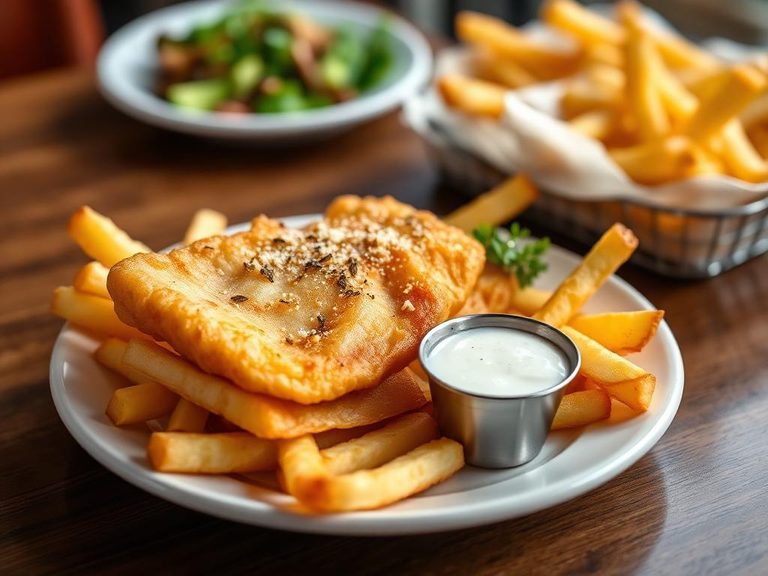
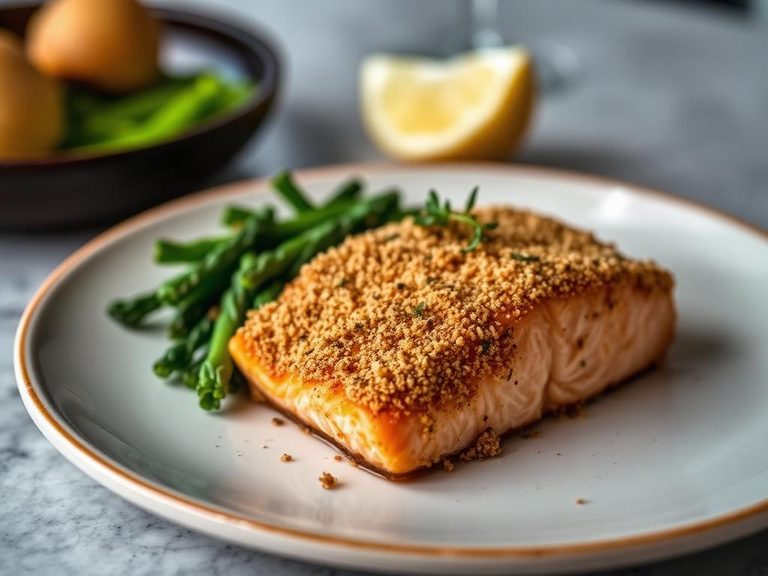
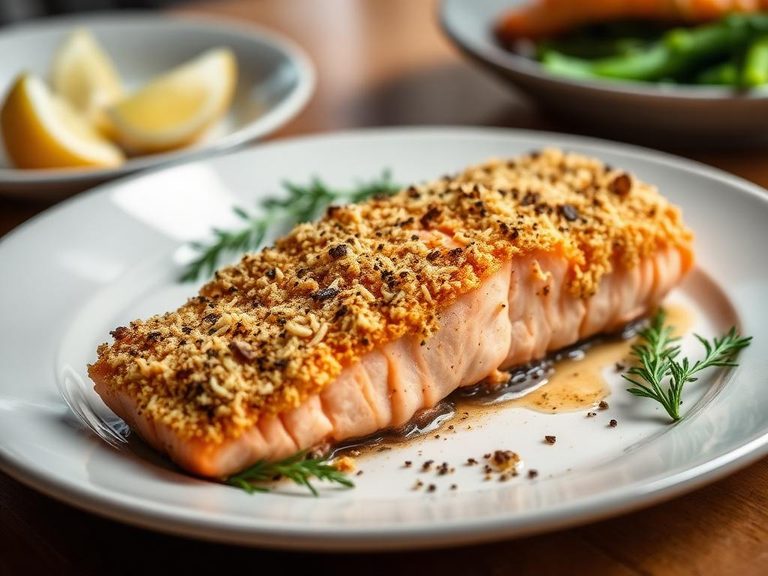
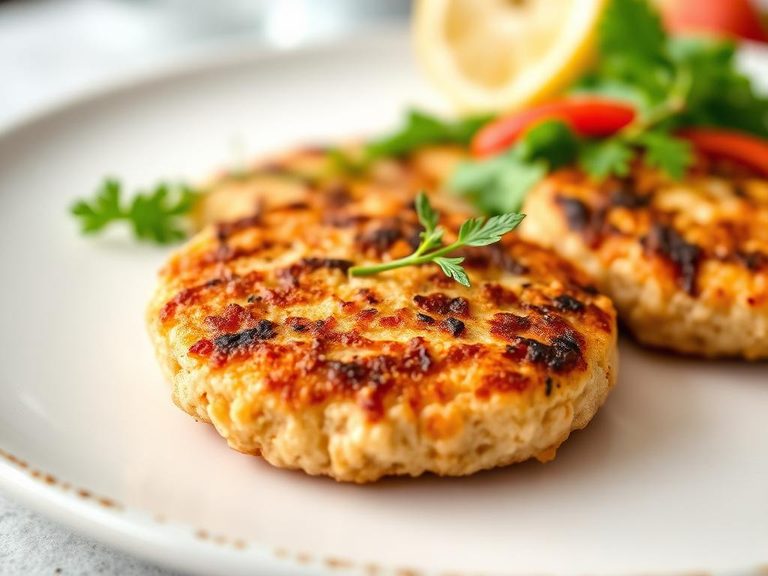
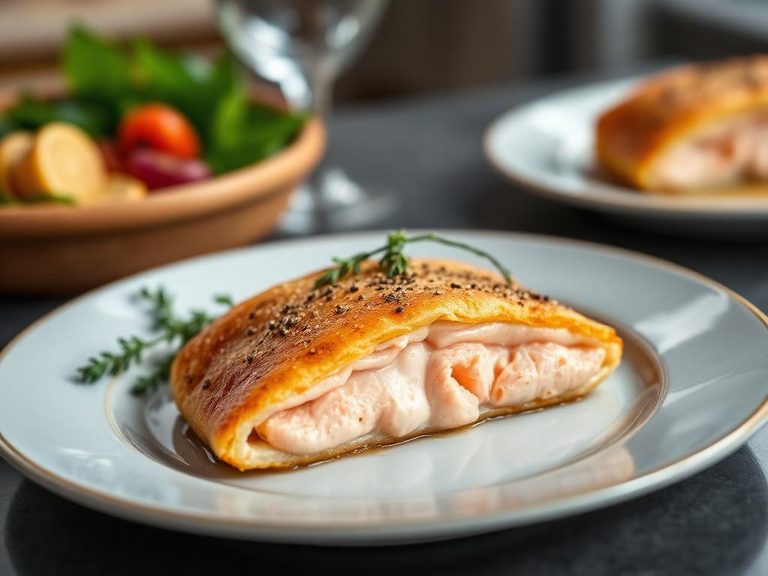
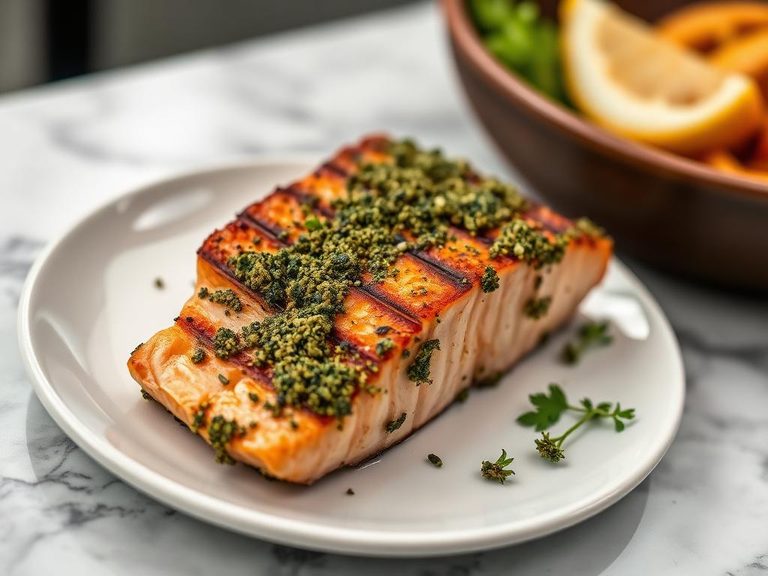
Baked or broiled coated salmon is a savory, flaky fish fillet encased in a crisp, seasoned crust—often breadcrumbs, panko, or a light batter—that turns golden and crunchy under high heat. The interior remains moist and tender, offering a rich, buttery flavor with a satisfying contrast between the crunchy exterior and the soft, oily fish. Nutritionally, it delivers a substantial 22.7 grams of protein per 100 grams, making it an excellent source of high-quality protein and healthy fats.
Calorie split: 33% protein · 11% carbs · 55% fat
↓ Full nutrition💚 Why it's loved
People love it for the irresistible contrast of a crispy, flavorful coating against the tender, flaky salmon—it's a restaurant-quality texture that's easy to achieve at home. It's also incredibly versatile, pairing well with everything from lemon-dill sauce to a simple side of roasted vegetables, making it a staple in both casual weeknight dinners and festive gatherings.
⚠️ Watch-outs & how to enjoy it better
The coating can add extra carbohydrates and sometimes hidden sodium, which may be a concern for those monitoring blood sugar or salt intake. To counteract this, opt for whole-grain or almond-flour coatings to boost fiber and reduce refined carbs, and use herbs and spices instead of salt for flavor. Also, be mindful of portion sizes to keep calories in check, and pair the fish with non-starchy vegetables to balance the meal.
Key benefits
- High in complete protein for muscle maintenance and satiety
- Rich in omega-3 fatty acids for heart and brain health
- Provides a satisfying crunch without deep-frying
- Contains B vitamins and selenium for energy and immune support
- Balanced macronutrient profile for a balanced meal
🍽️ Popular dishes
🌍 Where it's eaten
💡 Did you know?
The crispy coating on baked salmon can actually help lock in moisture, keeping the fish flaky and tender even when cooked at high temperatures—a technique used by chefs to prevent the fish from drying out.
Full nutrition (USDA data · scales with serving)
| Water | 51.3 g |
| Energy | 277 kcal |
| Protein | 22.7 g |
| Total lipid (fat) | 16.6 g |
| Carbohydrate, by difference | 7.8 g |
| Fiber, total dietary | 0.30 g |
| Total Sugars | 0.14 g |
| Calcium, Ca | 19.0 mg |
| Iron, Fe | 0.95 mg |
| Magnesium, Mg | 32.0 mg |
| Phosphorus, P | 273 mg |
| Potassium, K | 398 mg |
| Sodium, Na | 329 mg |
| Zinc, Zn | 0.48 mg |
| Copper, Cu | 0.07 mg |
| Selenium, Se | 29.1 ug |
| Vitamin C, total ascorbic acid | 2.5 mg |
| Thiamin | 0.25 mg |
| Riboflavin | 0.19 mg |
| Niacin | 9.6 mg |
| Vitamin B-6 | 0.63 mg |
| Folate, total | 36.0 ug |
| Folic acid | 13.0 ug |
| Folate, food | 23.0 ug |
| Folate, DFE | 45.0 ug |
| Choline, total | 91.3 mg |
| Vitamin B-12 | 3.3 ug |
| Vitamin B-12, added | 0.00 ug |
| Vitamin A, RAE | 69.0 ug |
| Retinol | 68.0 ug |
| Carotene, beta | 9.0 ug |
| Carotene, alpha | 0.00 ug |
| Cryptoxanthin, beta | 0.00 ug |
| Lycopene | 0.00 ug |
| Lutein + zeaxanthin | 7.0 ug |
| Vitamin E (alpha-tocopherol) | 3.6 mg |
| Vitamin E, added | 0.00 mg |
| Vitamin D (D2 + D3) | 11.6 ug |
| Vitamin K (phylloquinone) | 4.4 ug |
| Alcohol, ethyl | 0.00 g |
| Caffeine | 0.00 mg |
| Theobromine | 0.00 mg |
Fat & fatty acid profile (per 100g)
| Fatty acids, total saturated | 3.9 g |
| SFA 4:0 | 0.03 g |
| SFA 6:0 | 0.02 g |
| SFA 8:0 | 0.01 g |
| SFA 10:0 | 0.03 g |
| SFA 12:0 | 0.04 g |
| SFA 14:0 | 0.60 g |
| SFA 16:0 | 2.3 g |
| SFA 18:0 | 0.68 g |
| Fatty acids, total monounsaturated | 5.0 g |
| MUFA 16:1 | 0.70 g |
| MUFA 18:1 | 3.9 g |
| MUFA 20:1 | 0.35 g |
| MUFA 22:1 | 0.01 g |
| Fatty acids, total polyunsaturated | 4.7 g |
| PUFA 18:2 | 2.0 g |
| PUFA 18:3 | 0.29 g |
| PUFA 18:4 | 0.11 g |
| PUFA 20:4 | 0.08 g |
| PUFA 20:5 n-3 (EPA) | 0.73 g |
| PUFA 22:5 n-3 (DPA) | 0.32 g |
| PUFA 22:6 n-3 (DHA) | 0.96 g |
| Cholesterol | 63.0 mg |
Amino acid profile (per 100g)
Estimated from Fish, fish sticks, frozen, prepared — USDA does not publish this profile for Fish.
| Tryptophan | 0.12 g |
| Threonine | 0.37 g |
| Isoleucine | 0.43 g |
| Leucine | 0.85 g |
| Lysine | 0.80 g |
| Methionine | 0.30 g |
| Phenylalanine | 0.47 g |
| Tyrosine | 0.29 g |
| Valine | 0.50 g |
| Arginine | 0.59 g |
| Histidine | 0.23 g |
| Alanine | 0.55 g |
| Aspartic acid | 0.82 g |
| Glutamic acid | 2.3 g |
| Glycine | 0.47 g |
| Proline | 0.78 g |
| Serine | 0.49 g |
| Hydroxyproline | 0.00 g |
FAQ
Is coated salmon healthier than fried fish?
Yes, baked or broiled coated salmon is generally healthier than deep-fried fish because it uses less oil, retains more omega-3s, and avoids the added fat from frying. However, the coating can still add calories and carbs, so choose light, whole-grain coatings for the best balance.
Can I make coated salmon gluten-free?
Absolutely—use gluten-free breadcrumbs, almond flour, or crushed nuts like pecans or walnuts for the coating. This keeps the dish gluten-free while adding extra texture and nutrition.
How do I prevent the coating from falling off?
Pat the salmon dry before coating, use a thin layer of mustard or egg wash as a binder, and press the coating firmly onto the fish. Bake on a preheated sheet to help the crust set quickly.
Nutrient density (calculated · NRF9.3)
Nutrient Rich Foods index: beneficial nutrients (protein, fiber, vitamins, minerals) minus saturated fat, added sugar & sodium, per 100 kcal.
NRF9.3 index — Fulgoni, Keast & Drewnowski, 2009. Computed from USDA nutrients.
Weight-loss friendliness (composite index)
Energy density 2.77 kcal/g · 33% calories from protein · 0.3 g fiber · 0.1 g sugar per 100 g.
Composite of energy density (Rolls et al., 1999), protein & fiber satiety, minus sugar. A calculated heuristic — ranks satiety-per-calorie, not a clinical measure.
Dietary load (calculated from USDA values)
Potential renal acid load. Positive = acid-forming, negative = alkaline-forming.
Sodium-to-potassium ratio: 0.83 (lower is better — aim for ≤ 1)
Sodium:potassium per WHO potassium guidance. Computed from USDA nutrients.