

Fish, NS as to type, baked or broiled, coated
Common food

Photo: Wikipedia
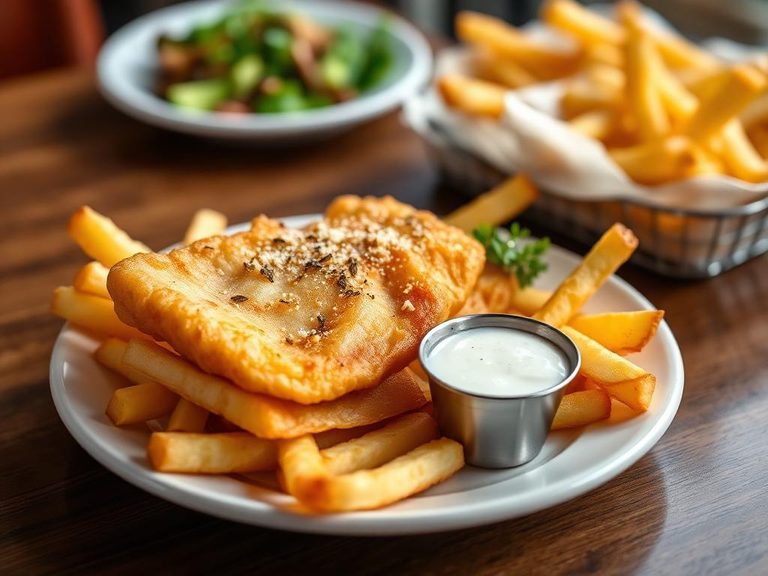
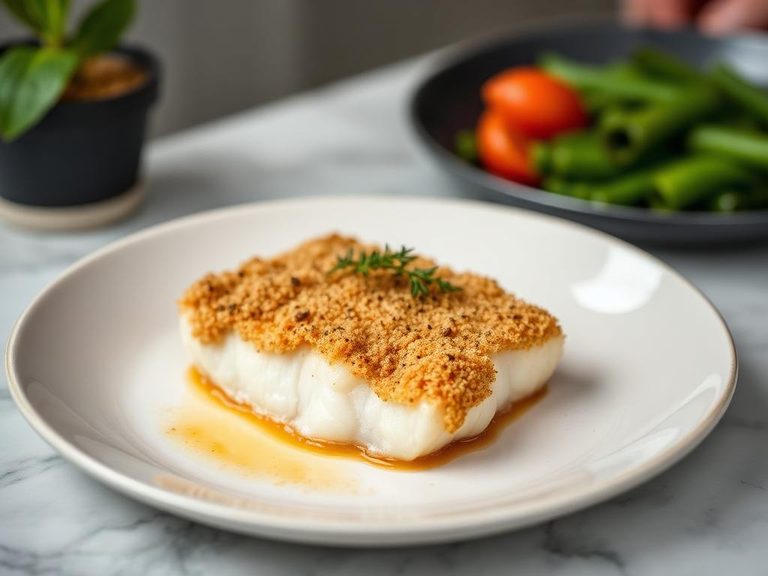
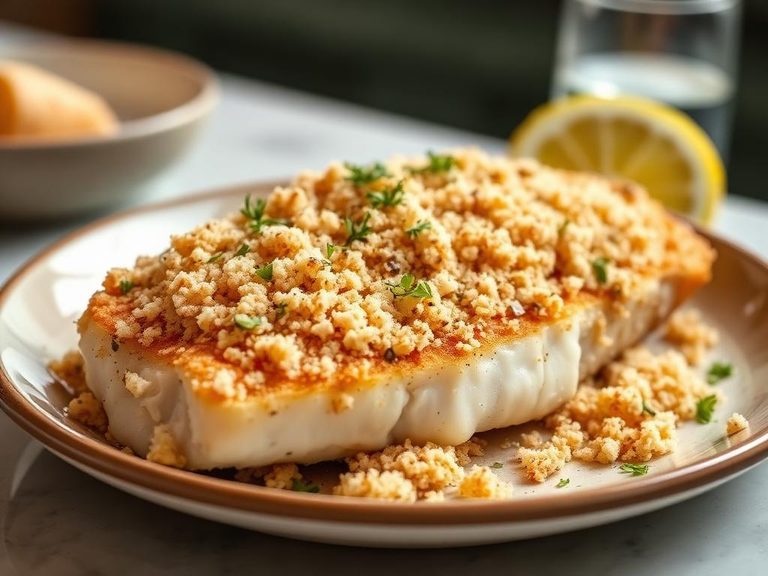
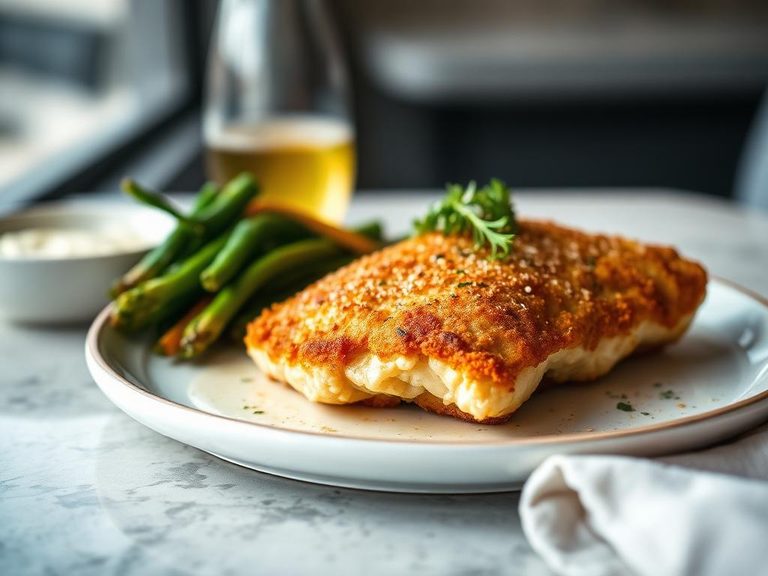
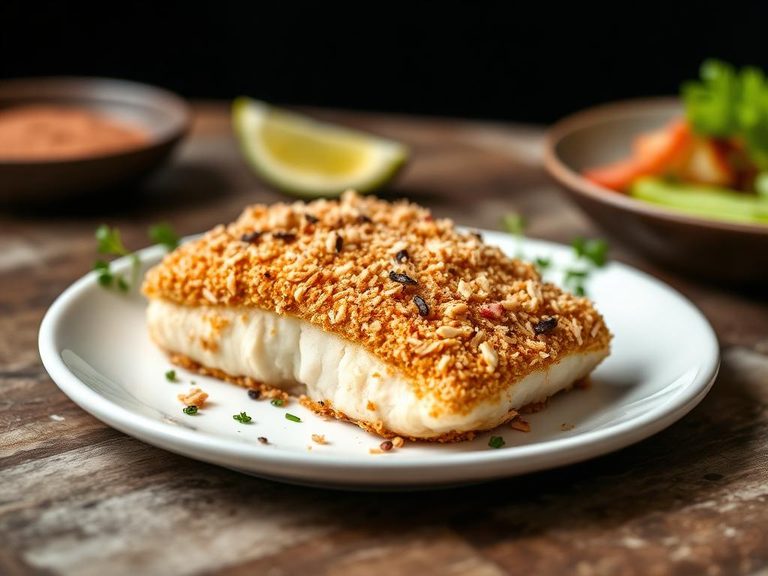
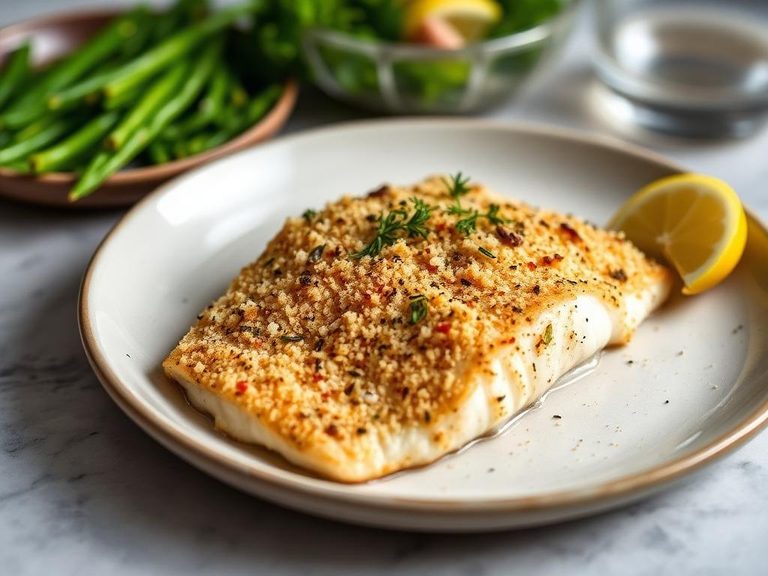
This is a lean, protein-rich cut of fish that has been coated and then baked or broiled to achieve a golden, crisp exterior. The coating, typically a light breading or batter, adds a satisfying textural contrast to the tender, flaky flesh inside. With a solid 20.73g of protein per 100g, it's a powerhouse for muscle maintenance and satiety.
Calorie split: 38% protein · 14% carbs · 48% fat
↓ Full nutrition💚 Why it's loved
People love this preparation for its satisfying crunch and the way it keeps the fish moist and flavorful. It's a versatile canvas that pairs beautifully with everything from tartar sauce and lemon to spicy remoulade, making it a crowd-pleaser in many cultures.
⚠️ Watch-outs & how to enjoy it better
The coating can add extra carbohydrates and calories compared to plain fish, which might be a concern for strict low-carb diets. To mitigate this, opt for a light, whole-grain coating and pair it with non-starchy vegetables like steamed broccoli or a large green salad to balance the meal and slow digestion.
Key benefits
- High in complete protein for muscle repair and growth
- Provides a good source of healthy fats, including omega-3s
- Baking or broiling is a lower-fat cooking method than frying
- Low in sugar and a source of essential minerals
- Can be a satisfying, low-carb meal option when paired with vegetables
🍽️ Popular dishes
🌍 Where it's eaten
💡 Did you know?
The term 'fish and chips' was first used in print in 1860, and the dish is believed to have been brought to the UK by Jewish immigrants from Portugal and Spain who fried fish in a similar manner.
Full nutrition (USDA data · scales with serving)
| Water | 58.7 g |
| Energy | 223 kcal |
| Protein | 20.7 g |
| Total lipid (fat) | 11.7 g |
| Carbohydrate, by difference | 7.8 g |
| Fiber, total dietary | 0.30 g |
| Total Sugars | 0.14 g |
| Calcium, Ca | 19.0 mg |
| Iron, Fe | 0.96 mg |
| Magnesium, Mg | 29.0 mg |
| Phosphorus, P | 246 mg |
| Potassium, K | 353 mg |
| Sodium, Na | 340 mg |
| Zinc, Zn | 0.50 mg |
| Copper, Cu | 0.07 mg |
| Selenium, Se | 28.4 ug |
| Vitamin C, total ascorbic acid | 1.0 mg |
| Thiamin | 0.18 mg |
| Riboflavin | 0.15 mg |
| Niacin | 6.0 mg |
| Vitamin B-6 | 0.36 mg |
| Folate, total | 33.0 ug |
| Folic acid | 13.0 ug |
| Folate, food | 20.0 ug |
| Folate, DFE | 42.0 ug |
| Choline, total | 74.6 mg |
| Vitamin B-12 | 2.6 ug |
| Vitamin B-12, added | 0.00 ug |
| Vitamin A, RAE | 41.0 ug |
| Retinol | 41.0 ug |
| Carotene, beta | 9.0 ug |
| Carotene, alpha | 0.00 ug |
| Cryptoxanthin, beta | 0.00 ug |
| Lycopene | 0.00 ug |
| Lutein + zeaxanthin | 7.0 ug |
| Vitamin E (alpha-tocopherol) | 2.3 mg |
| Vitamin E, added | 0.00 mg |
| Vitamin D (D2 + D3) | 5.7 ug |
| Vitamin K (phylloquinone) | 5.0 ug |
| Alcohol, ethyl | 0.00 g |
| Caffeine | 0.00 mg |
| Theobromine | 0.00 mg |
Fat & fatty acid profile (per 100g)
| Fatty acids, total saturated | 2.8 g |
| SFA 4:0 | 0.03 g |
| SFA 6:0 | 0.02 g |
| SFA 8:0 | 0.01 g |
| SFA 10:0 | 0.03 g |
| SFA 12:0 | 0.04 g |
| SFA 14:0 | 0.34 g |
| SFA 16:0 | 1.7 g |
| SFA 18:0 | 0.53 g |
| Fatty acids, total monounsaturated | 3.8 g |
| MUFA 16:1 | 0.36 g |
| MUFA 18:1 | 3.3 g |
| MUFA 20:1 | 0.18 g |
| MUFA 22:1 | 0.01 g |
| Fatty acids, total polyunsaturated | 3.1 g |
| PUFA 18:2 | 1.8 g |
| PUFA 18:3 | 0.24 g |
| PUFA 18:4 | 0.05 g |
| PUFA 20:4 | 0.05 g |
| PUFA 20:5 n-3 (EPA) | 0.31 g |
| PUFA 22:5 n-3 (DPA) | 0.15 g |
| PUFA 22:6 n-3 (DHA) | 0.44 g |
| Cholesterol | 62.0 mg |
Amino acid profile (per 100g)
Estimated from Fish, fish sticks, frozen, prepared — USDA does not publish this profile for Fish.
| Tryptophan | 0.12 g |
| Threonine | 0.37 g |
| Isoleucine | 0.43 g |
| Leucine | 0.85 g |
| Lysine | 0.80 g |
| Methionine | 0.30 g |
| Phenylalanine | 0.47 g |
| Tyrosine | 0.29 g |
| Valine | 0.50 g |
| Arginine | 0.59 g |
| Histidine | 0.23 g |
| Alanine | 0.55 g |
| Aspartic acid | 0.82 g |
| Glutamic acid | 2.3 g |
| Glycine | 0.47 g |
| Proline | 0.78 g |
| Serine | 0.49 g |
| Hydroxyproline | 0.00 g |
FAQ
What is the best way to keep the coating crispy?
Ensure the fish is patted dry before coating, use a preheated baking sheet or broiler pan, and avoid overcrowding the pan. For extra crispiness, you can lightly spray the coated fish with oil before cooking.
Can I use this as a base for fish tacos?
Absolutely. Flake the baked or broiled coated fish and serve it in warm tortillas with shredded cabbage, a creamy sauce, and a squeeze of lime for a quick and delicious taco filling.
Is this a good option for a high-protein diet?
Yes, with over 20g of protein per 100g, it's an excellent choice. To keep it lean, choose a light coating (like whole-wheat breadcrumbs or almond flour) and avoid heavy, creamy sauces.
Nutrient density (calculated · NRF9.3)
Nutrient Rich Foods index: beneficial nutrients (protein, fiber, vitamins, minerals) minus saturated fat, added sugar & sodium, per 100 kcal.
NRF9.3 index — Fulgoni, Keast & Drewnowski, 2009. Computed from USDA nutrients.
Weight-loss friendliness (composite index)
Energy density 2.23 kcal/g · 37% calories from protein · 0.3 g fiber · 0.1 g sugar per 100 g.
Composite of energy density (Rolls et al., 1999), protein & fiber satiety, minus sugar. A calculated heuristic — ranks satiety-per-calorie, not a clinical measure.
Dietary load (calculated from USDA values)
Potential renal acid load. Positive = acid-forming, negative = alkaline-forming.
Sodium-to-potassium ratio: 0.96 (lower is better — aim for ≤ 1)
Sodium:potassium per WHO potassium guidance. Computed from USDA nutrients.