

Emu, full rump, raw
Whole food · Poultry Products

Photo: Wikipedia
The full rump of an emu is a deep red, lean game meat with a fine-grained texture similar to premium beef tenderloin. Its flavor is subtly richer and slightly earthier than beef, without the strong 'gamey' taste found in some other exotic meats. Nutritionally, it's a powerhouse of protein with minimal fat, making it exceptionally lean.
Calorie split: 86% protein · 0% carbs · 14% fat
↓ Full nutrition💚 Why it's loved
People love emu rump for its clean, beef-like flavor that accepts marinades and seasonings beautifully, offering a familiar yet novel culinary experience. It's prized by health-conscious cooks and adventurous eaters for delivering a satisfying, protein-dense meal without heaviness.
⚠️ Watch-outs & how to enjoy it better
Due to its extreme leanness, emu rump can become tough and dry if overcooked, which is a common pitfall for those accustomed to fattier meats. To counteract this, it's best cooked quickly to medium-rare using high-heat methods like grilling or searing, and always allowed to rest before slicing against the grain.
Key benefits
- Extremely high in complete protein per calorie
- Very low in total and saturated fat
- Rich in iron and zinc, supporting immune function
- Naturally free of carbohydrates and sugars
- A sustainable red meat alternative
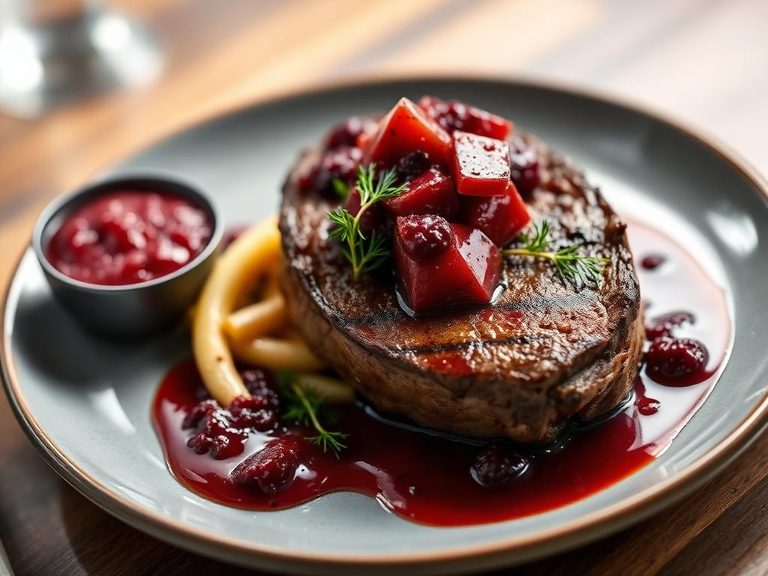
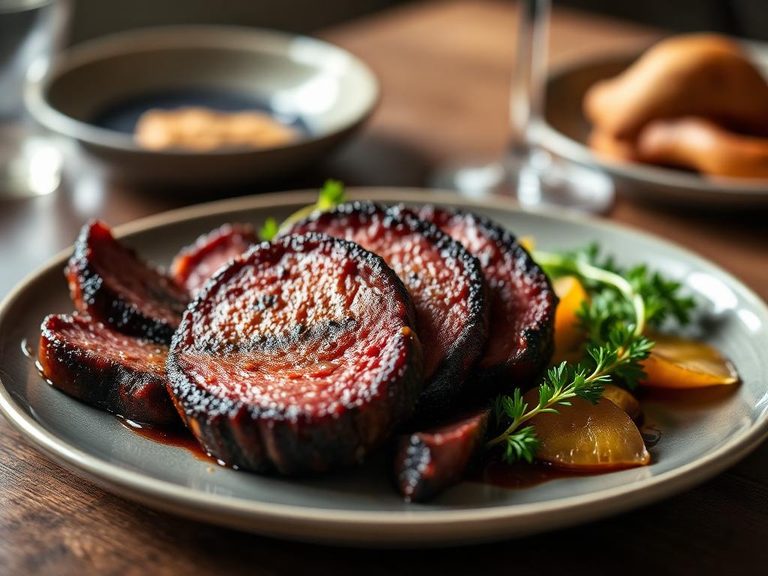
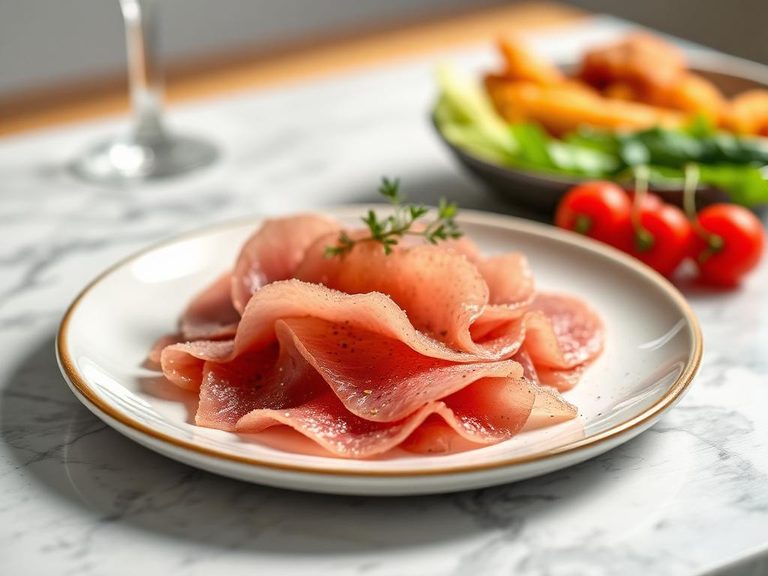
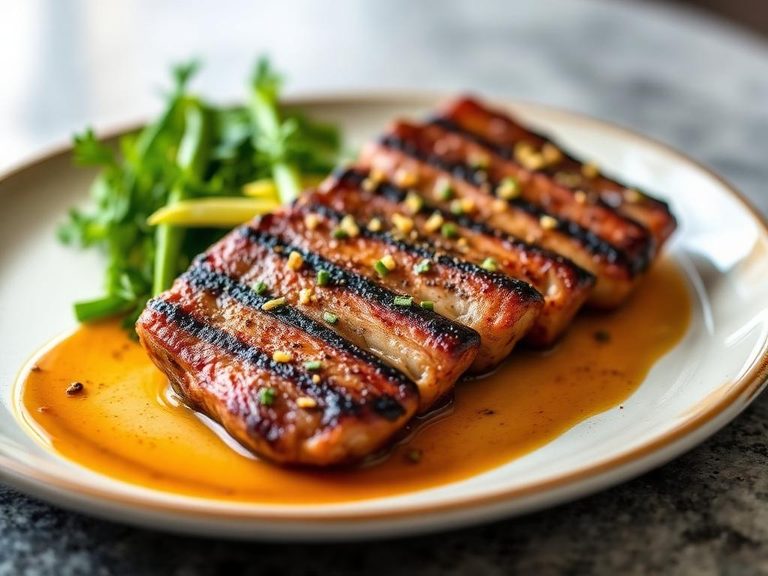
🍽️ Popular dishes
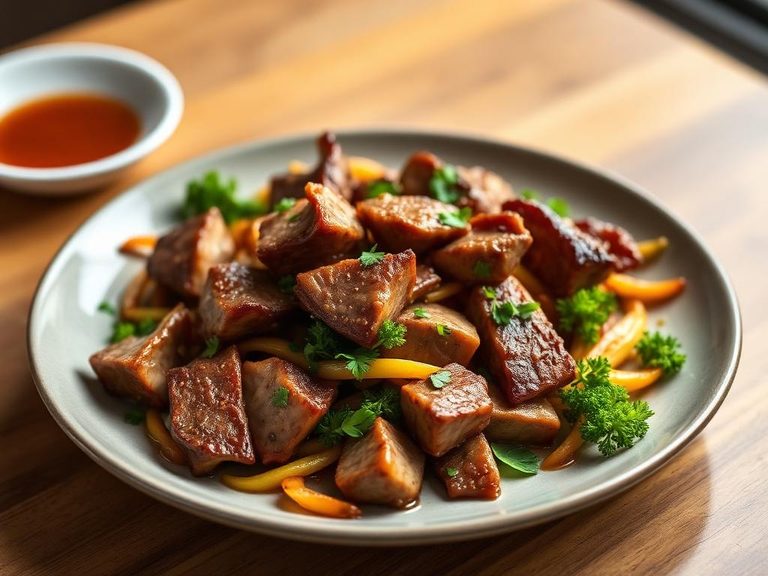
🌍 Where it's eaten
💡 Did you know?
Emu meat is so lean that it's classified as a 'fat-modified' red meat by some food authorities, and its fat is primarily heart-healthy unsaturated fat.
Full nutrition (USDA data · scales with serving)
| Water | 73.8 g |
| Energy | 112 kcal |
| Energy | 469 kj |
| Protein | 22.8 g |
| Total lipid (fat) | 1.6 g |
| Ash | 1.1 g |
| Carbohydrate, by difference | 0.00 g |
| Fiber, total dietary | 0.00 g |
| Total Sugars | 0.00 g |
| Calcium, Ca | 4.0 mg |
| Iron, Fe | 5.0 mg |
| Magnesium, Mg | 40.0 mg |
| Phosphorus, P | 236 mg |
| Potassium, K | 330 mg |
| Sodium, Na | 90.0 mg |
| Zinc, Zn | 3.6 mg |
| Copper, Cu | 0.21 mg |
| Manganese, Mn | 0.03 mg |
| Selenium, Se | 32.5 ug |
| Vitamin C, total ascorbic acid | 0.00 mg |
| Thiamin | 0.36 mg |
| Riboflavin | 0.46 mg |
| Niacin | 7.5 mg |
| Pantothenic acid | 2.7 mg |
| Vitamin B-6 | 0.64 mg |
| Folate, total | 13.0 ug |
| Folic acid | 0.00 ug |
| Folate, food | 13.0 ug |
| Folate, DFE | 13.0 ug |
| Vitamin B-12 | 2.2 ug |
| Vitamin A, RAE | 4.0 ug |
| Retinol | 4.0 ug |
| Carotene, beta | 0.00 ug |
| Carotene, alpha | 0.00 ug |
| Cryptoxanthin, beta | 0.00 ug |
| Vitamin A, IU | 15.0 iu |
| Lycopene | 0.00 ug |
| Lutein + zeaxanthin | 0.00 ug |
| Vitamin E (alpha-tocopherol) | 0.23 mg |
| Alcohol, ethyl | 0.00 g |
| Caffeine | 0.00 mg |
| Theobromine | 0.00 mg |
Fat & fatty acid profile (per 100g)
| Fatty acids, total saturated | 0.45 g |
| SFA 14:0 | 0.01 g |
| SFA 15:0 | 0.00 g |
| SFA 16:0 | 0.32 g |
| SFA 17:0 | 0.01 g |
| SFA 18:0 | 0.10 g |
| SFA 20:0 | 0.00 g |
| SFA 22:0 | 0.00 g |
| SFA 24:0 | 0.00 g |
| Fatty acids, total monounsaturated | 0.52 g |
| MUFA 14:1 | 0.00 g |
| MUFA 16:1 | 0.03 g |
| MUFA 17:1 | 0.00 g |
| MUFA 18:1 | 0.47 g |
| MUFA 20:1 | 0.01 g |
| MUFA 22:1 | 0.00 g |
| Fatty acids, total polyunsaturated | 0.33 g |
| PUFA 18:2 | 0.28 g |
| PUFA 18:3 | 0.03 g |
| PUFA 20:2 n-6 c,c | 0.00 g |
| PUFA 20:4 | 0.01 g |
| PUFA 20:5 n-3 (EPA) | 0.00 g |
| PUFA 22:6 n-3 (DHA) | 0.01 g |
| Cholesterol | 85.0 mg |
Amino acid profile (per 100g)
| Tryptophan | 0.15 g |
| Threonine | 0.65 g |
| Isoleucine | 0.74 g |
| Leucine | 1.3 g |
| Lysine | 1.3 g |
| Methionine | 0.43 g |
| Cystine | 0.17 g |
| Phenylalanine | 0.65 g |
| Tyrosine | 0.49 g |
| Valine | 0.76 g |
| Arginine | 1.0 g |
| Histidine | 0.50 g |
| Alanine | 0.89 g |
| Aspartic acid | 2.0 g |
| Glutamic acid | 2.2 g |
| Glycine | 0.72 g |
| Proline | 0.93 g |
| Serine | 0.54 g |
| Hydroxyproline | 0.15 g |
FAQ
How does emu meat taste compared to beef?
Emu has a flavor profile very similar to lean beef, but with a slightly richer, more complex and subtly earthy note. It lacks the strong, sometimes metallic 'gamey' flavor of venison or kangaroo.
What's the best way to cook emu rump to prevent it from drying out?
The key is high heat and short time. Sear or grill it quickly to an internal temperature of 130-135°F (54-57°C) for medium-rare. Let it rest for 5-10 minutes before slicing thinly against the grain to retain juices.
Is emu meat a common allergen?
No, emu is not among the common food allergens (like nuts, dairy, or gluten). However, as with any novel protein, individuals with specific meat allergies should exercise caution and consult a healthcare provider.
Nutrient density (calculated · NRF9.3)
Nutrient Rich Foods index: beneficial nutrients (protein, fiber, vitamins, minerals) minus saturated fat, added sugar & sodium, per 100 kcal.
NRF9.3 index — Fulgoni, Keast & Drewnowski, 2009. Computed from USDA nutrients.
Weight-loss friendliness (composite index)
Energy density 1.12 kcal/g · 82% calories from protein · 0.0 g fiber · 0.0 g sugar per 100 g.
Composite of energy density (Rolls et al., 1999), protein & fiber satiety, minus sugar. A calculated heuristic — ranks satiety-per-calorie, not a clinical measure.
Dietary load (calculated from USDA values)
Potential renal acid load. Positive = acid-forming, negative = alkaline-forming.
Sodium-to-potassium ratio: 0.27 (lower is better — aim for ≤ 1)
Sodium:potassium per WHO potassium guidance. Computed from USDA nutrients.