

Emu Carpaccio
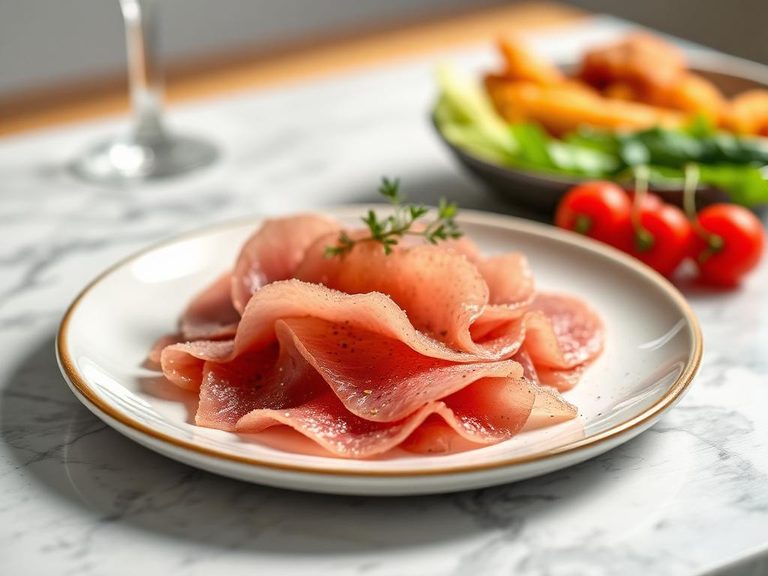
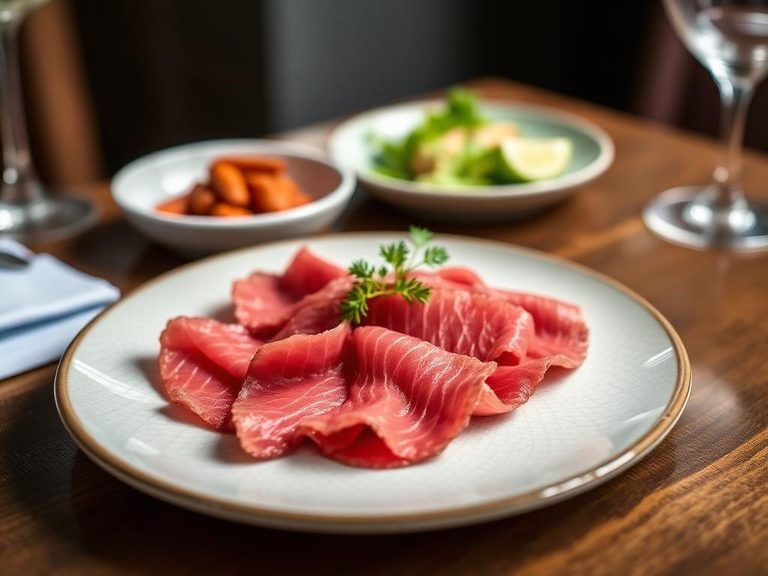
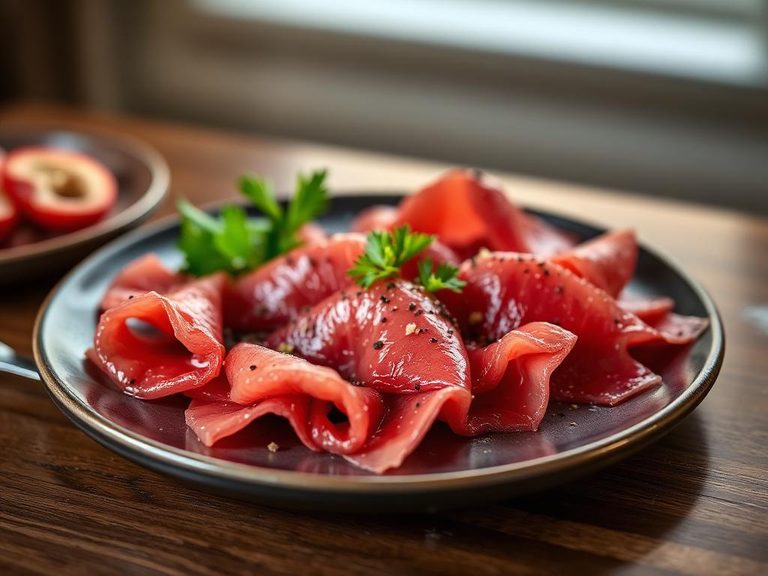
Emu Carpaccio is a modern Australian dish featuring thinly sliced, raw emu meat, typically served with a light dressing, fresh herbs, and sometimes a garnish like capers or shaved vegetables. It draws inspiration from the classic Italian beef carpaccio but uses lean, native Australian emu, making it a unique fusion of culinary traditions. The dish is often found in contemporary Australian cuisine, particularly in restaurants focused on native ingredients.
🍽️ Nutrition at a glance
This dish is exceptionally high in protein and very low in fat and carbohydrates, making it a lean, nutrient-dense option. A typical serving provides a significant amount of iron, zinc, and B vitamins, with a calorie count roughly between 150-200 kcal per 100g serving, depending on the dressing.
Nutrition breakdown
| Calories | 170 kcal |
| Protein | 24 g |
| Carbs | 0 g |
| Fat | 8 g |
| Fiber | 0 g |
| Sugar | 0 g |
| Sodium | 70 mg |
| Iron | 4.5 mg |
| Zinc | 3.2 mg |
| Niacin (B3) | 5.8 mg |
| Vitamin B6 | 0.6 mg |
| Phosphorus | 220 mg |
| Selenium | 22 mcg |
| Potassium | 310 mg |
| Cholesterol | 70 mg |
Per 100 g (about 3.5 oz) · estimated, varies by recipe
💡 What's interesting
Culturally, it represents the growing 'bush tucker' movement, which incorporates indigenous Australian ingredients into modern gastronomy. Nutritionally, emu meat is a red meat that is surprisingly low in fat and high in conjugated linoleic acid (CLA), a fatty acid studied for its potential health benefits.
🍽️ Related dishes
AI estimate may be inaccurate · Terms