

Egg substitute, powder
Whole food · Dairy and Egg Products

Photo: Wikipedia
Egg substitute powder is a shelf-stable, dehydrated product designed to replicate the function of whole eggs, primarily for binding and leavening. It typically has a neutral, slightly beany or starchy taste and a fine, powdery texture that rehydrates into a viscous liquid. Nutritionally, it is a concentrated source of protein, often derived from soy or pea, with a significant carbohydrate content from added starches.
Calorie split: 52% protein · 20% carbs · 27% fat
↓ Full nutrition💚 Why it's loved
People love it for its incredible versatility and reliability in vegan and allergy-friendly baking, where it flawlessly binds cakes, cookies, and scrambles. It's a pantry staple that ensures recipe success without the need for fresh eggs.
⚠️ Watch-outs & how to enjoy it better
The high carbohydrate and sugar content (21.8g each per 100g) can contribute to blood sugar spikes if used in large quantities, and it lacks the rich flavor and mouthfeel of real eggs. To counteract this, use it in balanced recipes that include healthy fats and fibers, and consider it a functional ingredient rather than a direct 1:1 flavor substitute.
Key benefits
- Excellent source of plant-based protein (55.5g per 100g)
- Shelf-stable and convenient for long-term storage
- Cholesterol-free and vegan-friendly alternative
- Provides consistent binding and leavening in baking
- Lower in fat than whole eggs (13g per 100g)
🍽️ Popular dishes
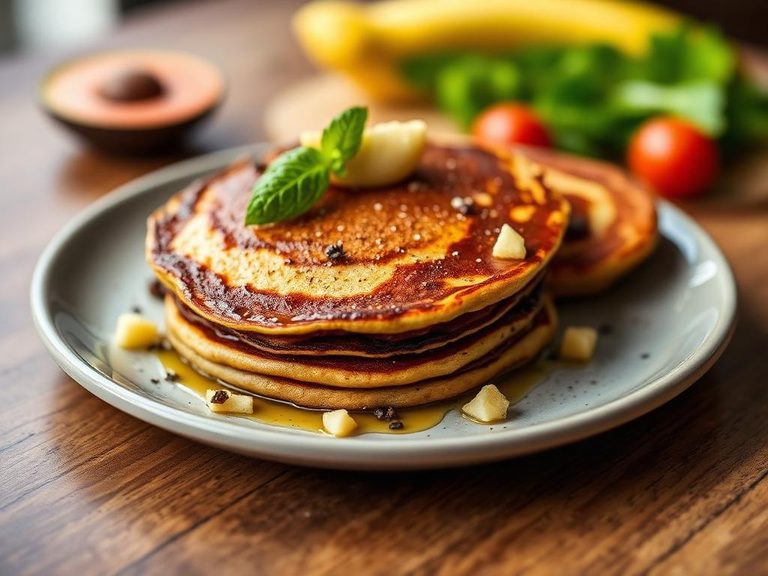
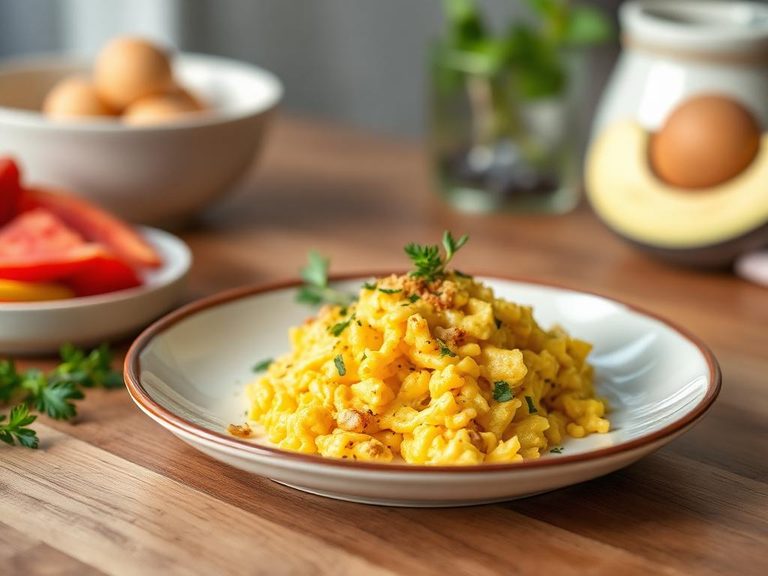


🌍 Where it's eaten
💡 Did you know?
Many commercial egg powders are derived from mung bean protein, which is the same key ingredient used in the popular 'Just Egg' liquid substitute.
Full nutrition (USDA data · scales with serving)
| Water | 3.9 g |
| Energy | 444 kcal |
| Energy | 1856 kj |
| Protein | 55.5 g |
| Total lipid (fat) | 13.0 g |
| Ash | 5.8 g |
| Carbohydrate, by difference | 21.8 g |
| Fiber, total dietary | 0.00 g |
| Total Sugars | 21.8 g |
| Calcium, Ca | 326 mg |
| Iron, Fe | 3.2 mg |
| Magnesium, Mg | 65.0 mg |
| Phosphorus, P | 478 mg |
| Potassium, K | 744 mg |
| Sodium, Na | 800 mg |
| Zinc, Zn | 1.8 mg |
| Copper, Cu | 0.21 mg |
| Manganese, Mn | 0.08 mg |
| Selenium, Se | 128 ug |
| Vitamin C, total ascorbic acid | 0.80 mg |
| Thiamin | 0.23 mg |
| Riboflavin | 1.8 mg |
| Niacin | 0.58 mg |
| Pantothenic acid | 3.4 mg |
| Vitamin B-6 | 0.14 mg |
| Folate, total | 125 ug |
| Folic acid | 0.00 ug |
| Folate, food | 125 ug |
| Folate, DFE | 125 ug |
| Choline, total | 118 mg |
| Vitamin B-12 | 3.5 ug |
| Vitamin B-12, added | 0.00 ug |
| Vitamin A, RAE | 369 ug |
| Retinol | 369 ug |
| Carotene, beta | 0.00 ug |
| Carotene, alpha | 0.00 ug |
| Cryptoxanthin, beta | 0.00 ug |
| Vitamin A, IU | 1230 iu |
| Lycopene | 0.00 ug |
| Lutein + zeaxanthin | 0.00 ug |
| Vitamin E (alpha-tocopherol) | 1.3 mg |
| Vitamin E, added | 0.00 mg |
| Vitamin D (D2 + D3), International Units | 0.00 iu |
| Vitamin D (D2 + D3) | 0.00 ug |
| Vitamin K (phylloquinone) | 0.40 ug |
| Alcohol, ethyl | 0.00 g |
| Caffeine | 0.00 mg |
| Theobromine | 0.00 mg |
Fat & fatty acid profile (per 100g)
| Fatty acids, total saturated | 3.8 g |
| SFA 4:0 | 0.00 g |
| SFA 6:0 | 0.00 g |
| SFA 8:0 | 0.00 g |
| SFA 10:0 | 0.00 g |
| SFA 12:0 | 0.00 g |
| SFA 14:0 | 0.07 g |
| SFA 16:0 | 2.7 g |
| SFA 18:0 | 0.99 g |
| Fatty acids, total monounsaturated | 5.3 g |
| MUFA 16:1 | 0.50 g |
| MUFA 18:1 | 4.8 g |
| MUFA 20:1 | 0.00 g |
| MUFA 22:1 | 0.00 g |
| Fatty acids, total polyunsaturated | 1.7 g |
| PUFA 18:2 | 1.4 g |
| PUFA 18:3 | 0.09 g |
| PUFA 18:4 | 0.00 g |
| PUFA 20:4 | 0.11 g |
| PUFA 20:5 n-3 (EPA) | 0.00 g |
| PUFA 22:5 n-3 (DPA) | 0.00 g |
| PUFA 22:6 n-3 (DHA) | 0.00 g |
| Cholesterol | 572 mg |
Amino acid profile (per 100g)
Estimated from Egg substitute, liquid or frozen, fat free — USDA does not publish this profile for Egg substitute.
| Tryptophan | 0.16 g |
| Threonine | 0.48 g |
| Isoleucine | 0.66 g |
| Leucine | 0.97 g |
| Lysine | 0.71 g |
| Methionine | 0.39 g |
| Cystine | 0.23 g |
| Phenylalanine | 0.65 g |
| Tyrosine | 0.46 g |
| Valine | 0.79 g |
| Arginine | 0.58 g |
| Histidine | 0.26 g |
| Alanine | 0.62 g |
| Aspartic acid | 0.93 g |
| Glutamic acid | 1.7 g |
| Glycine | 0.36 g |
| Proline | 0.56 g |
| Serine | 0.75 g |
FAQ
How do I rehydrate egg substitute powder?
A common ratio is 1 part powder to 2-3 parts water (by volume). For one 'egg', mix 1 tablespoon of powder with 2 tablespoons of water and let it sit for a few minutes to thicken.
Can I use it for recipes that require whipped egg whites?
Generally, no. Most powders are designed for binding and scrambling. For stiff peaks, you would need a specific meringue powder or aquafaba.
Is it suitable for people with soy allergies?
Not always. Many are soy-based, but pea protein or potato starch versions exist. Always check the ingredient list for soy, wheat, or other allergens.
Nutrient density (calculated · NRF9.3)
Nutrient Rich Foods index: beneficial nutrients (protein, fiber, vitamins, minerals) minus saturated fat, added sugar & sodium, per 100 kcal.
NRF9.3 index — Fulgoni, Keast & Drewnowski, 2009. Computed from USDA nutrients.
Weight-loss friendliness (composite index)
Energy density 4.44 kcal/g · 50% calories from protein · 0.0 g fiber · 21.8 g sugar per 100 g.
Composite of energy density (Rolls et al., 1999), protein & fiber satiety, minus sugar. A calculated heuristic — ranks satiety-per-calorie, not a clinical measure.
Dietary load (calculated from USDA values)
Potential renal acid load. Positive = acid-forming, negative = alkaline-forming.
Sodium-to-potassium ratio: 1.08 (lower is better — aim for ≤ 1)
Sodium:potassium per WHO potassium guidance. Computed from USDA nutrients.