

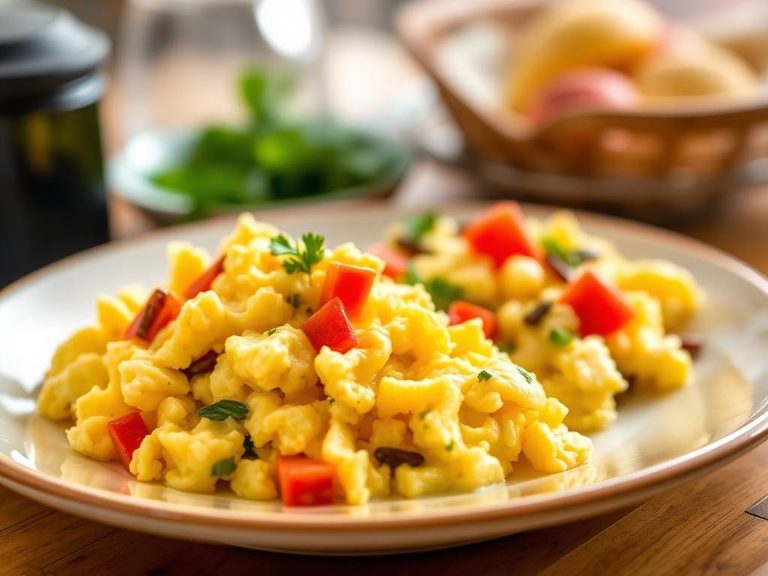
Egg omelet or scrambled egg, with cheese and tomatoes, no added fat
Common food
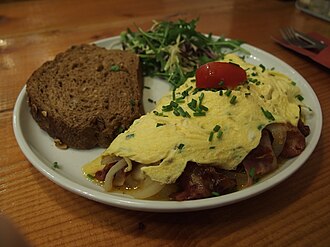
Photo: Wikipedia
A fluffy, protein-packed breakfast staple made from eggs gently cooked with melted cheese and juicy tomatoes, all without a drop of added fat. The texture is soft and custardy, with the cheese adding a rich, savory depth and the tomatoes providing bright, acidic bursts. It's a nutrient-dense meal, delivering high-quality protein and healthy fats while keeping carbohydrates very low.
Calorie split: 31% protein · 5% carbs · 64% fat
↓ Full nutrition💚 Why it's loved
People adore its comforting, savory flavor and the satisfying contrast between the creamy eggs, gooey cheese, and fresh tomato. It's incredibly versatile, ready in minutes, and serves as a blank canvas for countless herb and spice combinations.
⚠️ Watch-outs & how to enjoy it better
The primary caution is for those with egg or dairy allergies or intolerances. The cholesterol content may be a consideration for individuals with specific dietary restrictions. To mitigate, ensure proper cooking to reduce salmonella risk and balance the meal with fiber-rich vegetables like spinach or a side of whole-grain toast.
Key benefits
- Excellent source of complete protein for muscle maintenance.
- Provides choline, essential for brain and liver health.
- Low in carbohydrates, suitable for low-carb diets.
- Rich in vitamins A and C from the tomatoes.
- Contains calcium from the cheese for bone health.
🍽️ Popular dishes

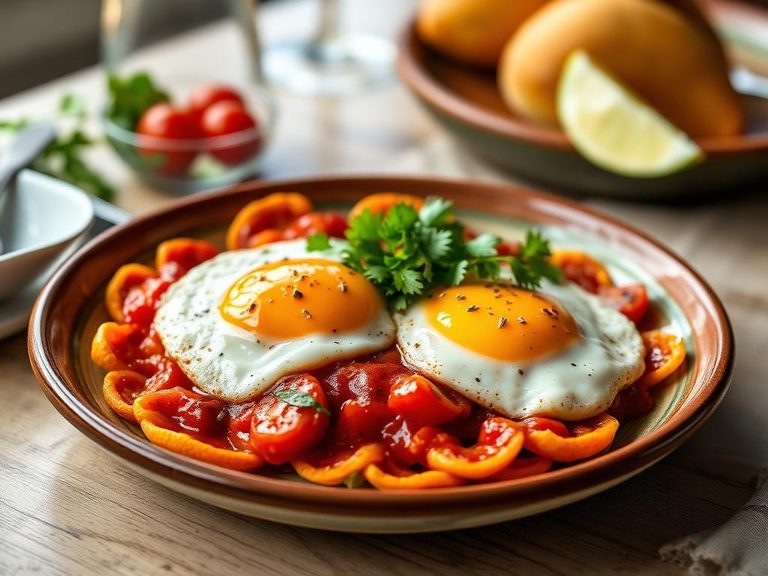
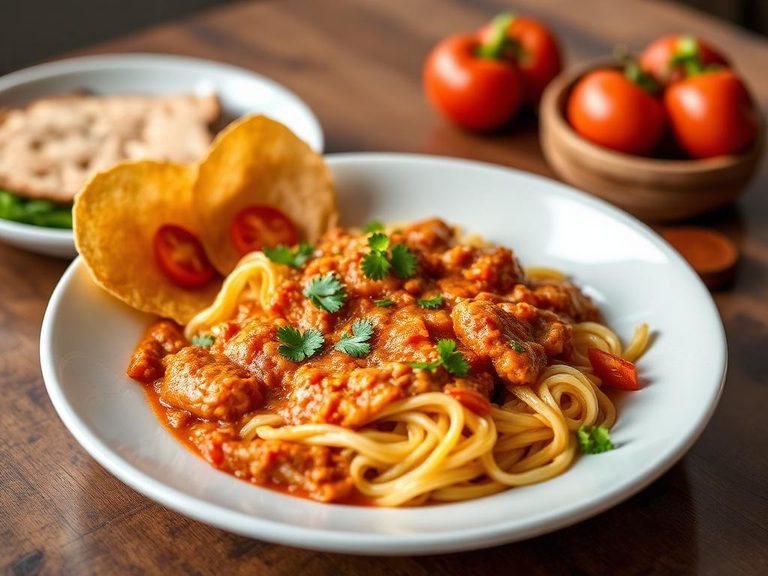
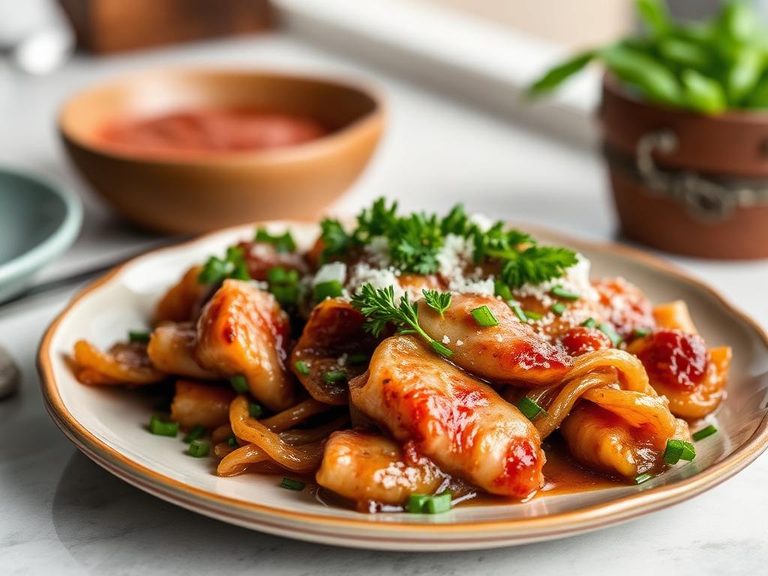

🌍 Where it's eaten
💡 Did you know?
The proteins in eggs begin to set at just 144°F (62°C), making them one of the most delicate and temperature-sensitive ingredients to cook perfectly.
Full nutrition (USDA data · scales with serving)
| Water | 73.5 g |
| Energy | 154 kcal |
| Protein | 12.0 g |
| Total lipid (fat) | 10.9 g |
| Carbohydrate, by difference | 1.9 g |
| Fiber, total dietary | 0.20 g |
| Total Sugars | 0.87 g |
| Calcium, Ca | 142 mg |
| Iron, Fe | 1.4 mg |
| Magnesium, Mg | 13.0 mg |
| Phosphorus, P | 211 mg |
| Potassium, K | 151 mg |
| Sodium, Na | 305 mg |
| Zinc, Zn | 1.3 mg |
| Copper, Cu | 0.01 mg |
| Selenium, Se | 26.5 ug |
| Vitamin C, total ascorbic acid | 2.2 mg |
| Thiamin | 0.06 mg |
| Riboflavin | 0.35 mg |
| Niacin | 0.09 mg |
| Vitamin B-6 | 0.07 mg |
| Folate, total | 44.0 ug |
| Folic acid | 0.00 ug |
| Folate, food | 44.0 ug |
| Folate, DFE | 44.0 ug |
| Choline, total | 209 mg |
| Vitamin B-12 | 0.79 ug |
| Vitamin B-12, added | 0.00 ug |
| Vitamin A, RAE | 174 ug |
| Retinol | 168 ug |
| Carotene, beta | 62.0 ug |
| Carotene, alpha | 12.0 ug |
| Cryptoxanthin, beta | 11.0 ug |
| Lycopene | 299 ug |
| Lutein + zeaxanthin | 405 ug |
| Vitamin E (alpha-tocopherol) | 0.96 mg |
| Vitamin E, added | 0.00 mg |
| Vitamin D (D2 + D3) | 2.3 ug |
| Vitamin K (phylloquinone) | 1.5 ug |
| Alcohol, ethyl | 0.00 g |
| Caffeine | 0.00 mg |
| Theobromine | 0.00 mg |
Fat & fatty acid profile (per 100g)
| Fatty acids, total saturated | 4.3 g |
| SFA 4:0 | 0.07 g |
| SFA 6:0 | 0.05 g |
| SFA 8:0 | 0.03 g |
| SFA 10:0 | 0.08 g |
| SFA 12:0 | 0.09 g |
| SFA 14:0 | 0.33 g |
| SFA 16:0 | 2.7 g |
| SFA 18:0 | 0.95 g |
| Fatty acids, total monounsaturated | 3.5 g |
| MUFA 16:1 | 0.24 g |
| MUFA 18:1 | 3.3 g |
| MUFA 20:1 | 0.01 g |
| MUFA 22:1 | 0.00 g |
| Fatty acids, total polyunsaturated | 1.5 g |
| PUFA 18:2 | 1.2 g |
| PUFA 18:3 | 0.02 g |
| PUFA 18:4 | 0.00 g |
| PUFA 20:4 | 0.00 g |
| PUFA 20:5 n-3 (EPA) | 0.00 g |
| PUFA 22:5 n-3 (DPA) | 0.00 g |
| PUFA 22:6 n-3 (DHA) | 0.00 g |
| Cholesterol | 326 mg |
Amino acid profile (per 100g)
Estimated from Egg, whole, cooked, omelet — USDA does not publish this profile for Egg omelet or scrambled egg.
| Tryptophan | 0.14 g |
| Threonine | 0.47 g |
| Isoleucine | 0.56 g |
| Leucine | 0.91 g |
| Lysine | 0.77 g |
| Methionine | 0.32 g |
| Cystine | 0.23 g |
| Phenylalanine | 0.57 g |
| Tyrosine | 0.42 g |
| Valine | 0.72 g |
| Arginine | 0.69 g |
| Histidine | 0.26 g |
| Alanine | 0.62 g |
| Aspartic acid | 1.1 g |
| Glutamic acid | 1.4 g |
| Glycine | 0.36 g |
| Proline | 0.43 g |
| Serine | 0.82 g |
FAQ
How do I prevent the tomatoes from making the eggs watery?
Dice the tomatoes and gently pat them dry with a paper towel before adding. Alternatively, sauté them separately for a minute to cook off excess moisture before folding into the eggs.
Can I make this without cheese and still have it be tasty?
Absolutely. Boost flavor with herbs like chives, dill, or basil, a pinch of black pepper, or a dash of hot sauce. The natural richness of the eggs and the acidity of the tomatoes carry the dish well.
Is this dish suitable for a keto diet?
Yes, it's an excellent keto-friendly option due to its high fat and protein content and very low net carbs from the tomatoes and eggs.
Nutrient density (calculated · NRF9.3)
Nutrient Rich Foods index: beneficial nutrients (protein, fiber, vitamins, minerals) minus saturated fat, added sugar & sodium, per 100 kcal.
NRF9.3 index — Fulgoni, Keast & Drewnowski, 2009. Computed from USDA nutrients.
Weight-loss friendliness (composite index)
Energy density 1.54 kcal/g · 31% calories from protein · 0.2 g fiber · 0.9 g sugar per 100 g.
Composite of energy density (Rolls et al., 1999), protein & fiber satiety, minus sugar. A calculated heuristic — ranks satiety-per-calorie, not a clinical measure.
Dietary load (calculated from USDA values)
Potential renal acid load. Positive = acid-forming, negative = alkaline-forming.
Sodium-to-potassium ratio: 2.02 (lower is better — aim for ≤ 1)
Sodium:potassium per WHO potassium guidance. Computed from USDA nutrients.