

Egg omelet or scrambled egg, with cheese, meat, and tomatoes, fat added
Common food
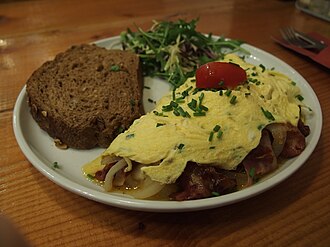
Photo: Wikipedia
A hearty, savory scramble of eggs folded with melted cheese, diced meat, and fresh tomatoes, cooked in a touch of added fat for richness. The texture is soft and custardy with pockets of gooey cheese and juicy tomato bursts. Nutritionally, it's a protein-packed, low-carb powerhouse with a satisfying dose of healthy fats.
Calorie split: 25% protein · 3% carbs · 71% fat
↓ Full nutrition💚 Why it's loved
People adore its customizable, one-pan comfort—the way the salty cheese melds with savory meat and bright, acidic tomatoes creates a deeply satisfying flavor profile. It's a universal quick meal that feels both indulgent and wholesome.
⚠️ Watch-outs & how to enjoy it better
The high fat and sodium content from cheese and processed meats may be a concern for those managing heart health or hypertension. To mitigate, use moderate portions of cheese, opt for low-sodium deli meats, and load up on extra tomatoes or a side of leafy greens for balance.
Key benefits
- Excellent source of high-quality protein for muscle maintenance.
- Very low in carbohydrates, suitable for low-carb or ketogenic diets.
- Rich in choline from eggs, essential for brain health.
- Provides calcium from cheese and lycopene from tomatoes.
- High satiety factor helps with appetite control.
🍽️ Popular dishes
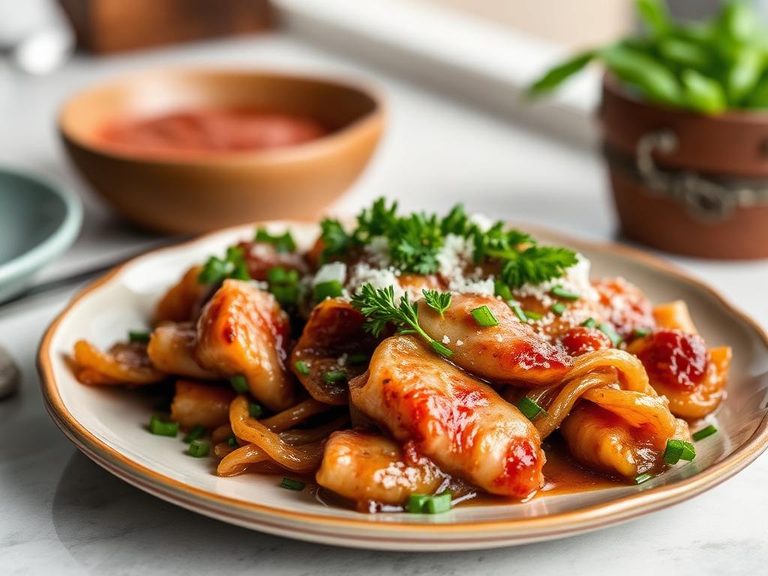
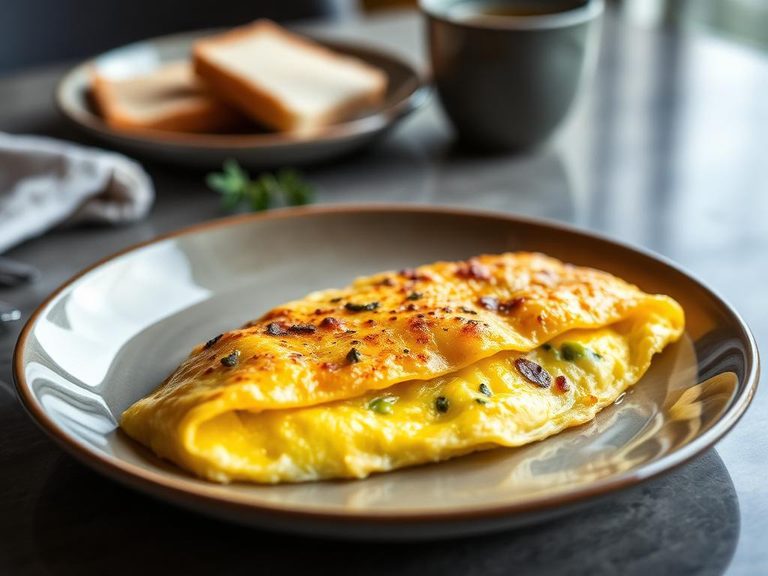
🌍 Where it's eaten
💡 Did you know?
The addition of tomatoes to egg dishes was once controversial in Europe, as tomatoes were initially feared to be poisonous, making dishes like the Spanish 'Pisto con Huevos' a bold culinary statement.
Full nutrition (USDA data · scales with serving)
| Water | 68.2 g |
| Energy | 199 kcal |
| Protein | 12.6 g |
| Total lipid (fat) | 15.8 g |
| Carbohydrate, by difference | 1.7 g |
| Fiber, total dietary | 0.10 g |
| Total Sugars | 0.71 g |
| Calcium, Ca | 133 mg |
| Iron, Fe | 1.3 mg |
| Magnesium, Mg | 13.0 mg |
| Phosphorus, P | 213 mg |
| Potassium, K | 153 mg |
| Sodium, Na | 376 mg |
| Zinc, Zn | 1.4 mg |
| Copper, Cu | 0.01 mg |
| Selenium, Se | 26.7 ug |
| Vitamin C, total ascorbic acid | 1.1 mg |
| Thiamin | 0.07 mg |
| Riboflavin | 0.34 mg |
| Niacin | 0.53 mg |
| Vitamin B-6 | 0.11 mg |
| Folate, total | 41.0 ug |
| Folic acid | 0.00 ug |
| Folate, food | 41.0 ug |
| Folate, DFE | 41.0 ug |
| Choline, total | 199 mg |
| Vitamin B-12 | 0.79 ug |
| Vitamin B-12, added | 0.00 ug |
| Vitamin A, RAE | 180 ug |
| Retinol | 175 ug |
| Carotene, beta | 43.0 ug |
| Carotene, alpha | 6.0 ug |
| Cryptoxanthin, beta | 10.0 ug |
| Lycopene | 148 ug |
| Lutein + zeaxanthin | 369 ug |
| Vitamin E (alpha-tocopherol) | 1.6 mg |
| Vitamin E, added | 0.00 mg |
| Vitamin D (D2 + D3) | 2.3 ug |
| Vitamin K (phylloquinone) | 4.6 ug |
| Alcohol, ethyl | 0.00 g |
| Caffeine | 0.00 mg |
| Theobromine | 0.00 mg |
Fat & fatty acid profile (per 100g)
| Fatty acids, total saturated | 5.6 g |
| SFA 4:0 | 0.09 g |
| SFA 6:0 | 0.07 g |
| SFA 8:0 | 0.04 g |
| SFA 10:0 | 0.10 g |
| SFA 12:0 | 0.12 g |
| SFA 14:0 | 0.43 g |
| SFA 16:0 | 3.4 g |
| SFA 18:0 | 1.2 g |
| Fatty acids, total monounsaturated | 5.4 g |
| MUFA 16:1 | 0.27 g |
| MUFA 18:1 | 5.0 g |
| MUFA 20:1 | 0.04 g |
| MUFA 22:1 | 0.00 g |
| Fatty acids, total polyunsaturated | 2.9 g |
| PUFA 18:2 | 2.5 g |
| PUFA 18:3 | 0.17 g |
| PUFA 18:4 | 0.00 g |
| PUFA 20:4 | 0.01 g |
| PUFA 20:5 n-3 (EPA) | 0.00 g |
| PUFA 22:5 n-3 (DPA) | 0.00 g |
| PUFA 22:6 n-3 (DHA) | 0.00 g |
| Cholesterol | 311 mg |
Amino acid profile (per 100g)
Estimated from Egg, whole, cooked, omelet — USDA does not publish this profile for Egg omelet or scrambled egg.
| Tryptophan | 0.14 g |
| Threonine | 0.47 g |
| Isoleucine | 0.56 g |
| Leucine | 0.91 g |
| Lysine | 0.77 g |
| Methionine | 0.32 g |
| Cystine | 0.23 g |
| Phenylalanine | 0.57 g |
| Tyrosine | 0.42 g |
| Valine | 0.72 g |
| Arginine | 0.69 g |
| Histidine | 0.26 g |
| Alanine | 0.62 g |
| Aspartic acid | 1.1 g |
| Glutamic acid | 1.4 g |
| Glycine | 0.36 g |
| Proline | 0.43 g |
| Serine | 0.82 g |
FAQ
Is this a good post-workout meal?
Yes, it's excellent. The high protein content aids muscle repair, while the fats provide sustained energy. The low carb content makes it ideal if you're not focused on glycogen replenishment.
Can I make this ahead for meal prep?
While best fresh, you can store leftovers in the fridge for 1-2 days. Reheat gently in a microwave or skillet to avoid the eggs becoming rubbery. The texture may soften slightly.
How can I reduce the fat content?
Use a non-stick pan with cooking spray instead of added fat, choose reduced-fat cheese, and incorporate more vegetables like spinach or mushrooms to bulk up the volume without extra calories.
Nutrient density (calculated · NRF9.3)
Nutrient Rich Foods index: beneficial nutrients (protein, fiber, vitamins, minerals) minus saturated fat, added sugar & sodium, per 100 kcal.
NRF9.3 index — Fulgoni, Keast & Drewnowski, 2009. Computed from USDA nutrients.
Weight-loss friendliness (composite index)
Energy density 1.99 kcal/g · 25% calories from protein · 0.1 g fiber · 0.7 g sugar per 100 g.
Composite of energy density (Rolls et al., 1999), protein & fiber satiety, minus sugar. A calculated heuristic — ranks satiety-per-calorie, not a clinical measure.
Dietary load (calculated from USDA values)
Potential renal acid load. Positive = acid-forming, negative = alkaline-forming.
Sodium-to-potassium ratio: 2.46 (lower is better — aim for ≤ 1)
Sodium:potassium per WHO potassium guidance. Computed from USDA nutrients.