

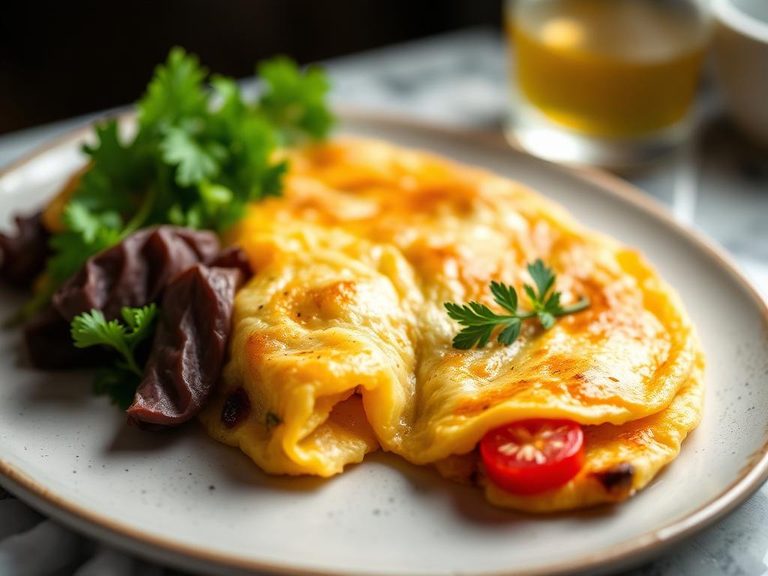
Egg omelet or scrambled egg, with cheese, meat, tomatoes, and dark-green vegetables, fat added
Common food

Photo: Wikipedia
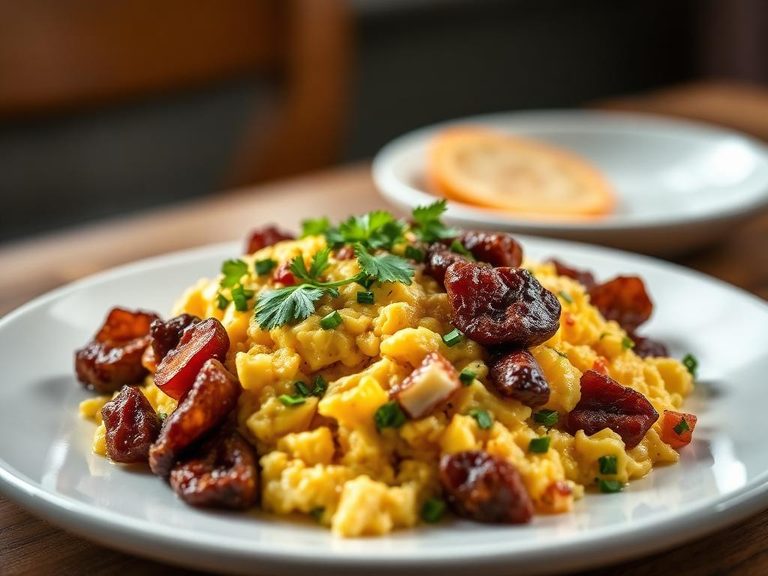
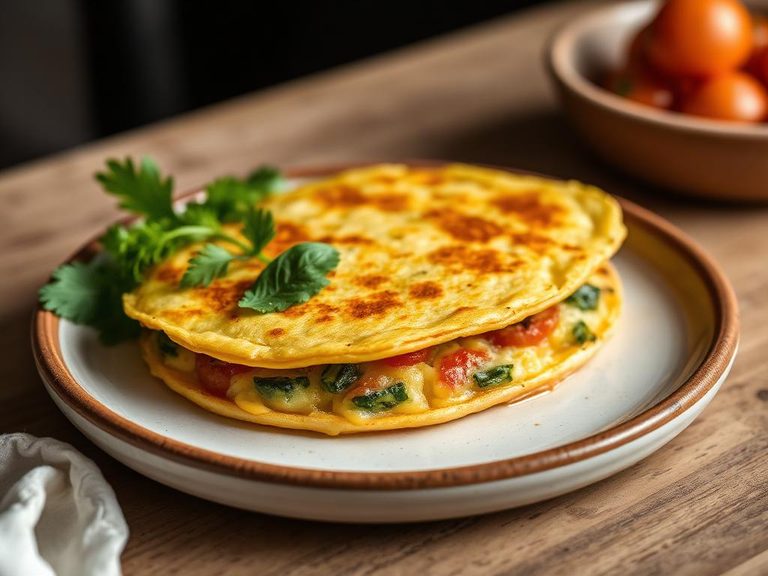
A fluffy, golden omelet or soft-scrambled egg, rich with melted cheese and savory bits of meat, brightened by juicy tomatoes and tender dark-green vegetables. Each bite offers a satisfying contrast of creamy, chewy, and crisp textures. It's a protein-packed powerhouse, delivering over 12 grams of protein per 100 grams with minimal carbs.
Calorie split: 25% protein · 4% carbs · 71% fat
↓ Full nutrition💚 Why it's loved
People adore it for its incredible versatility—it's a blank canvas that can be tailored to any taste or leftover in the fridge. The combination of savory, umami-rich flavors and comforting, hearty texture makes it a beloved staple for any meal of the day.
⚠️ Watch-outs & how to enjoy it better
The added fats and cheese can make it high in saturated fat and calories if portions aren't mindful. Those watching sodium intake should be cautious, as processed meats and cheese contribute significantly. For individuals with egg or dairy allergies, this dish is off-limits. Tip: Use a non-stick pan with minimal oil, choose leaner meats like turkey, and load up on the vegetables to volume up the meal without excessive calories.
Key benefits
- Excellent source of high-quality protein for muscle maintenance.
- Rich in essential vitamins like B12, riboflavin, and choline from eggs.
- Provides calcium and vitamin D from the cheese.
- Lycopene from tomatoes and iron from greens add key micronutrients.
- High satiety factor helps with appetite control.
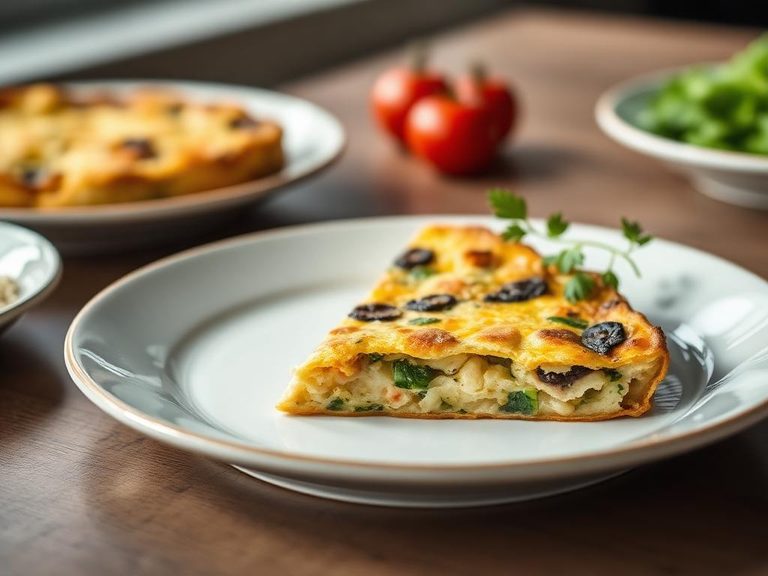
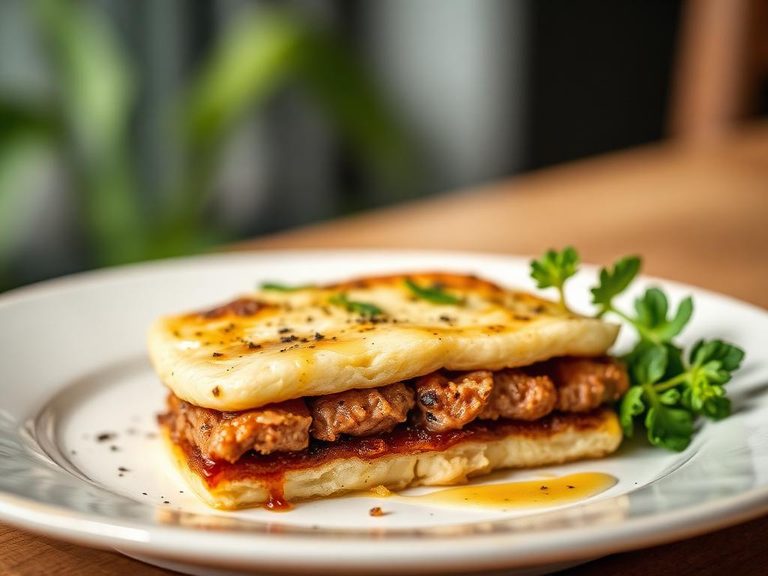
🍽️ Popular dishes

🌍 Where it's eaten
💡 Did you know?
The world record for the largest scrambled egg dish was set in 2012 in Egypt, using over 7,000 eggs to feed thousands of people.
Full nutrition (USDA data · scales with serving)
| Water | 69.5 g |
| Energy | 190 kcal |
| Protein | 12.1 g |
| Total lipid (fat) | 15.0 g |
| Carbohydrate, by difference | 1.8 g |
| Fiber, total dietary | 0.20 g |
| Total Sugars | 0.74 g |
| Calcium, Ca | 129 mg |
| Iron, Fe | 1.3 mg |
| Magnesium, Mg | 17.0 mg |
| Phosphorus, P | 204 mg |
| Potassium, K | 169 mg |
| Sodium, Na | 361 mg |
| Zinc, Zn | 1.3 mg |
| Copper, Cu | 0.02 mg |
| Selenium, Se | 25.3 ug |
| Vitamin C, total ascorbic acid | 2.9 mg |
| Thiamin | 0.07 mg |
| Riboflavin | 0.33 mg |
| Niacin | 0.53 mg |
| Vitamin B-6 | 0.12 mg |
| Folate, total | 43.0 ug |
| Folic acid | 0.00 ug |
| Folate, food | 43.0 ug |
| Folate, DFE | 43.0 ug |
| Choline, total | 190 mg |
| Vitamin B-12 | 0.75 ug |
| Vitamin B-12, added | 0.00 ug |
| Vitamin A, RAE | 183 ug |
| Retinol | 166 ug |
| Carotene, beta | 197 ug |
| Carotene, alpha | 6.0 ug |
| Cryptoxanthin, beta | 10.0 ug |
| Lycopene | 140 ug |
| Lutein + zeaxanthin | 690 ug |
| Vitamin E (alpha-tocopherol) | 1.6 mg |
| Vitamin E, added | 0.00 mg |
| Vitamin D (D2 + D3) | 2.1 ug |
| Vitamin K (phylloquinone) | 26.7 ug |
| Alcohol, ethyl | 0.00 g |
| Caffeine | 0.00 mg |
| Theobromine | 0.00 mg |
Fat & fatty acid profile (per 100g)
| Fatty acids, total saturated | 5.3 g |
| SFA 4:0 | 0.09 g |
| SFA 6:0 | 0.07 g |
| SFA 8:0 | 0.04 g |
| SFA 10:0 | 0.10 g |
| SFA 12:0 | 0.12 g |
| SFA 14:0 | 0.41 g |
| SFA 16:0 | 3.2 g |
| SFA 18:0 | 1.2 g |
| Fatty acids, total monounsaturated | 5.1 g |
| MUFA 16:1 | 0.26 g |
| MUFA 18:1 | 4.8 g |
| MUFA 20:1 | 0.04 g |
| MUFA 22:1 | 0.00 g |
| Fatty acids, total polyunsaturated | 2.8 g |
| PUFA 18:2 | 2.3 g |
| PUFA 18:3 | 0.17 g |
| PUFA 18:4 | 0.00 g |
| PUFA 20:4 | 0.01 g |
| PUFA 20:5 n-3 (EPA) | 0.00 g |
| PUFA 22:5 n-3 (DPA) | 0.00 g |
| PUFA 22:6 n-3 (DHA) | 0.00 g |
| Cholesterol | 295 mg |
Amino acid profile (per 100g)
Estimated from Egg, whole, cooked, omelet — USDA does not publish this profile for Egg omelet or scrambled egg.
| Tryptophan | 0.14 g |
| Threonine | 0.47 g |
| Isoleucine | 0.56 g |
| Leucine | 0.91 g |
| Lysine | 0.77 g |
| Methionine | 0.32 g |
| Cystine | 0.23 g |
| Phenylalanine | 0.57 g |
| Tyrosine | 0.42 g |
| Valine | 0.72 g |
| Arginine | 0.69 g |
| Histidine | 0.26 g |
| Alanine | 0.62 g |
| Aspartic acid | 1.1 g |
| Glutamic acid | 1.4 g |
| Glycine | 0.36 g |
| Proline | 0.43 g |
| Serine | 0.82 g |
FAQ
How do I prevent my omelet from becoming watery from the tomatoes?
Dice the tomatoes and gently squeeze out excess seeds and juice before adding them to the egg mixture or cooking them separately first to evaporate moisture.
Can I make this dish ahead for meal prep?
Yes, you can bake it as a frittata or strata, which holds its texture well for 3-4 days refrigerated. Scrambles and omelets are best served fresh.
What's the best way to cook the dark greens without them getting tough?
Wilt them quickly in the pan with a little water or oil just before adding the eggs. This preserves their color and tender texture.
Nutrient density (calculated · NRF9.3)
Nutrient Rich Foods index: beneficial nutrients (protein, fiber, vitamins, minerals) minus saturated fat, added sugar & sodium, per 100 kcal.
NRF9.3 index — Fulgoni, Keast & Drewnowski, 2009. Computed from USDA nutrients.
Weight-loss friendliness (composite index)
Energy density 1.90 kcal/g · 25% calories from protein · 0.2 g fiber · 0.7 g sugar per 100 g.
Composite of energy density (Rolls et al., 1999), protein & fiber satiety, minus sugar. A calculated heuristic — ranks satiety-per-calorie, not a clinical measure.
Dietary load (calculated from USDA values)
Potential renal acid load. Positive = acid-forming, negative = alkaline-forming.
Sodium-to-potassium ratio: 2.14 (lower is better — aim for ≤ 1)
Sodium:potassium per WHO potassium guidance. Computed from USDA nutrients.