

Crackers, crispbread, rye
Whole food · Baked Products

Photo: Wikipedia
Rye crispbread is a dry, brittle, and deeply crunchy flatbread, traditionally made from whole rye flour and often featuring a coarse, seedy texture. Its flavor is distinctly earthy, slightly sour, and nutty, with a robust character that stands up to strong toppings. Nutritionally, it is a fiber powerhouse, providing over 16g per 100g, which is exceptional for a baked good.
Calorie split: 8% protein · 88% carbs · 3% fat
↓ Full nutrition💚 Why it's loved
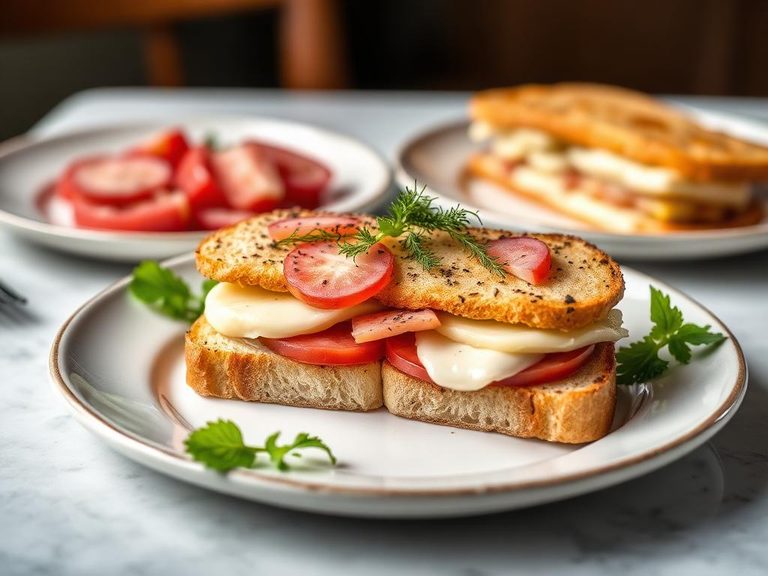
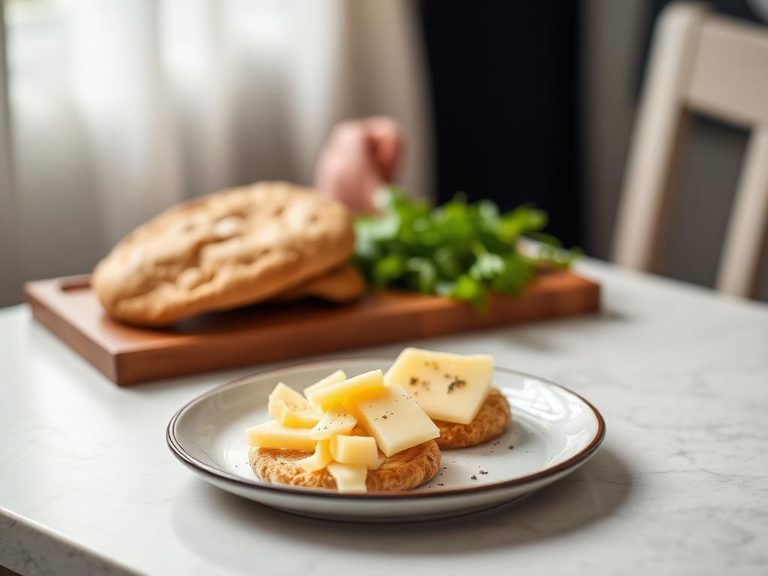
People love its satisfying, shattering crunch and deep, malty flavor that provides a hearty base for both sweet and savory toppings. It's a cultural staple in Scandinavia and Northern Europe, often enjoyed as part of a simple, wholesome open-faced sandwich (smörgås).
⚠️ Watch-outs & how to enjoy it better
Its dense, high-fiber nature can be challenging for some digestive systems, potentially causing bloating if not consumed with adequate water. The very low fat content means it can feel dry, and its robust flavor might overpower delicate toppings. To counteract this, pair it with creamy or fatty spreads like cheese, avocado, or smoked salmon, and always drink water alongside it.
Key benefits
- Extremely high in dietary fiber for digestive health and satiety
- Very low in fat (1.3g per 100g)
- Provides a good source of plant-based protein (7.9g per 100g)
- Low in sugar (1.07g per 100g)
- Whole-grain rye may support heart health
🍽️ Popular dishes
🌍 Where it's eaten
💡 Did you know?
In Sweden, a popular tradition is to eat seven different types of crispbread (sju sorters knäckebröd) at a fika (coffee break).
Full nutrition (USDA data · scales with serving)
| Water | 6.1 g |
| Energy | 366 kcal |
| Energy | 1531 kj |
| Protein | 7.9 g |
| Total lipid (fat) | 1.3 g |
| Ash | 2.4 g |
| Carbohydrate, by difference | 82.2 g |
| Fiber, total dietary | 16.5 g |
| Total Sugars | 1.1 g |
| Calcium, Ca | 31.0 mg |
| Iron, Fe | 2.4 mg |
| Magnesium, Mg | 78.0 mg |
| Phosphorus, P | 269 mg |
| Potassium, K | 319 mg |
| Sodium, Na | 410 mg |
| Zinc, Zn | 2.4 mg |
| Copper, Cu | 0.26 mg |
| Manganese, Mn | 2.5 mg |
| Selenium, Se | 36.6 ug |
| Vitamin C, total ascorbic acid | 0.00 mg |
| Thiamin | 0.24 mg |
| Riboflavin | 0.14 mg |
| Niacin | 1.0 mg |
| Pantothenic acid | 0.68 mg |
| Vitamin B-6 | 0.21 mg |
| Folate, total | 47.0 ug |
| Folic acid | 25.0 ug |
| Folate, food | 22.0 ug |
| Folate, DFE | 65.0 ug |
| Choline, total | 20.2 mg |
| Vitamin B-12 | 0.00 ug |
| Vitamin B-12, added | 0.00 ug |
| Vitamin A, RAE | 0.00 ug |
| Retinol | 0.00 ug |
| Carotene, beta | 0.00 ug |
| Carotene, alpha | 0.00 ug |
| Cryptoxanthin, beta | 0.00 ug |
| Vitamin A, IU | 0.00 iu |
| Lycopene | 0.00 ug |
| Lutein + zeaxanthin | 194 ug |
| Vitamin E (alpha-tocopherol) | 0.81 mg |
| Vitamin E, added | 0.00 mg |
| Vitamin D (D2 + D3), International Units | 0.00 iu |
| Vitamin D (D2 + D3) | 0.00 ug |
| Vitamin K (phylloquinone) | 6.0 ug |
| Alcohol, ethyl | 0.00 g |
| Caffeine | 0.00 mg |
| Theobromine | 0.00 mg |
Fat & fatty acid profile (per 100g)
| Fatty acids, total saturated | 0.14 g |
| SFA 4:0 | 0.00 g |
| SFA 6:0 | 0.00 g |
| SFA 8:0 | 0.00 g |
| SFA 10:0 | 0.00 g |
| SFA 12:0 | 0.00 g |
| SFA 14:0 | 0.00 g |
| SFA 16:0 | 0.14 g |
| SFA 18:0 | 0.01 g |
| Fatty acids, total monounsaturated | 0.17 g |
| MUFA 16:1 | 0.01 g |
| MUFA 18:1 | 0.15 g |
| MUFA 20:1 | 0.01 g |
| MUFA 22:1 | 0.00 g |
| Fatty acids, total polyunsaturated | 0.56 g |
| PUFA 18:2 | 0.48 g |
| PUFA 18:3 | 0.08 g |
| PUFA 18:4 | 0.00 g |
| PUFA 20:4 | 0.00 g |
| PUFA 20:5 n-3 (EPA) | 0.00 g |
| PUFA 22:5 n-3 (DPA) | 0.00 g |
| PUFA 22:6 n-3 (DHA) | 0.00 g |
| Cholesterol | 0.00 mg |
Amino acid profile (per 100g)
| Tryptophan | 0.09 g |
| Threonine | 0.28 g |
| Isoleucine | 0.32 g |
| Leucine | 0.56 g |
| Lysine | 0.30 g |
| Methionine | 0.12 g |
| Cystine | 0.15 g |
| Phenylalanine | 0.40 g |
| Tyrosine | 0.17 g |
| Valine | 0.40 g |
| Arginine | 0.37 g |
| Histidine | 0.18 g |
| Alanine | 0.34 g |
| Aspartic acid | 0.56 g |
| Glutamic acid | 2.2 g |
| Glycine | 0.31 g |
| Proline | 0.82 g |
| Serine | 0.43 g |
FAQ
Is rye crispbread gluten-free?
No, rye contains gluten. People with celiac disease or gluten sensitivity must avoid it.
Why is it so hard and dry?
It's baked at a low temperature for a long time to remove almost all moisture, creating its signature shelf-stable crunch and texture.
How do I keep it fresh?
Store it in an airtight container at room temperature to maintain its crispness. It can last for months.
Nutrient density (calculated · NRF9.3)
Nutrient Rich Foods index: beneficial nutrients (protein, fiber, vitamins, minerals) minus saturated fat, added sugar & sodium, per 100 kcal.
NRF9.3 index — Fulgoni, Keast & Drewnowski, 2009. Computed from USDA nutrients.
Weight-loss friendliness (composite index)
Energy density 3.66 kcal/g · 9% calories from protein · 16.5 g fiber · 1.1 g sugar per 100 g.
Composite of energy density (Rolls et al., 1999), protein & fiber satiety, minus sugar. A calculated heuristic — ranks satiety-per-calorie, not a clinical measure.
Dietary load (calculated from USDA values)
Potential renal acid load. Positive = acid-forming, negative = alkaline-forming.
Sodium-to-potassium ratio: 1.29 (lower is better — aim for ≤ 1)
Sodium:potassium per WHO potassium guidance. Computed from USDA nutrients.