

Cookies, butter, commercially prepared, enriched
Whole food · Baked Products
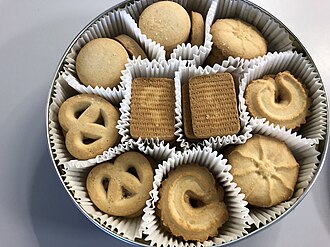
Photo: Wikipedia
A classic, commercially prepared butter cookie, this treat is defined by its rich, buttery flavor and a tender, crumbly texture that melts on the tongue. Nutritionally, it is a high-energy food, delivering nearly 470 calories per 100 grams, with a significant portion coming from carbohydrates and sugar. Its simple, indulgent profile makes it a staple for quick snacks and tea-time accompaniments.
Calorie split: 5% protein · 59% carbs · 36% fat
↓ Full nutrition💚 Why it's loved
People love butter cookies for their rich, nostalgic flavor and satisfyingly crisp, crumbly texture that pairs perfectly with coffee or tea. Their versatility allows them to be enjoyed plain, dipped in chocolate, or used as a base for desserts, making them a beloved staple in many households and cultures.
⚠️ Watch-outs & how to enjoy it better
The high sugar and refined carbohydrate content can lead to rapid blood-sugar spikes, making it a poor choice for those managing diabetes or seeking sustained energy. To counteract this, pair a single cookie with a source of protein or healthy fat (like nuts or cheese) to slow sugar absorption, and practice strict portion control by limiting yourself to one or two cookies at a time.
Key benefits
- Provides a quick source of energy from carbohydrates and fats
- Often enriched with vitamins and minerals like iron and B vitamins
- Offers a convenient, portable snack with a long shelf life
- Serves as a simple, comforting treat for many cultures
- Can be a useful calorie-dense food for those needing to increase energy intake
🍽️ Popular dishes
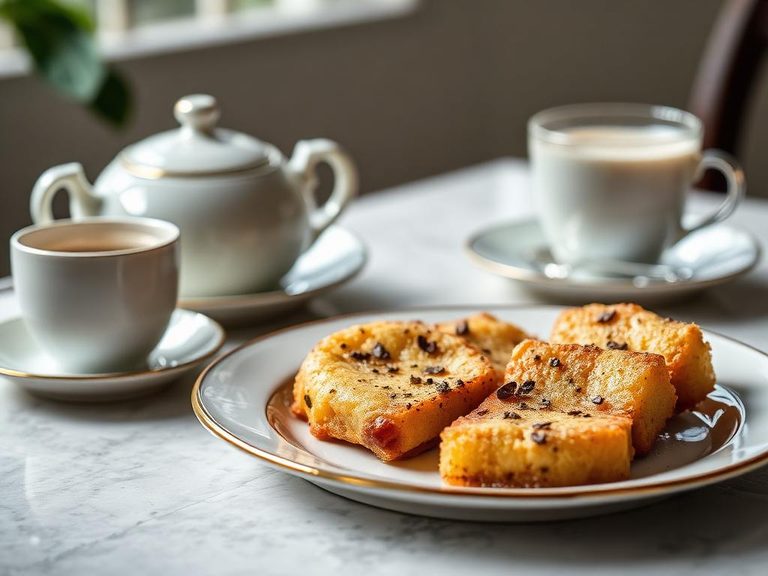
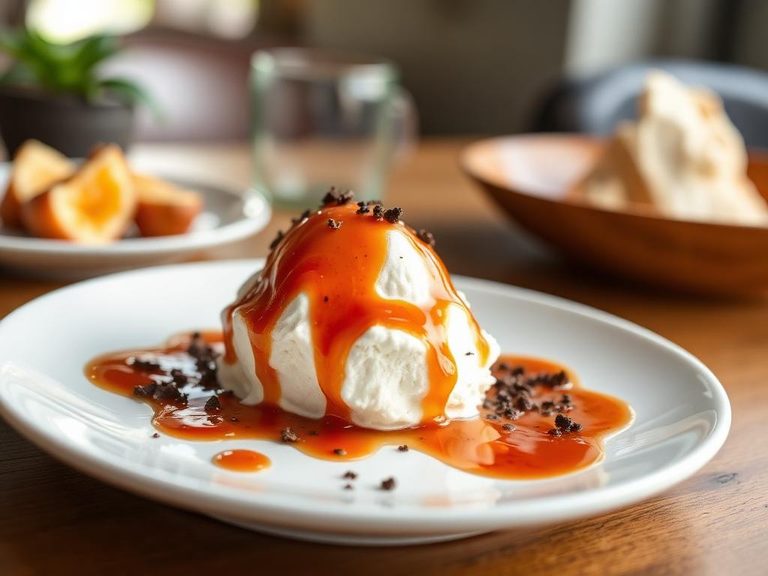
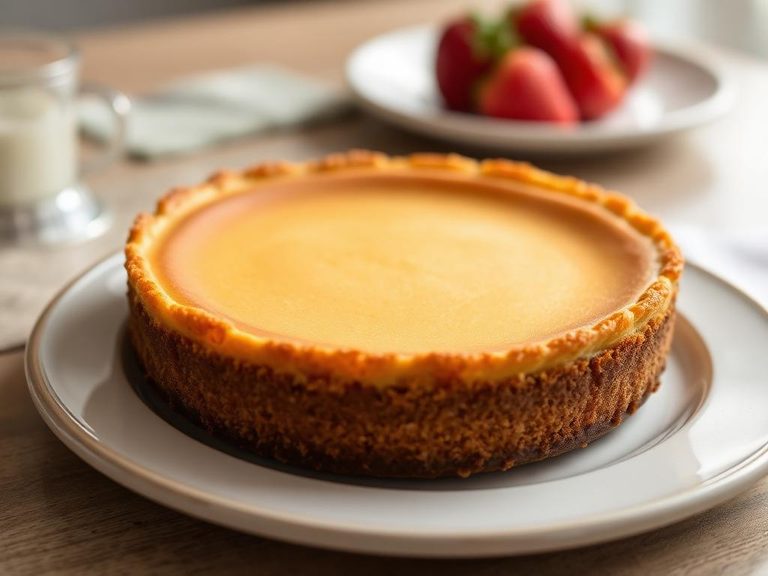

🌍 Where it's eaten
💡 Did you know?
The term 'butter cookie' is legally protected in some countries, like Denmark, where it can only be used if the dough contains at least 2.5% butter by weight.
Full nutrition (USDA data · scales with serving)
| Water | 4.6 g |
| Energy | 467 kcal |
| Energy | 1954 kj |
| Protein | 6.1 g |
| Total lipid (fat) | 18.8 g |
| Ash | 1.5 g |
| Carbohydrate, by difference | 68.9 g |
| Fiber, total dietary | 0.80 g |
| Total Sugars | 20.2 g |
| Calcium, Ca | 29.0 mg |
| Iron, Fe | 2.2 mg |
| Magnesium, Mg | 12.0 mg |
| Phosphorus, P | 102 mg |
| Potassium, K | 111 mg |
| Sodium, Na | 282 mg |
| Zinc, Zn | 0.38 mg |
| Copper, Cu | 0.20 mg |
| Manganese, Mn | 0.17 mg |
| Selenium, Se | 8.4 ug |
| Vitamin C, total ascorbic acid | 0.00 mg |
| Thiamin | 0.37 mg |
| Riboflavin | 0.34 mg |
| Niacin | 3.2 mg |
| Pantothenic acid | 0.49 mg |
| Vitamin B-6 | 0.04 mg |
| Folate, total | 76.0 ug |
| Folic acid | 70.0 ug |
| Folate, food | 6.0 ug |
| Folate, DFE | 125 ug |
| Choline, total | 6.5 mg |
| Vitamin B-12 | 0.36 ug |
| Vitamin B-12, added | 0.00 ug |
| Vitamin A, RAE | 165 ug |
| Retinol | 162 ug |
| Carotene, beta | 35.0 ug |
| Carotene, alpha | 0.00 ug |
| Cryptoxanthin, beta | 1.0 ug |
| Vitamin A, IU | 673 iu |
| Lycopene | 0.00 ug |
| Lutein + zeaxanthin | 22.0 ug |
| Vitamin E (alpha-tocopherol) | 0.58 mg |
| Vitamin E, added | 0.00 mg |
| Vitamin D (D2 + D3), International Units | 16.0 iu |
| Vitamin D (D2 + D3) | 0.40 ug |
| Vitamin K (phylloquinone) | 1.7 ug |
| Alcohol, ethyl | 0.00 g |
| Caffeine | 0.00 mg |
| Theobromine | 0.00 mg |
Fat & fatty acid profile (per 100g)
| Fatty acids, total saturated | 11.1 g |
| SFA 4:0 | 0.55 g |
| SFA 6:0 | 0.32 g |
| SFA 8:0 | 0.19 g |
| SFA 10:0 | 0.42 g |
| SFA 12:0 | 0.47 g |
| SFA 14:0 | 1.7 g |
| SFA 16:0 | 4.8 g |
| SFA 18:0 | 2.2 g |
| Fatty acids, total monounsaturated | 5.5 g |
| MUFA 16:1 | 0.42 g |
| MUFA 18:1 | 4.8 g |
| MUFA 20:1 | 0.01 g |
| MUFA 22:1 | 0.00 g |
| Fatty acids, total polyunsaturated | 0.98 g |
| PUFA 18:2 | 0.68 g |
| PUFA 18:3 | 0.26 g |
| PUFA 18:4 | 0.00 g |
| PUFA 20:4 | 0.02 g |
| PUFA 20:5 n-3 (EPA) | 0.01 g |
| PUFA 22:5 n-3 (DPA) | 0.00 g |
| PUFA 22:6 n-3 (DHA) | 0.01 g |
| Cholesterol | 117 mg |
Amino acid profile (per 100g)
| Tryptophan | 0.08 g |
| Threonine | 0.21 g |
| Isoleucine | 0.28 g |
| Leucine | 0.47 g |
| Lysine | 0.31 g |
| Methionine | 0.13 g |
| Cystine | 0.12 g |
| Phenylalanine | 0.30 g |
| Tyrosine | 0.21 g |
| Valine | 0.32 g |
| Arginine | 0.26 g |
| Histidine | 0.14 g |
| Alanine | 0.22 g |
| Aspartic acid | 0.37 g |
| Glutamic acid | 1.6 g |
| Glycine | 0.19 g |
| Proline | 0.57 g |
| Serine | 0.35 g |
FAQ
What makes butter cookies different from other cookies?
Butter cookies are characterized by their high butter content, which gives them a rich flavor and a tender, crumbly texture. They often have a simple recipe with minimal ingredients, focusing on the quality of the butter.
Are butter cookies suitable for people with dietary restrictions?
Butter cookies typically contain gluten, dairy, and sometimes eggs, making them unsuitable for those with allergies or intolerances to these ingredients. However, gluten-free and vegan versions are increasingly available in stores.
How should butter cookies be stored to maintain freshness?
Store butter cookies in an airtight container at room temperature, away from direct sunlight and moisture. They can also be frozen for longer storage, but should be thawed at room temperature to preserve their texture.
Nutrient density (calculated · NRF9.3)
Nutrient Rich Foods index: beneficial nutrients (protein, fiber, vitamins, minerals) minus saturated fat, added sugar & sodium, per 100 kcal.
NRF9.3 index — Fulgoni, Keast & Drewnowski, 2009. Computed from USDA nutrients.
Weight-loss friendliness (composite index)
Energy density 4.67 kcal/g · 5% calories from protein · 0.8 g fiber · 20.2 g sugar per 100 g.
Composite of energy density (Rolls et al., 1999), protein & fiber satiety, minus sugar. A calculated heuristic — ranks satiety-per-calorie, not a clinical measure.
Dietary load (calculated from USDA values)
Potential renal acid load. Positive = acid-forming, negative = alkaline-forming.
Sodium-to-potassium ratio: 2.54 (lower is better — aim for ≤ 1)
Sodium:potassium per WHO potassium guidance. Computed from USDA nutrients.