

Chickpeas (garbanzo beans, bengal gram), mature seeds, canned, drained solids
Whole food · Legumes and Legume Products
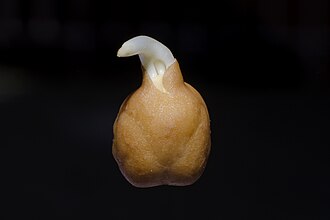
Photo: Wikipedia
These are the mature seeds of the chickpea plant, canned and drained for convenience. They have a firm, slightly creamy texture with a mild, nutty, and earthy flavor. Nutritionally, they are a standout source of plant-based protein and dietary fiber.
Calorie split: 20% protein · 63% carbs · 17% fat
↓ Full nutrition💚 Why it's loved
People love them for their incredible versatility—they seamlessly absorb spices in curries, blend into creamy hummus, or add a hearty texture to salads. They are a cornerstone of many global cuisines, offering a satisfying, protein-rich staple.
⚠️ Watch-outs & how to enjoy it better
As a legume, they contain oligosaccharides which can cause gas and bloating in some individuals; rinsing them well and gradually increasing intake can help. They are also a common allergen and, like many canned goods, can be high in sodium—look for 'low sodium' versions or rinse thoroughly. Pairing them with a source of vitamin C (like lemon juice) can enhance iron absorption.
Key benefits
- Excellent source of plant-based protein for muscle maintenance.
- High in dietary fiber, promoting digestive health and satiety.
- Provides complex carbohydrates for sustained energy release.
- Naturally low in fat and contains no cholesterol.
🍽️ Popular dishes
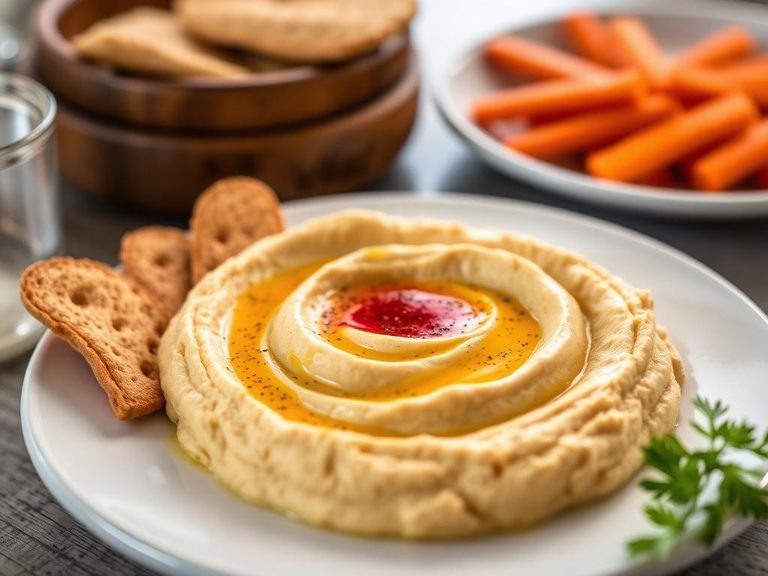
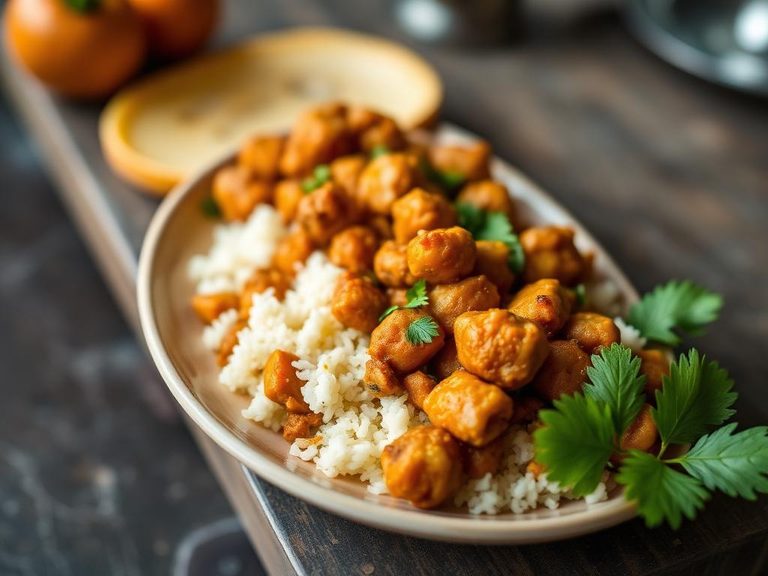
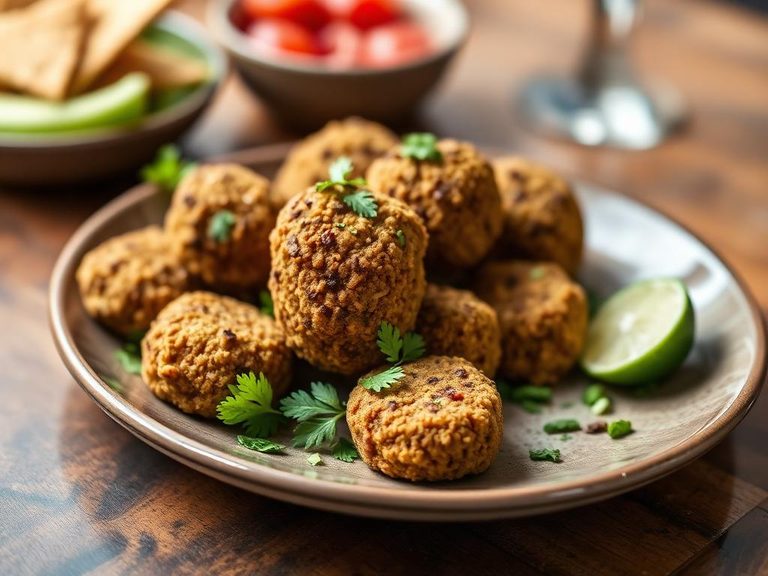

🌍 Where it's eaten
💡 Did you know?
Archaeological evidence suggests chickpeas were first domesticated in the Middle East over 10,000 years ago, making them one of the earliest cultivated legumes.
Full nutrition (USDA data · scales with serving)
| Water | 66.7 g |
| Energy | 139 kcal |
| Energy | 583 kj |
| Protein | 7.0 g |
| Total lipid (fat) | 2.8 g |
| Ash | 0.91 g |
| Carbohydrate, by difference | 22.5 g |
| Fiber, total dietary | 6.4 g |
| Total Sugars | 4.0 g |
| Calcium, Ca | 45.0 mg |
| Iron, Fe | 1.1 mg |
| Magnesium, Mg | 26.0 mg |
| Phosphorus, P | 85.0 mg |
| Potassium, K | 126 mg |
| Sodium, Na | 246 mg |
| Zinc, Zn | 0.63 mg |
| Copper, Cu | 0.25 mg |
| Manganese, Mn | 0.85 mg |
| Selenium, Se | 3.1 ug |
| Vitamin C, total ascorbic acid | 0.10 mg |
| Thiamin | 0.03 mg |
| Riboflavin | 0.01 mg |
| Niacin | 0.14 mg |
| Vitamin B-6 | 0.12 mg |
| Folate, total | 48.0 ug |
| Folic acid | 0.00 ug |
| Folate, food | 48.0 ug |
| Folate, DFE | 48.0 ug |
| Vitamin B-12 | 0.00 ug |
| Vitamin A, RAE | 1.0 ug |
| Retinol | 0.00 ug |
| Carotene, beta | 14.0 ug |
| Carotene, alpha | 0.00 ug |
| Cryptoxanthin, beta | 0.00 ug |
| Vitamin A, IU | 23.0 iu |
| Lycopene | 0.00 ug |
| Lutein + zeaxanthin | 0.00 ug |
| Vitamin E (alpha-tocopherol) | 0.29 mg |
| Vitamin D (D2 + D3), International Units | 0.00 iu |
| Vitamin D (D2 + D3) | 0.00 ug |
| Vitamin K (phylloquinone) | 3.4 ug |
| Alcohol, ethyl | 0.00 g |
| Caffeine | 0.00 mg |
| Theobromine | 0.00 mg |
Fat & fatty acid profile (per 100g)
| Fatty acids, total saturated | 0.21 g |
| SFA 4:0 | 0.00 g |
| SFA 6:0 | 0.00 g |
| SFA 8:0 | 0.00 g |
| SFA 10:0 | 0.00 g |
| SFA 12:0 | 0.00 g |
| SFA 14:0 | 0.00 g |
| SFA 16:0 | 0.18 g |
| SFA 18:0 | 0.03 g |
| Fatty acids, total monounsaturated | 0.49 g |
| MUFA 16:1 | 0.00 g |
| MUFA 18:1 | 0.48 g |
| MUFA 20:1 | 0.00 g |
| MUFA 22:1 | 0.00 g |
| Fatty acids, total polyunsaturated | 0.97 g |
| PUFA 18:2 | 0.93 g |
| PUFA 18:3 | 0.04 g |
| PUFA 18:4 | 0.00 g |
| PUFA 20:4 | 0.00 g |
| PUFA 20:5 n-3 (EPA) | 0.00 g |
| PUFA 22:5 n-3 (DPA) | 0.00 g |
| PUFA 22:6 n-3 (DHA) | 0.00 g |
| Fatty acids, total trans | 0.00 g |
| Cholesterol | 0.00 mg |
Amino acid profile (per 100g)
| Tryptophan | 0.07 g |
| Threonine | 0.26 g |
| Isoleucine | 0.30 g |
| Leucine | 0.51 g |
| Lysine | 0.47 g |
| Methionine | 0.09 g |
| Cystine | 0.10 g |
| Phenylalanine | 0.38 g |
| Tyrosine | 0.18 g |
| Valine | 0.30 g |
| Arginine | 0.67 g |
| Histidine | 0.20 g |
| Alanine | 0.30 g |
| Aspartic acid | 0.83 g |
| Glutamic acid | 1.2 g |
| Glycine | 0.29 g |
| Proline | 0.29 g |
| Serine | 0.36 g |
FAQ
Are canned chickpeas as nutritious as dried, cooked ones?
Yes, the canning process preserves most of the protein, fiber, and minerals. The main difference is often higher sodium content, which can be mitigated by rinsing.
Do I need to cook canned chickpeas before eating?
No, they are fully cooked during the canning process. They are ready to eat straight from the can, though many prefer to rinse them or warm them in a dish.
How can I use the liquid from the can (aquafaba)?
The starchy liquid, called aquafaba, can be whipped like egg whites to make meringues or used as a binder in vegan baking and cooking.
Nutrient density (calculated · NRF9.3)
Nutrient Rich Foods index: beneficial nutrients (protein, fiber, vitamins, minerals) minus saturated fat, added sugar & sodium, per 100 kcal.
NRF9.3 index — Fulgoni, Keast & Drewnowski, 2009. Computed from USDA nutrients.
Weight-loss friendliness (composite index)
Energy density 1.39 kcal/g · 20% calories from protein · 6.4 g fiber · 4.0 g sugar per 100 g.
Composite of energy density (Rolls et al., 1999), protein & fiber satiety, minus sugar. A calculated heuristic — ranks satiety-per-calorie, not a clinical measure.
Dietary load (calculated from USDA values)
Potential renal acid load. Positive = acid-forming, negative = alkaline-forming.
Sodium-to-potassium ratio: 1.95 (lower is better — aim for ≤ 1)
Sodium:potassium per WHO potassium guidance. Computed from USDA nutrients.