

Chicken wing, fried, coated, from raw
Common food
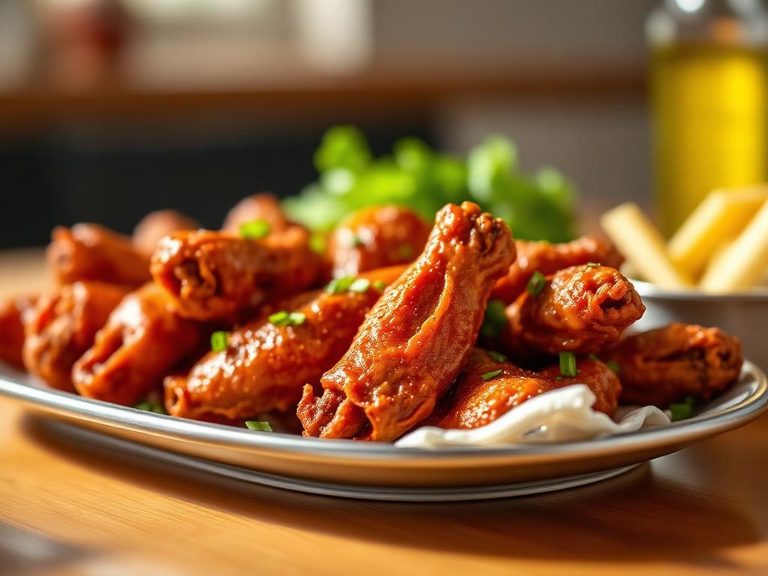
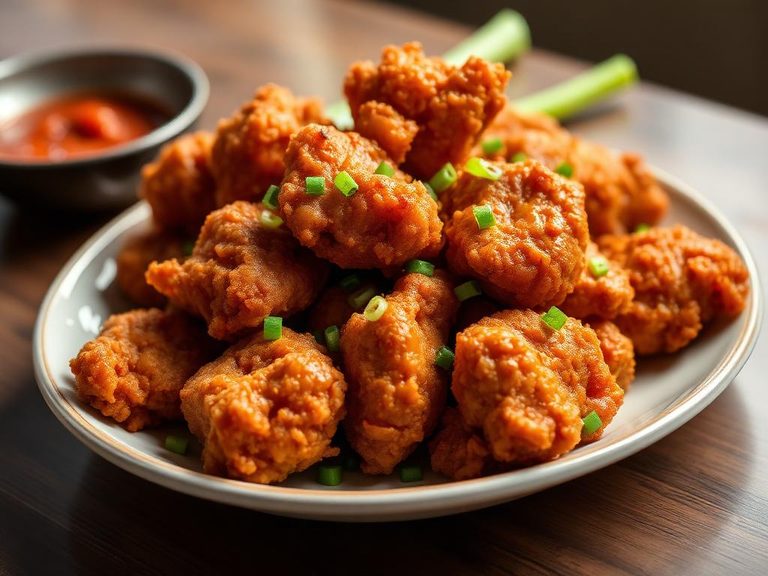
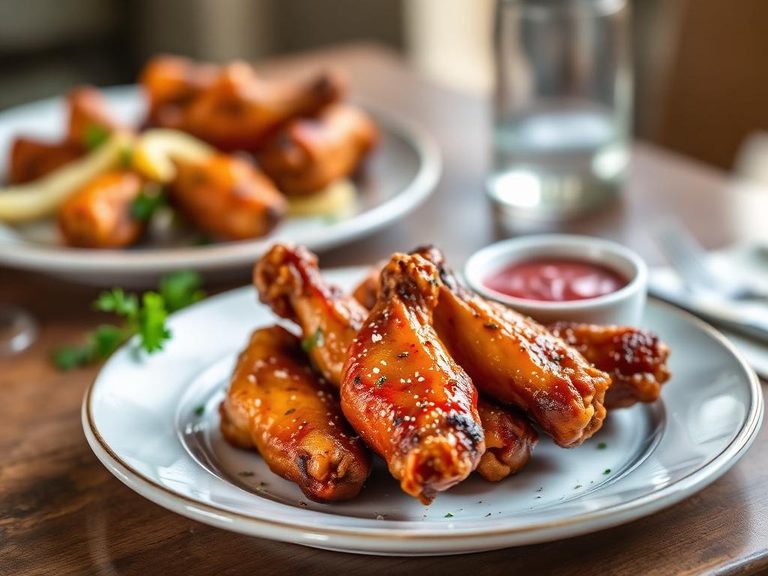
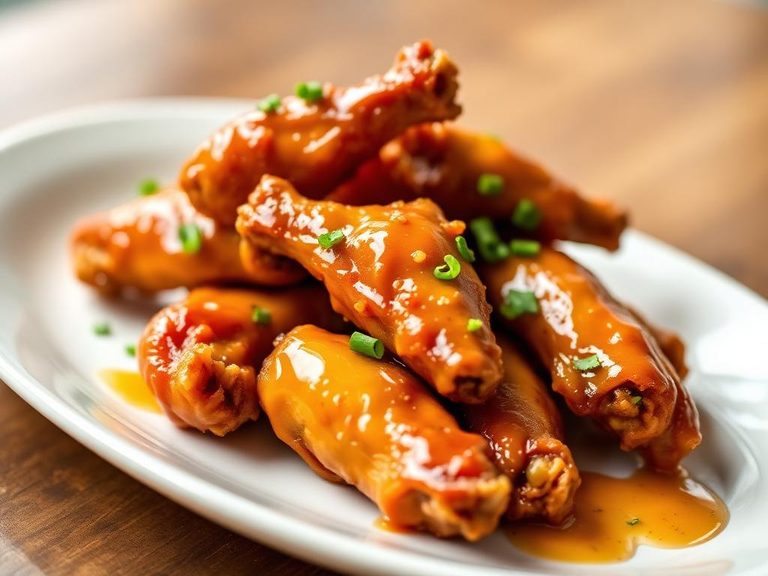
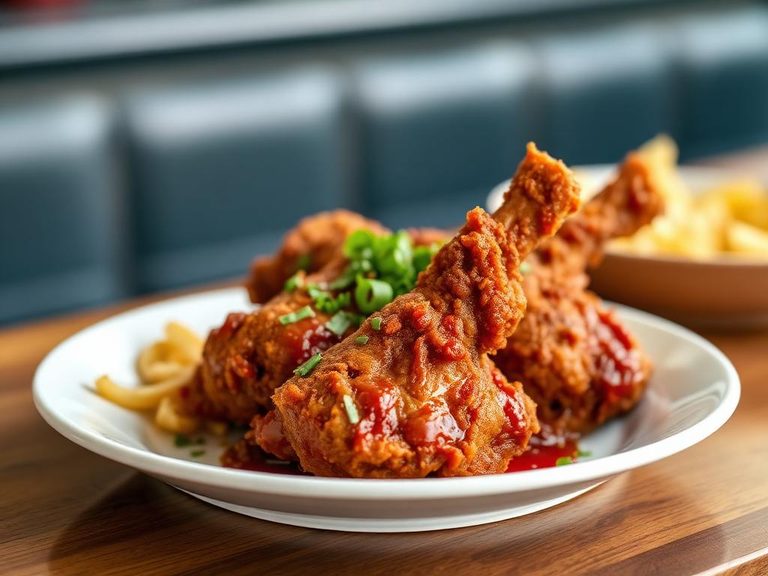
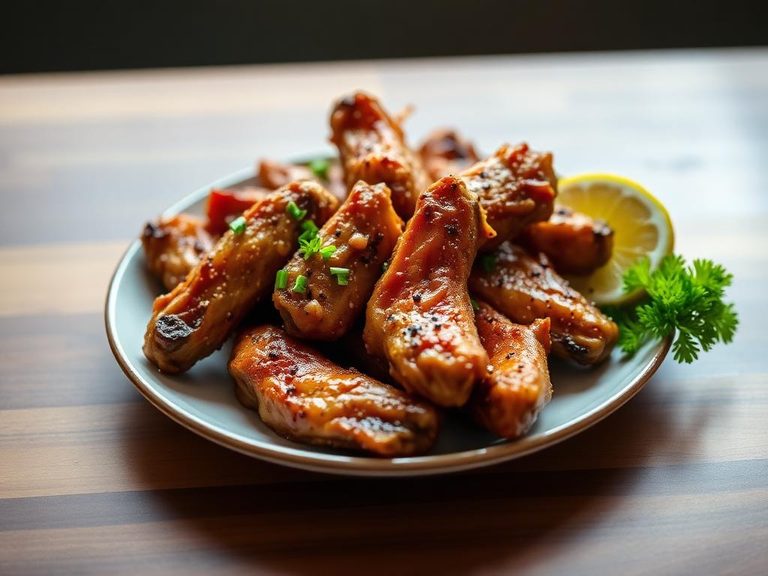
A crispy, golden-brown chicken wing, coated and deep-fried from raw, delivers a satisfying crunch that gives way to juicy, tender meat. It's a calorie-dense, high-protein snack or meal component, with a significant portion of its energy coming from fat due to the frying process and coating.
Calorie split: 27% protein · 8% carbs · 64% fat
↓ Full nutrition💚 Why it's loved
People adore the irresistible combination of a shatteringly crisp exterior and succulent, flavorful meat inside. It's a global comfort food, deeply embedded in social gatherings, sports events, and casual dining, often serving as a canvas for bold, spicy, or tangy sauces.
⚠️ Watch-outs & how to enjoy it better
The high fat and calorie content from deep-frying can be a concern for those managing weight or heart health. The coating and frying process can also make it high in sodium and potentially contain common allergens like wheat (gluten) in the batter. To counteract this, pair a modest portion with a large, fiber-rich salad or steamed vegetables to increase fullness, and opt for sauces on the side to control sodium and sugar intake.
Key benefits
- Excellent source of high-quality protein for muscle maintenance.
- Provides essential minerals like selenium and phosphorus.
- The crispy coating offers a satisfying textural contrast.
- A versatile base for countless sauces and seasonings.
🍽️ Popular dishes
🌍 Where it's eaten
💡 Did you know?
The practice of frying chicken wings in the United States is widely credited to a specific bar in Buffalo, New York, in 1964, where a customer's request for a late-night snack led to the creation of the now-famous Buffalo wing.
Full nutrition (USDA data · scales with serving)
| Water | 53.5 g |
| Energy | 289 kcal |
| Protein | 19.4 g |
| Total lipid (fat) | 20.2 g |
| Carbohydrate, by difference | 6.0 g |
| Fiber, total dietary | 0.20 g |
| Total Sugars | 0.10 g |
| Calcium, Ca | 22.0 mg |
| Iron, Fe | 1.1 mg |
| Magnesium, Mg | 17.0 mg |
| Phosphorus, P | 125 mg |
| Potassium, K | 176 mg |
| Sodium, Na | 419 mg |
| Zinc, Zn | 1.3 mg |
| Copper, Cu | 0.05 mg |
| Selenium, Se | 21.3 ug |
| Vitamin C, total ascorbic acid | 0.00 mg |
| Thiamin | 0.12 mg |
| Riboflavin | 0.16 mg |
| Niacin | 5.4 mg |
| Vitamin B-6 | 0.44 mg |
| Folate, total | 19.0 ug |
| Folic acid | 10.0 ug |
| Folate, food | 9.0 ug |
| Folate, DFE | 26.0 ug |
| Choline, total | 89.6 mg |
| Vitamin B-12 | 0.28 ug |
| Vitamin B-12, added | 0.00 ug |
| Vitamin A, RAE | 11.0 ug |
| Retinol | 11.0 ug |
| Carotene, beta | 0.00 ug |
| Carotene, alpha | 0.00 ug |
| Cryptoxanthin, beta | 0.00 ug |
| Lycopene | 0.00 ug |
| Lutein + zeaxanthin | 5.0 ug |
| Vitamin E (alpha-tocopherol) | 1.9 mg |
| Vitamin E, added | 0.00 mg |
| Vitamin D (D2 + D3) | 0.20 ug |
| Vitamin K (phylloquinone) | 7.3 ug |
| Alcohol, ethyl | 0.00 g |
| Caffeine | 0.00 mg |
| Theobromine | 0.00 mg |
Fat & fatty acid profile (per 100g)
| Fatty acids, total saturated | 4.8 g |
| SFA 4:0 | 0.00 g |
| SFA 6:0 | 0.00 g |
| SFA 8:0 | 0.00 g |
| SFA 10:0 | 0.01 g |
| SFA 12:0 | 0.01 g |
| SFA 14:0 | 0.08 g |
| SFA 16:0 | 3.7 g |
| SFA 18:0 | 0.93 g |
| Fatty acids, total monounsaturated | 9.0 g |
| MUFA 16:1 | 0.89 g |
| MUFA 18:1 | 7.9 g |
| MUFA 20:1 | 0.13 g |
| MUFA 22:1 | 0.00 g |
| Fatty acids, total polyunsaturated | 5.5 g |
| PUFA 18:2 | 4.9 g |
| PUFA 18:3 | 0.43 g |
| PUFA 18:4 | 0.00 g |
| PUFA 20:4 | 0.08 g |
| PUFA 20:5 n-3 (EPA) | 0.00 g |
| PUFA 22:5 n-3 (DPA) | 0.01 g |
| PUFA 22:6 n-3 (DHA) | 0.01 g |
| Cholesterol | 112 mg |
Amino acid profile (per 100g)
Estimated from Chicken, broiler, rotisserie, BBQ, wing, meat only — USDA does not publish this profile for Chicken wing.
| Tryptophan | 0.29 g |
| Threonine | 0.74 g |
| Isoleucine | 1.3 g |
| Leucine | 2.1 g |
| Lysine | 2.2 g |
| Methionine | 0.81 g |
| Cystine | 0.28 g |
| Phenylalanine | 1.1 g |
| Tyrosine | 0.83 g |
| Valine | 1.4 g |
| Arginine | 1.7 g |
| Histidine | 0.75 g |
| Alanine | 1.5 g |
| Aspartic acid | 2.5 g |
| Glutamic acid | 4.0 g |
| Glycine | 1.4 g |
| Proline | 1.7 g |
| Serine | 0.69 g |
FAQ
How does the nutrition change if it's baked instead of fried?
Baking significantly reduces the fat and total calorie content, as it doesn't require submerging in oil. The protein content remains similar, but the texture will be less uniformly crispy.
Is the coating the main source of the carbohydrates?
Yes, the flour or starch-based coating is the primary contributor to the carbohydrate content, as the chicken itself contains negligible carbs.
What's the best way to re-crisp leftover fried wings?
Reheat them in a preheated oven or air fryer at a high temperature (around 400°F/200°C) for 10-15 minutes. This restores crispiness far better than microwaving, which can make them soggy.
Nutrient density (calculated · NRF9.3)
Nutrient Rich Foods index: beneficial nutrients (protein, fiber, vitamins, minerals) minus saturated fat, added sugar & sodium, per 100 kcal.
NRF9.3 index — Fulgoni, Keast & Drewnowski, 2009. Computed from USDA nutrients.
Weight-loss friendliness (composite index)
Energy density 2.89 kcal/g · 27% calories from protein · 0.2 g fiber · 0.1 g sugar per 100 g.
Composite of energy density (Rolls et al., 1999), protein & fiber satiety, minus sugar. A calculated heuristic — ranks satiety-per-calorie, not a clinical measure.
Dietary load (calculated from USDA values)
Potential renal acid load. Positive = acid-forming, negative = alkaline-forming.
Sodium-to-potassium ratio: 2.38 (lower is better — aim for ≤ 1)
Sodium:potassium per WHO potassium guidance. Computed from USDA nutrients.