

Chicken wing, fried, coated, from pre-cooked
Common food
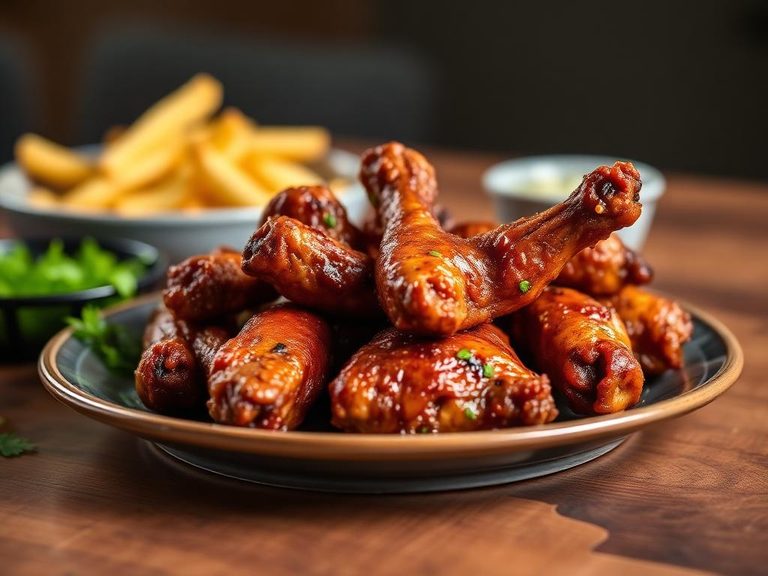
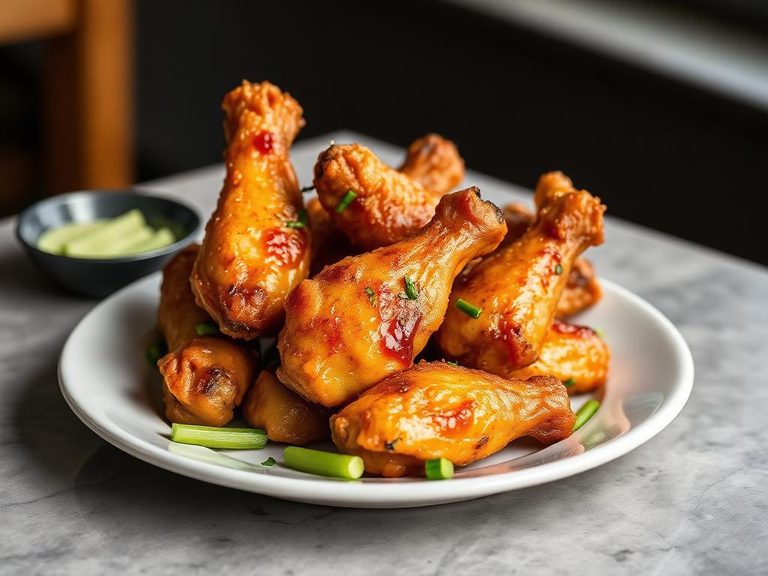
A golden, crispy-coated chicken wing, typically deep-fried after pre-cooking, delivering a satisfying crunch that gives way to tender, juicy meat. Its flavor profile is savory and rich, with the coating often seasoned with salt, pepper, and sometimes a blend of spices. Nutritionally, it's a dense source of protein and fat, with minimal carbohydrates.
Calorie split: 26% protein · 10% carbs · 64% fat
↓ Full nutrition💚 Why it's loved
People love it for the irresistible textural contrast between the shattering, savory crust and the succulent meat inside. It's a social, shareable food deeply embedded in game-day culture, pub fare, and casual gatherings worldwide.
⚠️ Watch-outs & how to enjoy it better
The high fat and calorie density can be a concern for weight management, and the frying process may generate advanced glycation end products (AGEs). To counteract this, practice strict portion control (stick to 2-3 wings) and pair them with a large, vinegar-dressed green salad or steamed vegetables to increase fiber and volume without excessive calories.
Key benefits
- High-quality complete protein for muscle maintenance
- Provides energy-dense calories from fat
- Contains essential minerals like selenium and phosphorus
- A popular and palatable way to increase protein intake
- Often a source of B vitamins, especially niacin
🍽️ Popular dishes
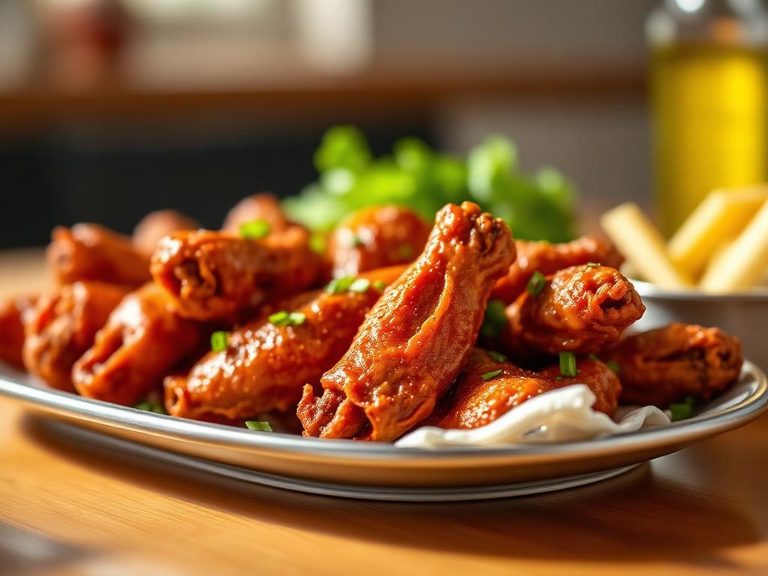
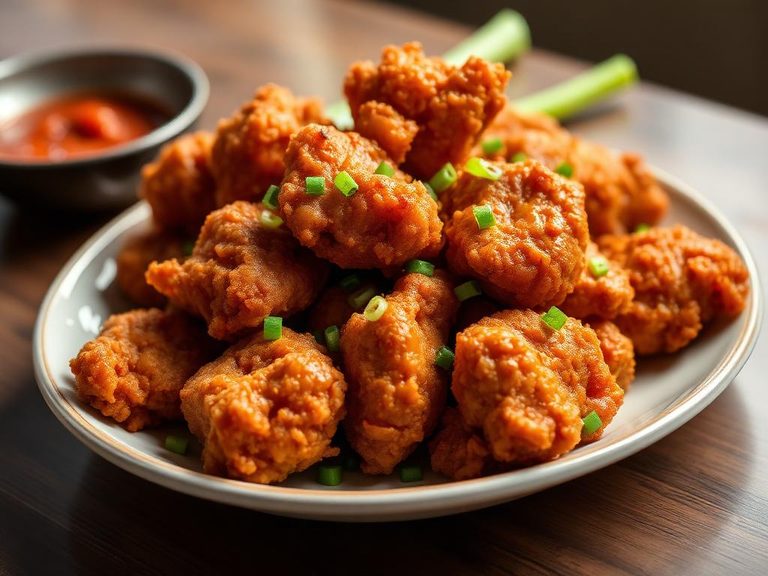
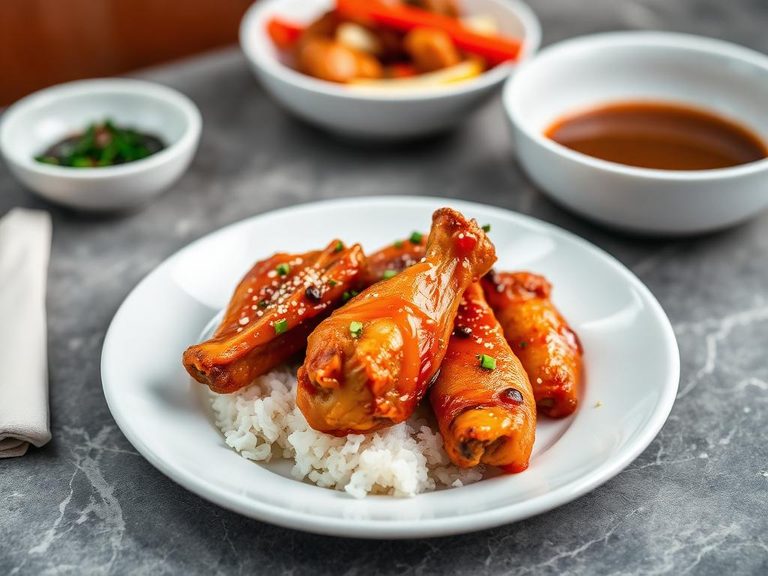
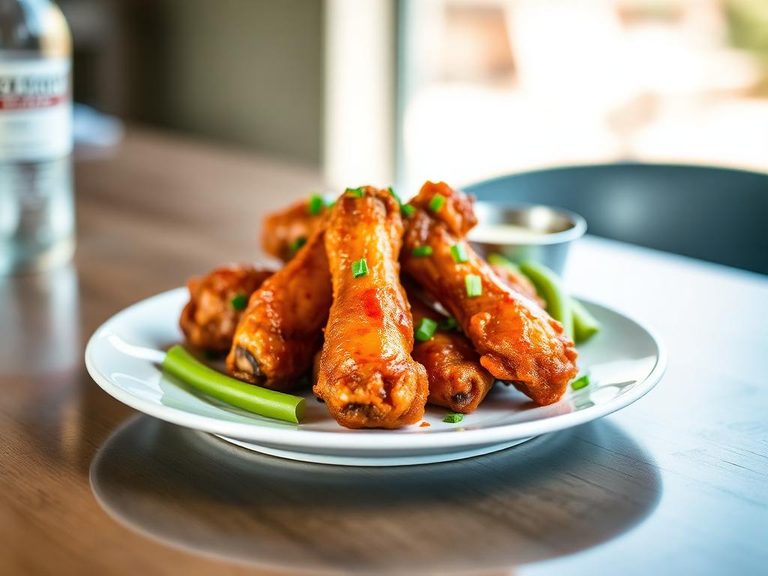
🌍 Where it's eaten
💡 Did you know?
The 'Buffalo' wing was reportedly invented in 1964 at the Anchor Bar in Buffalo, New York, when the owner's son and his friends wanted a late-night snack, and she fried up some chicken wings and tossed them in a hot sauce she had on hand.
Full nutrition (USDA data · scales with serving)
| Water | 52.6 g |
| Energy | 294 kcal |
| Protein | 18.6 g |
| Total lipid (fat) | 20.6 g |
| Carbohydrate, by difference | 7.2 g |
| Fiber, total dietary | 0.30 g |
| Total Sugars | 0.12 g |
| Calcium, Ca | 22.0 mg |
| Iron, Fe | 1.2 mg |
| Magnesium, Mg | 17.0 mg |
| Phosphorus, P | 122 mg |
| Potassium, K | 170 mg |
| Sodium, Na | 461 mg |
| Zinc, Zn | 1.3 mg |
| Copper, Cu | 0.05 mg |
| Selenium, Se | 20.6 ug |
| Vitamin C, total ascorbic acid | 0.00 mg |
| Thiamin | 0.14 mg |
| Riboflavin | 0.16 mg |
| Niacin | 5.3 mg |
| Vitamin B-6 | 0.42 mg |
| Folate, total | 21.0 ug |
| Folic acid | 12.0 ug |
| Folate, food | 9.0 ug |
| Folate, DFE | 30.0 ug |
| Choline, total | 85.8 mg |
| Vitamin B-12 | 0.27 ug |
| Vitamin B-12, added | 0.00 ug |
| Vitamin A, RAE | 10.0 ug |
| Retinol | 10.0 ug |
| Carotene, beta | 0.00 ug |
| Carotene, alpha | 0.00 ug |
| Cryptoxanthin, beta | 0.00 ug |
| Lycopene | 0.00 ug |
| Lutein + zeaxanthin | 6.0 ug |
| Vitamin E (alpha-tocopherol) | 2.0 mg |
| Vitamin E, added | 0.00 mg |
| Vitamin D (D2 + D3) | 0.20 ug |
| Vitamin K (phylloquinone) | 8.3 ug |
| Alcohol, ethyl | 0.00 g |
| Caffeine | 0.00 mg |
| Theobromine | 0.00 mg |
Fat & fatty acid profile (per 100g)
| Fatty acids, total saturated | 4.8 g |
| SFA 4:0 | 0.00 g |
| SFA 6:0 | 0.00 g |
| SFA 8:0 | 0.00 g |
| SFA 10:0 | 0.01 g |
| SFA 12:0 | 0.01 g |
| SFA 14:0 | 0.08 g |
| SFA 16:0 | 3.7 g |
| SFA 18:0 | 0.93 g |
| Fatty acids, total monounsaturated | 9.1 g |
| MUFA 16:1 | 0.85 g |
| MUFA 18:1 | 8.0 g |
| MUFA 20:1 | 0.13 g |
| MUFA 22:1 | 0.00 g |
| Fatty acids, total polyunsaturated | 5.8 g |
| PUFA 18:2 | 5.1 g |
| PUFA 18:3 | 0.47 g |
| PUFA 18:4 | 0.00 g |
| PUFA 20:4 | 0.07 g |
| PUFA 20:5 n-3 (EPA) | 0.00 g |
| PUFA 22:5 n-3 (DPA) | 0.01 g |
| PUFA 22:6 n-3 (DHA) | 0.00 g |
| Cholesterol | 107 mg |
Amino acid profile (per 100g)
Estimated from Chicken, broiler, rotisserie, BBQ, wing, meat only — USDA does not publish this profile for Chicken wing.
| Tryptophan | 0.29 g |
| Threonine | 0.74 g |
| Isoleucine | 1.3 g |
| Leucine | 2.1 g |
| Lysine | 2.2 g |
| Methionine | 0.81 g |
| Cystine | 0.28 g |
| Phenylalanine | 1.1 g |
| Tyrosine | 0.83 g |
| Valine | 1.4 g |
| Arginine | 1.7 g |
| Histidine | 0.75 g |
| Alanine | 1.5 g |
| Aspartic acid | 2.5 g |
| Glutamic acid | 4.0 g |
| Glycine | 1.4 g |
| Proline | 1.7 g |
| Serine | 0.69 g |
FAQ
Is the protein content still high after frying?
Yes, the protein remains largely intact. The frying process adds fat and calories but does not significantly degrade the protein from the chicken itself.
Why is the carb count listed if it's just chicken and breading?
The carbohydrates (7.15g per 100g) come almost entirely from the flour or starch-based coating used to achieve the crispy crust.
Can I make a healthier version at home?
Yes. You can bake or air-fry pre-cooked wings with a light coating of oil and spices to drastically reduce the total fat and calorie content while maintaining a crispy texture.
Nutrient density (calculated · NRF9.3)
Nutrient Rich Foods index: beneficial nutrients (protein, fiber, vitamins, minerals) minus saturated fat, added sugar & sodium, per 100 kcal.
NRF9.3 index — Fulgoni, Keast & Drewnowski, 2009. Computed from USDA nutrients.
Weight-loss friendliness (composite index)
Energy density 2.94 kcal/g · 25% calories from protein · 0.3 g fiber · 0.1 g sugar per 100 g.
Composite of energy density (Rolls et al., 1999), protein & fiber satiety, minus sugar. A calculated heuristic — ranks satiety-per-calorie, not a clinical measure.
Dietary load (calculated from USDA values)
Potential renal acid load. Positive = acid-forming, negative = alkaline-forming.
Sodium-to-potassium ratio: 2.71 (lower is better — aim for ≤ 1)
Sodium:potassium per WHO potassium guidance. Computed from USDA nutrients.