

Chicken wing, fried, coated, from fast food
Common food
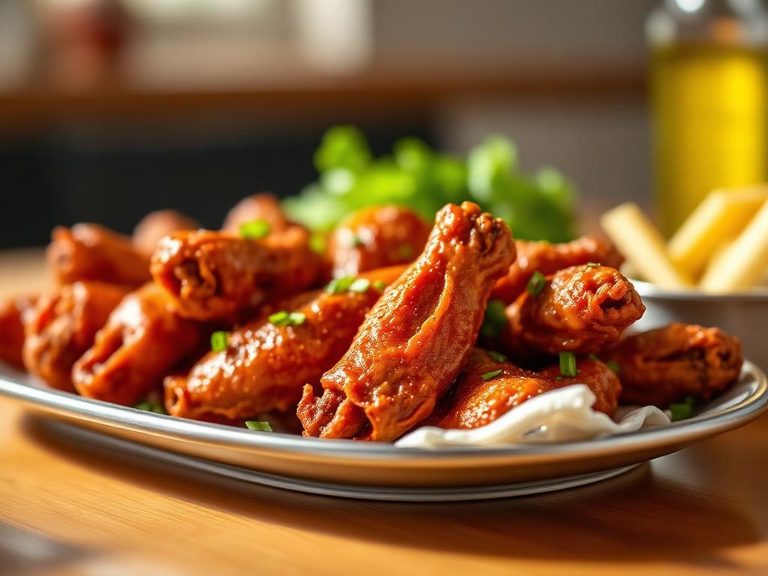
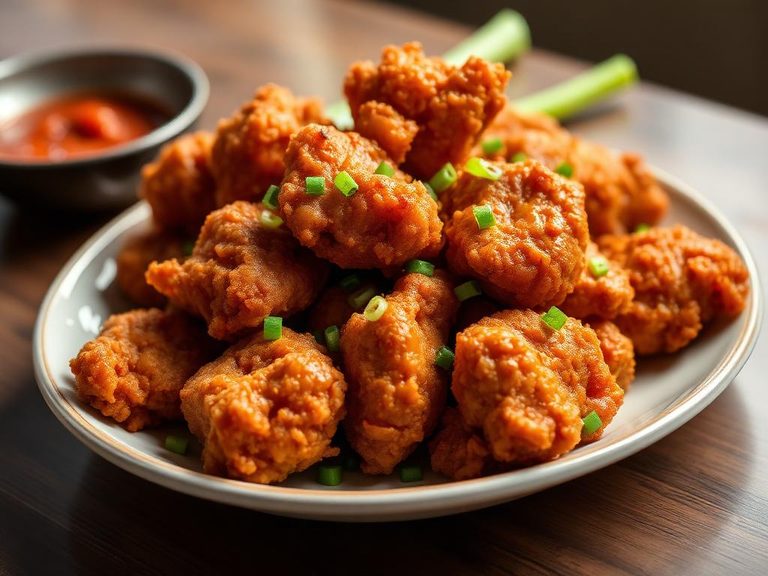
A fast-food staple, these are chicken wings coated in a seasoned flour or batter and deep-fried until golden and crispy. The exterior shatters to reveal juicy, tender meat inside, with a savory, often salty flavor profile. Nutritionally, they are a dense source of protein and fat, with the coating contributing most of the carbohydrates.
Calorie split: 22% protein · 19% carbs · 59% fat
↓ Full nutrition💚 Why it's loved
People love the irresistible combination of a crunchy, savory coating and succulent meat, often enhanced by dipping sauces. It's a quintessential comfort food deeply embedded in sports-viewing culture and casual dining.
⚠️ Watch-outs & how to enjoy it better
The deep-frying process significantly increases calorie and unhealthy fat content, and the coating can be high in sodium and refined carbs. Those monitoring blood sugar, heart health, or sodium intake should be cautious. To counteract, pair with non-starchy vegetables (like celery or a side salad) to add fiber, practice portion control by limiting to 2-3 wings, and opt for unbreaded or grilled versions when possible.
Key benefits
- High in complete protein for muscle maintenance
- Provides dietary fat for energy and nutrient absorption
- Convenient, ready-to-eat source of calories
- Popular social and comfort food
🍽️ Popular dishes
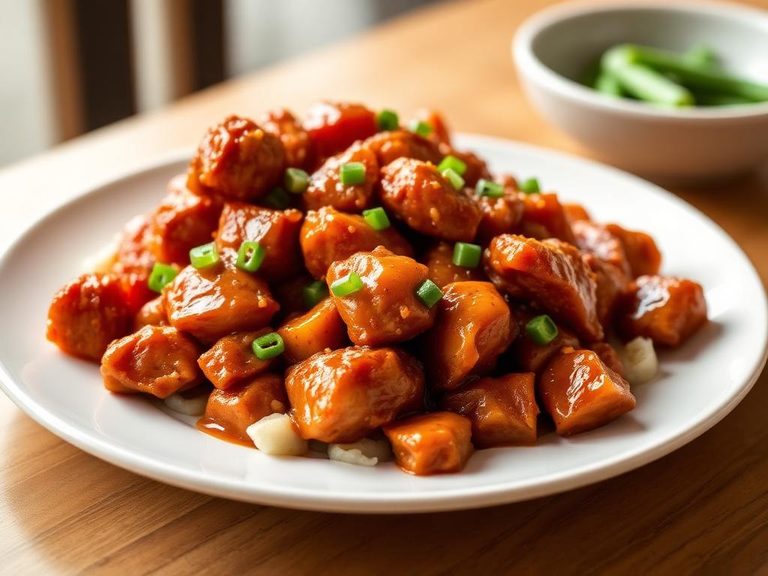
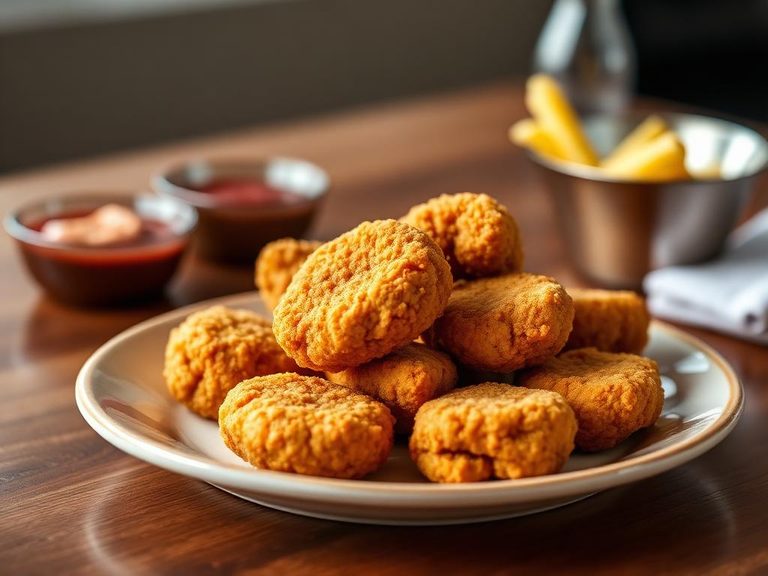
🌍 Where it's eaten
💡 Did you know?
The iconic Buffalo wing was invented in 1964 at the Anchor Bar in Buffalo, New York, when the owner's son and his friends wanted a late-night snack, leading to the creation of the first spicy chicken wings tossed in a cayenne-based hot sauce and butter.
Full nutrition (USDA data · scales with serving)
| Water | 43.1 g |
| Energy | 323 kcal |
| Protein | 17.8 g |
| Total lipid (fat) | 21.3 g |
| Carbohydrate, by difference | 15.0 g |
| Fiber, total dietary | 0.30 g |
| Total Sugars | 0.10 g |
| Calcium, Ca | 61.0 mg |
| Iron, Fe | 1.3 mg |
| Magnesium, Mg | 22.0 mg |
| Phosphorus, P | 187 mg |
| Potassium, K | 221 mg |
| Sodium, Na | 843 mg |
| Zinc, Zn | 1.1 mg |
| Copper, Cu | 0.08 mg |
| Selenium, Se | 24.2 ug |
| Vitamin C, total ascorbic acid | 0.00 mg |
| Thiamin | 0.15 mg |
| Riboflavin | 0.23 mg |
| Niacin | 5.7 mg |
| Vitamin B-6 | 0.16 mg |
| Folate, total | 32.0 ug |
| Folic acid | 24.0 ug |
| Folate, food | 9.0 ug |
| Folate, DFE | 49.0 ug |
| Choline, total | 68.8 mg |
| Vitamin B-12 | 0.38 ug |
| Vitamin B-12, added | 0.00 ug |
| Vitamin A, RAE | 14.0 ug |
| Retinol | 14.0 ug |
| Carotene, beta | 0.00 ug |
| Carotene, alpha | 0.00 ug |
| Cryptoxanthin, beta | 0.00 ug |
| Lycopene | 0.00 ug |
| Lutein + zeaxanthin | 5.0 ug |
| Vitamin E (alpha-tocopherol) | 1.6 mg |
| Vitamin E, added | 0.00 mg |
| Vitamin D (D2 + D3) | 0.10 ug |
| Vitamin K (phylloquinone) | 5.2 ug |
| Alcohol, ethyl | 0.00 g |
| Caffeine | 0.00 mg |
| Theobromine | 0.00 mg |
Fat & fatty acid profile (per 100g)
| Fatty acids, total saturated | 5.0 g |
| SFA 4:0 | 0.00 g |
| SFA 6:0 | 0.00 g |
| SFA 8:0 | 0.00 g |
| SFA 10:0 | 0.01 g |
| SFA 12:0 | 0.01 g |
| SFA 14:0 | 0.14 g |
| SFA 16:0 | 3.3 g |
| SFA 18:0 | 1.3 g |
| Fatty acids, total monounsaturated | 9.9 g |
| MUFA 16:1 | 0.68 g |
| MUFA 18:1 | 9.0 g |
| MUFA 20:1 | 0.17 g |
| MUFA 22:1 | 0.01 g |
| Fatty acids, total polyunsaturated | 4.7 g |
| PUFA 18:2 | 4.0 g |
| PUFA 18:3 | 0.56 g |
| PUFA 18:4 | 0.00 g |
| PUFA 20:4 | 0.06 g |
| PUFA 20:5 n-3 (EPA) | 0.00 g |
| PUFA 22:5 n-3 (DPA) | 0.01 g |
| PUFA 22:6 n-3 (DHA) | 0.00 g |
| Cholesterol | 94.0 mg |
Amino acid profile (per 100g)
Estimated from Chicken, broiler, rotisserie, BBQ, wing, meat only — USDA does not publish this profile for Chicken wing.
| Tryptophan | 0.29 g |
| Threonine | 0.74 g |
| Isoleucine | 1.3 g |
| Leucine | 2.1 g |
| Lysine | 2.2 g |
| Methionine | 0.81 g |
| Cystine | 0.28 g |
| Phenylalanine | 1.1 g |
| Tyrosine | 0.83 g |
| Valine | 1.4 g |
| Arginine | 1.7 g |
| Histidine | 0.75 g |
| Alanine | 1.5 g |
| Aspartic acid | 2.5 g |
| Glutamic acid | 4.0 g |
| Glycine | 1.4 g |
| Proline | 1.7 g |
| Serine | 0.69 g |
FAQ
Are fried chicken wings a good source of protein?
Yes, they are. Chicken wings are primarily muscle meat, and even with the coating, a 100g serving provides about 17.77g of high-quality, complete protein, which is essential for building and repairing tissues.
Why are they so high in calories and fat?
The high calorie and fat content comes from two main sources: the natural fat in the chicken skin and meat, and the oil absorbed during the deep-frying process. The breading also adds carbohydrates, further increasing the calorie density.
How can I make a healthier version at home?
You can achieve a healthier result by baking or air-frying the wings instead of deep-frying. Use a light coating of spices and a small amount of oil, and serve with a homemade, lower-sodium sauce to control ingredients and reduce overall fat and sodium intake.
Nutrient density (calculated · NRF9.3)
Nutrient Rich Foods index: beneficial nutrients (protein, fiber, vitamins, minerals) minus saturated fat, added sugar & sodium, per 100 kcal.
NRF9.3 index — Fulgoni, Keast & Drewnowski, 2009. Computed from USDA nutrients.
Weight-loss friendliness (composite index)
Energy density 3.23 kcal/g · 22% calories from protein · 0.3 g fiber · 0.1 g sugar per 100 g.
Composite of energy density (Rolls et al., 1999), protein & fiber satiety, minus sugar. A calculated heuristic — ranks satiety-per-calorie, not a clinical measure.
Dietary load (calculated from USDA values)
Potential renal acid load. Positive = acid-forming, negative = alkaline-forming.
Sodium-to-potassium ratio: 3.81 (lower is better — aim for ≤ 1)
Sodium:potassium per WHO potassium guidance. Computed from USDA nutrients.