

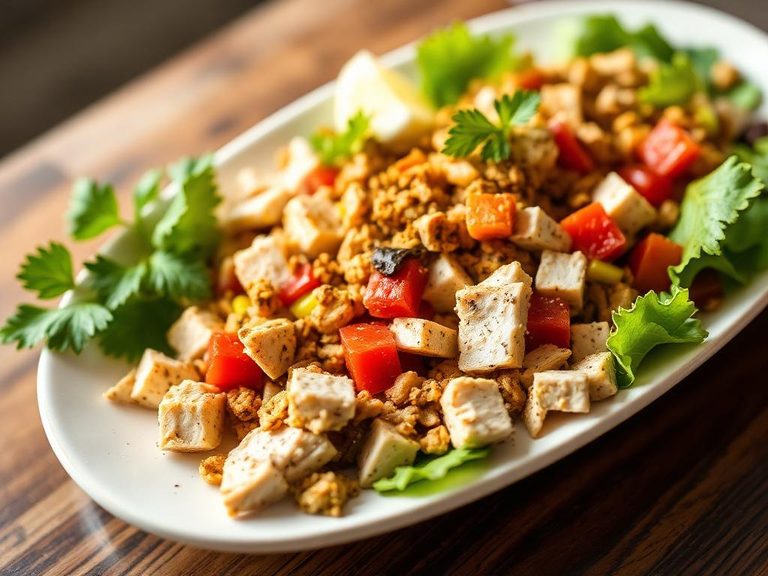
Chicken or turkey salad, made with any type of fat free dressing
Common food

Photo: Wikipedia
This is a lean, protein-packed salad where tender, shredded poultry is tossed in a bright, tangy, fat-free dressing. The texture is a satisfying mix of soft meat and crisp vegetables, with a clean, savory flavor profile. Its standout feature is the high protein-to-calorie ratio, making it a powerful, light meal option.
Calorie split: 47% protein · 22% carbs · 30% fat
↓ Full nutrition💚 Why it's loved
People love it for its effortless convenience and customizable nature—it's a reliable, satisfying meal that can be dressed up with apples, grapes, or nuts. It's a staple of American deli culture, evoking a sense of nostalgic, wholesome comfort food.
⚠️ Watch-outs & how to enjoy it better
The lean protein and lack of fat can leave some feeling hungry sooner, and the texture can become dry if overcooked or left too long. To counteract this, mix in a tablespoon of hummus, a few avocado slices, or a sprinkle of seeds for healthy fats that boost satiety. Always pair with a large portion of leafy greens or whole-grain crackers to increase fiber and fullness.
Key benefits
- Excellent source of lean protein for muscle maintenance
- Low in total fat and calories, supporting weight management
- Provides a good base for adding fiber-rich vegetables
- Quick and convenient for meal prep and packed lunches
- Versatile canvas for various herbs and spices
🍽️ Popular dishes
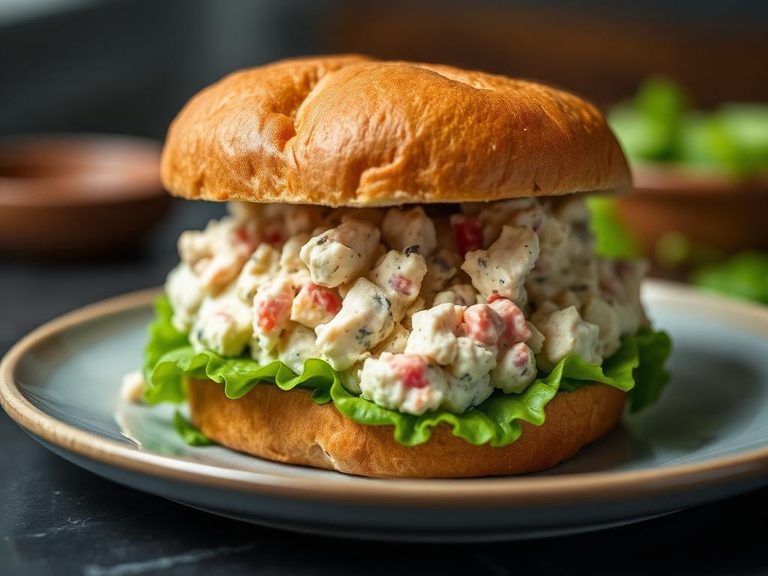
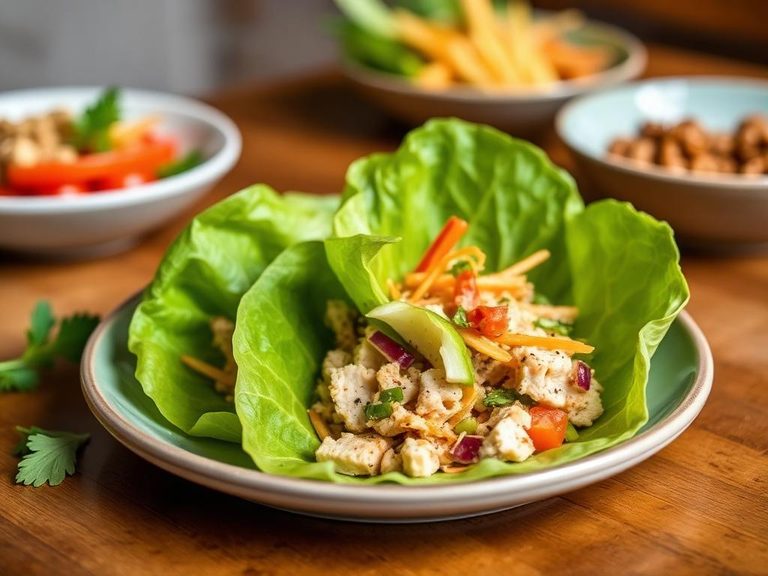
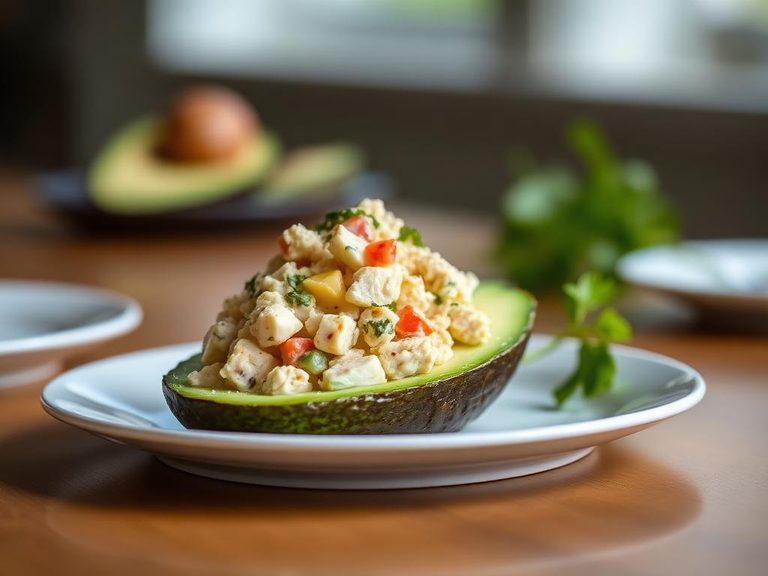
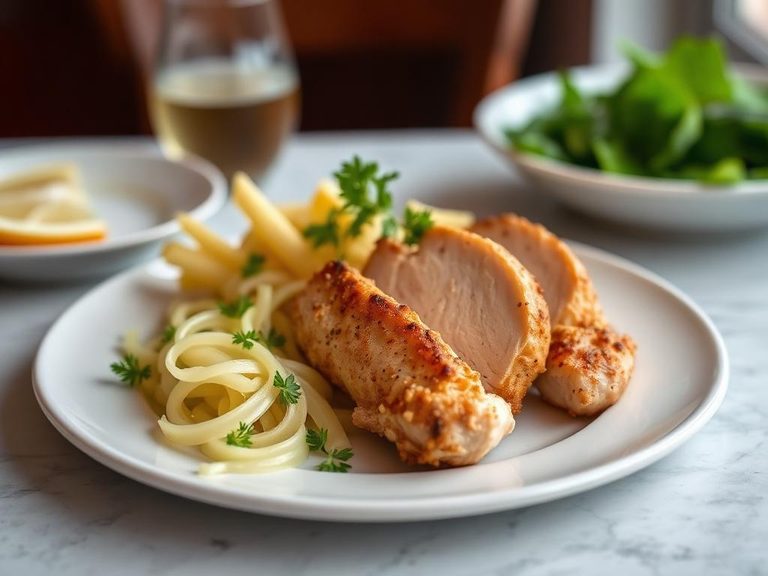
🌍 Where it's eaten
💡 Did you know?
The concept of a 'salad' featuring cooked meat in a mayonnaise-like dressing became a fashionable luncheon dish in the mid-19th century, with chicken salad being a centerpiece of the first menu at the Waldorf-Astoria Hotel in 1893.
Full nutrition (USDA data · scales with serving)
| Water | 74.9 g |
| Energy | 111 kcal |
| Protein | 13.3 g |
| Total lipid (fat) | 3.8 g |
| Carbohydrate, by difference | 6.3 g |
| Fiber, total dietary | 0.90 g |
| Total Sugars | 4.3 g |
| Calcium, Ca | 19.0 mg |
| Iron, Fe | 0.44 mg |
| Magnesium, Mg | 15.0 mg |
| Phosphorus, P | 123 mg |
| Potassium, K | 207 mg |
| Sodium, Na | 525 mg |
| Zinc, Zn | 0.83 mg |
| Copper, Cu | 0.04 mg |
| Selenium, Se | 11.8 ug |
| Vitamin C, total ascorbic acid | 0.70 mg |
| Thiamin | 0.04 mg |
| Riboflavin | 0.11 mg |
| Niacin | 3.8 mg |
| Vitamin B-6 | 0.13 mg |
| Folate, total | 13.0 ug |
| Folic acid | 0.00 ug |
| Folate, food | 12.0 ug |
| Folate, DFE | 12.0 ug |
| Choline, total | 34.3 mg |
| Vitamin B-12 | 0.18 ug |
| Vitamin B-12, added | 0.00 ug |
| Vitamin A, RAE | 12.0 ug |
| Retinol | 4.0 ug |
| Carotene, beta | 88.0 ug |
| Carotene, alpha | 7.0 ug |
| Cryptoxanthin, beta | 16.0 ug |
| Lycopene | 0.00 ug |
| Lutein + zeaxanthin | 77.0 ug |
| Vitamin E (alpha-tocopherol) | 0.30 mg |
| Vitamin E, added | 0.00 mg |
| Vitamin D (D2 + D3) | 0.00 ug |
| Vitamin K (phylloquinone) | 16.8 ug |
| Alcohol, ethyl | 0.00 g |
| Caffeine | 0.00 mg |
| Theobromine | 0.00 mg |
Fat & fatty acid profile (per 100g)
| Fatty acids, total saturated | 0.93 g |
| SFA 4:0 | 0.00 g |
| SFA 6:0 | 0.00 g |
| SFA 8:0 | 0.01 g |
| SFA 10:0 | 0.01 g |
| SFA 12:0 | 0.06 g |
| SFA 14:0 | 0.04 g |
| SFA 16:0 | 0.65 g |
| SFA 18:0 | 0.16 g |
| Fatty acids, total monounsaturated | 1.8 g |
| MUFA 16:1 | 0.22 g |
| MUFA 18:1 | 1.5 g |
| MUFA 20:1 | 0.01 g |
| MUFA 22:1 | 0.01 g |
| Fatty acids, total polyunsaturated | 0.50 g |
| PUFA 18:2 | 0.45 g |
| PUFA 18:3 | 0.03 g |
| PUFA 18:4 | 0.00 g |
| PUFA 20:4 | 0.01 g |
| PUFA 20:5 n-3 (EPA) | 0.00 g |
| PUFA 22:5 n-3 (DPA) | 0.00 g |
| PUFA 22:6 n-3 (DHA) | 0.00 g |
| Cholesterol | 57.0 mg |
Amino acid profile (per 100g)
Estimated from Turnover, chicken- or turkey-, and vegetable-filled, reduced fat, frozen — USDA does not publish this profile for Chicken or turkey salad.
| Tryptophan | 0.16 g |
| Threonine | 0.41 g |
| Isoleucine | 0.47 g |
| Leucine | 0.80 g |
| Lysine | 0.61 g |
| Methionine | 0.23 g |
| Cystine | 0.13 g |
| Phenylalanine | 0.47 g |
| Tyrosine | 0.37 g |
| Valine | 0.53 g |
| Arginine | 0.51 g |
| Histidine | 0.30 g |
| Alanine | 0.45 g |
| Aspartic acid | 0.80 g |
| Glutamic acid | 2.2 g |
| Glycine | 0.38 g |
| Proline | 0.87 g |
| Serine | 0.42 g |
| Hydroxyproline | 0.00 g |
FAQ
Can I use canned chicken or turkey for this?
Yes, canned poultry is a common and convenient shortcut. Be sure to drain it very well and rinse it lightly to reduce sodium, then pat it dry before mixing to avoid a watery salad.
How do I prevent my chicken salad from being dry?
The key is to not overcook the poultry. Poach or bake chicken breasts just until done, then let them rest before shredding. You can also mix the dressing with the meat while it's still slightly warm to help it absorb the flavors.
Is this suitable for a low-sodium diet?
It can be, but you must control the ingredients. Use low-sodium broth to cook the meat, rinse canned poultry, and make your own fat-free dressing with lemon juice, vinegar, and herbs instead of using store-bought versions that are often high in salt.
Nutrient density (calculated · NRF9.3)
Nutrient Rich Foods index: beneficial nutrients (protein, fiber, vitamins, minerals) minus saturated fat, added sugar & sodium, per 100 kcal.
NRF9.3 index — Fulgoni, Keast & Drewnowski, 2009. Computed from USDA nutrients.
Weight-loss friendliness (composite index)
Energy density 1.11 kcal/g · 48% calories from protein · 0.9 g fiber · 4.3 g sugar per 100 g.
Composite of energy density (Rolls et al., 1999), protein & fiber satiety, minus sugar. A calculated heuristic — ranks satiety-per-calorie, not a clinical measure.
Dietary load (calculated from USDA values)
Potential renal acid load. Positive = acid-forming, negative = alkaline-forming.
Sodium-to-potassium ratio: 2.54 (lower is better — aim for ≤ 1)
Sodium:potassium per WHO potassium guidance. Computed from USDA nutrients.