

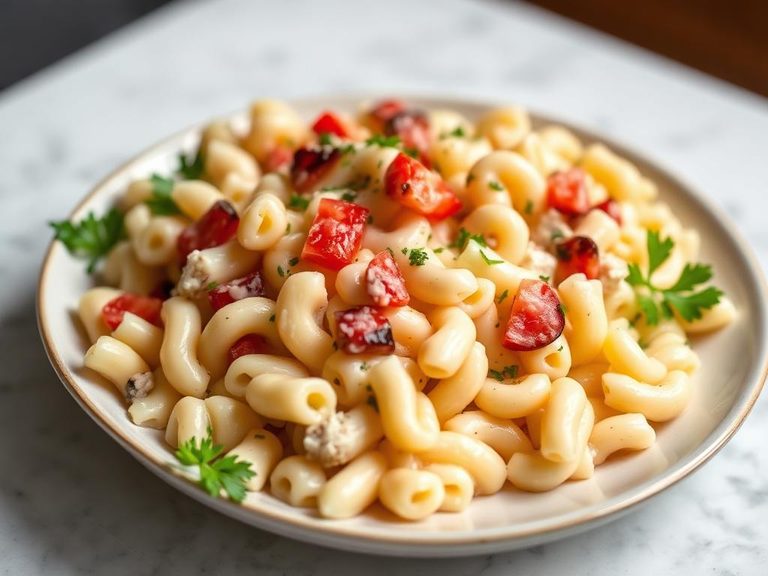
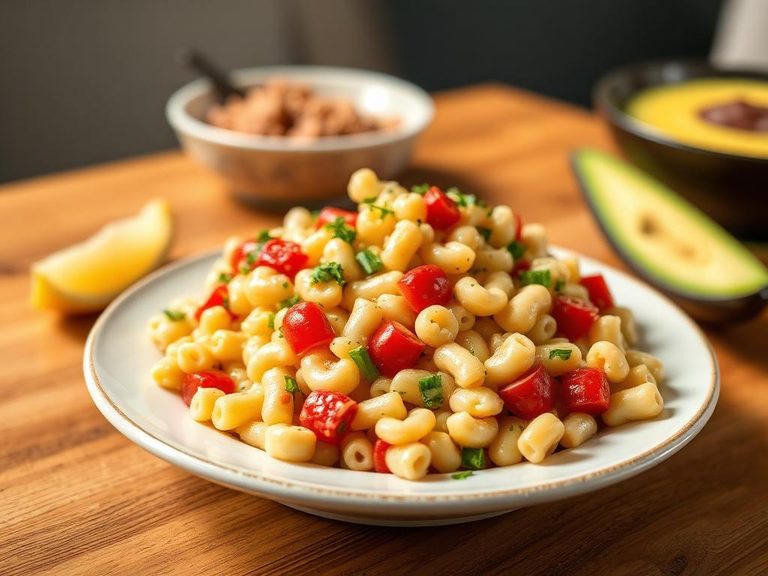
Macaroni or pasta salad, made with any type of fat free dressing
Common food

Photo: Wikipedia
A chilled, starchy side dish where cooked pasta is tossed with vegetables and a fat-free dressing, resulting in a tangy, slightly chewy texture. Its light, vinegar-forward profile makes it a refreshing contrast to heavier meals, while the pasta base provides a solid foundation of carbohydrates. With only 1.14g of fat per 100g, it is a notably low-fat option for those monitoring dietary fat intake.
Calorie split: 13% protein · 80% carbs · 8% fat
↓ Full nutrition💚 Why it's loved
People love it for its refreshing, tangy flavor and satisfying chew, making it a staple at summer barbecues, potlucks, and picnics. Its versatility allows for endless customization with different pasta shapes, vegetables, and herbs, appealing to a wide range of palates.
⚠️ Watch-outs & how to enjoy it better
The high carbohydrate content can lead to blood sugar spikes, especially when paired with other high-glycemic foods. To mitigate this, pair it with a source of protein (like chicken or beans) and healthy fats (like avocado or nuts) to slow digestion and stabilize blood sugar. Additionally, be mindful of sodium levels in some commercial dressings, and consider using a homemade vinaigrette for better control.
Key benefits
- Low in dietary fat (1.14g per 100g)
- Provides quick energy from carbohydrates (26.54g per 100g)
- Contains a modest amount of fiber (1.7g per 100g)
- Light and refreshing, suitable for warm weather
- Versatile base for adding vegetables and lean proteins
🍽️ Popular dishes
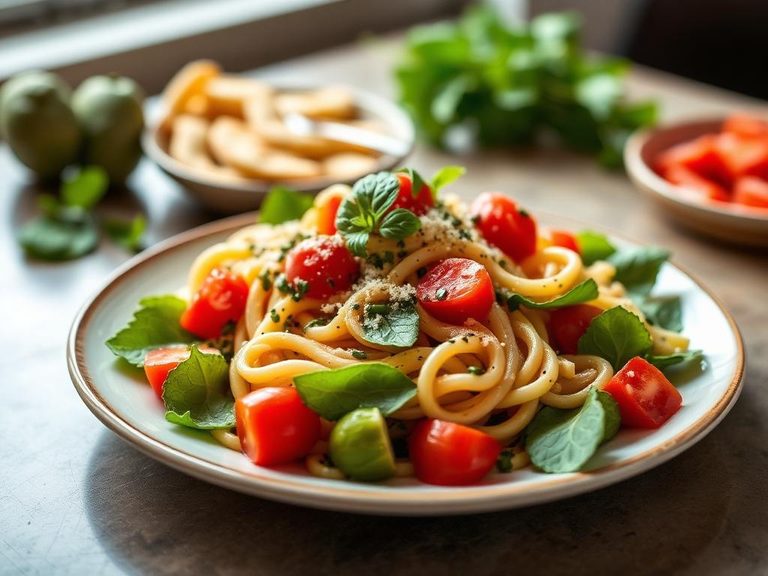
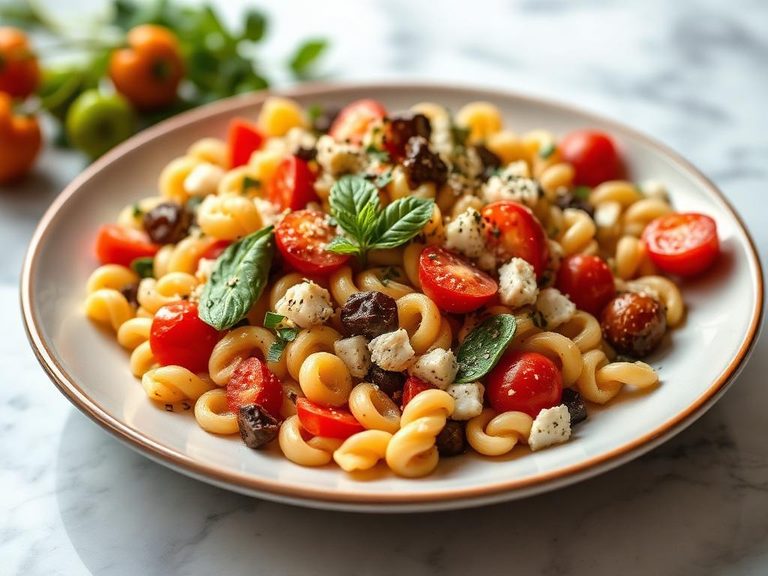
🌍 Where it's eaten
💡 Did you know?
The concept of cold pasta salads dates back to ancient Roman times, where they would mix cold pasta with oil and herbs, though the modern version with mayonnaise or vinegar-based dressings became popular in the 20th century.
Full nutrition (USDA data · scales with serving)
| Water | 67.1 g |
| Energy | 134 kcal |
| Protein | 4.3 g |
| Total lipid (fat) | 1.1 g |
| Carbohydrate, by difference | 26.5 g |
| Fiber, total dietary | 1.7 g |
| Total Sugars | 3.4 g |
| Calcium, Ca | 8.0 mg |
| Iron, Fe | 0.98 mg |
| Magnesium, Mg | 14.0 mg |
| Phosphorus, P | 44.0 mg |
| Potassium, K | 53.0 mg |
| Sodium, Na | 239 mg |
| Zinc, Zn | 0.39 mg |
| Copper, Cu | 0.08 mg |
| Selenium, Se | 19.0 ug |
| Vitamin C, total ascorbic acid | 1.7 mg |
| Thiamin | 0.20 mg |
| Riboflavin | 0.10 mg |
| Niacin | 1.2 mg |
| Vitamin B-6 | 0.04 mg |
| Folate, total | 54.0 ug |
| Folic acid | 47.0 ug |
| Folate, food | 7.0 ug |
| Folate, DFE | 87.0 ug |
| Choline, total | 5.3 mg |
| Vitamin B-12 | 0.00 ug |
| Vitamin B-12, added | 0.00 ug |
| Vitamin A, RAE | 3.0 ug |
| Retinol | 0.00 ug |
| Carotene, beta | 27.0 ug |
| Carotene, alpha | 5.0 ug |
| Cryptoxanthin, beta | 12.0 ug |
| Lycopene | 0.00 ug |
| Lutein + zeaxanthin | 24.0 ug |
| Vitamin E (alpha-tocopherol) | 0.09 mg |
| Vitamin E, added | 0.00 mg |
| Vitamin D (D2 + D3) | 0.00 ug |
| Vitamin K (phylloquinone) | 8.1 ug |
| Alcohol, ethyl | 0.00 g |
| Caffeine | 0.00 mg |
| Theobromine | 0.00 mg |
Fat & fatty acid profile (per 100g)
| Fatty acids, total saturated | 0.23 g |
| SFA 4:0 | 0.00 g |
| SFA 6:0 | 0.00 g |
| SFA 8:0 | 0.00 g |
| SFA 10:0 | 0.01 g |
| SFA 12:0 | 0.04 g |
| SFA 14:0 | 0.02 g |
| SFA 16:0 | 0.12 g |
| SFA 18:0 | 0.03 g |
| Fatty acids, total monounsaturated | 0.41 g |
| MUFA 16:1 | 0.00 g |
| MUFA 18:1 | 0.41 g |
| MUFA 20:1 | 0.00 g |
| MUFA 22:1 | 0.00 g |
| Fatty acids, total polyunsaturated | 0.25 g |
| PUFA 18:2 | 0.22 g |
| PUFA 18:3 | 0.02 g |
| PUFA 18:4 | 0.00 g |
| PUFA 20:4 | 0.00 g |
| PUFA 20:5 n-3 (EPA) | 0.00 g |
| PUFA 22:5 n-3 (DPA) | 0.00 g |
| PUFA 22:6 n-3 (DHA) | 0.00 g |
| Cholesterol | 1.0 mg |
FAQ
Is macaroni salad healthy?
It can be part of a healthy diet, especially when made with fat-free dressing and plenty of vegetables. However, it's high in carbohydrates, so portion control is key, especially for those managing blood sugar levels.
Can I make macaroni salad ahead of time?
Yes, it's actually better when made ahead, as the flavors have time to meld. Store it in an airtight container in the refrigerator for up to 3-4 days.
What can I add to macaroni salad to make it more nutritious?
Add vegetables like bell peppers, cucumbers, tomatoes, and carrots for extra fiber and vitamins. Incorporating protein sources like grilled chicken, chickpeas, or hard-boiled eggs can also enhance its nutritional profile.
Nutrient density (calculated · NRF9.3)
Nutrient Rich Foods index: beneficial nutrients (protein, fiber, vitamins, minerals) minus saturated fat, added sugar & sodium, per 100 kcal.
NRF9.3 index — Fulgoni, Keast & Drewnowski, 2009. Computed from USDA nutrients.
Weight-loss friendliness (composite index)
Energy density 1.34 kcal/g · 13% calories from protein · 1.7 g fiber · 3.4 g sugar per 100 g.
Composite of energy density (Rolls et al., 1999), protein & fiber satiety, minus sugar. A calculated heuristic — ranks satiety-per-calorie, not a clinical measure.
Dietary load (calculated from USDA values)
Potential renal acid load. Positive = acid-forming, negative = alkaline-forming.
Sodium-to-potassium ratio: 4.51 (lower is better — aim for ≤ 1)
Sodium:potassium per WHO potassium guidance. Computed from USDA nutrients.