

Tuna salad, made with any type of fat free dressing
Common food

Photo: Wikipedia
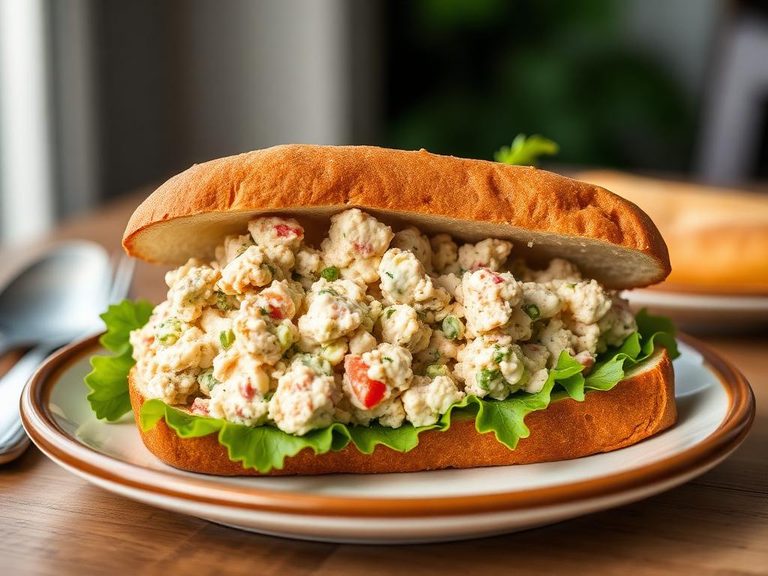
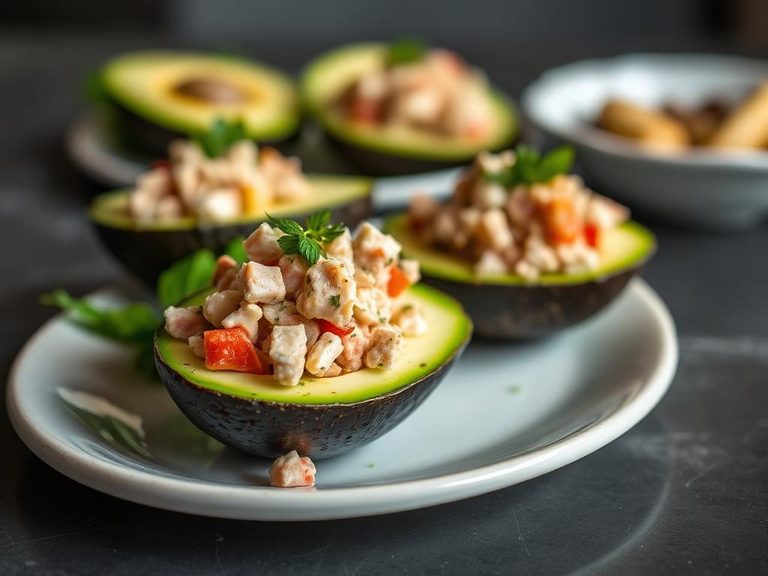
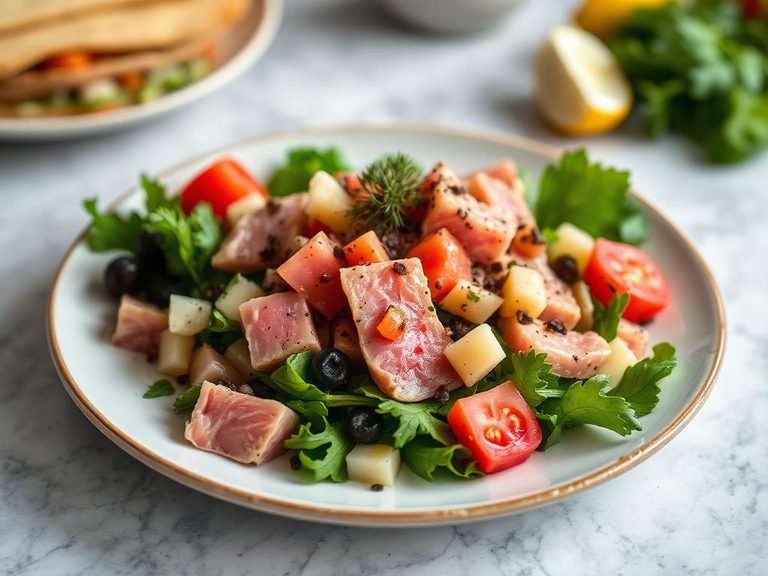
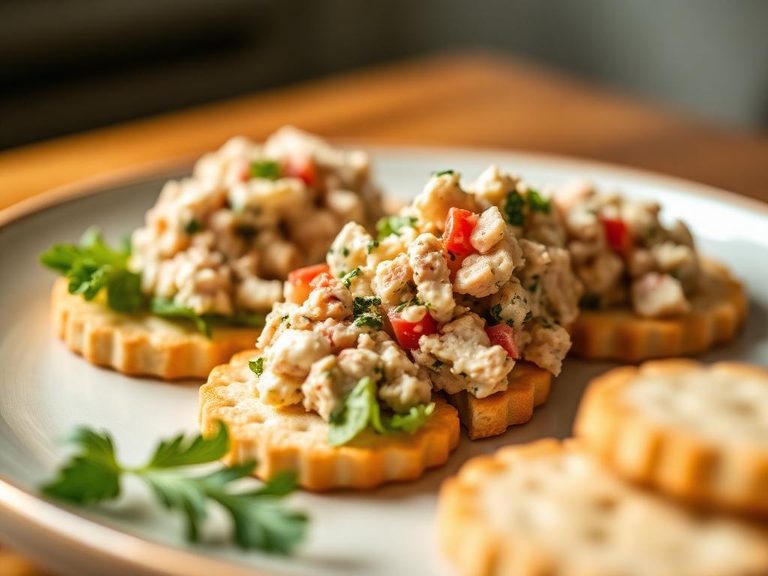
A lean, protein-packed salad of flaked tuna bound with a tangy, fat-free dressing, often featuring crisp vegetables like celery or onion. The texture is a satisfying mix of tender fish and crunchy mix-ins, with a bright, acidic flavor profile from the dressing. It's a standout for being exceptionally high in protein while remaining very low in calories and fat.
Calorie split: 52% protein · 34% carbs · 14% fat
↓ Full nutrition💚 Why it's loved
People love it for its effortless versatility—it's a staple for quick lunches, picnic fare, and light dinners that can be endlessly customized with herbs, spices, or crunchy additions. Its clean, savory flavor and satisfying texture make healthy eating feel effortless and delicious.
⚠️ Watch-outs & how to enjoy it better
Some commercial fat-free dressings can be high in sodium or added sugars, and tuna is a common allergen. To counteract this, choose dressings with minimal ingredients, rinse canned tuna to reduce sodium by up to 40%, and pair the salad with extra vegetables or a whole grain to add fiber and balance blood sugar response.
Key benefits
- Excellent source of lean, complete protein for muscle maintenance.
- Very low in calories, making it ideal for weight management.
- Provides omega-3 fatty acids from the tuna.
- Quick and no-cook, perfect for meal prep.
- High satiety factor helps control hunger.
🍽️ Popular dishes
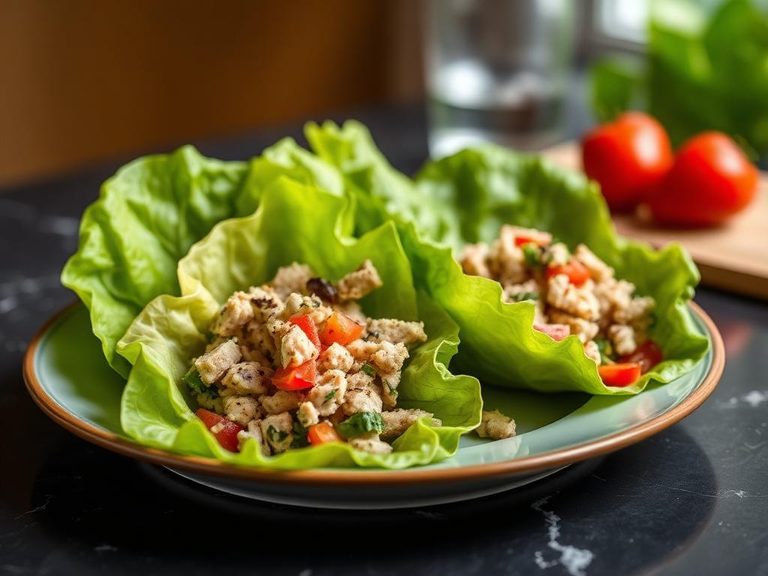
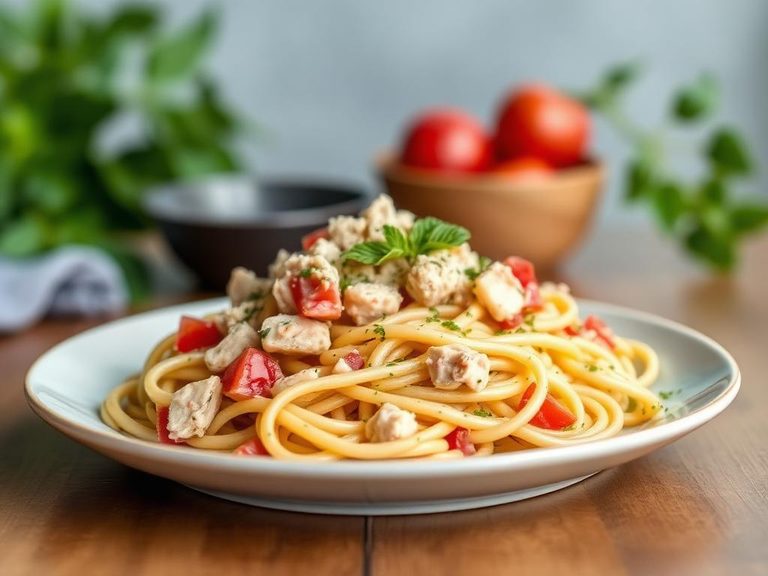
🌍 Where it's eaten
💡 Did you know?
The classic 'tuna salad' as a bound salad is largely an American invention that became a pantry staple during World War II, thanks to the widespread availability and long shelf life of canned tuna.
Full nutrition (USDA data · scales with serving)
| Water | 81.3 g |
| Energy | 72.0 kcal |
| Protein | 9.6 g |
| Total lipid (fat) | 1.1 g |
| Carbohydrate, by difference | 6.3 g |
| Fiber, total dietary | 0.80 g |
| Total Sugars | 4.3 g |
| Calcium, Ca | 21.0 mg |
| Iron, Fe | 0.90 mg |
| Magnesium, Mg | 15.0 mg |
| Phosphorus, P | 75.0 mg |
| Potassium, K | 157 mg |
| Sodium, Na | 460 mg |
| Zinc, Zn | 0.37 mg |
| Copper, Cu | 0.03 mg |
| Selenium, Se | 33.7 ug |
| Vitamin C, total ascorbic acid | 0.70 mg |
| Thiamin | 0.02 mg |
| Riboflavin | 0.06 mg |
| Niacin | 5.0 mg |
| Vitamin B-6 | 0.17 mg |
| Folate, total | 10.0 ug |
| Folic acid | 0.00 ug |
| Folate, food | 10.0 ug |
| Folate, DFE | 10.0 ug |
| Choline, total | 16.3 mg |
| Vitamin B-12 | 1.3 ug |
| Vitamin B-12, added | 0.00 ug |
| Vitamin A, RAE | 17.0 ug |
| Retinol | 8.0 ug |
| Carotene, beta | 87.0 ug |
| Carotene, alpha | 7.0 ug |
| Cryptoxanthin, beta | 16.0 ug |
| Lycopene | 0.00 ug |
| Lutein + zeaxanthin | 76.0 ug |
| Vitamin E (alpha-tocopherol) | 0.26 mg |
| Vitamin E, added | 0.00 mg |
| Vitamin D (D2 + D3) | 0.60 ug |
| Vitamin K (phylloquinone) | 16.7 ug |
| Alcohol, ethyl | 0.00 g |
| Caffeine | 0.00 mg |
| Theobromine | 0.00 mg |
Fat & fatty acid profile (per 100g)
| Fatty acids, total saturated | 0.26 g |
| SFA 4:0 | 0.00 g |
| SFA 6:0 | 0.00 g |
| SFA 8:0 | 0.01 g |
| SFA 10:0 | 0.01 g |
| SFA 12:0 | 0.06 g |
| SFA 14:0 | 0.03 g |
| SFA 16:0 | 0.09 g |
| SFA 18:0 | 0.06 g |
| Fatty acids, total monounsaturated | 0.51 g |
| MUFA 16:1 | 0.01 g |
| MUFA 18:1 | 0.49 g |
| MUFA 20:1 | 0.00 g |
| MUFA 22:1 | 0.01 g |
| Fatty acids, total polyunsaturated | 0.17 g |
| PUFA 18:2 | 0.04 g |
| PUFA 18:3 | 0.01 g |
| PUFA 18:4 | 0.00 g |
| PUFA 20:4 | 0.01 g |
| PUFA 20:5 n-3 (EPA) | 0.01 g |
| PUFA 22:5 n-3 (DPA) | 0.00 g |
| PUFA 22:6 n-3 (DHA) | 0.10 g |
| Cholesterol | 20.0 mg |
Amino acid profile (per 100g)
Estimated from Fish, tuna salad — USDA does not publish this profile for Tuna salad.
| Tryptophan | 0.18 g |
| Threonine | 0.70 g |
| Isoleucine | 0.74 g |
| Leucine | 1.3 g |
| Lysine | 1.5 g |
| Methionine | 0.47 g |
| Cystine | 0.17 g |
| Phenylalanine | 0.63 g |
| Tyrosine | 0.54 g |
| Valine | 0.82 g |
| Arginine | 0.97 g |
| Histidine | 0.47 g |
| Alanine | 0.96 g |
| Aspartic acid | 1.6 g |
| Glutamic acid | 2.4 g |
| Glycine | 0.77 g |
| Proline | 0.56 g |
| Serine | 0.66 g |
FAQ
What's the best type of tuna to use?
For flavor and sustainability, look for 'skipjack' or 'light' tuna packed in water. 'Albacore' or 'white' tuna is milder and higher in fat. Always check for 'dolphin-safe' labels.
How can I make it creamier without adding fat?
Mash in a quarter of a ripe avocado, use a tablespoon of plain Greek yogurt, or blend in a tablespoon of silken tofu for a creamy texture with added nutrients.
Is canned tuna safe to eat every day?
Due to potential mercury content, it's recommended to vary your seafood sources. The FDA suggests 2-3 servings (about 8-12 ounces) of low-mercury fish like light canned tuna per week for most adults.
Nutrient density (calculated · NRF9.3)
Nutrient Rich Foods index: beneficial nutrients (protein, fiber, vitamins, minerals) minus saturated fat, added sugar & sodium, per 100 kcal.
NRF9.3 index — Fulgoni, Keast & Drewnowski, 2009. Computed from USDA nutrients.
Weight-loss friendliness (composite index)
Energy density 0.72 kcal/g · 53% calories from protein · 0.8 g fiber · 4.3 g sugar per 100 g.
Composite of energy density (Rolls et al., 1999), protein & fiber satiety, minus sugar. A calculated heuristic — ranks satiety-per-calorie, not a clinical measure.
Dietary load (calculated from USDA values)
Potential renal acid load. Positive = acid-forming, negative = alkaline-forming.
Sodium-to-potassium ratio: 2.93 (lower is better — aim for ≤ 1)
Sodium:potassium per WHO potassium guidance. Computed from USDA nutrients.