

Chicken breast, baked or broiled, skin eaten, from fast food / restaurant
Common food
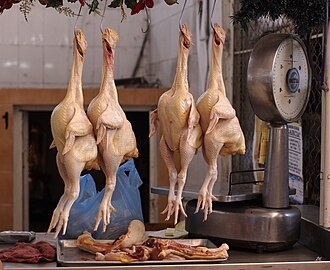
Photo: Wikipedia
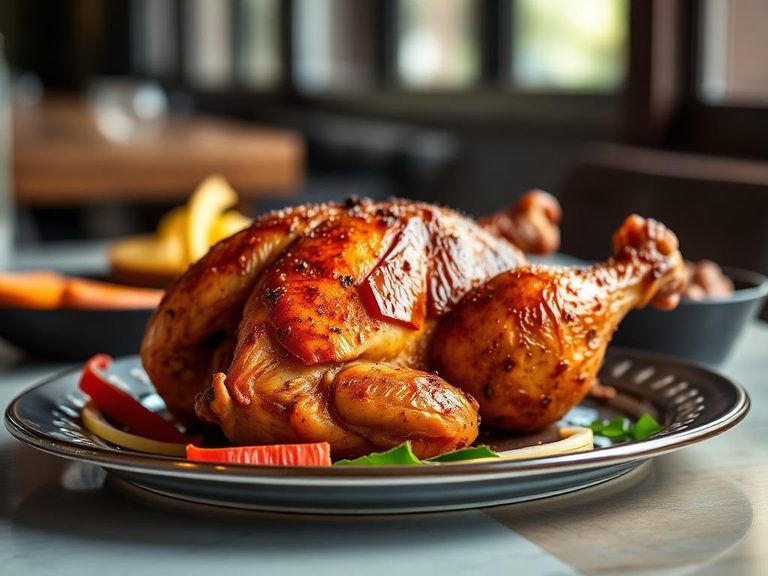
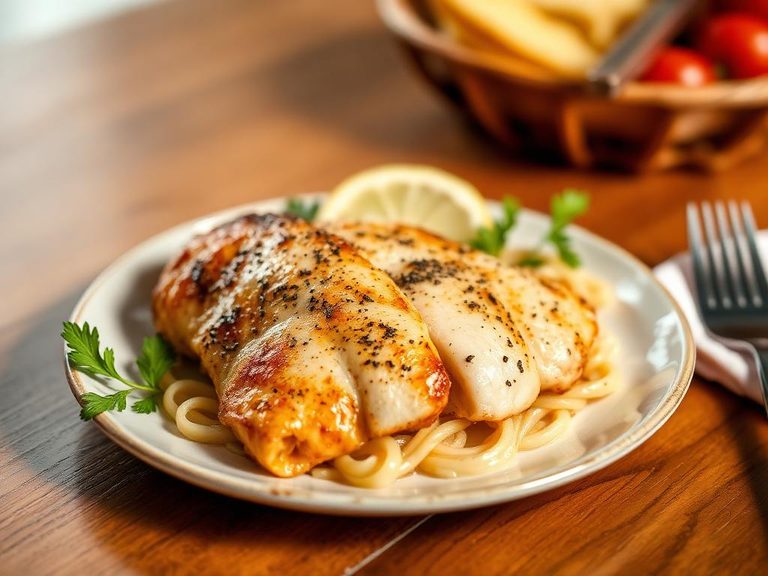
This is a lean, protein-dense cut of chicken breast, cooked dry-heat style with the skin left on for added flavor and moisture. The texture is typically firm yet juicy, with the skin offering a savory, crisp contrast to the mild, clean meat. Its standout nutritional feature is a high protein-to-calorie ratio, providing over 25 grams of protein per 100 grams with virtually no carbohydrates.
Calorie split: 52% protein · 0% carbs · 48% fat
↓ Full nutrition💚 Why it's loved
People love it for its straightforward, satisfying savoriness and incredible versatility—it's a blank canvas for marinades, rubs, and sauces. It's a staple in countless global cuisines, valued for being a relatively quick and healthy protein centerpiece.
⚠️ Watch-outs & how to enjoy it better
The skin significantly increases the saturated fat and calorie content compared to skinless breast, which may be a concern for those monitoring fat intake. Fast-food versions can be high in sodium from seasoning or brines. To counteract this, consider removing the skin before eating to reduce fat, or pair it with fiber-rich vegetables and whole grains to balance the meal's sodium impact.
Key benefits
- Excellent source of complete, high-quality protein for muscle maintenance and satiety.
- Very low in carbohydrates and sugars, making it suitable for low-carb and ketogenic diets.
- Provides essential nutrients like niacin (vitamin B3) and selenium.
- Skin-on preparation can help retain moisture and add fat-soluble vitamins.
🍽️ Popular dishes
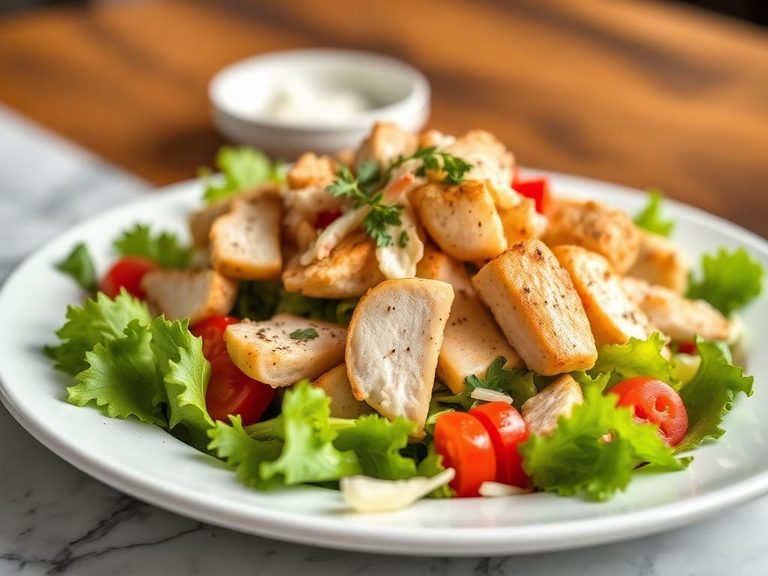
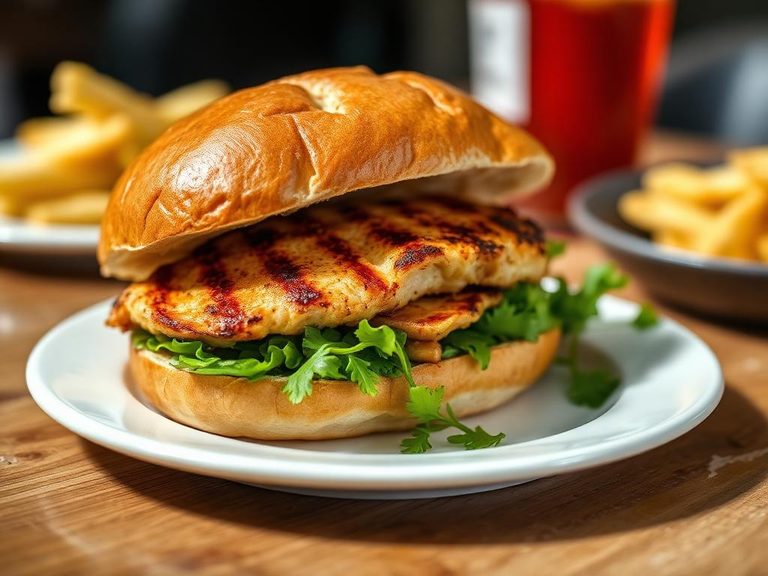
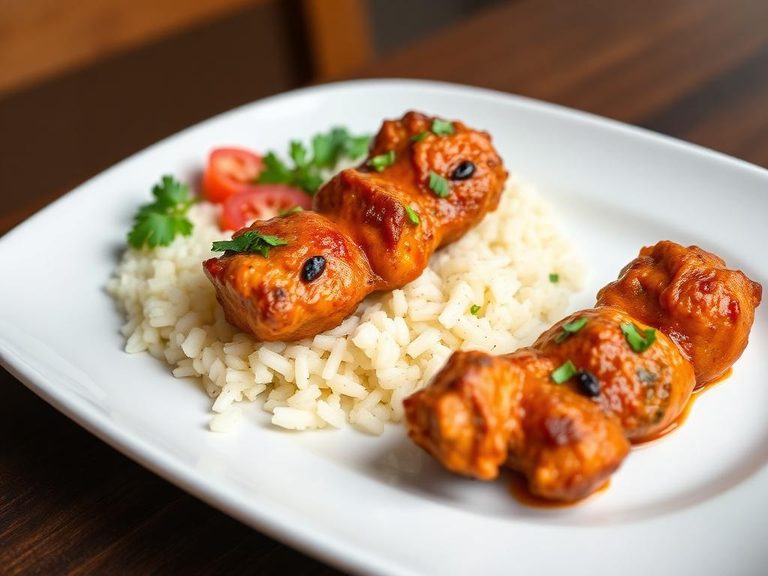
🌍 Where it's eaten
💡 Did you know?
The white meat of the breast is composed of fast-twitch muscle fibers, which are designed for short bursts of intense activity (like flapping wings), making it leaner but also quicker to dry out if overcooked.
Full nutrition (USDA data · scales with serving)
| Water | 61.8 g |
| Energy | 206 kcal |
| Protein | 25.7 g |
| Total lipid (fat) | 10.6 g |
| Carbohydrate, by difference | 0.00 g |
| Fiber, total dietary | 0.00 g |
| Total Sugars | 0.00 g |
| Calcium, Ca | 7.0 mg |
| Iron, Fe | 0.52 mg |
| Magnesium, Mg | 23.0 mg |
| Phosphorus, P | 191 mg |
| Potassium, K | 291 mg |
| Sodium, Na | 406 mg |
| Zinc, Zn | 0.87 mg |
| Copper, Cu | 0.04 mg |
| Selenium, Se | 25.8 ug |
| Vitamin C, total ascorbic acid | 0.00 mg |
| Thiamin | 0.07 mg |
| Riboflavin | 0.18 mg |
| Niacin | 8.5 mg |
| Vitamin B-6 | 0.68 mg |
| Folate, total | 6.0 ug |
| Folic acid | 0.00 ug |
| Folate, food | 6.0 ug |
| Folate, DFE | 6.0 ug |
| Choline, total | 63.1 mg |
| Vitamin B-12 | 0.17 ug |
| Vitamin B-12, added | 0.00 ug |
| Vitamin A, RAE | 17.0 ug |
| Retinol | 17.0 ug |
| Carotene, beta | 1.0 ug |
| Carotene, alpha | 0.00 ug |
| Cryptoxanthin, beta | 0.00 ug |
| Lycopene | 0.00 ug |
| Lutein + zeaxanthin | 0.00 ug |
| Vitamin E (alpha-tocopherol) | 0.96 mg |
| Vitamin E, added | 0.00 mg |
| Vitamin D (D2 + D3) | 0.10 ug |
| Vitamin K (phylloquinone) | 2.5 ug |
| Alcohol, ethyl | 0.00 g |
| Caffeine | 0.00 mg |
| Theobromine | 0.00 mg |
Fat & fatty acid profile (per 100g)
| Fatty acids, total saturated | 2.5 g |
| SFA 4:0 | 0.00 g |
| SFA 6:0 | 0.00 g |
| SFA 8:0 | 0.00 g |
| SFA 10:0 | 0.02 g |
| SFA 12:0 | 0.01 g |
| SFA 14:0 | 0.06 g |
| SFA 16:0 | 1.9 g |
| SFA 18:0 | 0.48 g |
| Fatty acids, total monounsaturated | 4.0 g |
| MUFA 16:1 | 0.44 g |
| MUFA 18:1 | 3.5 g |
| MUFA 20:1 | 0.10 g |
| MUFA 22:1 | 0.00 g |
| Fatty acids, total polyunsaturated | 2.4 g |
| PUFA 18:2 | 2.1 g |
| PUFA 18:3 | 0.15 g |
| PUFA 18:4 | 0.00 g |
| PUFA 20:4 | 0.07 g |
| PUFA 20:5 n-3 (EPA) | 0.01 g |
| PUFA 22:5 n-3 (DPA) | 0.01 g |
| PUFA 22:6 n-3 (DHA) | 0.01 g |
| Cholesterol | 95.0 mg |
Amino acid profile (per 100g)
Estimated from Chicken, broiler or fryers, breast, skinless, boneless, meat only, cooked, grilled — USDA does not publish this profile for Chicken breast.
| Tryptophan | 0.39 g |
| Threonine | 1.4 g |
| Isoleucine | 1.5 g |
| Leucine | 2.5 g |
| Lysine | 2.9 g |
| Methionine | 0.79 g |
| Cystine | 0.32 g |
| Phenylalanine | 1.2 g |
| Tyrosine | 1.1 g |
| Valine | 1.6 g |
| Arginine | 2.1 g |
| Histidine | 1.1 g |
| Alanine | 1.8 g |
| Aspartic acid | 2.9 g |
| Glutamic acid | 4.5 g |
| Glycine | 1.4 g |
| Proline | 0.97 g |
| Serine | 1.2 g |
FAQ
How do I keep baked chicken breast from drying out?
Brining (soaking in saltwater) before cooking, using a meat thermometer to pull it at 165°F (74°C), and letting it rest for 5-10 minutes after cooking are key techniques to ensure juiciness.
Is the skin nutritious or should I remove it?
The skin is a significant source of fat and calories but also contains some fat-soluble vitamins. Its consumption is a matter of personal dietary preference and goals.
Why does restaurant chicken breast taste different?
Restaurants often use techniques like brining, pounding for even thickness, or cooking on high-heat surfaces (like broilers) to achieve a specific texture and flavor profile.
Nutrient density (calculated · NRF9.3)
Nutrient Rich Foods index: beneficial nutrients (protein, fiber, vitamins, minerals) minus saturated fat, added sugar & sodium, per 100 kcal.
NRF9.3 index — Fulgoni, Keast & Drewnowski, 2009. Computed from USDA nutrients.
Weight-loss friendliness (composite index)
Energy density 2.06 kcal/g · 50% calories from protein · 0.0 g fiber · 0.0 g sugar per 100 g.
Composite of energy density (Rolls et al., 1999), protein & fiber satiety, minus sugar. A calculated heuristic — ranks satiety-per-calorie, not a clinical measure.
Dietary load (calculated from USDA values)
Potential renal acid load. Positive = acid-forming, negative = alkaline-forming.
Sodium-to-potassium ratio: 1.40 (lower is better — aim for ≤ 1)
Sodium:potassium per WHO potassium guidance. Computed from USDA nutrients.