

Chicken breast, fried, coated, skin / coating eaten, from fast food / restaurant
Common food

Photo: Wikipedia
This is the iconic, crispy-coated chicken breast fillet you get from a fast-food drive-thru or casual restaurant. It delivers a satisfying crunch from the golden batter or breading, giving way to tender, juicy white meat inside. Nutritionally, it's a solid source of protein, but the frying process adds significant fat and calories compared to grilled versions.
Calorie split: 28% protein · 16% carbs · 56% fat
↓ Full nutrition💚 Why it's loved
People crave it for that perfect contrast of shattering, savory crust and moist, mild chicken—a comforting, universally recognizable flavor. Its portability and consistent taste make it a reliable go-to meal or snack across cultures.
⚠️ Watch-outs & how to enjoy it better
The frying process increases saturated fat and calorie density, and the coating can be high in sodium and refined carbs. To counteract, pair it with a fiber-rich side like a salad or steamed vegetables, practice portion control by choosing a single piece, and opt for grilled versions when available to reduce fat intake.
Key benefits
- High-quality complete protein for muscle maintenance and satiety.
- Convenient, ready-to-eat source of energy and nutrients.
- Provides essential B vitamins like niacin and B6.
- Contains minerals such as selenium and phosphorus.
🍽️ Popular dishes
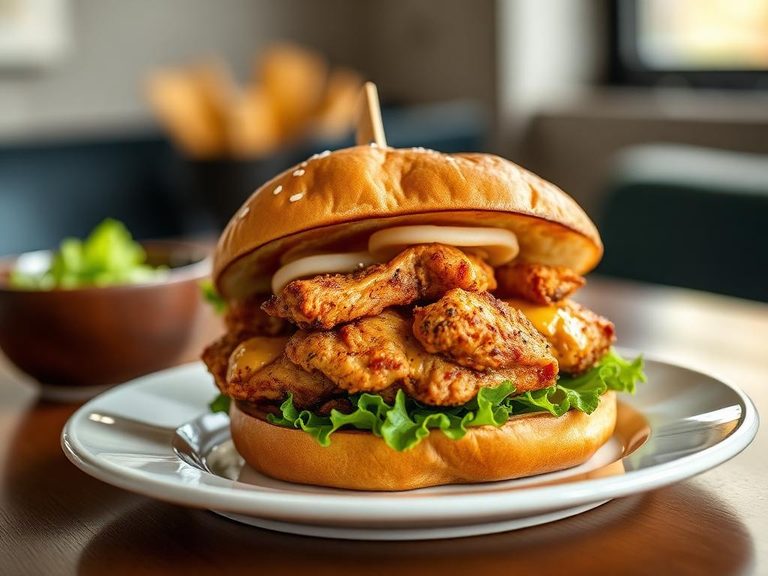

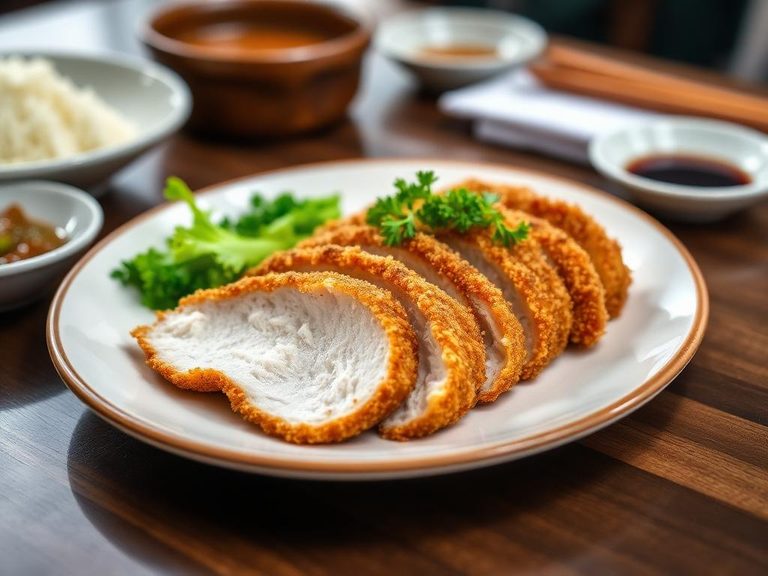
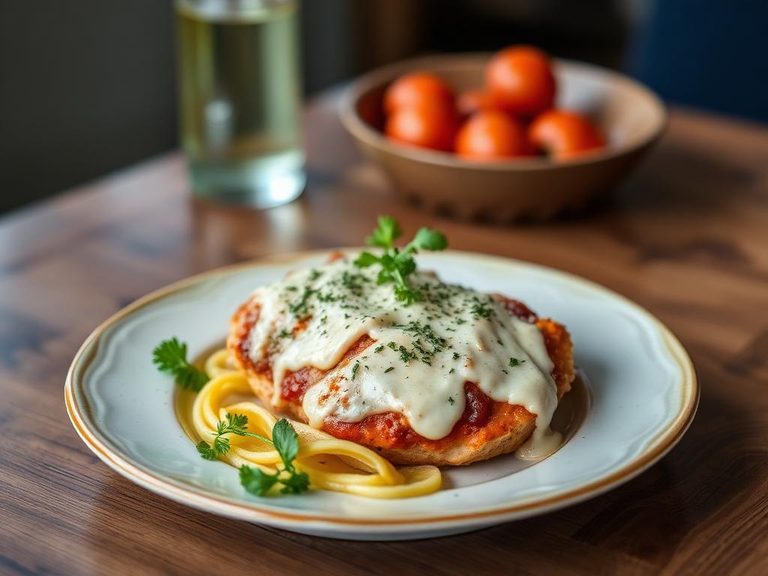

🌍 Where it's eaten
💡 Did you know?
The modern fast-food chicken breast fillet owes much of its popularity to a 1960s marketing campaign by a major U.S. chain that coined the term 'Colonel's Recipe' to emphasize a secret blend of 11 herbs and spices.
Full nutrition (USDA data · scales with serving)
| Water | 50.8 g |
| Energy | 273 kcal |
| Protein | 19.3 g |
| Total lipid (fat) | 16.9 g |
| Carbohydrate, by difference | 10.7 g |
| Fiber, total dietary | 0.30 g |
| Total Sugars | 0.10 g |
| Calcium, Ca | 42.0 mg |
| Iron, Fe | 1.0 mg |
| Magnesium, Mg | 23.0 mg |
| Phosphorus, P | 191 mg |
| Potassium, K | 232 mg |
| Sodium, Na | 549 mg |
| Zinc, Zn | 0.79 mg |
| Copper, Cu | 0.06 mg |
| Selenium, Se | 24.4 ug |
| Vitamin C, total ascorbic acid | 0.00 mg |
| Thiamin | 0.16 mg |
| Riboflavin | 0.21 mg |
| Niacin | 6.7 mg |
| Vitamin B-6 | 0.21 mg |
| Folate, total | 29.0 ug |
| Folic acid | 18.0 ug |
| Folate, food | 11.0 ug |
| Folate, DFE | 41.0 ug |
| Choline, total | 65.1 mg |
| Vitamin B-12 | 0.25 ug |
| Vitamin B-12, added | 0.00 ug |
| Vitamin A, RAE | 9.0 ug |
| Retinol | 9.0 ug |
| Carotene, beta | 0.00 ug |
| Carotene, alpha | 0.00 ug |
| Cryptoxanthin, beta | 0.00 ug |
| Lycopene | 0.00 ug |
| Lutein + zeaxanthin | 5.0 ug |
| Vitamin E (alpha-tocopherol) | 1.7 mg |
| Vitamin E, added | 0.00 mg |
| Vitamin D (D2 + D3) | 0.10 ug |
| Vitamin K (phylloquinone) | 7.1 ug |
| Alcohol, ethyl | 0.00 g |
| Caffeine | 0.00 mg |
| Theobromine | 0.00 mg |
Fat & fatty acid profile (per 100g)
| Fatty acids, total saturated | 3.6 g |
| SFA 4:0 | 0.00 g |
| SFA 6:0 | 0.00 g |
| SFA 8:0 | 0.00 g |
| SFA 10:0 | 0.01 g |
| SFA 12:0 | 0.01 g |
| SFA 14:0 | 0.09 g |
| SFA 16:0 | 2.4 g |
| SFA 18:0 | 0.91 g |
| Fatty acids, total monounsaturated | 7.7 g |
| MUFA 16:1 | 0.41 g |
| MUFA 18:1 | 7.0 g |
| MUFA 20:1 | 0.12 g |
| MUFA 22:1 | 0.01 g |
| Fatty acids, total polyunsaturated | 4.4 g |
| PUFA 18:2 | 3.7 g |
| PUFA 18:3 | 0.50 g |
| PUFA 18:4 | 0.00 g |
| PUFA 20:4 | 0.04 g |
| PUFA 20:5 n-3 (EPA) | 0.00 g |
| PUFA 22:5 n-3 (DPA) | 0.00 g |
| PUFA 22:6 n-3 (DHA) | 0.00 g |
| Cholesterol | 75.0 mg |
Amino acid profile (per 100g)
Estimated from Chicken, broiler or fryers, breast, skinless, boneless, meat only, cooked, grilled — USDA does not publish this profile for Chicken breast.
| Tryptophan | 0.39 g |
| Threonine | 1.4 g |
| Isoleucine | 1.5 g |
| Leucine | 2.5 g |
| Lysine | 2.9 g |
| Methionine | 0.79 g |
| Cystine | 0.32 g |
| Phenylalanine | 1.2 g |
| Tyrosine | 1.1 g |
| Valine | 1.6 g |
| Arginine | 2.1 g |
| Histidine | 1.1 g |
| Alanine | 1.8 g |
| Aspartic acid | 2.9 g |
| Glutamic acid | 4.5 g |
| Glycine | 1.4 g |
| Proline | 0.97 g |
| Serine | 1.2 g |
FAQ
How does the nutrition differ from grilled chicken breast?
Fried, coated chicken breast has roughly double the fat and significantly more calories per 100g than grilled chicken breast, due to the absorbed cooking oil and the carbohydrate-rich coating.
Is the coating a significant source of carbohydrates?
Yes, the breading or batter contributes most of the 10.72g of carbs per 100g, primarily from refined flour, which can cause a quicker rise in blood sugar compared to uncoated chicken.
Can I make a healthier version at home?
Absolutely. Use whole-grain breadcrumbs or almond flour for the coating, and bake or air-fry the chicken with a light spray of oil to drastically reduce the fat content while retaining crunch.
Nutrient density (calculated · NRF9.3)
Nutrient Rich Foods index: beneficial nutrients (protein, fiber, vitamins, minerals) minus saturated fat, added sugar & sodium, per 100 kcal.
NRF9.3 index — Fulgoni, Keast & Drewnowski, 2009. Computed from USDA nutrients.
Weight-loss friendliness (composite index)
Energy density 2.73 kcal/g · 28% calories from protein · 0.3 g fiber · 0.1 g sugar per 100 g.
Composite of energy density (Rolls et al., 1999), protein & fiber satiety, minus sugar. A calculated heuristic — ranks satiety-per-calorie, not a clinical measure.
Dietary load (calculated from USDA values)
Potential renal acid load. Positive = acid-forming, negative = alkaline-forming.
Sodium-to-potassium ratio: 2.37 (lower is better — aim for ≤ 1)
Sodium:potassium per WHO potassium guidance. Computed from USDA nutrients.