

Chicken breast, baked or broiled, skin not eaten, from fast food / restaurant
Common food
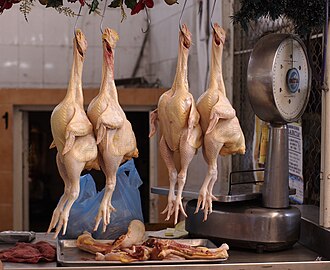
Photo: Wikipedia
This is the lean, protein-dense workhorse of the modern diet: a plain, skinless chicken breast cooked by high-heat dry methods like baking or broiling. The texture is typically firm and fibrous, with a mild, savory flavor that acts as a blank canvas for seasonings. Nutritionally, it's a standout for delivering nearly 30 grams of high-quality protein per 100 grams with minimal fat and zero carbohydrates.
Calorie split: 71% protein · 0% carbs · 29% fat
↓ Full nutrition💚 Why it's loved
People love it for its unparalleled convenience and clean protein boost; it's the ultimate meal-prep staple that can be sliced into salads, shredded for tacos, or cubed for stir-fries. Its mild taste makes it a family-friendly ingredient that readily absorbs marinades and spices.
⚠️ Watch-outs & how to enjoy it better
The primary downside is its potential for dryness and blandness if overcooked, which can make meals feel like a chore. For those monitoring sodium intake, fast-food or restaurant versions can be surprisingly high in salt from seasoning blends or brines. To counteract dryness, marinate before cooking or use a meat thermometer to pull it at 165°F (74°C). To manage sodium, choose grilled over pre-seasoned options and pair with fresh, unsalted sides.
Key benefits
- Excellent source of complete, high-quality protein for muscle maintenance and satiety.
- Very low in fat and carbohydrates, making it ideal for calorie-controlled or low-carb diets.
- Versatile base for countless global cuisines and flavor profiles.
- Convenient and widely available as a quick, ready-to-eat protein option.
🍽️ Popular dishes
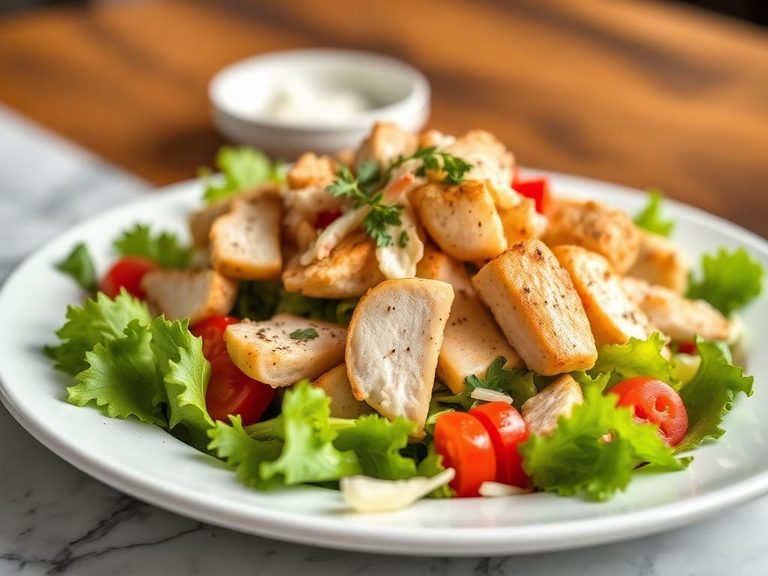
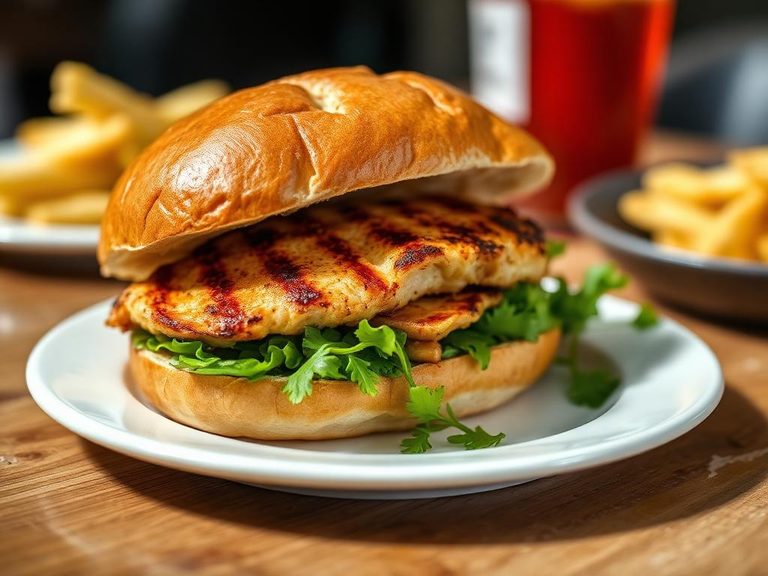
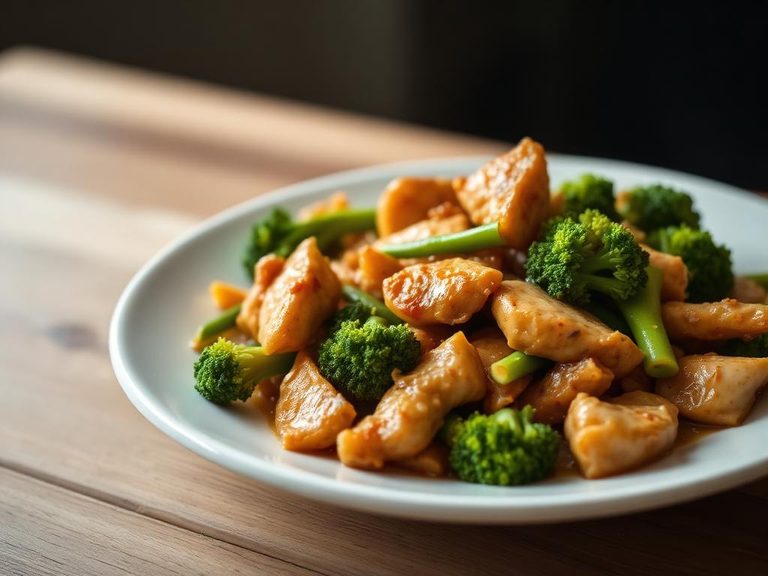
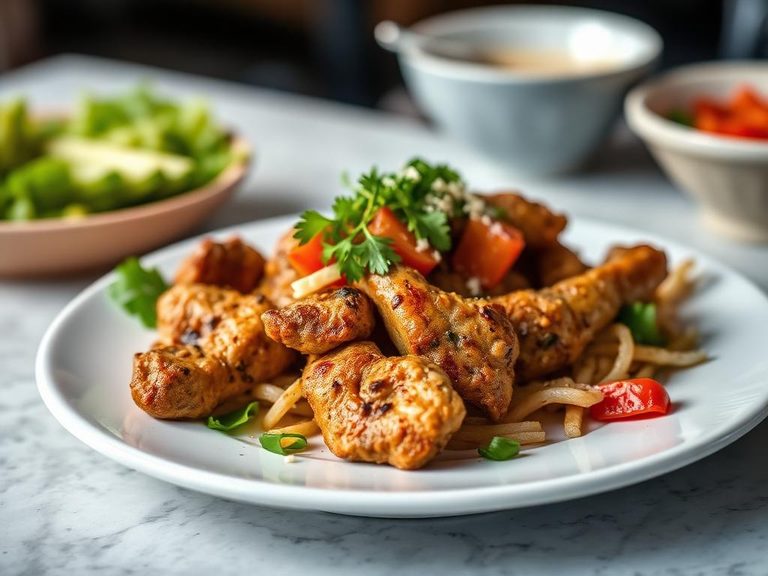
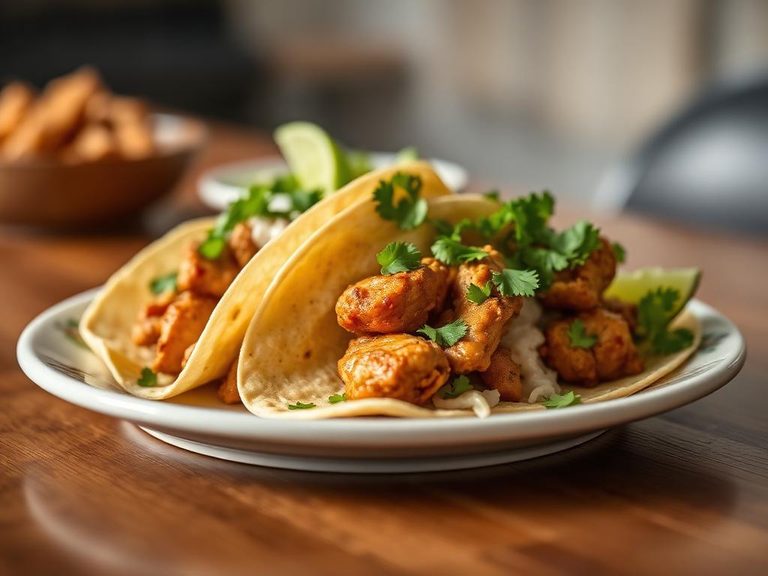
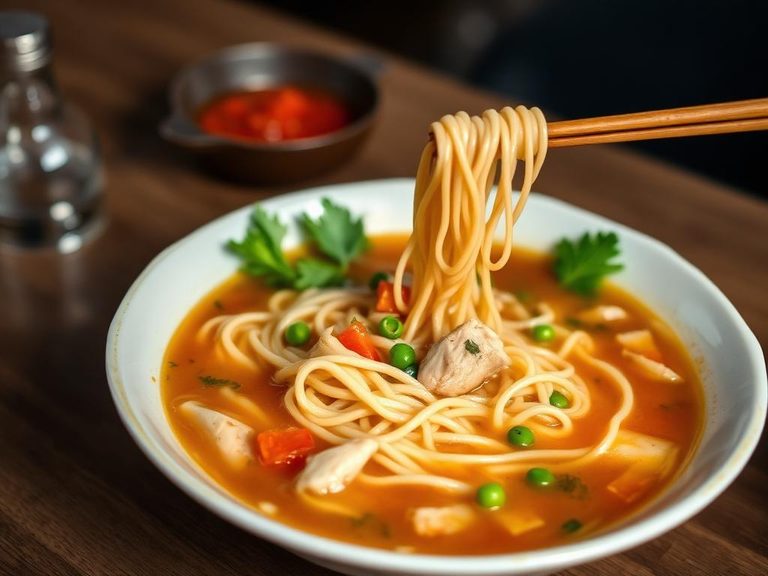
🌍 Where it's eaten
💡 Did you know?
A single chicken breast can contain over 50 different muscles, all working together to power the bird's flight and movement.
Full nutrition (USDA data · scales with serving)
| Water | 62.7 g |
| Energy | 176 kcal |
| Protein | 29.6 g |
| Total lipid (fat) | 5.4 g |
| Carbohydrate, by difference | 0.00 g |
| Fiber, total dietary | 0.00 g |
| Total Sugars | 0.00 g |
| Calcium, Ca | 7.0 mg |
| Iron, Fe | 0.44 mg |
| Magnesium, Mg | 28.0 mg |
| Phosphorus, P | 224 mg |
| Potassium, K | 351 mg |
| Sodium, Na | 430 mg |
| Zinc, Zn | 0.89 mg |
| Copper, Cu | 0.05 mg |
| Selenium, Se | 30.0 ug |
| Vitamin C, total ascorbic acid | 0.00 mg |
| Thiamin | 0.09 mg |
| Riboflavin | 0.21 mg |
| Niacin | 10.1 mg |
| Vitamin B-6 | 0.85 mg |
| Folate, total | 7.0 ug |
| Folic acid | 0.00 ug |
| Folate, food | 7.0 ug |
| Folate, DFE | 7.0 ug |
| Choline, total | 75.5 mg |
| Vitamin B-12 | 0.18 ug |
| Vitamin B-12, added | 0.00 ug |
| Vitamin A, RAE | 9.0 ug |
| Retinol | 9.0 ug |
| Carotene, beta | 0.00 ug |
| Carotene, alpha | 0.00 ug |
| Cryptoxanthin, beta | 0.00 ug |
| Lycopene | 0.00 ug |
| Lutein + zeaxanthin | 0.00 ug |
| Vitamin E (alpha-tocopherol) | 1.1 mg |
| Vitamin E, added | 0.00 mg |
| Vitamin D (D2 + D3) | 0.00 ug |
| Vitamin K (phylloquinone) | 2.0 ug |
| Alcohol, ethyl | 0.00 g |
| Caffeine | 0.00 mg |
| Theobromine | 0.00 mg |
Fat & fatty acid profile (per 100g)
| Fatty acids, total saturated | 1.0 g |
| SFA 4:0 | 0.00 g |
| SFA 6:0 | 0.00 g |
| SFA 8:0 | 0.00 g |
| SFA 10:0 | 0.02 g |
| SFA 12:0 | 0.01 g |
| SFA 14:0 | 0.02 g |
| SFA 16:0 | 0.71 g |
| SFA 18:0 | 0.23 g |
| Fatty acids, total monounsaturated | 1.8 g |
| MUFA 16:1 | 0.12 g |
| MUFA 18:1 | 1.6 g |
| MUFA 20:1 | 0.03 g |
| MUFA 22:1 | 0.00 g |
| Fatty acids, total polyunsaturated | 1.3 g |
| PUFA 18:2 | 1.1 g |
| PUFA 18:3 | 0.10 g |
| PUFA 18:4 | 0.00 g |
| PUFA 20:4 | 0.06 g |
| PUFA 20:5 n-3 (EPA) | 0.00 g |
| PUFA 22:5 n-3 (DPA) | 0.01 g |
| PUFA 22:6 n-3 (DHA) | 0.01 g |
| Cholesterol | 96.0 mg |
Amino acid profile (per 100g)
Estimated from Chicken, broiler or fryers, breast, skinless, boneless, meat only, cooked, grilled — USDA does not publish this profile for Chicken breast.
| Tryptophan | 0.39 g |
| Threonine | 1.4 g |
| Isoleucine | 1.5 g |
| Leucine | 2.5 g |
| Lysine | 2.9 g |
| Methionine | 0.79 g |
| Cystine | 0.32 g |
| Phenylalanine | 1.2 g |
| Tyrosine | 1.1 g |
| Valine | 1.6 g |
| Arginine | 2.1 g |
| Histidine | 1.1 g |
| Alanine | 1.8 g |
| Aspartic acid | 2.9 g |
| Glutamic acid | 4.5 g |
| Glycine | 1.4 g |
| Proline | 0.97 g |
| Serine | 1.2 g |
FAQ
Why is my baked chicken breast so dry?
Chicken breast is very lean and cooks quickly, making it easy to overcook. The key is to not overbake it—use a meat thermometer and remove it when the internal temperature reaches 165°F (74°C). Letting it rest for 5-10 minutes after cooking allows juices to redistribute.
How can I add flavor without adding fat or calories?
Use dry spice rubs (like paprika, cumin, garlic powder, black pepper) or acidic marinades (lemon juice, vinegar, yogurt) before cooking. Fresh herbs like rosemary, thyme, or cilantro added during or after cooking also add significant flavor.
Is the nutritional value different from home-cooked chicken breast?
The base nutrition is similar, but restaurant or fast-food versions may have added sodium, sugars, or oils in marinades or breading. Always check for added ingredients if tracking specific macros.
Nutrient density (calculated · NRF9.3)
Nutrient Rich Foods index: beneficial nutrients (protein, fiber, vitamins, minerals) minus saturated fat, added sugar & sodium, per 100 kcal.
NRF9.3 index — Fulgoni, Keast & Drewnowski, 2009. Computed from USDA nutrients.
Weight-loss friendliness (composite index)
Energy density 1.76 kcal/g · 67% calories from protein · 0.0 g fiber · 0.0 g sugar per 100 g.
Composite of energy density (Rolls et al., 1999), protein & fiber satiety, minus sugar. A calculated heuristic — ranks satiety-per-calorie, not a clinical measure.
Dietary load (calculated from USDA values)
Potential renal acid load. Positive = acid-forming, negative = alkaline-forming.
Sodium-to-potassium ratio: 1.23 (lower is better — aim for ≤ 1)
Sodium:potassium per WHO potassium guidance. Computed from USDA nutrients.