

Chicken breast, baked, broiled, or roasted, skin eaten, from raw
Common food
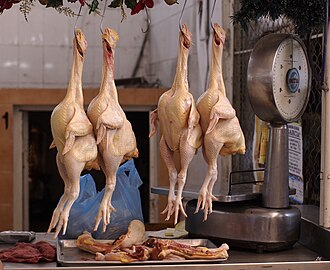
Photo: Wikipedia
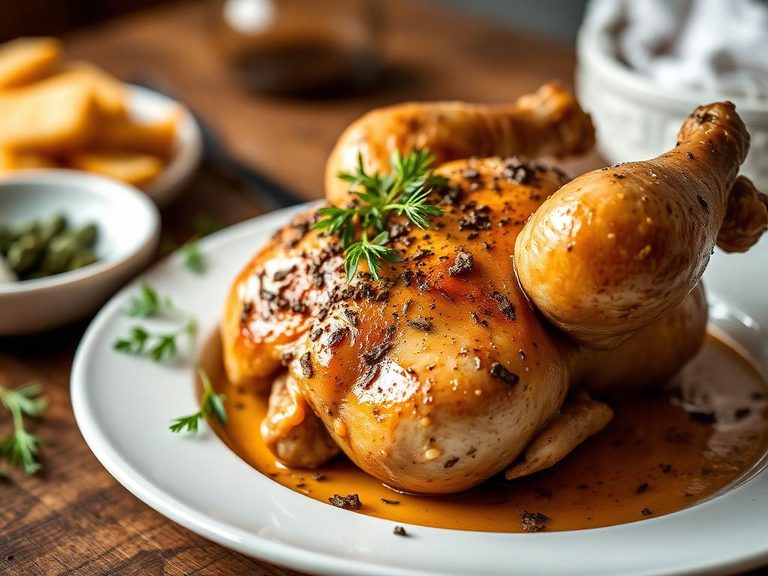
This is lean, white-meat chicken breast cooked with its skin on, yielding a juicy, tender interior with a crisp, golden-brown exterior. Its flavor is mild and savory, acting as a perfect canvas for a wide array of seasonings and marinades. Nutritionally, it's a powerhouse of complete protein with a moderate amount of fat from the skin, making it a satisfying, low-carb meal base.
Calorie split: 57% protein · 0% carbs · 43% fat
↓ Full nutrition💚 Why it's loved
People love it for its incredible adaptability; it can be seasoned simply with salt and pepper or take on bold flavors from global cuisines. The skin, when cooked properly, adds a delicious, crispy texture and rich flavor that elevates the entire dish.
⚠️ Watch-outs & how to enjoy it better
Without careful cooking, the lean meat can become dry and tough, which is a common complaint. The skin, while flavorful, adds extra fat and calories, so those monitoring intake may choose to remove it. To counteract dryness, marinate the chicken before cooking or use a meat thermometer to avoid overcooking.
Key benefits
- Excellent source of complete, high-quality protein for muscle repair and growth.
- Very low in carbohydrates, making it ideal for low-carb and ketogenic diets.
- The skin adds flavor and healthy fats, which can increase satiety.
- A versatile base for countless healthy and flavorful meal preparations.
🍽️ Popular dishes

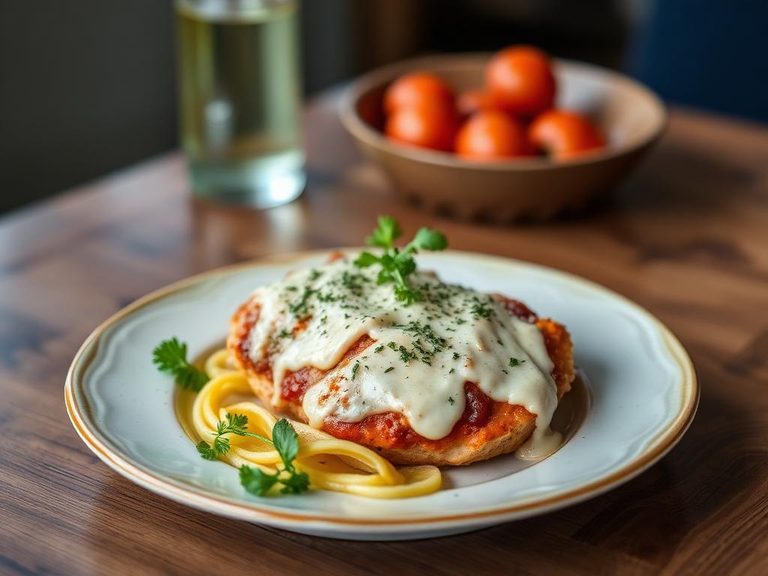
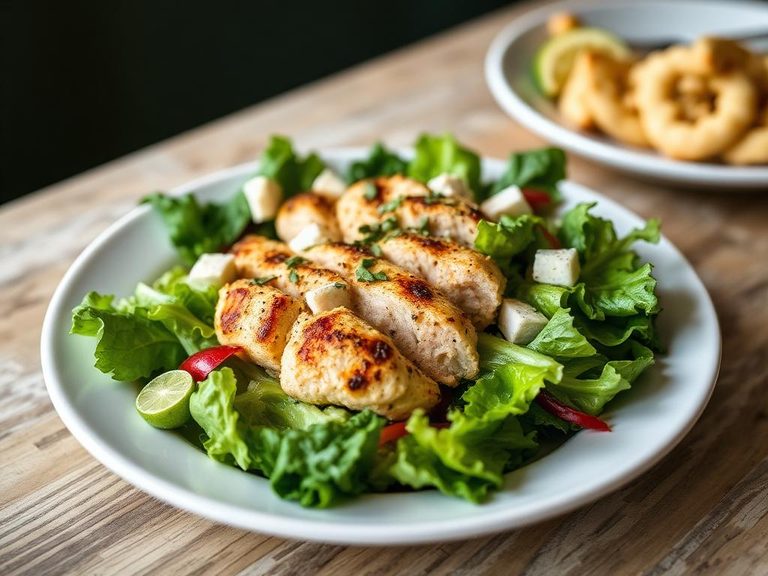
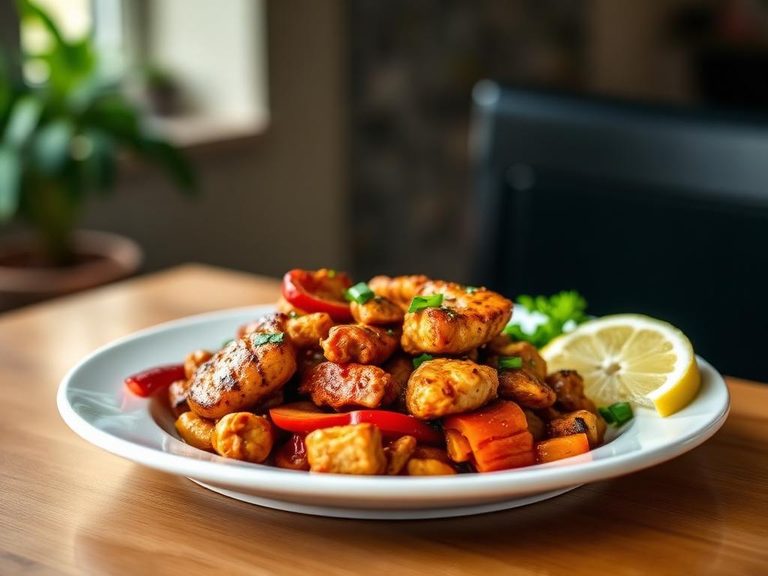
🌍 Where it's eaten
💡 Did you know?
A single chicken breast can contain over 50% of the recommended daily value for niacin (vitamin B3), which is crucial for converting food into energy.
Full nutrition (USDA data · scales with serving)
| Water | 63.2 g |
| Energy | 192 kcal |
| Protein | 26.3 g |
| Total lipid (fat) | 8.8 g |
| Carbohydrate, by difference | 0.00 g |
| Fiber, total dietary | 0.00 g |
| Total Sugars | 0.00 g |
| Calcium, Ca | 7.0 mg |
| Iron, Fe | 0.53 mg |
| Magnesium, Mg | 24.0 mg |
| Phosphorus, P | 195 mg |
| Potassium, K | 298 mg |
| Sodium, Na | 336 mg |
| Zinc, Zn | 0.89 mg |
| Copper, Cu | 0.04 mg |
| Selenium, Se | 26.4 ug |
| Vitamin C, total ascorbic acid | 0.00 mg |
| Thiamin | 0.07 mg |
| Riboflavin | 0.18 mg |
| Niacin | 8.7 mg |
| Vitamin B-6 | 0.70 mg |
| Folate, total | 6.0 ug |
| Folic acid | 0.00 ug |
| Folate, food | 6.0 ug |
| Folate, DFE | 6.0 ug |
| Choline, total | 64.5 mg |
| Vitamin B-12 | 0.17 ug |
| Vitamin B-12, added | 0.00 ug |
| Vitamin A, RAE | 18.0 ug |
| Retinol | 18.0 ug |
| Carotene, beta | 1.0 ug |
| Carotene, alpha | 0.00 ug |
| Cryptoxanthin, beta | 0.00 ug |
| Lycopene | 0.00 ug |
| Lutein + zeaxanthin | 0.00 ug |
| Vitamin E (alpha-tocopherol) | 0.59 mg |
| Vitamin E, added | 0.00 mg |
| Vitamin D (D2 + D3) | 0.10 ug |
| Vitamin K (phylloquinone) | 0.50 ug |
| Alcohol, ethyl | 0.00 g |
| Caffeine | 0.00 mg |
| Theobromine | 0.00 mg |
Fat & fatty acid profile (per 100g)
| Fatty acids, total saturated | 2.3 g |
| SFA 4:0 | 0.00 g |
| SFA 6:0 | 0.00 g |
| SFA 8:0 | 0.00 g |
| SFA 10:0 | 0.02 g |
| SFA 12:0 | 0.01 g |
| SFA 14:0 | 0.06 g |
| SFA 16:0 | 1.7 g |
| SFA 18:0 | 0.43 g |
| Fatty acids, total monounsaturated | 3.3 g |
| MUFA 16:1 | 0.44 g |
| MUFA 18:1 | 2.7 g |
| MUFA 20:1 | 0.09 g |
| MUFA 22:1 | 0.00 g |
| Fatty acids, total polyunsaturated | 1.7 g |
| PUFA 18:2 | 1.5 g |
| PUFA 18:3 | 0.06 g |
| PUFA 18:4 | 0.00 g |
| PUFA 20:4 | 0.07 g |
| PUFA 20:5 n-3 (EPA) | 0.01 g |
| PUFA 22:5 n-3 (DPA) | 0.01 g |
| PUFA 22:6 n-3 (DHA) | 0.01 g |
| Cholesterol | 97.0 mg |
Amino acid profile (per 100g)
Estimated from Chicken, broiler or fryers, breast, skinless, boneless, meat only, cooked, grilled — USDA does not publish this profile for Chicken breast.
| Tryptophan | 0.39 g |
| Threonine | 1.4 g |
| Isoleucine | 1.5 g |
| Leucine | 2.5 g |
| Lysine | 2.9 g |
| Methionine | 0.79 g |
| Cystine | 0.32 g |
| Phenylalanine | 1.2 g |
| Tyrosine | 1.1 g |
| Valine | 1.6 g |
| Arginine | 2.1 g |
| Histidine | 1.1 g |
| Alanine | 1.8 g |
| Aspartic acid | 2.9 g |
| Glutamic acid | 4.5 g |
| Glycine | 1.4 g |
| Proline | 0.97 g |
| Serine | 1.2 g |
FAQ
How do I prevent baked chicken breast from drying out?
Brine it in a saltwater solution for 30 minutes before cooking, or marinate it. Cook to an internal temperature of 165°F (74°C) using a meat thermometer, and let it rest for 5-10 minutes after cooking to allow juices to redistribute.
Is it healthier to eat the skin or remove it?
The skin contains most of the fat and calories. Keeping it adds flavor and satiety but increases the calorie count. Removing it makes the cut leaner. The choice depends on your dietary goals and taste preference.
What's the best way to get a crispy skin when roasting?
Pat the skin completely dry with paper towels before seasoning. Start cooking at a high temperature (425°F / 220°C) to render the fat and crisp the skin. You can also place it skin-side up on a rack in the roasting pan.
Nutrient density (calculated · NRF9.3)
Nutrient Rich Foods index: beneficial nutrients (protein, fiber, vitamins, minerals) minus saturated fat, added sugar & sodium, per 100 kcal.
NRF9.3 index — Fulgoni, Keast & Drewnowski, 2009. Computed from USDA nutrients.
Weight-loss friendliness (composite index)
Energy density 1.92 kcal/g · 55% calories from protein · 0.0 g fiber · 0.0 g sugar per 100 g.
Composite of energy density (Rolls et al., 1999), protein & fiber satiety, minus sugar. A calculated heuristic — ranks satiety-per-calorie, not a clinical measure.
Dietary load (calculated from USDA values)
Potential renal acid load. Positive = acid-forming, negative = alkaline-forming.
Sodium-to-potassium ratio: 1.13 (lower is better — aim for ≤ 1)
Sodium:potassium per WHO potassium guidance. Computed from USDA nutrients.