

Cheese spread, Swiss cheese base
Common food
A smooth, creamy spread made from melted Swiss cheese, offering a rich, nutty, and slightly sweet flavor with a velvety, spreadable texture. It's a calorie-dense source of protein and fat, providing a substantial energy boost per serving. The spread's signature taste comes from the characteristic sweetness and meltability of Swiss cheese.
Calorie split: 23% protein · 12% carbs · 66% fat
↓ Full nutrition💚 Why it's loved
People adore its deep, savory umami and nutty notes that elevate simple crackers, vegetables, or sandwiches. Its effortless, ready-to-use creaminess makes it a versatile staple for both quick snacks and elegant appetizers.
⚠️ Watch-outs & how to enjoy it better
Its high fat and calorie content require mindful portion control, especially for those managing weight. The spread is a common dairy allergen and contains lactose, which can cause digestive issues for some. To mitigate, pair it with fiber-rich foods like whole-grain crackers or raw vegetables, and stick to a single-tablespoon serving.
Key benefits
- Excellent source of high-quality protein for muscle maintenance.
- Provides calcium for bone health.
- Offers conjugated linoleic acid (CLA), a fatty acid linked to various health benefits.
- Convenient, no-melt-required topping or dip for quick meals.
- Rich in vitamin B12, essential for nerve function.
🍽️ Popular dishes


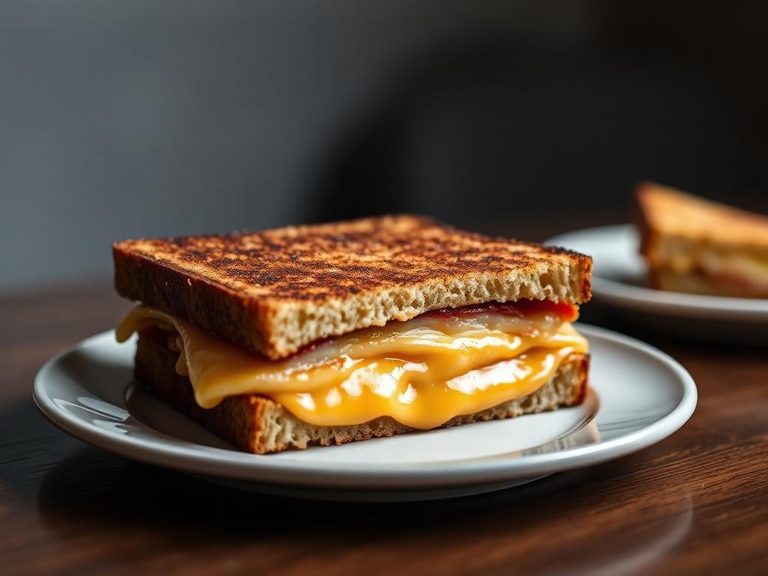
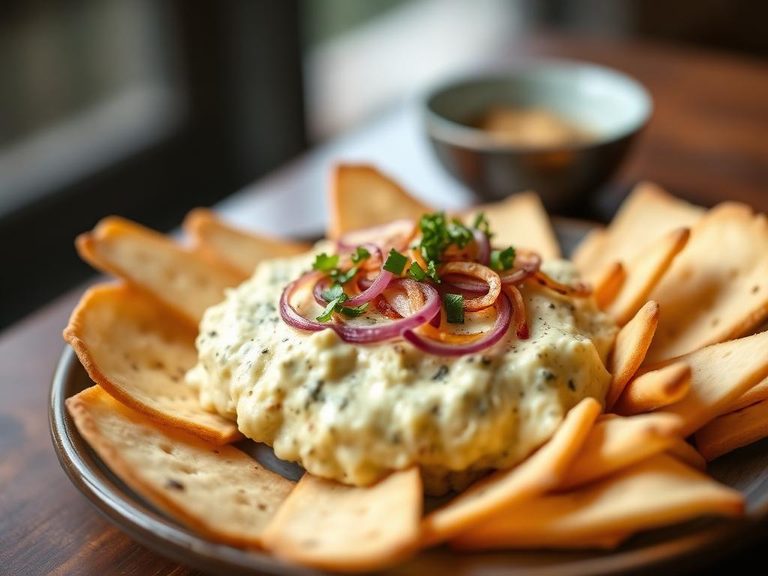
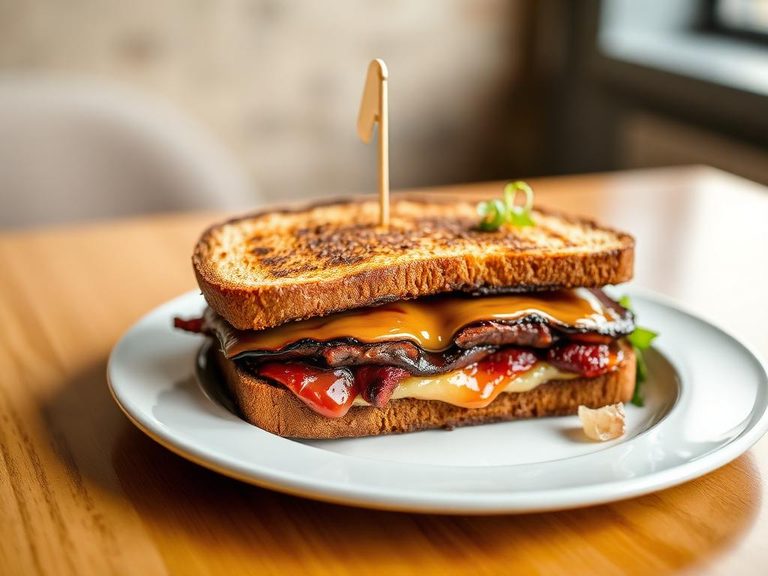

🌍 Where it's eaten
💡 Did you know?
The holes in Swiss cheese, called 'eyes,' are formed by carbon dioxide released by bacteria during fermentation; a spread version typically omits this step for a uniform texture.
Full nutrition (USDA data · scales with serving)
| Water | 47.6 g |
| Energy | 290 kcal |
| Protein | 16.4 g |
| Total lipid (fat) | 21.2 g |
| Carbohydrate, by difference | 8.7 g |
| Fiber, total dietary | 0.00 g |
| Total Sugars | 7.3 g |
| Calcium, Ca | 562 mg |
| Iron, Fe | 0.33 mg |
| Magnesium, Mg | 29.0 mg |
| Phosphorus, P | 875 mg |
| Potassium, K | 242 mg |
| Sodium, Na | 1625 mg |
| Zinc, Zn | 2.6 mg |
| Copper, Cu | 0.03 mg |
| Selenium, Se | 11.3 ug |
| Vitamin C, total ascorbic acid | 0.00 mg |
| Thiamin | 0.05 mg |
| Riboflavin | 0.43 mg |
| Niacin | 0.13 mg |
| Vitamin B-6 | 0.12 mg |
| Folate, total | 7.0 ug |
| Folic acid | 0.00 ug |
| Folate, food | 7.0 ug |
| Folate, DFE | 7.0 ug |
| Choline, total | 36.2 mg |
| Vitamin B-12 | 0.40 ug |
| Vitamin B-12, added | 0.00 ug |
| Vitamin A, RAE | 173 ug |
| Retinol | 168 ug |
| Carotene, beta | 55.0 ug |
| Carotene, alpha | 0.00 ug |
| Cryptoxanthin, beta | 0.00 ug |
| Lycopene | 0.00 ug |
| Lutein + zeaxanthin | 0.00 ug |
| Vitamin E (alpha-tocopherol) | 0.19 mg |
| Vitamin E, added | 0.00 mg |
| Vitamin D (D2 + D3) | 0.40 ug |
| Vitamin K (phylloquinone) | 1.8 ug |
| Alcohol, ethyl | 0.00 g |
| Caffeine | 0.00 mg |
| Theobromine | 0.00 mg |
Fat & fatty acid profile (per 100g)
| Fatty acids, total saturated | 13.3 g |
| SFA 4:0 | 0.69 g |
| SFA 6:0 | 0.41 g |
| SFA 8:0 | 0.31 g |
| SFA 10:0 | 0.51 g |
| SFA 12:0 | 0.63 g |
| SFA 14:0 | 2.2 g |
| SFA 16:0 | 5.9 g |
| SFA 18:0 | 2.4 g |
| Fatty acids, total monounsaturated | 6.2 g |
| MUFA 16:1 | 0.56 g |
| MUFA 18:1 | 5.2 g |
| MUFA 20:1 | 0.00 g |
| MUFA 22:1 | 0.00 g |
| Fatty acids, total polyunsaturated | 0.62 g |
| PUFA 18:2 | 0.40 g |
| PUFA 18:3 | 0.22 g |
| PUFA 18:4 | 0.00 g |
| PUFA 20:4 | 0.00 g |
| PUFA 20:5 n-3 (EPA) | 0.00 g |
| PUFA 22:5 n-3 (DPA) | 0.00 g |
| PUFA 22:6 n-3 (DHA) | 0.00 g |
| Cholesterol | 55.0 mg |
Amino acid profile (per 100g)
Estimated from Cheese spread, pasteurized process, American — USDA does not publish this profile for Cheese spread.
| Tryptophan | 0.24 g |
| Threonine | 0.63 g |
| Isoleucine | 0.83 g |
| Leucine | 1.8 g |
| Lysine | 1.5 g |
| Methionine | 0.54 g |
| Cystine | 0.10 g |
| Phenylalanine | 0.93 g |
| Tyrosine | 0.89 g |
| Valine | 1.4 g |
| Arginine | 0.55 g |
| Histidine | 0.51 g |
| Alanine | 0.60 g |
| Aspartic acid | 1.1 g |
| Glutamic acid | 3.5 g |
| Glycine | 0.31 g |
| Proline | 2.3 g |
| Serine | 1.0 g |
FAQ
Is cheese spread the same as processed cheese?
Not exactly. While both are melted and emulsified, a Swiss cheese base spread is primarily made from Swiss cheese, giving it a distinct flavor profile compared to generic processed cheese products which may contain other cheeses and additives.
Can I use this spread for cooking or just as a dip?
It's excellent for both! It melts smoothly into sauces, works as a base for savory pastries like a simplified Welsh Rarebit, and adds creaminess to casseroles. It's also perfect as a dip or spread straight from the jar.
How does the nutrition compare to a slice of regular Swiss cheese?
Per 100g, the spread is slightly lower in protein and higher in fat than a solid slice of Swiss cheese, due to the emulsifying salts and sometimes added fats used to achieve its smooth, spreadable consistency.
Nutrient density (calculated · NRF9.3)
Nutrient Rich Foods index: beneficial nutrients (protein, fiber, vitamins, minerals) minus saturated fat, added sugar & sodium, per 100 kcal.
NRF9.3 index — Fulgoni, Keast & Drewnowski, 2009. Computed from USDA nutrients.
Weight-loss friendliness (composite index)
Energy density 2.90 kcal/g · 23% calories from protein · 0.0 g fiber · 7.3 g sugar per 100 g.
Composite of energy density (Rolls et al., 1999), protein & fiber satiety, minus sugar. A calculated heuristic — ranks satiety-per-calorie, not a clinical measure.
Dietary load (calculated from USDA values)
Potential renal acid load. Positive = acid-forming, negative = alkaline-forming.
Sodium-to-potassium ratio: 6.71 (lower is better — aim for ≤ 1)
Sodium:potassium per WHO potassium guidance. Computed from USDA nutrients.