

Cereals, corn grits, yellow, regular, quick, enriched, cooked with water, with salt
Whole food · Breakfast Cereals

Photo: Wikipedia
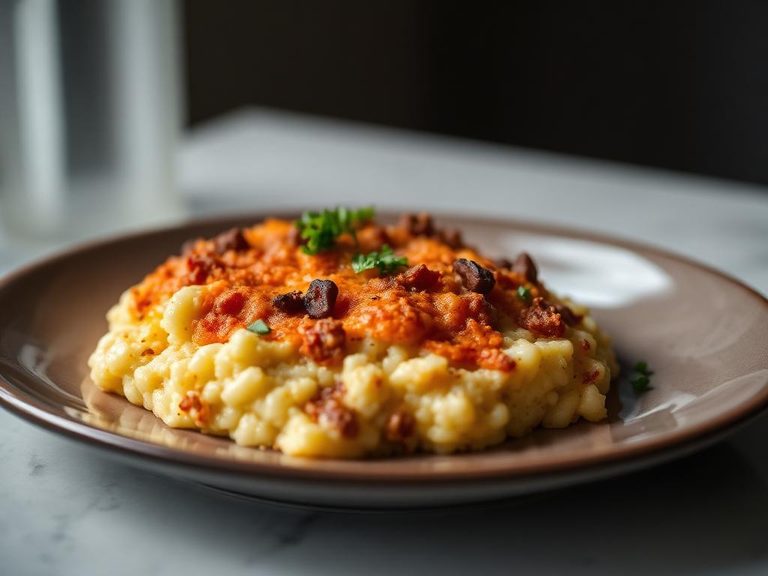
This is a bowl of classic American yellow corn grits, cooked to a smooth, porridge-like consistency. It has a mild, earthy corn flavor and a comforting, slightly grainy texture that can range from creamy to firm. Nutritionally, it's a low-fat, low-calorie carbohydrate source, providing quick energy with minimal fat.
Calorie split: 8% protein · 87% carbs · 5% fat
↓ Full nutrition💚 Why it's loved
People love grits for their comforting, blank-canvas nature—they act as a warm, savory base that soaks up flavors from butter, cheese, or rich sauces. They are a beloved staple of Southern U.S. cuisine, evoking a sense of tradition and home cooking.
⚠️ Watch-outs & how to enjoy it better
The quick-cooking variety can cause a rapid blood-sugar spike due to its high glycemic index. The added salt contributes to sodium intake. To counteract this, pair grits with a protein like shrimp or eggs and a healthy fat like avocado or olive oil to slow digestion, and use low-sodium broth or reduce added salt during cooking.
Key benefits
- Good source of complex carbohydrates for sustained energy
- Very low in fat and naturally cholesterol-free
- Contains added iron and B vitamins from enrichment
- Gluten-free, making it suitable for those with celiac disease
- Provides a small amount of dietary fiber
🍽️ Popular dishes
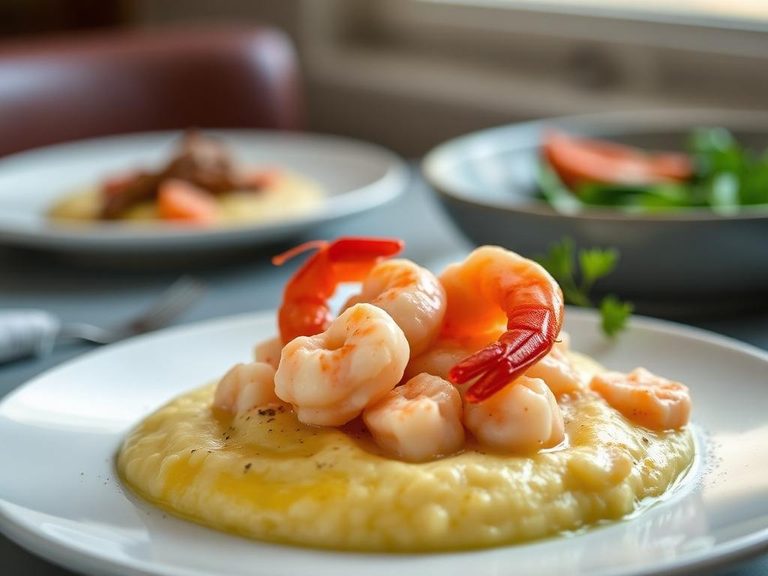
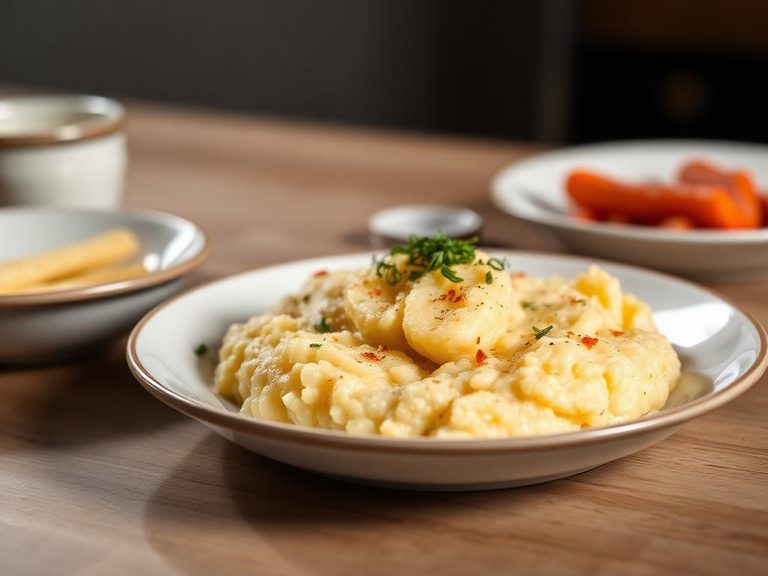
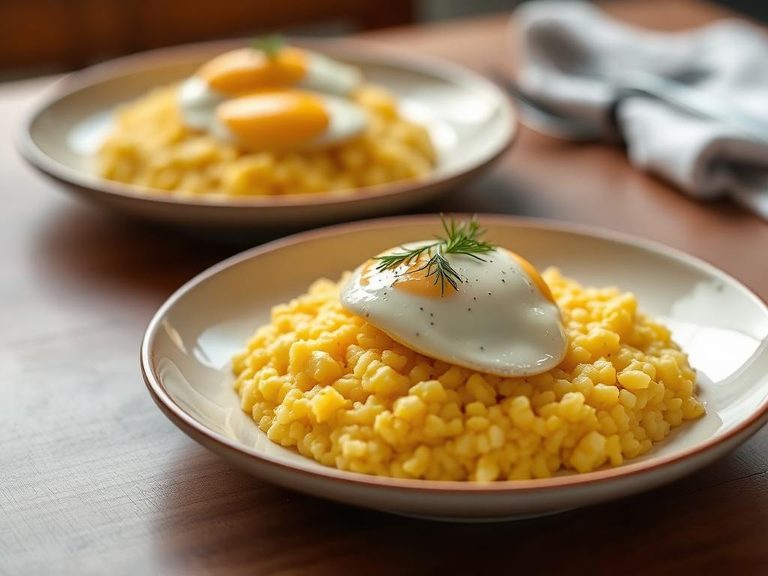
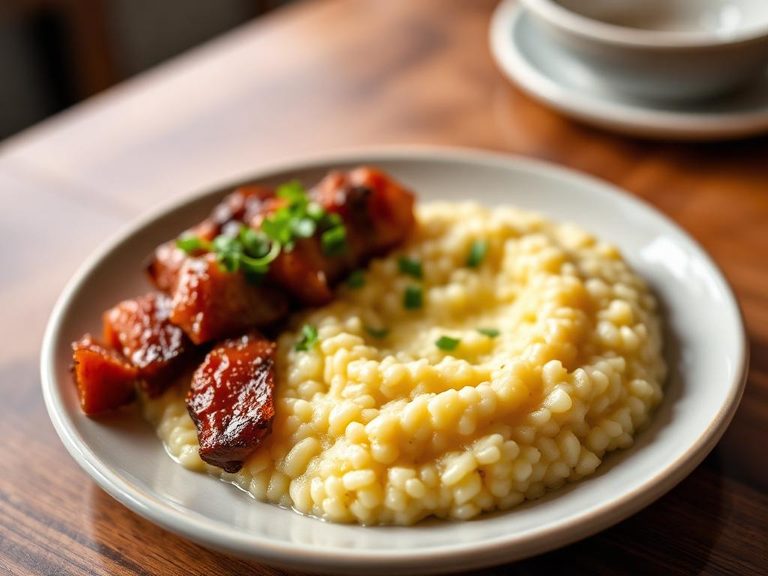
🌍 Where it's eaten
💡 Did you know?
The term 'grits' comes from the Old English word 'grytt,' meaning coarse meal, and the dish has been a staple in the American South since colonial times, with roots in Native American corn preparation techniques.
Full nutrition (USDA data · scales with serving)
| Water | 84.4 g |
| Energy | 65.0 kcal |
| Energy | 273 kj |
| Protein | 1.2 g |
| Total lipid (fat) | 0.39 g |
| Ash | 0.15 g |
| Carbohydrate, by difference | 13.9 g |
| Fiber, total dietary | 0.70 g |
| Total Sugars | 0.09 g |
| Calcium, Ca | 1.0 mg |
| Iron, Fe | 0.57 mg |
| Magnesium, Mg | 5.0 mg |
| Phosphorus, P | 14.0 mg |
| Potassium, K | 22.0 mg |
| Sodium, Na | 223 mg |
| Zinc, Zn | 0.14 mg |
| Copper, Cu | 0.00 mg |
| Manganese, Mn | 0.04 mg |
| Selenium, Se | 2.7 ug |
| Vitamin C, total ascorbic acid | 0.00 mg |
| Thiamin | 0.10 mg |
| Riboflavin | 0.06 mg |
| Niacin | 0.76 mg |
| Pantothenic acid | 0.04 mg |
| Vitamin B-6 | 0.04 mg |
| Folate, total | 27.0 ug |
| Folic acid | 14.0 ug |
| Folate, food | 13.0 ug |
| Folate, DFE | 37.0 ug |
| Choline, total | 2.4 mg |
| Vitamin B-12 | 0.00 ug |
| Vitamin B-12, added | 0.00 ug |
| Vitamin A, RAE | 0.00 ug |
| Retinol | 0.00 ug |
| Carotene, beta | 0.00 ug |
| Carotene, alpha | 0.00 ug |
| Cryptoxanthin, beta | 0.00 ug |
| Vitamin A, IU | 0.00 iu |
| Lycopene | 0.00 ug |
| Lutein + zeaxanthin | 197 ug |
| Vitamin E (alpha-tocopherol) | 0.02 mg |
| Vitamin E, added | 0.00 mg |
| Vitamin D (D2 + D3), International Units | 0.00 iu |
| Vitamin D (D2 + D3) | 0.00 ug |
| Vitamin K (phylloquinone) | 0.00 ug |
| Alcohol, ethyl | 0.00 g |
| Caffeine | 0.00 mg |
| Theobromine | 0.00 mg |
Fat & fatty acid profile (per 100g)
| Fatty acids, total saturated | 0.06 g |
| SFA 4:0 | 0.00 g |
| SFA 6:0 | 0.00 g |
| SFA 8:0 | 0.00 g |
| SFA 10:0 | 0.00 g |
| SFA 12:0 | 0.00 g |
| SFA 14:0 | 0.00 g |
| SFA 16:0 | 0.06 g |
| SFA 18:0 | 0.01 g |
| Fatty acids, total monounsaturated | 0.06 g |
| MUFA 16:1 | 0.00 g |
| MUFA 18:1 | 0.06 g |
| MUFA 20:1 | 0.00 g |
| MUFA 22:1 | 0.00 g |
| Fatty acids, total polyunsaturated | 0.13 g |
| PUFA 18:2 | 0.13 g |
| PUFA 18:3 | 0.00 g |
| PUFA 18:4 | 0.00 g |
| PUFA 20:4 | 0.00 g |
| PUFA 20:5 n-3 (EPA) | 0.00 g |
| PUFA 22:5 n-3 (DPA) | 0.00 g |
| PUFA 22:6 n-3 (DHA) | 0.00 g |
| Cholesterol | 0.00 mg |
Amino acid profile (per 100g)
| Tryptophan | 0.01 g |
| Threonine | 0.05 g |
| Isoleucine | 0.05 g |
| Leucine | 0.17 g |
| Lysine | 0.04 g |
| Methionine | 0.03 g |
| Cystine | 0.03 g |
| Phenylalanine | 0.07 g |
| Tyrosine | 0.06 g |
| Valine | 0.07 g |
| Arginine | 0.07 g |
| Histidine | 0.04 g |
| Alanine | 0.11 g |
| Aspartic acid | 0.10 g |
| Glutamic acid | 0.27 g |
| Glycine | 0.06 g |
| Proline | 0.13 g |
| Serine | 0.07 g |
FAQ
What's the difference between quick grits and stone-ground grits?
Quick grits are pre-cooked and dried, then ground fine for fast preparation (5-10 minutes). Stone-ground grits are whole corn kernels ground between stones, retaining the germ and hull, which gives them a coarser texture and nuttier flavor but require longer cooking (45-60 minutes).
Can I make grits without using a lot of salt?
Yes. Use low-sodium broth or water for cooking, and enhance flavor with aromatics like garlic, herbs, a bay leaf, or a pat of unsalted butter or a sprinkle of nutritional yeast at the end.
Are grits and polenta the same thing?
They are very similar—both are porridges made from ground corn. The main differences are regional and varietal: 'grits' typically use white or yellow corn and are associated with the U.S. South, while 'polenta' traditionally uses a specific variety of yellow corn and is Italian in origin.
Nutrient density (calculated · NRF9.3)
Nutrient Rich Foods index: beneficial nutrients (protein, fiber, vitamins, minerals) minus saturated fat, added sugar & sodium, per 100 kcal.
NRF9.3 index — Fulgoni, Keast & Drewnowski, 2009. Computed from USDA nutrients.
Weight-loss friendliness (composite index)
Energy density 0.65 kcal/g · 8% calories from protein · 0.7 g fiber · 0.1 g sugar per 100 g.
Composite of energy density (Rolls et al., 1999), protein & fiber satiety, minus sugar. A calculated heuristic — ranks satiety-per-calorie, not a clinical measure.
Dietary load (calculated from USDA values)
Potential renal acid load. Positive = acid-forming, negative = alkaline-forming.
Sodium-to-potassium ratio: 10.14 (lower is better — aim for ≤ 1)
Sodium:potassium per WHO potassium guidance. Computed from USDA nutrients.