

Carrots, canned, cooked, fat added, NS as to fat type
Common food

Photo: Wikipedia
These are tender, pre-cooked carrot slices or chunks, preserved in a can with a small amount of added fat for a subtle sheen and mouthfeel. They offer a sweet, mellow carrot flavor and a soft, yielding texture that's ready to eat straight from the can. Nutritionally, they provide a modest calorie boost from the added fat while retaining the carrot's natural fiber and beta-carotene.
Calorie split: 5% protein · 44% carbs · 51% fat
↓ Full nutrition💚 Why it's loved
People love the convenience and consistent sweetness of canned carrots, which make them a reliable staple for quick soups, stews, and side dishes. Their soft texture is perfect for blending into sauces or for those who prefer a less crunchy vegetable.
⚠️ Watch-outs & how to enjoy it better
The canning process can result in a softer texture and a less vibrant, sometimes metallic flavor compared to fresh or frozen carrots. They may also contain added sodium or sugars in some brands, so checking labels is wise. To counteract this, rinse them well to reduce sodium and pair them with protein-rich foods like lentils or chicken to create a more balanced meal and moderate blood sugar response.
Key benefits
- Provides a convenient source of beta-carotene, which the body converts to vitamin A.
- The added fat can help with the absorption of fat-soluble vitamins like A and K.
- Contains dietary fiber, supporting digestive health.
- Offers a quick, no-prep vegetable option for meals.
- Shelf-stable and long-lasting in the pantry.
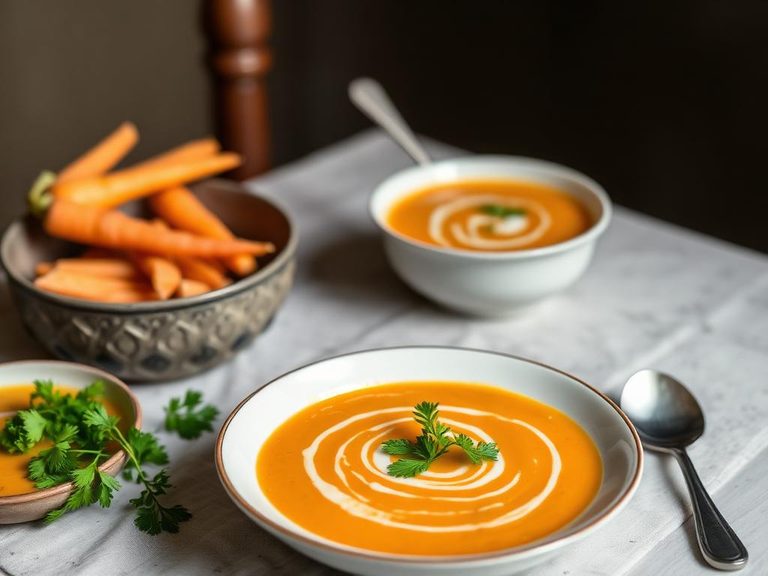
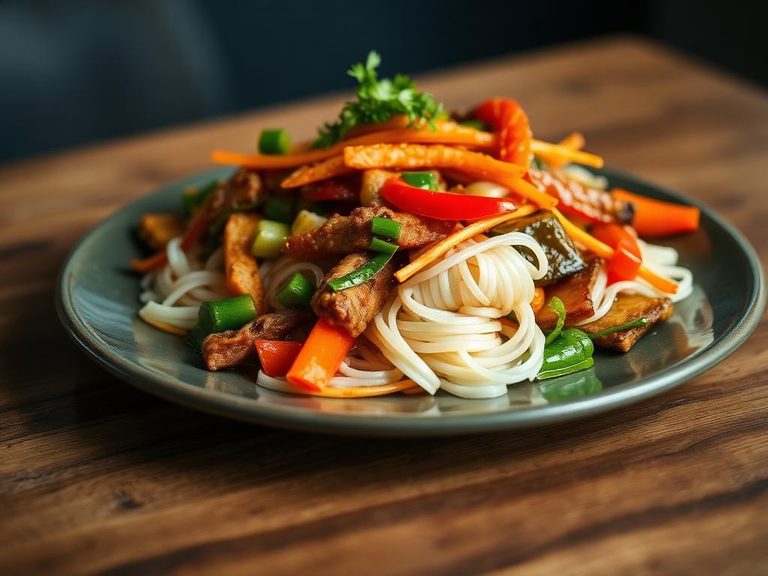
🍽️ Popular dishes



🌍 Where it's eaten
💡 Did you know?
The beta-carotene in carrots is more bioavailable to your body after they are cooked, and the small amount of added fat in the can further enhances this absorption.
Full nutrition (USDA data · scales with serving)
| Water | 90.6 g |
| Energy | 47.0 kcal |
| Protein | 0.63 g |
| Total lipid (fat) | 2.7 g |
| Carbohydrate, by difference | 5.4 g |
| Fiber, total dietary | 1.5 g |
| Total Sugars | 2.4 g |
| Calcium, Ca | 25.0 mg |
| Iron, Fe | 0.62 mg |
| Magnesium, Mg | 8.0 mg |
| Phosphorus, P | 24.0 mg |
| Potassium, K | 174 mg |
| Sodium, Na | 244 mg |
| Zinc, Zn | 0.25 mg |
| Copper, Cu | 0.10 mg |
| Selenium, Se | 0.40 ug |
| Vitamin C, total ascorbic acid | 2.4 mg |
| Thiamin | 0.02 mg |
| Riboflavin | 0.03 mg |
| Niacin | 0.54 mg |
| Vitamin B-6 | 0.13 mg |
| Folate, total | 8.0 ug |
| Folic acid | 0.00 ug |
| Folate, food | 8.0 ug |
| Folate, DFE | 8.0 ug |
| Choline, total | 6.3 mg |
| Vitamin B-12 | 0.00 ug |
| Vitamin B-12, added | 0.00 ug |
| Vitamin A, RAE | 553 ug |
| Retinol | 11.0 ug |
| Carotene, beta | 5181 ug |
| Carotene, alpha | 2663 ug |
| Cryptoxanthin, beta | 0.00 ug |
| Lycopene | 0.00 ug |
| Lutein + zeaxanthin | 0.00 ug |
| Vitamin E (alpha-tocopherol) | 1.1 mg |
| Vitamin E, added | 0.00 mg |
| Vitamin D (D2 + D3) | 0.00 ug |
| Vitamin K (phylloquinone) | 11.6 ug |
| Alcohol, ethyl | 0.00 g |
| Caffeine | 0.00 mg |
| Theobromine | 0.00 mg |
Fat & fatty acid profile (per 100g)
| Fatty acids, total saturated | 0.70 g |
| SFA 4:0 | 0.02 g |
| SFA 6:0 | 0.01 g |
| SFA 8:0 | 0.01 g |
| SFA 10:0 | 0.02 g |
| SFA 12:0 | 0.02 g |
| SFA 14:0 | 0.07 g |
| SFA 16:0 | 0.39 g |
| SFA 18:0 | 0.14 g |
| Fatty acids, total monounsaturated | 0.92 g |
| MUFA 16:1 | 0.02 g |
| MUFA 18:1 | 0.88 g |
| MUFA 20:1 | 0.01 g |
| MUFA 22:1 | 0.00 g |
| Fatty acids, total polyunsaturated | 0.82 g |
| PUFA 18:2 | 0.73 g |
| PUFA 18:3 | 0.09 g |
| PUFA 18:4 | 0.00 g |
| PUFA 20:4 | 0.00 g |
| PUFA 20:5 n-3 (EPA) | 0.00 g |
| PUFA 22:5 n-3 (DPA) | 0.00 g |
| PUFA 22:6 n-3 (DHA) | 0.00 g |
| Cholesterol | 2.0 mg |
Amino acid profile (per 100g)
Estimated from Carrots, canned, no salt added, drained solids — USDA does not publish this profile for Carrots.
| Tryptophan | 0.01 g |
| Threonine | 0.02 g |
| Isoleucine | 0.03 g |
| Leucine | 0.03 g |
| Lysine | 0.03 g |
| Methionine | 0.00 g |
| Cystine | 0.01 g |
| Phenylalanine | 0.02 g |
| Tyrosine | 0.01 g |
| Valine | 0.03 g |
| Arginine | 0.03 g |
| Histidine | 0.01 g |
| Alanine | 0.04 g |
| Aspartic acid | 0.08 g |
| Glutamic acid | 0.12 g |
| Glycine | 0.02 g |
| Proline | 0.02 g |
| Serine | 0.02 g |
FAQ
Are canned carrots as nutritious as fresh?
They retain most of their vitamins and fiber, though some water-soluble vitamins like vitamin C may be reduced during processing. The added fat can actually help you absorb the fat-soluble vitamins they contain.
Why do they have added fat?
A small amount of fat (like vegetable oil) is sometimes added to prevent the carrot pieces from sticking together in the can and to improve the mouthfeel and flavor.
How can I reduce the sodium in canned carrots?
Rinsing and draining the carrots in a colander under running water for about a minute can significantly reduce the surface sodium content.
Nutrient density (calculated · NRF9.3)
Nutrient Rich Foods index: beneficial nutrients (protein, fiber, vitamins, minerals) minus saturated fat, added sugar & sodium, per 100 kcal.
NRF9.3 index — Fulgoni, Keast & Drewnowski, 2009. Computed from USDA nutrients.
Weight-loss friendliness (composite index)
Energy density 0.47 kcal/g · 5% calories from protein · 1.5 g fiber · 2.4 g sugar per 100 g.
Composite of energy density (Rolls et al., 1999), protein & fiber satiety, minus sugar. A calculated heuristic — ranks satiety-per-calorie, not a clinical measure.
Dietary load (calculated from USDA values)
Potential renal acid load. Positive = acid-forming, negative = alkaline-forming.
Sodium-to-potassium ratio: 1.40 (lower is better — aim for ≤ 1)
Sodium:potassium per WHO potassium guidance. Computed from USDA nutrients.