

Carrots, fresh, cooked, fat added, NS as to fat type
Common food

Photo: Wikipedia
These are tender, sweet carrots that have been cooked with a small amount of fat, which gives them a glossy sheen and a richer mouthfeel than plain boiled carrots. The cooking process softens them to a pleasant, fork-tender texture while concentrating their natural sugars. Nutritionally, they offer a good dose of fiber and beta-carotene, with the added fat helping your body absorb this fat-soluble vitamin.
Calorie split: 5% protein · 57% carbs · 37% fat
↓ Full nutrition💚 Why it's loved
People love them for their comforting, sweet flavor that becomes more pronounced with cooking, and their incredibly versatile nature that fits seamlessly into roasts, stews, and side dishes across countless cuisines.
⚠️ Watch-outs & how to enjoy it better
For those monitoring blood sugar, the combination of natural sugars and soft texture can lead to a quicker glycemic response. To counteract this, pair them with a source of protein or healthy fat (like nuts or a lean meat) to slow digestion, and be mindful of portion sizes if eating them alone.
Key benefits
- Excellent source of beta-carotene, which the body converts to Vitamin A.
- Good source of dietary fiber for digestive health.
- The added fat significantly increases the absorption of fat-soluble vitamins.
- Naturally sweet, providing a healthier alternative to sugary snacks.
- Contains antioxidants like lutein and lycopene.
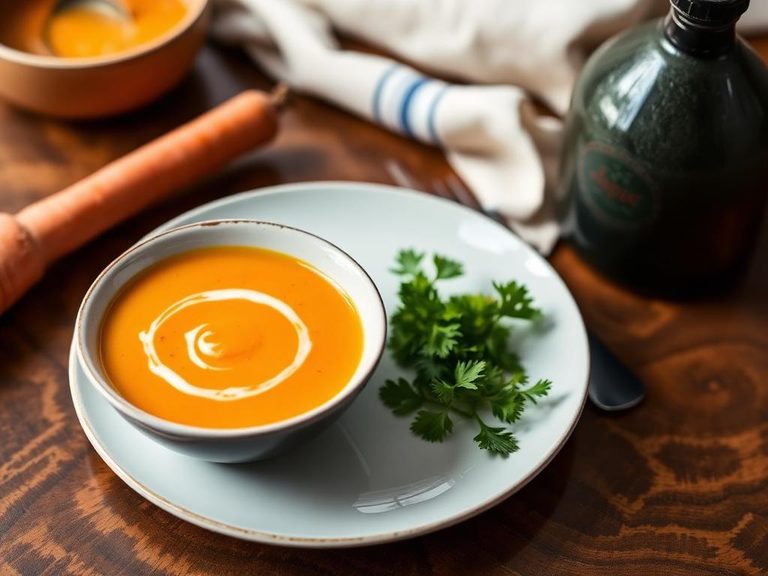
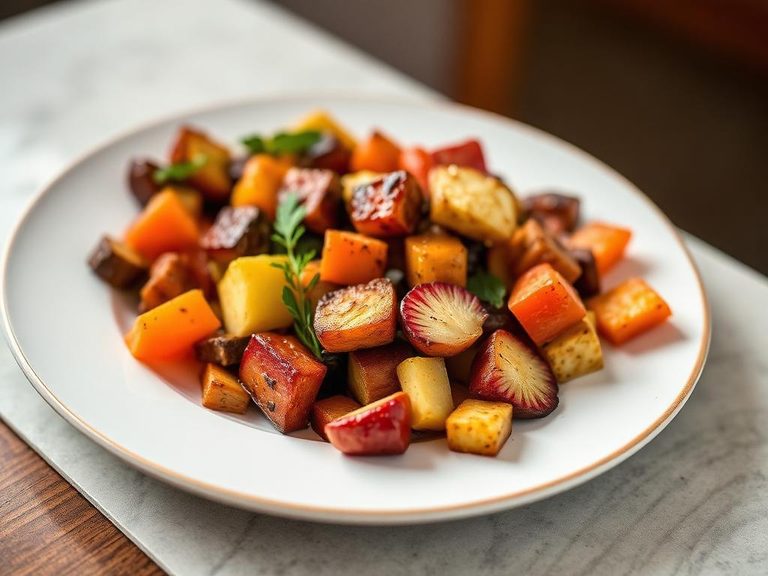
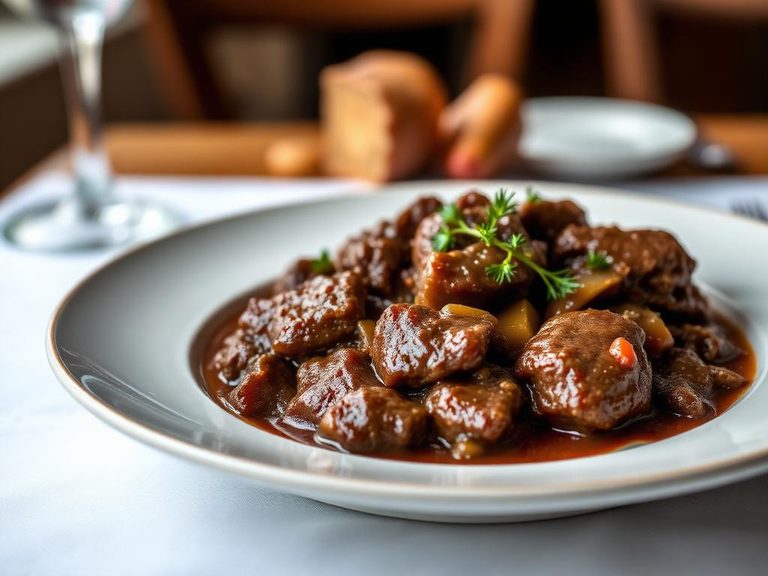
🍽️ Popular dishes



🌍 Where it's eaten
💡 Did you know?
Cooking carrots actually increases the bioavailability of certain antioxidants, like beta-carotene, making them more nutritious for your body than many raw preparations.
Full nutrition (USDA data · scales with serving)
| Water | 84.6 g |
| Energy | 72.0 kcal |
| Protein | 0.96 g |
| Total lipid (fat) | 3.0 g |
| Carbohydrate, by difference | 10.4 g |
| Fiber, total dietary | 3.1 g |
| Total Sugars | 4.8 g |
| Calcium, Ca | 31.0 mg |
| Iron, Fe | 0.15 mg |
| Magnesium, Mg | 12.0 mg |
| Phosphorus, P | 41.0 mg |
| Potassium, K | 283 mg |
| Sodium, Na | 214 mg |
| Zinc, Zn | 0.24 mg |
| Copper, Cu | 0.06 mg |
| Selenium, Se | 0.00 ug |
| Vitamin C, total ascorbic acid | 5.1 mg |
| Thiamin | 0.06 mg |
| Riboflavin | 0.09 mg |
| Niacin | 1.3 mg |
| Vitamin B-6 | 0.15 mg |
| Folate, total | 32.0 ug |
| Folic acid | 0.00 ug |
| Folate, food | 32.0 ug |
| Folate, DFE | 32.0 ug |
| Choline, total | 9.1 mg |
| Vitamin B-12 | 0.00 ug |
| Vitamin B-12, added | 0.00 ug |
| Vitamin A, RAE | 812 ug |
| Retinol | 11.0 ug |
| Carotene, beta | 7942 ug |
| Carotene, alpha | 3331 ug |
| Cryptoxanthin, beta | 0.00 ug |
| Lycopene | 1.0 ug |
| Lutein + zeaxanthin | 245 ug |
| Vitamin E (alpha-tocopherol) | 1.1 mg |
| Vitamin E, added | 0.00 mg |
| Vitamin D (D2 + D3) | 0.00 ug |
| Vitamin K (phylloquinone) | 15.5 ug |
| Alcohol, ethyl | 0.00 g |
| Caffeine | 0.00 mg |
| Theobromine | 0.00 mg |
Fat & fatty acid profile (per 100g)
| Fatty acids, total saturated | 0.73 g |
| SFA 4:0 | 0.02 g |
| SFA 6:0 | 0.01 g |
| SFA 8:0 | 0.01 g |
| SFA 10:0 | 0.02 g |
| SFA 12:0 | 0.02 g |
| SFA 14:0 | 0.07 g |
| SFA 16:0 | 0.41 g |
| SFA 18:0 | 0.14 g |
| Fatty acids, total monounsaturated | 0.95 g |
| MUFA 16:1 | 0.02 g |
| MUFA 18:1 | 0.92 g |
| MUFA 20:1 | 0.01 g |
| MUFA 22:1 | 0.00 g |
| Fatty acids, total polyunsaturated | 0.86 g |
| PUFA 18:2 | 0.78 g |
| PUFA 18:3 | 0.09 g |
| PUFA 18:4 | 0.00 g |
| PUFA 20:4 | 0.00 g |
| PUFA 20:5 n-3 (EPA) | 0.00 g |
| PUFA 22:5 n-3 (DPA) | 0.00 g |
| PUFA 22:6 n-3 (DHA) | 0.00 g |
| Cholesterol | 2.0 mg |
Amino acid profile (per 100g)
Estimated from Carrots, canned, no salt added, drained solids — USDA does not publish this profile for Carrots.
| Tryptophan | 0.01 g |
| Threonine | 0.02 g |
| Isoleucine | 0.03 g |
| Leucine | 0.03 g |
| Lysine | 0.03 g |
| Methionine | 0.00 g |
| Cystine | 0.01 g |
| Phenylalanine | 0.02 g |
| Tyrosine | 0.01 g |
| Valine | 0.03 g |
| Arginine | 0.03 g |
| Histidine | 0.01 g |
| Alanine | 0.04 g |
| Aspartic acid | 0.08 g |
| Glutamic acid | 0.12 g |
| Glycine | 0.02 g |
| Proline | 0.02 g |
| Serine | 0.02 g |
FAQ
Does adding fat change the nutritional value?
Yes, it adds calories and fat, but it also crucially helps your body absorb the fat-soluble vitamins (A, E, K) and antioxidants present in the carrots, making them more nutritionally beneficial.
Are cooked carrots as healthy as raw carrots?
Both are healthy, but cooking changes the nutrient profile. It softens the fiber and increases the availability of some antioxidants like beta-carotene, while raw carrots retain more heat-sensitive nutrients like Vitamin C.
What kind of fat is typically used?
Common choices include butter for a rich flavor, olive oil for a heart-healthy option, or neutral vegetable oils. The specific fat type isn't defined in this generic entry, so it can vary.
Nutrient density (calculated · NRF9.3)
Nutrient Rich Foods index: beneficial nutrients (protein, fiber, vitamins, minerals) minus saturated fat, added sugar & sodium, per 100 kcal.
NRF9.3 index — Fulgoni, Keast & Drewnowski, 2009. Computed from USDA nutrients.
Weight-loss friendliness (composite index)
Energy density 0.72 kcal/g · 5% calories from protein · 3.1 g fiber · 4.8 g sugar per 100 g.
Composite of energy density (Rolls et al., 1999), protein & fiber satiety, minus sugar. A calculated heuristic — ranks satiety-per-calorie, not a clinical measure.
Dietary load (calculated from USDA values)
Potential renal acid load. Positive = acid-forming, negative = alkaline-forming.
Sodium-to-potassium ratio: 0.76 (lower is better — aim for ≤ 1)
Sodium:potassium per WHO potassium guidance. Computed from USDA nutrients.